
Executive Overview
In contemporary society, discussing anything more consequential than pizza toppings has become a high-stakes endeavor fraught with the potential for hurt feelings, defensive emotional outbursts, and the fracturing of vital personal relationships. This hyper-polarized cultural climate has left educators and community leaders searching for viable antidotes to the pervasive breakdown of civic communication. Enter the growth discourse framework, an innovative pedagogical approach developed by the School for Ethics and Global Leadership (SEGL).
SEGL, a premier, semester-long residential program for high-achieving high school juniors from across the United States, places ethical thinking, leadership development, and international affairs at the core of its curriculum. Its overarching mission is to graduate students who are not only intellectually nimble but also fully prepared to catalyze positive change in a fractured world. Central to this mission is growth discourse—a structured, intentional method of communication designed to help students tackle complex, emotionally charged topics that most adult groups instinctively avoid.
Rather than chasing an elusive and often sterile standard of "civility," growth discourse leans into vulnerability, demanding both courage and deep intellectual honesty. Because the framework is remarkably straightforward, it offers a replicable model for educators at all grade levels who want to elevate the quality of discourse in their own classrooms. This report explores the mechanics of growth discourse, examines how SEGL avoids the pitfalls of false equivalence, breaks down the core principles of the model, and offers a glimpse into an optimistic future for educational leadership.
Detailed Chronology and Origins: The Birth of SEGL
The genesis of this discourse model traces back to 2009, when educator Noah Bopp founded the School for Ethics and Global Leadership with a singular, ambitious vision: to bring diverse, high-potential youth together in a residential setting and equip them with the rigorous ethical framework required to lead in the 21st century.
Over the years, Bopp and his faculty observed a troubling societal shift. As national politics and cultural discussions grew increasingly toxic, students arriving at the program were increasingly hesitant to voice authentic opinions. They feared social ostracization, cancellation, or the emotional fallout of saying the "wrong" thing. Traditional rules of debate or standard civility guidelines proved inadequate; they merely encouraged students to walk on eggshells, biting their tongues rather than engaging in authentic intellectual friction.
Recognizing that real personal and civic growth requires discomfort, Bopp and his team systematically dismantled conventional discussion paradigms. They replaced the passive goal of "being nice" with the active, transformative goal of "growing through dialogue." By pivoting from civil discourse to growth discourse, SEGL established a developmental timeline where students first learn to establish radical belonging, subsequently master critical thinking frameworks, and ultimately transition from academic critique to real-world ethical action.
Supporting Context & Metrics: The Mechanics of Growth Discourse
To understand how SEGL’s framework operates on a daily basis, one must examine the specific pillars that support it. The model rejects both the silent echo chamber and the chaotic shouting match, carving out a middle path rooted in structured intellectual rigor.
1. Begin with Belonging
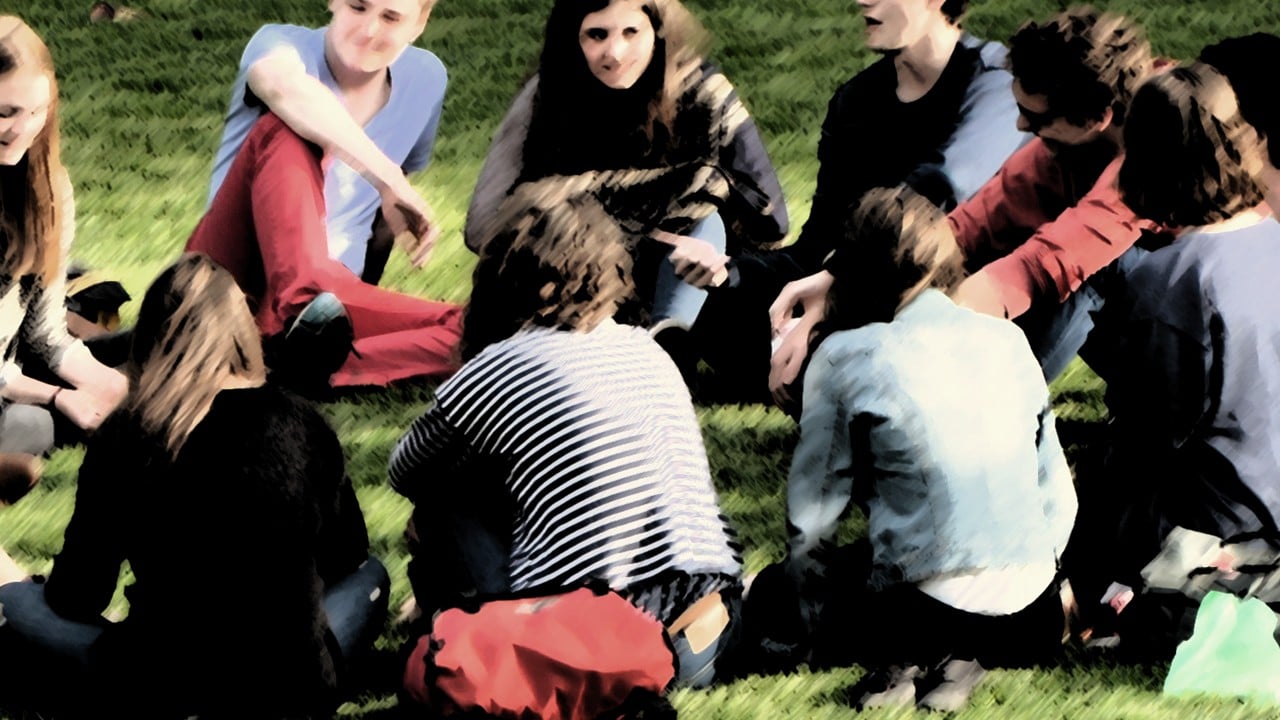
Before any challenging conversation can take place—whether regarding immigration policy, economic disparity, or historical injustices—participants must feel a profound sense of psychological safety and inclusion. SEGL achieves this not through vague encouragement, but through structural design and deliberate community-building.
The student body and faculty are intentionally recruited to represent a rich tapestry of backgrounds, viewpoints, and identities. Bopp notes that in a homogeneous classroom, tackling sensitive topics is exceedingly difficult because opposing viewpoints are sparse, leaving dissenting students feeling alienated. Conversely, when an intentionally diverse cohort is explicitly taught that they belong, the baseline anxiety of the room drops. Students realize they can express unpopular or complex thoughts without risking their standing in the community.
2. Value Intent and Impact
Sensitive discussions inevitably involve missteps where a participant uses imprecise language or triggers unintended offense. This reality often sparks a polarizing debate: Which matters more—the speaker’s benign intent or the listener’s negative impact?
According to the growth discourse model, this is a false dichotomy. Both intent and impact carry profound weight:
- The Danger of Dismissive Intent: If a speaker uses "I’m sorry, that wasn’t my intent" as a get-out-of-jail-free card, they fail to take accountability for how their words land. They must pause and reflect on the ripple effects of their communication.
- The Danger of Unearned Attribution: Conversely, if a listener automatically assigns a malicious motive to a peer solely based on an emotional reaction, they display intellectual incuriosity and a lack of reflective maturity. Growth discourse requires holding both realities in tension.
3. Avoid Echo Chambers
Human nature drives us toward homophily—the tendency to associate with those who mirror our beliefs. While finding refuge among like-minded peers is occasionally necessary for psychological restoration, making it a permanent state stunts intellectual and moral development. SEGL teaches students to step outside their echo chambers not to abandon their core values, but to learn how to re-engage constructively with those who see the world differently.
4. Follow the STAR Model
At the operational heart of SEGL’s critical thinking curriculum is the STAR model, adapted from Harvard Project Zero’s renowned thinking routines. This four-step framework ensures that students thoroughly understand an issue before rushing to moral judgment:
- SEE: The foundational step. Students must ask: What can I see? What can I understand before I judge? What do the experts say? What crucial voices are missing from this conversation? The goal is comprehensive observation and information gathering before taking a stance.
- THINK: Once the landscape is observed, leaders must exercise discernment. They must grapple with ethical questions: Is this right or wrong? Is this policy effective or harmful? What underlying values are at stake?
- ACT: Diverging from purely academic routines, SEGL adds an action-oriented step. Leaders cannot remain perpetually in the realm of analysis; they must make choices. Whether deciding how to vote, confronting an ethical dilemma among peers, or choosing honesty over self-preservation, students must translate thought into ethical action.
- REFLECT: The final step closes the loop. Students evaluate the outcomes of their actions: Did we like the result? What was the community response? What adjustments should be made next time? Crucially, this reflection feeds directly back into the "SEE" phase of the next ethical challenge, creating a continuous loop of lifelong learning.
Official Statements & Expert Insights: Redefining "Bothsidesism"
In an era where media outlets and educational institutions frequently stumble into the trap of bothsidesism—falsely presenting fringe conspiracies and empirically validated facts as equally legitimate viewpoints—SEGL maintains a fiercely nonpartisan yet profoundly non-neutral stance.

Noah Bopp addresses this distinction with unwavering clarity:
"SEGL is nonpartisan. SEGL is not neutral. We don’t say, ‘The Holocaust, good or bad, you decide,’ right? We don’t say in our science classrooms, ‘Climate change, is that real or not real?’ When there is a topic where reasonable, educated people are disagreeing, we give our students critical thinking skills so that they can evaluate arguments and then bring in people who represent the best possible arguments on those different sides and say, where do you stand?"
Bopp warns against the lazy temptation of telling students what to think rather than teaching them how to think. When educators dictate predetermined conclusions, they bypass the messy, essential labor of critical thinking. In doing so, they inadvertently prime students to fall prey to the next demagogue who promises easy answers.
"If we err on the side of teaching students what to think—which is so easy to do—we shortcut the critical thinking process and we make that kid susceptible to the next demagogue who comes along. And there are a lot of demagogues in this world right now."
Future Outlook: Cultivating the Innate Goodness of Learners
As the conversation concludes, a vital question remains: Can humanity pull itself out of this historical chapter characterized by intense polarization, ideological silos, and toxic public discourse?
Bopp’s answer is an immediate and resounding affirmative. Drawing inspiration from classical philosophy, he references a timeless passage from Plato’s Republic: "Education is not about putting sight into blind eyes."
Expanding on this philosophy, Bopp notes:

"The effective educator assumes that the power to learn is already present in the soul of the learner. And that means the goal of the educator is to give the learner places to look and questions to ask. I have enormous faith that if we can give students places to look—the current challenges that face our world—and questions to ask, which are the classic ethical questions that cross culture and time and age and language, that the goodness that is already present in the learner will be uncovered. I have a fundamental belief in the goodness of every human being. Maybe that’s naive. But it sure helps me as a teacher and it sure helps me these days."
Moving Forward: Practical Implementation for Educators
For educators inspired by this framework, implementing growth discourse does not require a complete overhaul of an institution. By integrating practices like the STAR thinking routine, establishing explicit guidelines for belonging, and holding space for respectful intellectual friction, any classroom can transform from a potential minefield into a crucible for authentic leadership development.
The faculty at the School for Ethics and Global Leadership remains actively engaged in supporting educators eager to pilot these strategies. Teachers and administrators interested in adapting growth discourse guidelines or accessing sample lesson plans can connect directly with the SEGL team through their official website or reach out to Noah Bopp at [email protected].
By shifting our educational goals from polite silence to courageous growth discourse, we can prepare the next generation not merely to tolerate differences, but to harness them in service of a more thoughtful, ethical, and unified world.

