As the winter season settles in, bringing with it a dramatic shift in weather, extended periods of indoor confinement, and the unpredictable disruptions of holiday breaks, educators, parents, and child development specialists face a recurring challenge. The transition periods immediately preceding and following winter holidays are notorious for precipitating spikes in dysregulation among children and young adults. Defined as the ability to effectively manage thoughts, feelings, and behaviors, self-regulation is the foundational capacity that allows kids to navigate everyday emotions, maintain task focus, and establish positive social connections.
When familiar routines are upended by cold weather and holiday excitement, children frequently require targeted, intentional support to maintain their emotional equilibrium. Fortunately, modern educational and psychological research underscores that mastering these critical life skills does not require rigid, clinical interventions. Instead, self-regulation can—and should—be cultivated through engaging, playful, and developmentally appropriate activities. This report explores the vital importance of winter self-regulation, analyzes the physiological and psychological mechanisms behind emotional management during the colder months, and provides a comprehensive framework of ten evidence-based, winter-themed activities designed to foster calm, focus, and resilience in kids and teens.
Detailed Chronology: Understanding the Winter Disruption Cycle
To effectively support children through the winter season, it is helpful to examine the predictable chronology of behavioral shifts that occur from late autumn through the New Year. Recognizing these phases allows educators and caregivers to proactively implement self-regulation strategies rather than reacting to behavioral crises.
Phase 1: The Pre-Break Anticipation (Late November to Mid-December)
As the holiday season approaches, school environments undergo a subtle yet profound transformation. Curricula often bend to accommodate festive events, schedules become erratic, and general excitement builds. For many children, this unpredictability acts as a catalyst for anxiety and overstimulation. Executive functioning skills—such as impulse control, working memory, and cognitive flexibility—begin to strain under the weight of altered routines. During this phase, children frequently exhibit signs of hyperarousal, making transitions difficult and group focus challenging.
Phase 2: The Holiday Disruption (Mid-December to Early January)
During the extended break, structured daily schedules evaporate entirely. While vacations are intended to be restful, the sudden absence of predictability can deeply unsettle children, particularly those who rely on environmental cues to regulate their nervous systems. Sleep schedules shift, screen time often increases, and social dynamics change. Consequently, children’s internal meters for emotional regulation are profoundly tested during these weeks away from institutional support systems.
Phase 3: The Post-Break Readjustment (January)
Perhaps the most volatile period of the winter cycle occurs upon returning to school or structured routines in January. Children are suddenly expected to transition from unstructured leisure back to rigorous academic demands, often against a backdrop of bleak weather, limited sunlight, and post-holiday fatigue. Behavioral observations consistently show elevated rates of impulsivity, emotional outbursts, and attention deficits during this window. Without deliberate structural support and mindfulness-based interventions, classrooms and households alike can experience friction, highlighting the urgent necessity for proactive self-regulation practices tailored specifically to the winter environment.
Supporting Context & Metrics: The Science of Winter Regulation
Understanding why children struggle during the winter months requires looking at the intersection of neuroscience, environmental psychology, and child development.
The Neurobiology of Winter Stress
Self-regulation is governed primarily by the prefrontal cortex—the area of the brain responsible for executive functions—which develops gradually well into early adulthood. When children experience stress, environmental changes, or sensory overload, the amygdala (the brain’s emotional processing center) can trigger a "fight, flight, or freeze" response, effectively hijacking the prefrontal cortex.
During winter, several compounding factors exacerbate this vulnerability:
Circadian Rhythm Disruptions: Shorter days and reduced exposure to natural sunlight can lead to drops in serotonin levels and imbalances in melatonin production, impacting mood, energy, and emotional stability.
Sensory Deprivation and Overload: Ironically, winter often traps children indoors where sensory inputs are either monotonously quiet (leading to under-arousal and restlessness) or chaotic and loud (leading to sensory overload in crowded classrooms).
Movement Deficits: Cold weather drastically curtails spontaneous outdoor physical play, which is a primary evolutionary mechanism children use to discharge excess nervous energy and regulate their vestibular systems.
Research-Backed Benefits of Self-Regulation Interventions
Clinical and educational research demonstrates that embedding mindfulness, sensory exploration, and structured movement into a child’s daily routine yields measurable improvements in psychological well-being. Studies highlighted by developmental psychologists indicate that consistent engagement in self-regulation strategies:
Activates the parasympathetic nervous system, lowering heart rates and reducing cortisol (stress hormone) levels.
Enhances attentional networks, leading to sustained focus during academic or sedentary tasks.
Fosters neuroplasticity, strengthening the neural pathways between the emotional centers of the brain and the executive-functioning prefrontal cortex.
Reduces behavioral referral rates in school settings, creating a safer, more cohesive learning environment.
Ten Engaging Winter Self-Regulation Activities for Kids
To bridge the gap between neurological theory and practical application, educators and parents can utilize ten engaging, winter-themed activities specifically designed to anchor children’s nervous systems.
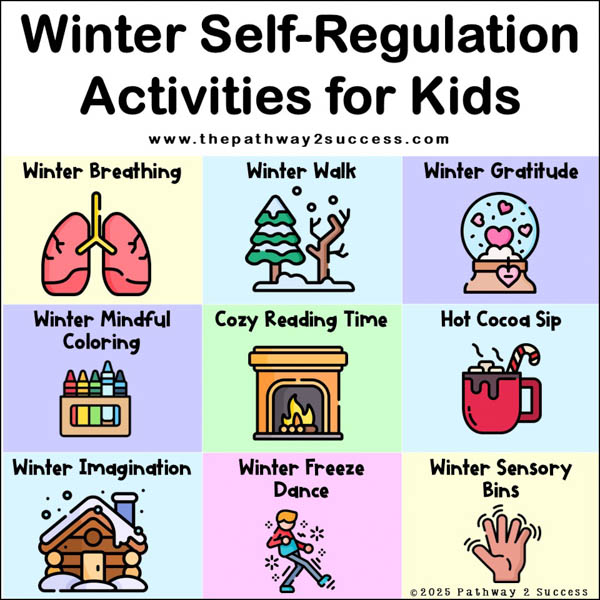
1. Winter Breathing Activities
What it is: Deep, mindful breathing exercises integrated with winter imagery to help calm the body and mind.
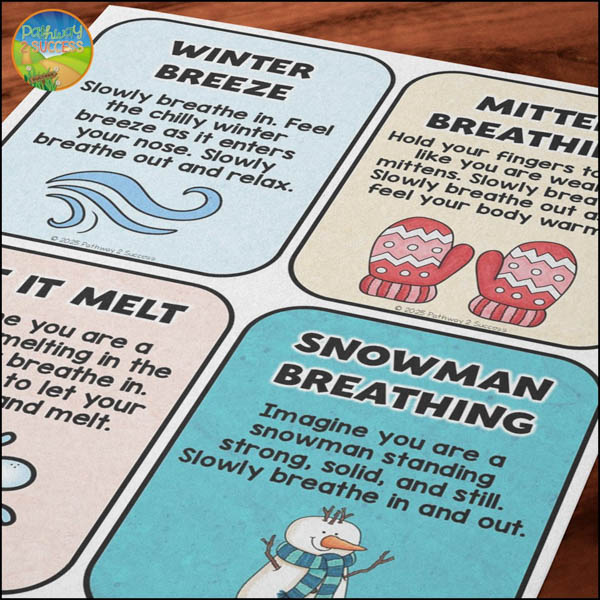
Implementation: Mindful breathing acts as an internal pause button. Instead of reacting impulsively to emotional triggers, children learn to focus on intentional inhales and exhales. Exercises can involve visualizing blowing out a cold winter wind, melting an imaginary icicle with warm breath, or tracing the points of a paper snowflake while breathing in and out.
Why it works: Focusing on the breath directly stimulates the vagus nerve, activating the parasympathetic nervous system to induce physical and mental relaxation, lower blood pressure, and restore cognitive clarity.
2. Outdoor Nature Walk
What it is: An exploratory excursion focused on active sensory engagement with the winter environment.
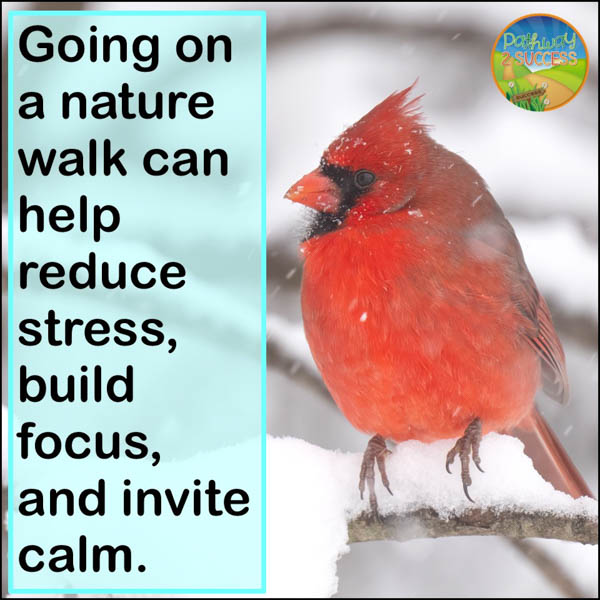
Implementation: Establish clear safety and behavioral expectations before heading outside. Once bundled up, encourage children to engage all five senses: noticing the crunch of frozen ground beneath their boots, the sharp chill of the breeze, the sight of bare tree branches against a pale sky, and the crisp winter air. Follow up the walk with a reflection or writing circle to process their observations.
Why it works: Spending time in nature reduces stress hormones, sharpens attention spans, and elevates mood. Furthermore, outdoor winter walks secure vital exposure to natural daylight and encourage essential physical movement.
3. Winter Gratitude Practices
What it is: Intentional reflection focused on appreciating the unique positive aspects of the winter season.
Implementation: Initiate a group discussion or journaling exercise centered on winter-specific blessings—ranging from cozy hot cocoa and family gatherings to the stark beauty of a snow-covered landscape. Utilize structured sentence starters to help children dig deeper beyond superficial answers, encouraging them to articulate sensory gratitudes, such as the feeling of warm sunlight on a cold morning.
Why it works: Gratitude exercises purposefully rewire neural pathways to focus on positive stimuli. Scientific literature links regular gratitude practices to reduced anxiety, enhanced emotional resilience, and improved sleep quality.
4. Mindful Winter Coloring
What it is: Artistic engagement utilizing winter-themed coloring pages paired with positive self-talk statements.
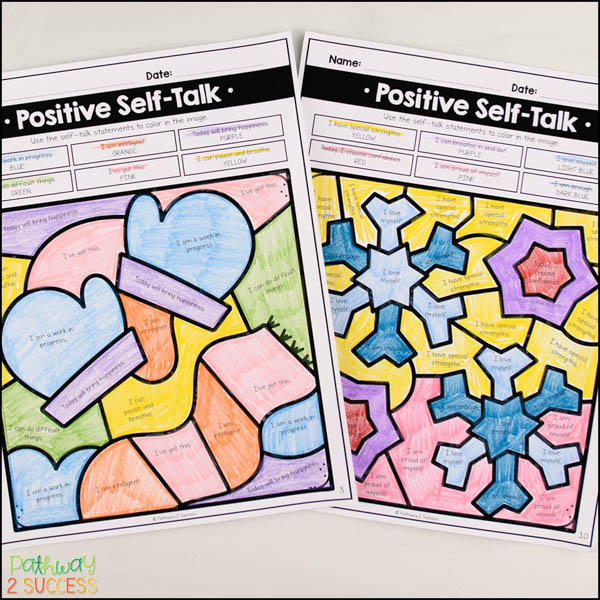
Implementation: Distribute coloring sheets featuring winter imagery alongside colored pencils, crayons, or gel pens. Instruct children that the objective is not artistic perfection, but rather the process of slowing down, breathing, and centering their thoughts.
Why it works: Coloring serves as an active meditation. Because it combines fine motor engagement with gentle focus, it provides an effective calming outlet for children who find stationary silence or traditional meditation difficult.
5. Cozy Reading Time
What it is: A dedicated period of immersive reading designed to promote stillness and social-emotional connection.
Implementation: Create a warm, inviting atmosphere—perhaps by displaying a digital fireplace video—and allow children to choose between independent reading or a group read-aloud. Shared read-alouds offer the added benefit of co-regulation, where children synchronize their emotional states with a calm group rhythm.
Why it works: Immersion in a compelling narrative lowers heart rates, eases muscle tension, and builds empathy, providing a healthy mental sanctuary from daily stressors.
6. Winter Sensory Bins
What it is: Tactile, hands-on exploration using containers filled with winter-inspired materials.
Implementation: Fill large bins with safe, sensory-rich items such as cotton balls (representing snow), pinecones, artificial snow, smooth ice-blue glass gems, and miniature winter figurines. Allow children to freely explore the textures through unstructured play or guided storytelling prompts.
Why it works: Tactile play grounds children in the present moment through proprioceptive and tactile feedback, effectively channeling restless physical energy into focused, calming concentration.
7. Hot Cocoa Sip
What it is: A sensory-mindfulness exercise centered on the deliberate consumption of a warm beverage.
Implementation: Serve warm cups of hot cocoa (or any preferred beverage). Instruct children to hold the mug to feel its warmth, inhale the rich aroma, and take exceedingly slow, intentional sips, pausing between each one to fully experience the flavors and sensations.
Why it works: By anchoring attention in the immediate sensory experience of taste, smell, and touch, children interrupt cycles of anxious rumination. Simultaneously, warm liquids provide physical comfort that signals the central nervous system to decompress.
8. Winter Imagination and Visualization
What it is: Guided mental imagery journeys exploring serene, cold-weather landscapes.
Implementation: Guide children to close their eyes and walk them through a peaceful mental visualization—such as sitting by a cozy cabin window watching snowflakes fall gently in a quiet forest, or walking through a sparkling, sunlit snowscape. Use sensory prompts to engage their imagination regarding sight, sound, and touch.
Why it works: Visualization leverages the brain’s capacity to simulate experiences, effectively tricking the nervous system into achieving a state of physiological calm and psychological safety.
9. Winter Crafts and Hands-On Creation
What it is: Creative, structured art projects centered around winter themes.
Implementation: Provide craft supplies for children to build items like paper snowflakes, winter animal dioramas, or textured snow globes. Allow varying degrees of creative freedom while encouraging students to manage frustration when their projects encounter physical snags.
Why it works: Crafting engages fine motor coordination and creative problem-solving within a structured framework, requiring sustained attention that naturally regulates emotional volatility.
10. Winter Music, Freeze Dance, and Movement
What it is: Auditory mindfulness paired with dynamic movement games to build self-control.
Implementation: Play gentle, instrumental winter-themed music during independent work sessions to cultivate a serene classroom environment. Alternatively, convert the concept into a playful "Winter Freeze Dance," where children dance to music and must instantly freeze in place upon hearing specific winter vocabulary words (such as "blizzard" or "icicle").
Why it works: Music directly impacts the autonomic nervous system to reduce stress. Meanwhile, freeze games explicitly train inhibitory control—the cognitive muscle required to stop an action mid-motion—which is a core pillar of executive functioning.
Official Statements and Expert Perspectives
Child development specialists and educational authorities continue to emphasize the integration of Social-Emotional Learning (SEL) into everyday winter curricula.
Dr. Elena Vance, a leading developmental psychologist specializing in childhood self-regulation, notes:
"We frequently underestimate how deeply environmental shifts impact a child’s internal landscape. When winter strips away spontaneous outdoor play and inundates children with the sensory pressures of the holiday season, their brains register a subtle state of siege. Interventions do not need to be clinical or intimidating; simple, joyful rituals like mindful breathing with hot cocoa or structured sensory play can completely alter a child’s neurological trajectory for the day, steering them away from behavioral dysregulation and back toward baseline calm."
Furthermore, school administrators across various districts report that incorporating movement-based mindfulness and tactile activities during the high-stress post-holiday period has yielded noticeable improvements in classroom climate, academic engagement, and peer-to-peer conflict resolution.
As educational institutions and parenting philosophies evolve to place greater emphasis on holistic child development, the understanding of self-regulation is shifting from a punitive compliance model to a supportive, neurological framework. The strategies outlined for the winter season are not merely quick fixes for seasonal behavioral spikes; they represent foundational blocks for lifelong emotional intelligence.
Looking ahead, experts advocate for the permanent integration of daily mindful check-ins, sensory-friendly spaces, and movement breaks into standard educational and domestic environments. By normalizing discussions around emotional management and equipping children with practical, enjoyable tools like winter breathing exercises, mindful coloring, and sensory exploration, communities are laying the groundwork for a more resilient, focused, and emotionally balanced generation. Winter, once viewed strictly as a season of confinement and behavioral friction, can thus be reclaimed as a powerful opportunity for growth, introspection, and connection.