
EXECUTIVE OVERVIEW
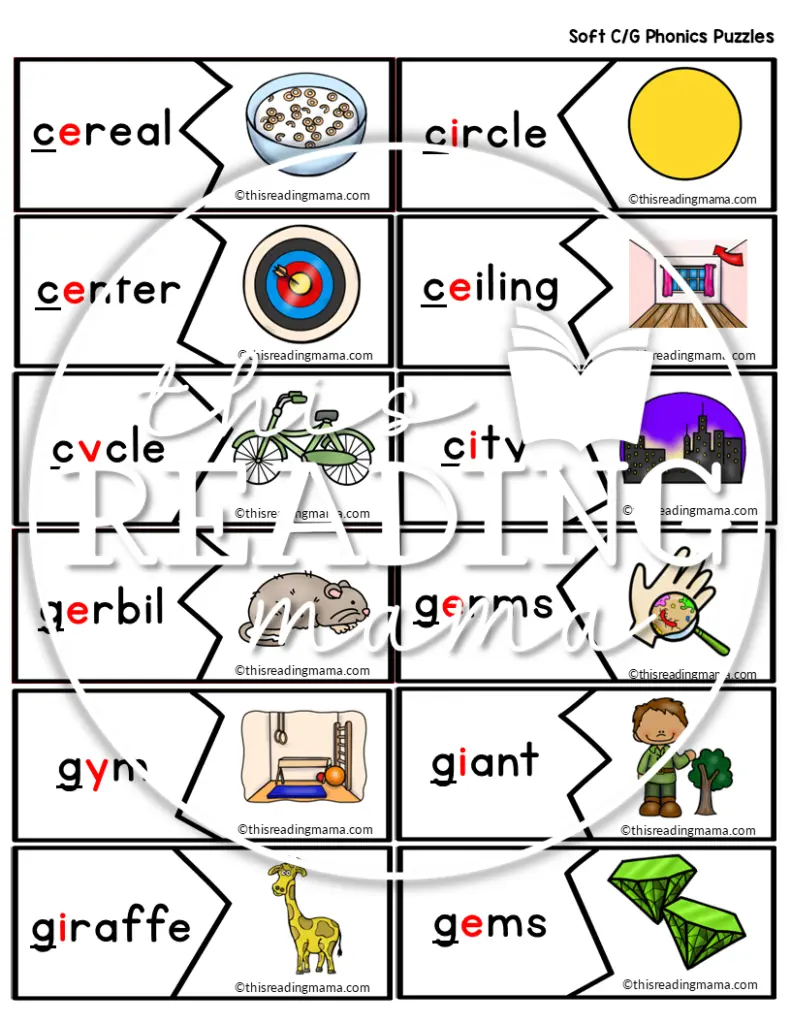
In the ongoing evolution of elementary education and evidence-based reading instruction, few hurdles prove as persistent—or as vital to conquer—as the mastery of English spelling generalizations. Among these, the duality of the letters c and g stands out as a frequent stumbling block for early readers. To bridge the gap between abstract phonetic rules and engaging, interactive classroom practice, literacy specialist and educator Becky has released a comprehensive new set of instructional materials: the Soft C and G Phonics Puzzles.
Designed to support educators, reading specialists, and homeschooling parents, this newly introduced resource targets a foundational phonics concept that often perplexes young learners. By transforming a complex spelling rule into tactile, puzzle-based gameplay, the resource aims to solidify decoding and encoding skills without the fatigue often associated with rote memorization. This executive overview explores the pedagogical mechanics behind the release, the linguistic theories governing soft letter sounds, the broader implications for structured literacy curricula, and how educators can immediately integrate these tools into their daily instructional frameworks.
1. Executive Overview: Decoding the Confusion of Hard and Soft Consonants
English is a notoriously complex orthographic landscape. Unlike shallower orthographies—such as Spanish or Finnish, where grapheme-phoneme correspondences are largely consistent—English is a deep orthography shaped by historical layers of Germanic, Latinate, and Old French influences. Consequently, individual letters frequently assume multiple phonetic identities depending on their structural environment within a word.
The letters c and g are prime examples of this linguistic versatility. When young learners first encounter the alphabet, they typically master the primary, "hard" sounds associated with these consonants: the crisp /k/ sound heard in cat and the guttural /g/ sound heard in goat. However, as their vocabulary expands, children quickly realize that these familiar friends cannot always be trusted to make the same sounds.

Words like city, nice, giraffe, and age introduce alternative pronunciations—the soft /s/ and the soft /j/—which can derail an emerging reader’s fluency and comprehension if they lack a clear guiding rule. The new Soft C and G Phonics Puzzles provide a targeted, hands-on intervention designed to demystify this phonetic transition, ensuring that students do not just memorize words, but truly understand the underlying architectural patterns of the English language.
2. Detailed Chronology: The Evolution of Phonics Instruction and the Birth of the Puzzles
To understand the significance of this new release, it is helpful to trace the chronological evolution of how phonics has been taught in classrooms over the past several decades, leading up to the current emphasis on the Science of Reading.
The Shift Toward Structured Literacy
For years, the pendulum of reading education swung wildly between whole-language approaches and explicit phonics instruction. By the late 2010s and early 2020s, a massive body of cognitive science—collectively known as the Science of Reading—overwhelmingly validated the necessity of explicit, systematic phonics instruction. Educators recognized that guessing words based on pictures or context clues failed struggling readers, particularly those with dyslexia or other reading difficulties.
Within a structured literacy framework, concepts must be taught sequentially, moving from simple to complex. Hard consonant sounds are traditionally introduced in early kindergarten or first grade. Soft consonant generalizations, however, typically emerge in late first grade or second grade once students have mastered basic short and long vowel patterns.
Identifying the Instructional Gap
Despite the clarity of the rules governing soft c and g, educators frequently noted a lack of engaging, low-prep materials that allowed students to practice these specific skills independently. Worksheets often felt tedious, while digital games sometimes lacked the tactile manipulation required for deep cognitive retention.

Recognizing this gap, curriculum developers began experimenting with puzzle-based formats that combined visual matching with phoneme-grapheme mapping. The culmination of this developmental timeline is the release of the Soft C and G Phonics Puzzles. By integrating visual art, tactile puzzle assembly, and explicit rule reinforcement, these puzzles represent a modern evolution in multisensory literacy tools designed for contemporary classrooms and home-learning environments.
3. Supporting Context & Metrics: The Linguistics of Soft "C" and "G"
To properly utilize the new puzzles, educators must thoroughly understand the linguistic mechanics and phonetic generalizations that govern soft c and g sounds.
Defining Hard vs. Soft Sounds
- Hard C: Represents the voiceless velar plosive sound /k/, as heard in cat, cup, and coat.
- Soft C: Represents the voiceless alveolar sibilant sound /s/, as heard in city, cent, and nice.
- Hard G: Represents the voiced velar plosive sound /g/, as heard in goat, gum, and game.
- Soft G: Represents the voiced postalveolar affricate sound /j/ (often spelled as dge or g), as heard in giraffe, gem, and age.
The Governing Phonics Generalization
How do readers know when to deploy the hard sound versus the soft sound? The guiding phonics rule is remarkably reliable:
When the letter c or g is immediately followed by the vowels e, i, or y, they typically make their soft sounds.
This generalization can be encapsulated by the linguistic shorthand often taught to elementary students: "E, I, Y, soften C and G." When c or g is followed by any other letter—particularly the back vowels a, o, and u, or any consonant—they retain their hard sounds.

Notable Exceptions
In linguistics, rules are rarely absolute, and English is notorious for its historical exceptions. When teaching soft c and g, educators must prepare students for words that break the pattern. Notable everyday exceptions include:
- Gift: Starts with a g followed by an i, yet retains the hard /g/ sound.
- Girl: Starts with a g followed by an i, yet maintains the hard /g/ sound.
- Geese: Contains a soft g in the first syllable, but the underlying root and historical Germanic origins explain structural variations.
- Get, Give, Gear: Common words where g is followed by e or i but maintains a hard sound due to Old Norse etymological roots.
Acknowledging these exceptions prevents student frustration and highlights the fascinating historical evolution of the English lexicon.
4. Official Statements and Pedagogical Perspectives
The release of the Soft C and G Phonics Puzzles has drawn enthusiastic commentary from educators, reading specialists, and curriculum designers who advocate for evidence-based literacy practices.
"When children encounter a word like ‘city’ for the first time, their instinct is often to pronounce it with a hard ‘c’ because that is what they learned first," explains Becky, creator of the resource and veteran literacy advocate. "Our goal with these puzzles is to make the transition to soft sounds intuitive. By giving students a physical, interactive way to match the spelling patterns with the corresponding sounds, we bridge the gap between cognitive theory and joyful classroom practice."
Educational psychologists emphasize that multisensory learning—engaging visual, auditory, and kinesthetic pathways simultaneously—greatly enhances memory consolidation in the developing brain. Puzzle assembly requires spatial reasoning and pattern matching, which activates different neural circuits than traditional writing or reading alone.
Furthermore, reading interventionists have praised the resource for its compatibility with Orton-Gillingham and other structured literacy approaches. Because the puzzles isolate specific phonetic rules without extraneous distractions, they serve as an ideal station activity for small-group instruction, targeted interventions, or independent practice centers.
5. Future Outlook: Integrating Puzzles into Modern Literacy Curricula
As educational paradigms continue to shift toward rigorous, evidence-based literacy instruction, the demand for high-quality, supplemental resources will only increase. The introduction of tools like the Soft C and G Phonics Puzzles points toward a broader trend in educational publishing: the democratization of professional-grade teaching aids.
The Role of Supplemental Materials in Modern Classrooms
Teachers today face unprecedented challenges, balancing diverse learning needs, recovering from pandemic-era learning loss, and adhering to strict curricular pacing guides. In this environment, low-prep, high-impact resources are invaluable. Puzzles, games, and manipulative-based activities allow educators to differentiate instruction seamlessly, providing extra scaffolding for struggling readers while offering engaging enrichment for advanced learners.
Expanding the Toolkit
In addition to the puzzles, educators utilizing these materials frequently pair them with comprehensive companion resources, such as No Prep Hard and Soft C and G Pages, to reinforce learning through varied modalities. Looking ahead, experts predict that successful literacy programs will increasingly rely on a blended ecosystem of explicit teacher-led instruction, interactive physical manipulatives, and digital tracking tools.
Conclusion
Mastering the intricacies of English orthography is a journey that requires patience, precision, and the right tools. By demystifying the rules governing soft c and g, resources like the newly released phonics puzzles empower a new generation of readers to approach unfamiliar words with confidence and analytical skill. As educators continue to embrace structured, multisensory teaching methods, these hands-on puzzles will undoubtedly remain a staple in classrooms and homes dedicated to cultivating lifelong, proficient readers.

