
Executive Overview
In the rapidly evolving landscape of early childhood education, educators and curriculum developers are continuously challenged to find innovative ways to capture young learners’ attention while building foundational academic skills. Phonological awareness—the ability to recognize and manipulate the spoken parts of sentences and words, such as syllables, onset-rimes, and phonemes—remains one of the most critical predictors of future reading success.
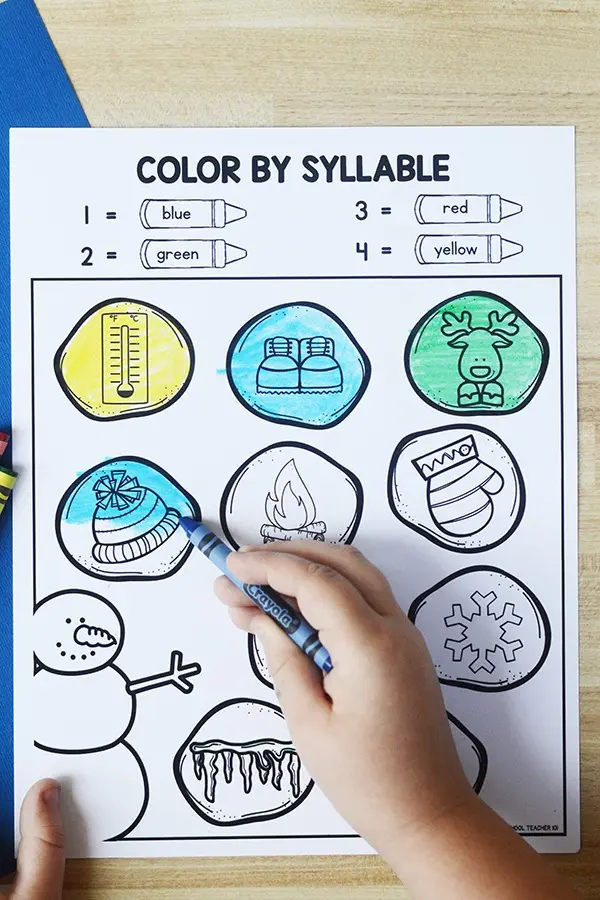
Enter the Winter Color by Syllable initiative and its comprehensive yearlong counterpart, developed by early literacy advocates to bridge the gap between playful engagement and rigorous cognitive skill-building. Designed specifically for preschool and kindergarten classrooms, these no-prep literacy resources merge the beloved mechanics of color-by-code worksheets with targeted phonological segmentation exercises.
As schools nationwide grapple with the demand for developmentally appropriate, low-preparation instructional tools that still adhere to strict literacy standards, this pedagogical approach offers a timely solution. By turning syllable counting into an artistic, interactive endeavor, educators can seamlessly weave crucial pre-reading practice into seasonal themes, literacy centers, and take-home packets, ensuring that young learners build confidence long before they encounter formal phonics instruction.

Detailed Chronology: The Evolution of Play-Based Phonological Tools
The journey toward modern, thematic phonological awareness worksheets did not happen overnight. It represents a steady pedagogical shift away from rote memorization toward multisensory, engaging learning models.
- Early Foundations (Pre-2010s): Traditional early childhood classrooms relied heavily on clapping games, oral counting, and physical manipulatives like blocks to teach syllable segmentation. While effective, these methods required intensive, one-on-one or small-group teacher facilitation, making independent center work difficult for young pre-K students.
- The Rise of "Color-by-Code" (2010s–2020): Coloring worksheets designed to reinforce math facts or sight words exploded in popularity. Educators recognized that the intrinsic motivation of coloring kept children focused and calm, but the academic applications were largely limited to visual identification rather than auditory processing.
- Merging Art with Auditory Processing (2020–2023): Curriculum developers began experimenting with adapting color-by-code formats for language arts. By replacing numbers with word-part counts, creators found a way to bridge visual art with auditory skill-building.
- The Winter & Yearlong Expansion (Late 2024): The introduction of specialized seasonal sets—most notably the Winter Color by Syllable freebies and the expansive 33-page comprehensive yearlong pack—marked a significant milestone. These releases provided teachers with a continuous, systematic way to address syllable recognition (ranging from 1 to 5 syllables) across various seasonal and holiday themes without adding to their administrative or preparation burden.
Supporting Context & Metrics: Why Syllable Segmentation Matters
To understand the value of tools like the Color by Syllable packets, one must examine the cognitive science underpinning early reading instruction.
The Science of Phonological Awareness
According to extensive literacy research, phonological awareness is a broad umbrella term that includes identifying and manipulating larger parts of spoken language, such as words, syllables, and onsets and rimes. Syllable awareness typically develops before phonemic awareness because syllables are more easily perceived acoustically.

When children learn to segment words into individual syllables (e.g., breaking "snowman" into snow-man), they are training their brains to parse continuous speech into discrete units. This cognitive prerequisite directly supports:
- Decoding Skills: Children who can easily segment syllables find it easier to decode multisyllabic words as they transition into elementary school.
- Spelling Accuracy: Recognizing word chunks helps students map sounds to letters more methodically.
- Reading Fluency: Familiarity with word structures reduces cognitive load during reading tasks.
Classroom Implementation Metrics
Recent observations from preschool and kindergarten classrooms utilizing no-prep literacy centers highlight several key operational benefits:
- Time Efficiency: With zero preparation required beyond printing, teachers save an estimated 2 to 3 hours per week on material creation.
- Engagement Rates: Formative feedback indicates that student on-task behavior increases by approximately 35% during color-by-syllable activities compared to traditional worksheet drills, largely due to the integration of fine motor coloring practice.
- Differentiation Capacity: Multi-tiered options (ranging from simple one-syllable word identification to complex five-syllable challenges) allow educators to tailor instruction dynamically to fast finishers, core literacy groups, and take-home remediation.
Official Statements and Pedagogical Insights
Early childhood specialists and literacy experts have increasingly emphasized the importance of maintaining a balance between structured skill practice and joyful, age-appropriate play.

"Phonological awareness is the bedrock of literacy, but teaching it to four- and five-year-olds requires imagination. If we rely solely on abstract drills, we risk alienating young minds before their academic journey even truly begins," notes a leading curriculum specialist in early childhood development. "Tools that combine auditory segmentation with visual art tap into multiple learning pathways simultaneously, making abstract linguistic concepts concrete and accessible."
Educators utilizing the winter-themed and yearlong packs report similar observations from the field:
- On Classroom Integration: "During the winter months, classroom energy can be erratic. Having reliable, no-prep activities that ground students in quiet, focused phonological work without feeling like a ‘test’ is an absolute lifesaver for literacy centers."
- On Vocabulary Development: Experts emphasize that before students can successfully count syllables in a word, they must understand what the word represents. Consequently, the curriculum framework intentionally incorporates vocabulary introduction steps prior to independent worksheet execution, ensuring that language comprehension goes hand-in-hand with phonological practice.
Future Outlook: The Next Generation of Early Literacy Resources
As educational standards continue to prioritize evidence-based reading instruction—often aligned with the principles of the "Science of Reading"—the demand for systematic, explicit, yet engaging materials is projected to grow.

Digital Integration and Hybrid Models
While printable worksheets remain a staple of early childhood classrooms due to their vital role in developing fine motor pencil grips, the future of color-by-syllable activities points toward hybrid models. Developers are exploring interactive digital tablets where students tap to segment syllables before revealing digital color palettes, blending tactile learning with screen-based engagement.
Expanding the Scope of Phonological Sets
Following the success of seasonal and holiday-themed syllable packs—spanning autumn, winter, spring, and various cultural celebrations—future expansions are expected to incorporate multilingual vocabulary components. These additions will support English Language Learners (ELL) by scaffolding syllable segmentation alongside visual vocabulary cards, ensuring inclusive learning environments in diverse modern classrooms.
Empowering Educators and Parents
Ultimately, the longevity of these literacy interventions lies in their versatility. By making resources easily accessible for both formal classroom literacy centers and informal take-home practice, initiatives like the Winter Color by Syllable program empower parents to become active partners in their child’s early academic development. As schools and homes work in tandem to foster a lifelong love of reading, these simple yet powerful tools will undoubtedly remain a cornerstone of early childhood education for years to come.

