
Executive Overview
In a decisive move that signals a rapid convergence of consumer appliance manufacturing and advanced physical AI, LG Electronics hosted senior NVIDIA officials at its newly established robot Data Factory in Seoul on August 18, 2026. This high-profile visit comes mere days after LG Group and NVIDIA inked a memorandum of understanding (MOU) for strategic cooperation at NVIDIA’s Santa Clara headquarters on August 13, 2026.
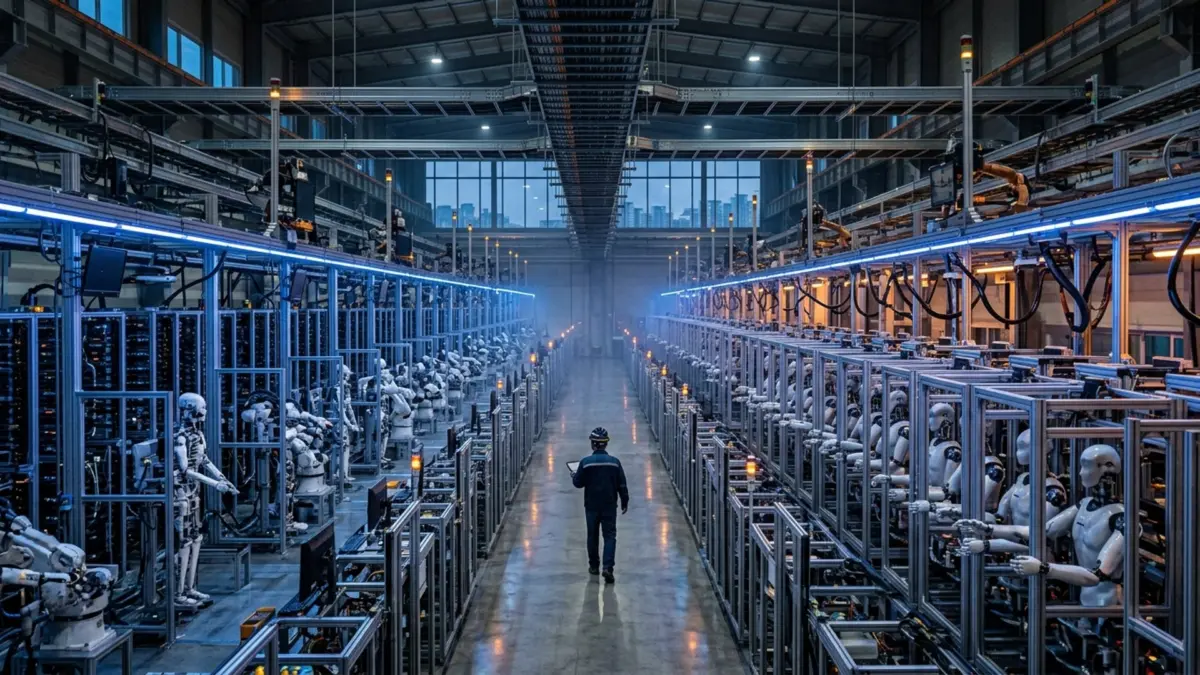
The velocity of this partnership underscores a broader transformation within the South Korean conglomerate. LG is aggressively positioning 2026 as the inaugural year of a sweeping, companywide robotics pivot. This strategic evolution spans from industrial-grade manufacturing systems to sophisticated home humanoids. At the heart of this initiative is the Yangjae Data Factory—a dedicated, four-story, 10,000-square-meter facility designed to serve as a hyper-specialized "gymnasium" for intelligent machines.
By leveraging NVIDIA’s cutting-edge physical AI ecosystem—including Omniverse libraries, Cosmos world models, and the Isaac development platform—alongside LG’s decades of manufacturing and component expertise, the two corporate giants are building an operational data flywheel. With an ambitious target of accumulating 100,000 hours of robot training data by the end of 2026, LG is systematically compressing roughly 12 years of real-world operational experience into a compressed, high-velocity development cycle. This infrastructure is engineered to feed LG’s proprietary Robot Foundation Model, laying the groundwork for the commercial rollout of next-generation bipedal humanoids and autonomous commercial systems.
Detailed Chronology: From Silicon Valley MOU to Seoul Facility Review
The timeline of the LG-NVIDIA alliance highlights an unprecedented pace of execution. Rather than lingering in prolonged bureaucratic negotiations, both organizations have moved from high-level strategic alignment to physical implementation in under a week.
August 13, 2026: The Santa Clara Agreement
The foundational framework of the collaboration was formally established at NVIDIA’s headquarters in Santa Clara, California. Executives from LG Group and NVIDIA signed an MOU explicitly focused on accelerating physical AI integration across LG’s vast manufacturing, logistics, and consumer electronics ecosystems. The agreement united NVIDIA’s world-class simulation tools and neural network architectures with LG’s deep-seated hardware engineering capabilities, setting the stage for joint development in robotics infrastructure.
August 18, 2026: The Yangjae Data Factory Inspection
Just five days later, the partnership transitioned from abstract strategy to tangible infrastructure. Senior NVIDIA officials toured LG’s under-construction robot Data Factory at the Yangjae R&D Campus in Seoul. During this visit, leadership teams reviewed live testing environments, assessed data pipelines, and evaluated how the facility’s multi-tiered layout will support the rapid deployment of autonomous systems. This rapid site review underscored both companies’ commitment to immediate operational execution, ensuring that software development and physical training environments evolve in lockstep.
July–December 2026: Structural Reorganization and 2026 Roadmaps
This partnership does not exist in a vacuum; it is backed by an internal corporate overhaul. In July 2026, LG established a dedicated Robotics Business Center reporting directly to the CEO. This centralized unit holds cross-group oversight, synchronizing robotics initiatives across LG Electronics, LG CNS, and LG Innotek. With the Yangjae facility slated for full operational capacity by the end of 2026, the company is hurtling toward its year-end performance metrics, chief among them the generation of 100,000 training hours.
Supporting Context & Metrics: Inside the Yangjae Data Factory
To understand how LG plans to revolutionize its robotics pipeline, one must examine the architecture of the Yangjae Data Factory. Spanning four floors and 10,000 square meters of floor space, the facility is meticulously partitioned to simulate diverse operational environments. By the end of 2026, LG expects the building to house several hundred robots operating simultaneously.
Specialized Training Environments
The Data Factory functions as a controlled ecosystem where robots execute repetitive tasks until generated datasets achieve the cleanliness and fidelity required for machine learning.
- Domestic Simulation Zones: Utilizing LG’s self-developed CLOiD home robots at scale, these rooms replicate real-world residential layouts. CLOiD units practice household maintenance, cleaning routines, and object manipulation on an endless loop.
- Industrial and Logistics Testbeds: Modeled directly after LG’s advanced washing machine manufacturing plant in Tennessee, these zones test heavy-duty material handling. Autonomous mobile robots and articulated arms practice moving, stacking, and assembling complex mechanical parts.
- Specialized Sub-Unit Contributions: LG CNS handles complex logistics automation workflows within the building, optimizing fleet management and route planning. Concurrently, LG Innotek operates a dedicated wing focused entirely on the fine-motor training of robotic hands and tactile sensors.
The Data Flywheel and NVIDIA’s AI Stack
Raw data harvested across these environments is instantly channeled into NVIDIA’s robust robotics stack. The integration relies on three foundational pillars:
- NVIDIA Omniverse: Provides physically accurate simulation environments where robot behaviors can be tested in virtual space before physical execution.
- NVIDIA Cosmos World Models: Generates and augments synthetic data, allowing researchers to simulate rare edge cases, lighting variations, and physical anomalies that are difficult to replicate organically.
- NVIDIA Isaac Development Platform: Serves as the computational backbone for perception, navigation, and manipulation algorithms.
This integration forms a closed-loop "data flywheel": robots generate real-world operational data; NVIDIA’s stack processes and augments this data to train superior foundation models; improved models enhance robot utility; and the refined units generate even higher-quality data.
The 100,000-Hour Target and Robot Foundation Models
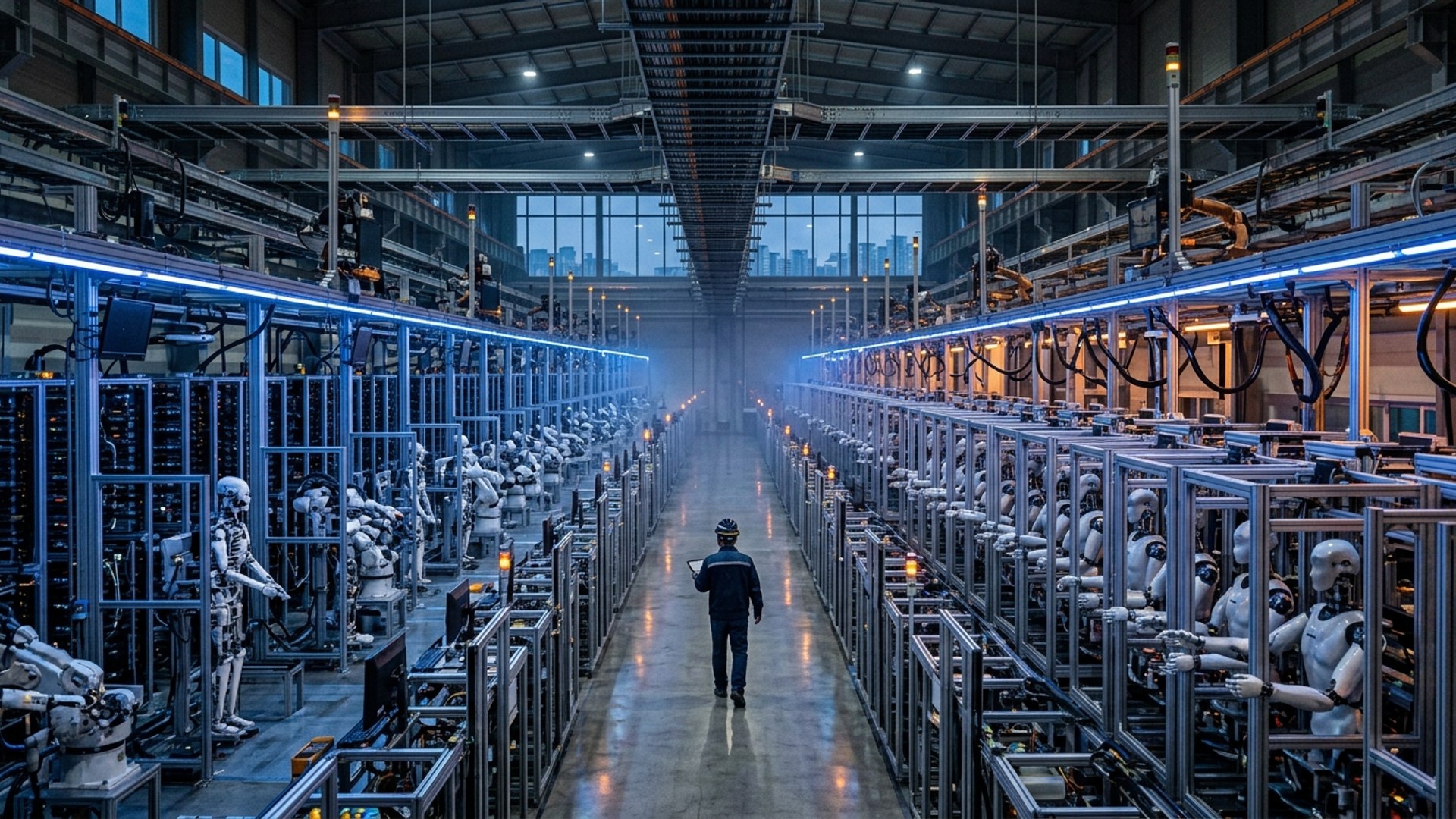
Achieving scale in physical AI requires massive datasets that reflect the unpredictable nature of the physical world. LG’s benchmark for the Yangjae facility—100,000 hours of training data by the conclusion of 2026—represents a monumental leap in data acquisition.
Compressing Time Through Simulation and Scale
By combining real-world telemetry from physical robots with synthetic data generated via NVIDIA Cosmos, LG is effectively compressing roughly 12 years of continuous operational experience into a few short months. This high-throughput data collection directly feeds LG’s Robot Foundation Model.
Just as Large Language Models (LLMs) revolutionized natural language processing by ingesting vast corpora of text, robot foundation models act as centralized, general-purpose neural architectures. Instead of programming a robot for every single distinct action, a foundation model equips the machine with a generalized understanding of physics, spatial reasoning, and object affordances. This core intelligence can then be fine-tuned for specialized domestic or industrial applications with minimal friction.
The Path to Bipedal Humanoids
The partnership extends far beyond data processing infrastructure. Industry reports and official disclosures indicate that LG is actively exploring NVIDIA’s Isaac GR00T foundation model to power its upcoming line of home robots and modular platforms. This collaboration is set to culminate in the joint development of reference robots, highlighted by LG’s anticipated public unveiling of a next-generation bipedal humanoid built on Isaac GR00T in the first quarter of 2027.
Furthermore, LG brings formidable in-house hardware expertise to the table. Beyond software integration, the company possesses decades of manufacturing mastery and proven capabilities in developing core robotic components, most notably high-precision actuators—the mechanical muscles that dictate fluid, human-like motion.
Official Statements and Strategic Vision
The transition from a home appliance manufacturer to an integrated robotics and physical AI solutions provider represents a monumental corporate pivot. Leadership from both organizations has emphasized the transformative nature of this alliance.
Lyu Jae-cheol, CEO of LG Electronics, captured the essence of the company’s internal synergy and external partnerships during the recent executive briefings:
"Through the synergy built on ‘One LG’—bringing together core capabilities across the Group—and strategic collaboration with global partners, we will secure our competitiveness in physical AI and become a comprehensive robotics solutions provider."
By unifying the sprawling divisions of the LG Group—encompassing consumer electronics, logistics automation, component manufacturing, and enterprise software—under a single administrative umbrella, the company has eliminated traditional corporate silos. This cohesive approach ensures that innovations developed within the Yangjae Data Factory can be rapidly scaled across global manufacturing hubs and consumer markets alike.
Future Outlook
As the Yangjae Data Factory barrels toward its full operational launch by the end of 2026, the immediate horizon is defined by concrete milestones.
For LG’s CLOiD robots—currently transitioning toward production-line validation in Tennessee—the Seoul facility represents the missing physical link between research concept and commercial deployment. The convergence of LG’s mechanical hardware prowess with NVIDIA’s simulation and AI infrastructure signals a mature phase in commercial robotics.
The upcoming months will test whether this high-velocity data flywheel can successfully yield a robust Robot Foundation Model capable of powering complex, untethered humanoid systems. If LG and NVIDIA achieve their ambitious 100,000-hour training milestone by year’s end, the anticipated Q1 2027 debut of LG’s bipedal humanoid may well mark a watershed moment in the commercialization of physical AI—transforming the household appliance giant into a dominant force in autonomous robotics.

