
Executive Overview
In the high-stakes landscape of modern education, instructional coaching and professional development are widely positioned as the primary vehicles for driving classroom innovation and school improvement. However, anyone who has ever stepped into the role of a school leader or instructional coach knows the friction that frequently emerges when trying to implement change. Teachers are often asked to overhaul curricula, adopt novel pedagogical frameworks, or alter long-standing classroom management styles. When met with pushback—ranging from subtle foot-dragging to vocal skepticism—coaches and administrators have historically diagnosed the issue as a personal deficit within the educator. Terms like "resistant to change," "set in their ways," and "unwilling to innovate" have long dominated administrative shorthand.
Enter acclaimed educator, author, and consultant Elena Aguilar. In her influential ninth book, How to Coach Resistance: Turning Pushback Into Possibility, Aguilar upends conventional educational wisdom. She posits that resistance is not an isolated character flaw inherent to a stubborn teacher, but rather a dynamic, bidirectional emotional exchange. According to Aguilar, the very people attempting to guide change—coaches, professional development (PD) providers, and team leaders—frequently contribute to, and sometimes inadvertently exacerbate, the very resistance they are trying to eliminate.
By analyzing the emotional currents running beneath the surface, identifying true developmental gaps rather than defaulting to assumptions of "low will," and recognizing that some pushback is entirely righteous and justified, Aguilar provides a transformative blueprint. This article explores Aguilar’s insights, dissects her foundational frameworks—including the ACE process and the Gaps Framework—and outlines a pathway for instructional leaders to shift from coercive compliance to authentic partnership.
Detailed Chronology of an Interpersonal Dynamic
To understand how instructional coaching relationships derail, one must examine the typical chronology of a pushback event. Historically, the lifecycle of a coaching conflict follows a predictable, escalating timeline:
- The Catalyst: A school leadership team or instructional coach introduces a new initiative, curriculum, or instructional mandate aimed at boosting student outcomes.
- The Initial Friction: A teacher expresses hesitation, asks critical questions, or states that a particular mandate will not work for their specific student demographic.
- The Defensive Reaction: Rather than exploring the root cause of the hesitation, the coach or administrator doubles down on the initiative, citing institutional goals, research data, or administrative expectations.
- The Escalation: The teacher feels unheard, dismissed, or professionally degraded, leading to hardened defensiveness. The coach, feeling undermined or blocked from meeting their coaching metrics, perceives the teacher as recalcitrant and uncooperative.
- The Impasse: A complete breakdown of trust occurs, resulting in performative compliance at best or outright alienation at worst.
Aguilar challenges this traditional timeline by reframing the interaction not as a tennis match where one player hits a ball against a brick wall, but as an arm-wrestling match fueled by mutual pressure. "What we experience as resistance is actually the dynamic between two people," Aguilar explains. Both parties enter the arena driven by underlying fears: the teacher fears exposure, failure, or an unmanageable workload; the coach fears professional inadequacy, project failure, or an inability to deliver results to upper management.

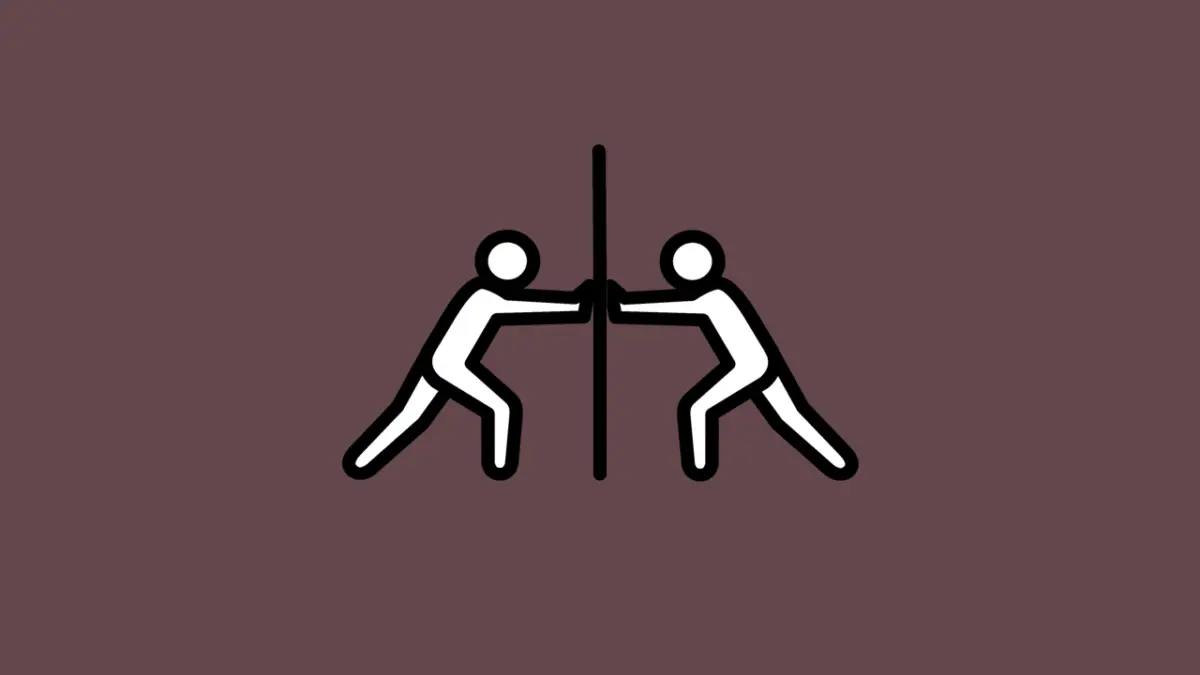
To break this cycle, Aguilar offers a disarmingly simple visual metaphor: two hands pushing against each other. The pressure is a byproduct of both individuals exerting force. "If you don’t want to experience resistance, drop your hand," she advises. "Stop exerting your own pressure against their pressure." Dropping the hand does not mean capitulating, lowering standards, or agreeing with every objection. Instead, it means replacing coercion with curiosity. By suspending the urge to argue and choosing to investigate the teacher’s perspective, the coach fundamentally alters the relational chemistry, transforming a positional battle into a collaborative dialogue.
Supporting Context & Frameworks: Decoding the Classroom Reality
To operationalize this philosophy of curiosity, Aguilar has developed structured analytical tools that help educational leaders diagnose what is truly happening beneath the surface of a difficult interaction. These frameworks move coaching away from guesswork and ground it in empathy and systemic analysis.
1. The ACE Framework: Addressing the Emotional Substratum
When a coach drops their hand and listens, they invariably encounter strong emotions. Left unaddressed, these emotions act as a barrier to professional growth. Aguilar’s ACE framework offers a three-step methodology for navigating this emotional terrain:
- Acknowledge Emotions: Coaches do not need formal clinical training to validate human feelings. By pausing before diving into problem-solving, a coach can name underlying emotional states—such as fear, shame, or distress—and check for accuracy. Simple framing, such as, "It sounds like there’s some anxiety about rolling out this new unit; does that feel accurate to you?" communicates profound acceptance.
- Cultivate Compassion: Struggling educators frequently subject themselves to harsh internal criticism. Aguilar suggests helping teachers access self-compassion by asking a grounding question: "What would you say to a best friend experiencing this exact same challenge?" Crucially, Aguilar emphasizes that coaches must model this self-compassion internally; inviting others to show themselves grace while operating from a place of unyielding perfectionism creates a hollow, ineffective dynamic.
- Expand the Story: Human beings naturally attach narratives to their struggles—stories about their competence, their students’ capabilities, or the administration’s intentions. By gently unpacking these beliefs, a coach can help the teacher recognize the limiting narratives they hold and consciously choose to expand their perspective.
2. The Gaps Framework: Diagnosing the Real Barrier
When instructional planning resumes, identifying the correct impediment is critical. Traditional coaching often assumes that a resistant teacher suffers from a "will gap"—the cynical assumption that the educator simply refuses to do the work. Aguilar’s Gaps Framework dismantles this lazy categorization by identifying six distinct areas for growth:
- Skill: The mechanical ability to execute a specific teaching strategy.
- Knowledge: Understanding the underlying theories, frameworks, or content.
- Capacity: Having the physical, temporal, or systemic resources (such as time, energy, or manageable class sizes) to implement the task.
- Will: Internal motivation and desire to engage in the work.
- Emotional Intelligence: The ability to regulate emotions, navigate relationships, and understand social dynamics within the classroom.
- Cultural Competence: The awareness, attitude, and skills needed to effectively interact across cultural differences.
By evaluating a challenge through these six lenses, a coach can rescue an educator from unfair marginalization. For instance, an upper-grade mathematics teacher resisting a literacy-heavy curriculum may not be defiant; they may simply lack the specific knowledge and skills required to teach reading comprehension within a math framework. Identifying the true gap converts an intractable behavior issue into a straightforward professional development opportunity.

3. Honoring Righteous Resistance
Perhaps one of Aguilar’s most countercultural assertions is that not all resistance is pathological. Sometimes, pushback is entirely legitimate. When a kindergarten teacher is ordered to keep five-year-olds seated at desks for consecutive hours of didactic instruction, their resistance is not a character flaw—it is a professional and ethical imperative rooted in child development.
Coaches must possess the discernment to distinguish between counterproductive pushback and "righteous resistance." When an educator objects to a mandate because it is pedagogically unsound, culturally insensitive, or harmful to students, leaders must create space for that pushback. Even when structural constraints prevent a coach from overturning a policy, they can help the teacher map out their agency: exploring where dissent is permissible, analyzing potential consequences, and strategizing how to elevate valid concerns to decision-makers.
Official Insights & Expert Perspectives
In her extensive dialogues and writings, Aguilar consistently reinforces the idea that true coaching is an act of radical partnership rather than hierarchical management.
"This is not to blame you," Aguilar writes, addressing instructional leaders directly. "It is the most hopeful thing I can tell you, because it means resistance is not fixed. It is determined at least in part by what you bring into the room, and what you bring is something you can change."
This perspective shifts the locus of control back to the professional developer. Rather than throwing up their hands when faced with an entrenched faculty member, leaders are empowered to look inward, audit their own communication styles, adjust their emotional posture, and fundamentally redesign how they approach adult learning.

Educational institutions have historically treated teacher professional development as a top-down delivery model. Supervisors distribute directives; teachers are expected to implement them. When implementation stumbles, punitive oversight often follows. Aguilar’s philosophy bridges the gap between accountability and empathy, asserting that systemic educational reform cannot succeed without first tending to the psychological safety and emotional well-being of the educators tasked with carrying it out.
Future Outlook: The Evolution of Instructional Leadership
As the educational landscape continues to grapple with teacher retention crises, burnout, and rapidly evolving pedagogical demands, the traditional playbook for instructional coaching is proving obsolete. Authoritarian leadership models that rely on compliance and fear are accelerating departures from the profession.
The future of successful school leadership hinges on relational intelligence, emotional literacy, and structural empathy. By adopting the principles outlined in How to Coach Resistance, instructional coaches and school administrators can transition from compliance monitors to trusted collaborators.
Moving forward, educational preparation programs must integrate adult learning theory, emotional intelligence frameworks, and advanced conflict-resolution strategies into administrative credentialing. When leaders are trained to view pushback not as an act of defiance, but as valuable data signaling a gap in knowledge, capacity, or emotional safety, the entire school culture shifts.
Ultimately, Aguilar’s message offers an inspiring vision for schools: an environment where difficult conversations are welcomed, vulnerabilities are met with compassion, and pushback is successfully transformed into endless possibility.

