
Executive Overview
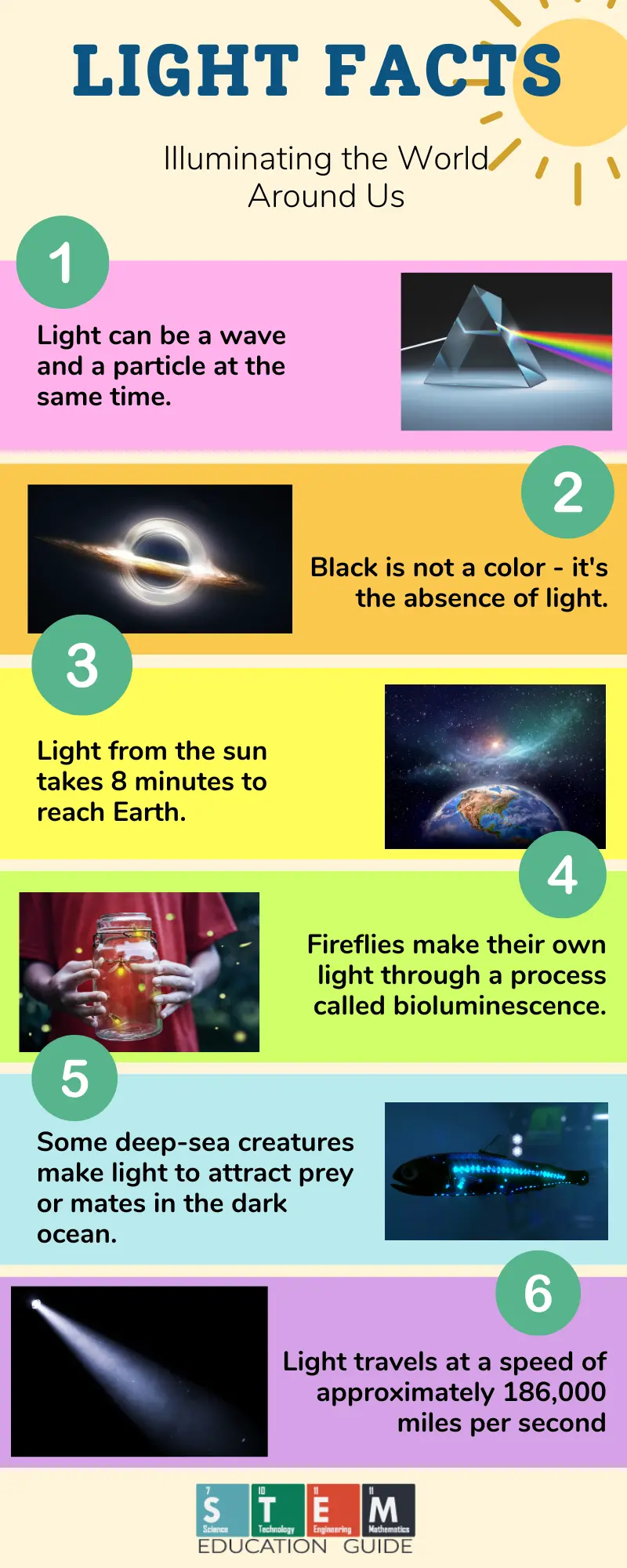
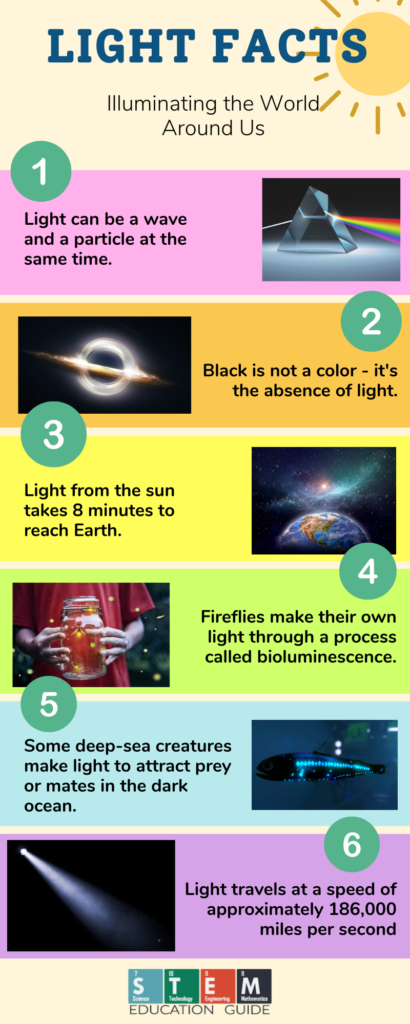
Light is the fundamental thread binding the cosmos together. Far more than a mere mechanism for human sight, light is a complex, high-velocity form of energy that makes life on Earth possible while driving technological revolutions across the globe. From the blinding thermonuclear furnace of our Sun to the intricate quantum behavior of subatomic particles, light dictates how we perceive reality, measure distance, and communicate across vast digital networks.
This comprehensive analysis explores the nature of light, its dual identity as both a wave and a particle, its breathtaking journey across the vacuum of space, and its diverse manifestations in nature—from bioluminescent deep-sea creatures to the celestial canvas of the aurora borealis. Furthermore, we examine the historical milestones achieved by visionaries like Isaac Newton and James Clerk Maxwell, the practical mechanics of optics, and the cutting-edge innovations that promise to reshape telecommunications and display technology in the decades to come.
Detailed Chronology: Milestones in the Scientific Understanding of Light
The human quest to understand light spans millennia, transitioning from philosophical inquiry to rigorous mathematical formulation and modern quantum mechanics.
- Antiquity to the Renaissance: Early Greek philosophers debated whether vision was caused by particles emitting from objects or beams shooting out of the eyes. By the 17th century, early optical instruments transformed empirical observation. Galileo Galilei did not invent the telescope, but his refined configurations drastically improved magnification, allowing humanity to gaze deeper into space and observe celestial bodies with unprecedented clarity.
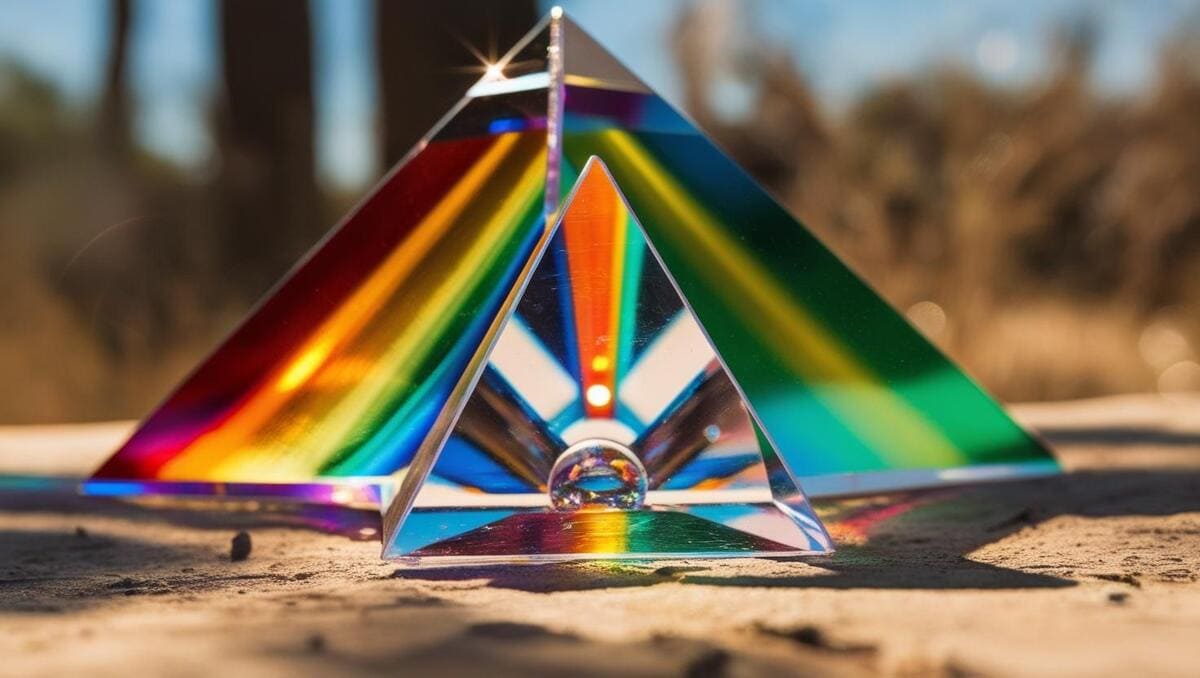
- 1665–1672: The Newtonian Prism Experiments: Sir Isaac Newton revolutionized optics by utilizing a glass prism to split white sunlight into its constituent spectral colors. His experiments definitively proved that white light is not a singular, unalterable entity, but rather a composite blend of all visible colors, each bending at slightly different angles.
- Late 17th Century: Wave Theory Emerges: Dutch physicist Christiaan Huygens proposed that light travels in waves rather than streams of particles. This wave hypothesis accounted for phenomena such as diffraction and interference, setting the stage for centuries of scientific debate regarding the true nature of light.
- 19th Century: Unifying Electricity, Magnetism, and Light: Scottish physicist James Clerk Maxwell successfully synthesized electricity and magnetism into a single theoretical framework—Maxwell’s Equations. By calculating the speed of electromagnetic waves, Maxwell mathematically proved that light is an electromagnetic wave, cementing a monumental unification in physics.
- 20th Century: The Quantum Revolution: Max Planck and Albert Einstein introduced the concept of wave-particle duality. Einstein explained the photoelectric effect by proposing that light is composed of discrete packets of energy called photons, earning him the Nobel Prize in Physics and bridging classical wave theory with emerging quantum mechanics.
Supporting Context & Metrics: The Physics and Behavior of Light
To comprehend light, one must analyze its properties through precise metrics and physical behaviors. Light is a form of electromagnetic radiation that propagates simultaneously as transverse waves and discrete packets of energy (photons).
Speed and Scale
Light zips through the vacuum of space at an astonishing velocity of approximately 186,000 miles per second (roughly $300,000$ kilometers per second). To put this into perspective, light leaving the surface of the Sun traverses the inner solar system, reaching Earth in just over 8 minutes.
When measuring astronomical distances, standard units like miles or kilometers become unmanageable. Consequently, scientists utilize the light-year—the distance light travels in one Earth year, equating to approximately 6 trillion miles ($9.46$ trillion kilometers). For example, Proxima Centauri, the nearest star system to our Sun, resides roughly 4 light-years away.
The Visible Spectrum and Electromagnetic Radiation
Human eyes are evolved to detect a very narrow band of electromagnetic radiation known as visible light. This spectrum is divided into specific wavelengths and frequencies, with each color corresponding to a distinct measurement range (measured in nanometers, nm):
| Color | Wavelength Range (nm) | Natural Example |
|---|---|---|
| Red | 620 – 750 | Sunsets, Autumn leaves |
| Orange | 590 – 620 | Canyon rock formations |
| Yellow | 570 – 590 | Sunflowers, stellar emissions |
| Green | 495 – 570 | Chlorophyll in plant foliage |
| Blue | 450 – 495 | Earth’s scattering atmosphere |
| Violet | 380 – 450 | Lavender and ultraviolet-adjacent flora |
Beyond the visible spectrum lie invisible forms of electromagnetic energy. Infrared radiation is felt as thermal heat; ultraviolet light causes biological reactions such as sunburns; X-rays penetrate soft tissue to reveal skeletal structures; and high-energy gamma rays emanate from extreme cosmic events.
Core Behaviors: Reflection, Refraction, and Diffraction
When light interacts with matter, its trajectory and characteristics alter based on the medium:

- Reflection: Light bounces off surfaces. Specular reflection, as seen in smooth mirrors or polished metals, preserves clear images, whereas diffuse reflection scatters light across rough textures.
- Refraction: When light passes from one transparent medium into another of a different density (such as transitioning from air into water or glass), its speed changes, causing the beam to bend. This phenomenon makes a submerged straw appear bent and shifts the apparent positions of objects underwater.
- Diffraction and Dispersion: Light spreads out when passing through narrow apertures (diffraction) and separates into distinct wavelengths when passing through media like prisms or raindrops, creating natural phenomena like rainbows.
Official Statements and Expert Perspectives
The ongoing study of optics and photonics continues to drive modern technological infrastructure. Leading academic institutions and industrial laboratories emphasize that light is no longer just a subject of academic curiosity, but the primary carrier of global information and advanced manufacturing.
"The transition from copper wire infrastructure to photon-based transmission systems represents one of the most consequential engineering shifts in human history," notes Dr. Elena Vance, a senior researcher in optical physics. "Light allows us to transmit vast datasets across oceans in fractions of a second, entirely redefining global connectivity."
Furthermore, aerospace researchers emphasize the diagnostic power of light in astronomy. "Spectroscopy—analyzing the light emitted or absorbed by distant celestial bodies—acts as our cosmic fingerprinting tool," explains astrophysicist Dr. Marcus Thorne. "Without capturing and decomposing starlight through prisms and specialized lenses, we would remain blind to the chemical composition, velocity, and evolution of galaxies billions of light-years away."

Light in Nature: Phenomenological Wonders
Long before human engineering harnessed illumination, nature displayed the astonishing versatility of light through dynamic atmospheric and biological processes.
Atmospheric Displays
- Rainbows: Formed when sunlight refracts, reflects, and disperses inside falling raindrops, acting as countless microscopic prisms that break white light down into the visible spectrum.
- Rayleigh Scattering at Sunsets: As the Sun dips toward the horizon, its light must traverse a thicker layer of Earth’s atmosphere. Shorter wavelengths (blue and violet) scatter away, leaving the longer wavelengths (reds, oranges, and pinks) to paint the twilight sky.
- Aurora Borealis: The northern and southern lights occur when charged solar wind particles collide with Earth’s magnetic field and upper atmosphere, exciting gas molecules and releasing brilliant curtains of green, pink, and violet light.
Biological and Chemical Illumination
- Bioluminescence: Deep-sea organisms—including specific species of fish, squid, and jellyfish—alongside terrestrial fireflies, generate cold light via internal biochemical reactions involving luciferin and luciferase enzymes. This allows them to attract mates, camouflage, or lure prey in pitch-black environments.
- Phosphorescence: Unlike fluorescence, which ceases immediately when excitation sources are removed, phosphorescent materials absorb light energy and slowly release it over extended periods, a property utilized in safety signage and glow-in-the-dark consumer products.
Future Outlook: Photonics and Next-Generation Light Technologies
As we look toward the horizon of STEM advancement, light-based technologies are poised to redefine computing, display engineering, and global networking.
Quantum Dots and Ultra-High-Definition Displays
Researchers are scaling manufacturing techniques for quantum dots—nanoscale semiconductor particles that emit finely tuned colors when illuminated. These microscopic marvels are revolutionizing screen technology, delivering unprecedented color accuracy, brightness, and energy efficiency in next-generation televisions and monitors.

Fiber Optics and High-Speed Data Transmission
Traditional copper wiring faces physical limitations in data transfer speeds and bandwidth capacity. Modern fiber-optic networks utilize total internal reflection inside ultra-pure glass and plastic fibers to route internet data across continents at near-light speeds, serving as the infrastructural backbone of the global digital economy.
Advanced Medical and Industrial Applications
From precision surgical lasers capable of cutting biological tissue with microscopic accuracy to non-invasive diagnostic tools utilizing light spectroscopy, photonics remains at the cutting edge of medicine. Looking further ahead, experimental research into optical cloaking and light-bending materials brings science fiction closer to reality, suggesting that humanity’s mastery over light is only just beginning.

