
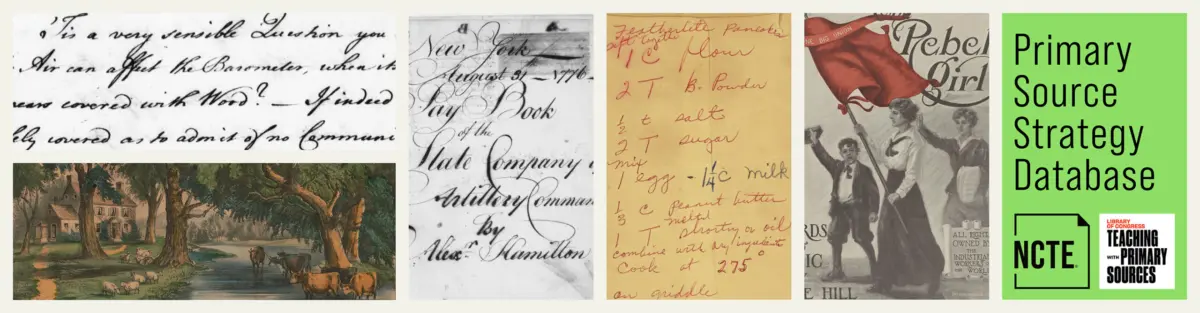
In an era where digital literacy, critical thinking, and historical contextualization are more vital than ever, educators face an ongoing challenge: how to make the distant past resonate with modern students. Enter a landmark collaborative initiative bridging the National Council of Teachers of English (NCTE) and the Library of Congress. Operating as a key component of the Teaching with Primary Sources (TPS) Consortium, this partnership is transforming how literacy teachers and students integrate primary source documents into everyday curricula.
At the core of this initiative is a robust, highly searchable digital database featuring pedagogical strategies for more than 150 unique artifacts drawn directly from the Library of Congress’s vast digitized archives. Crafted by over two dozen distinguished educators and English language arts (ELA) leaders, this repository goes beyond mere archiving. It articulates the precise literary merit of historical texts, offering educators ready-to-use themes, interdisciplinary units, and direct mappings to state educational standards.
Among the standout artifacts featured in the database is an 1851 letter to the editor titled “The New Costume,” published in The Mountain Sentinel. This primary source serves as a microcosm of the database’s broader utility: it demonstrates how historical artifacts can be leveraged to teach rhetorical analysis, spark discussions on gender roles, and draw direct parallels to contemporary socio-political issues. Through curated tools like this, the NCTE and the Library of Congress are equipping a new generation of students to read not just for comprehension, but for critical inquiry, evaluation, and civic engagement.
Detailed Chronology: The Evolution of the NCTE-Library of Congress Partnership
To fully understand the scope and ambition of the current database, it is necessary to examine the historical trajectory that brought the NCTE and the Library of Congress together, as well as the timeline of the primary sources they highlight.
The Institutional Timeline
- Establishment of the TPS Consortium: The Library of Congress established the Teaching with Primary Sources program to build a nationwide network of educational organizations, universities, and literacy groups dedicated to helping educators use the Library’s unprecedented digital collections.
- Forging the NCTE Alliance: Recognizing the unique synergy between historical artifact analysis and English language arts education, the NCTE integrated itself into the TPS Consortium. The goal was clear: bridge the gap between social studies archives and literacy instruction.
- Collaborative Curriculum Development: Over the course of several years, cohorts of ELA leaders and classroom teachers convened to select pivotal historical documents, author instructional strategies, and align them with modern state learning standards.
- Launch of the Searchable Database: The resulting repository went live, offering educators a streamlined, tag-based interface (categorized by terms like picturebook, argument, nonfiction, and specific historical eras) to seamlessly pull primary sources into lesson plans.
The Historical Timeline: The 1851 "Bloomer" Controversy
To appreciate the pedagogical value of specific entries within the database—such as the 1851 Mountain Sentinel letter—one must look back at the mid-19th-century dress reform movement:
- 1849–1850 (The Creation of the Style): Elizabeth Smith Miller conceptualizes a more practical outfit consisting of loose trousers under a knee-length skirt, designed to liberate women from the physical constraints of heavy Victorian attire.
- February 1851 (Popularization via The Lily): Amelia Bloomer, women’s rights advocate and editor of the pioneering feminist newspaper The Lily, adopts the outfit and champions it in print, sparking a national phenomenon.
- October 1851 (The Mountain Sentinel Letter): An anonymous author writing under the pseudonym "Amicus" publishes "The New Costume" in The Mountain Sentinel, fiercely defending the attire against conservative backlash and highlighting its physiological and social benefits.
- Mid-to-Late 1850s (The Cultural Backlash): While mainstream media and conservative critics lampooned the attire as immodest and a threat to traditional gender roles, the debate laid vital groundwork for future feminist discourse, bodily autonomy, and equal rights advocacy.
Supporting Context & Metrics
The integration of primary sources into ELA classrooms is not merely an alternative teaching method; it is a pedagogical shift supported by extensive educational research and measurable classroom outcomes.
The Pedagogical Imperative of Primary Sources
Modern ELA frameworks—including Common Core and various state standards—place heavy emphasis on informational text analysis, rhetorical evaluation, and the deconstruction of authorial bias. Traditional textbooks often sanitize history, presenting narratives as flat, undisputed facts. In contrast, primary sources like the 1851 Mountain Sentinel letter plunge students directly into the messy, passionate debates of the past.
When students analyze "The New Costume," they encounter:
- Rhetorical Strategies: How the author "Amicus" employs persuasive language to sway public opinion.
- Counter-arguments: Direct engagement with Victorian critics who viewed the clothing as a threat to societal fabric.
- Lexical Accessibility: Language that is sophisticated enough to challenge high school readers yet accessible enough to serve as an entry point for historical and textual analysis.
Database Metrics and Scope
- 150+ Curated Artifacts: The database meticulously catalogs over 150 distinct items from the Library of Congress collections, ranging from nineteenth-century newspaper clippings and early photographs to political cartoons and pamphlets.
- 25+ Educational Leaders: Content creation is anchored by more than two dozen veteran educators, curriculum developers, and ELA specialists who understand the practical realities of modern classrooms.
- Multi-State Standards Alignment: Resources are explicitly mapped to regional frameworks, such as the Missouri Learning Standards (MLS), ensuring that teachers can adopt these materials without sacrificing curricular pacing. Key standards frequently targeted include:
- MLS.9-10.RI.2.B: Analyzing how an author uses rhetoric to advance a point of view or purpose.
- MLS.11-12.RI.2.D: Evaluating an author’s argument and reasoning for effectiveness, validity, logic, credibility, and relevance of evidence.
Official Statements and Expert Insights
The collaboration between the National Council of Teachers of English and the Library of Congress underscores a shared commitment to elevating the standard of literacy education nationwide.
Educational leaders involved in the TPS Consortium have repeatedly emphasized the transformative power of placing authentic historical documents into the hands of students. While the specific entries in the database are designed to stand alone as instructional units, the collective philosophy of the partnership centers on inquiry-based learning.
"When students read a primary source like an 1851 defense of dress reform, they aren’t just memorizing a date or an event," notes curriculum design documentation associated with the NCTE-TPS initiative. "They are listening to a real human voice from the past, wrestling with the same questions of identity, societal expectation, and self-expression that young people navigate today."
Furthermore, ELA specialists stress that the inclusion of diverse topics—spanning Arts and Culture; Government, Law, and Politics; History; and News, Journalism, and Advertising—ensures that teachers across various disciplines can find relevant entry points. By making the database searchable through intuitive tags, the NCTE has lowered the barrier to entry for busy educators seeking to enrich their lesson plans with authentic historical artifacts.
Future Outlook: The Next Wave of Digital Literacy
As educational institutions adapt to an increasingly digital and information-saturated world, the importance of initiatives like the NCTE-Library of Congress partnership cannot be overstated. Looking ahead, the expansion of the Teaching with Primary Sources Consortium points toward several key developments in literacy education:
1. Deepening Interdisciplinary Connections
The traditional silos separating English language arts from social studies, history, and media studies are continuing to break down. Future iterations of the database aim to foster even closer collaboration between history and ELA teachers, using primary sources as dual-purpose tools that teach both historical context and advanced textual analysis.
2. Expanding Searchability and Digital Accessibility
Plans are underway to refine the database’s tagging and filtering mechanisms, allowing educators to search for artifacts based on specific reading lexile levels, cultural themes, and emerging state standard updates. This ensures that the repository remains agile and responsive to the evolving needs of classrooms across the United States.
3. Fostering Critical Media Literacy
In an era defined by rapid information cycles, deepfakes, and polarized media narratives, the ability to dissect an author’s argument, evaluate evidence, and recognize historical bias is a crucial life skill. By training students on 19th-century artifacts like the Bloomer costume debate, educators are building the foundational skepticism and analytical rigor required to navigate modern media landscapes.
Through the ongoing efforts of the NCTE, the Library of Congress, and the dedicated educators crafting these instructional strategies, the voices of the past will continue to shape, challenge, and inspire the thinkers of tomorrow.

