
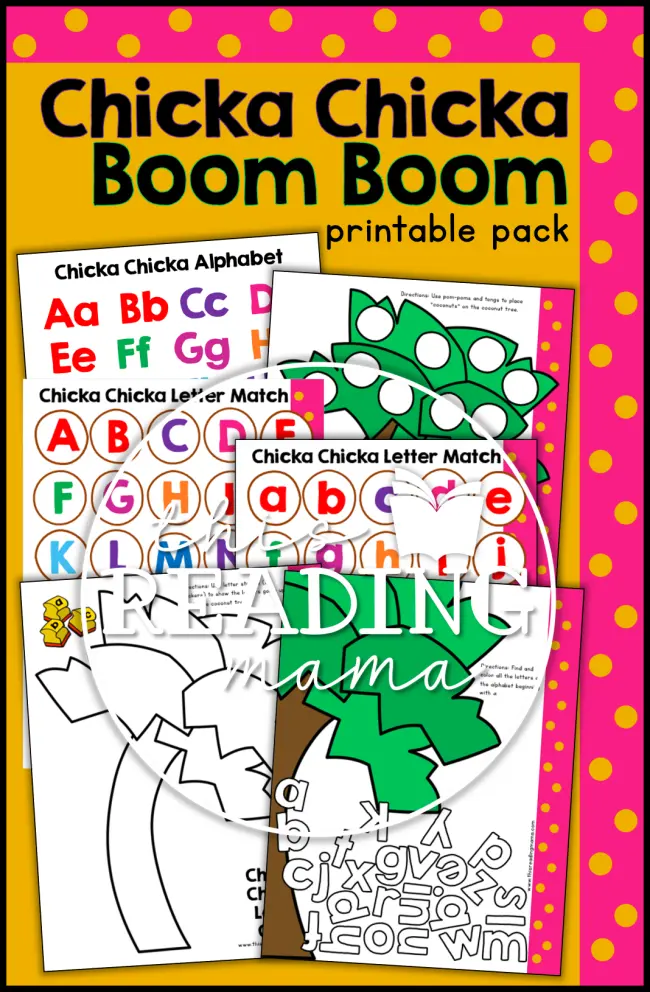
Early childhood education has long relied on foundational literacy tools to spark a lifelong love of reading in young learners. Among the most enduring resources in modern classrooms is Bill Martin Jr. and John Archambault’s beloved children’s classic, Chicka Chicka Boom Boom. Recently, this timeless tale of alphabetical adventure has inspired a brand-new, comprehensive pedagogical resource: a free, educator-designed Chicka Chicka Boom Boom Printable Pack.
Created by veteran educator Becky—who has returned to the classroom this academic year to teach a preschool literacy class at a local homeschool co-op—this resource bridges the gap between playful storytelling and essential cognitive development. Designed to address critical developmental milestones, the printable packet focuses heavily on two foundational pillars of early childhood education: letter recognition and fine motor skill enhancement.
As educational frameworks increasingly emphasize hands-on, multi-sensory learning experiences, tools that merge narrative engagement with targeted skill-building are more critical than ever. This report provides an in-depth examination of the newly released printable pack, exploring its pedagogical foundations, classroom applications, structural components, and the broader implications of incorporating thematic, literature-based printables into contemporary early education and homeschooling environments.
Detailed Chronology
The development and subsequent release of the Chicka Chicka Boom Boom Printable Pack follows a deliberate trajectory rooted in practical classroom experience and iterative educational design.

Phase 1: Classroom Integration and Inspiration
The genesis of the printable pack began when the creator stepped back into a formal teaching role for the current academic year, taking on a preschool literacy class within a local homeschool co-op setting. Recognizing the universal appeal of Chicka Chicka Boom Boom, the educator selected the rhythm-heavy, alphabet-centric picture book as the centerpiece for an immersive literacy unit. During this phase, students engaged in read-aloud sessions, physical movement activities, and interactive play centered around the book’s narrative of lowercase letters racing up a coconut tree.
Phase 2: Material Development and Resource Design
Observing how deeply the preschool students connected with the text, the educator identified a specific pedagogical need: supplemental, thematic worksheets and activity sheets that could reinforce the cognitive concepts introduced in the book. Over several weeks of lesson planning, a series of targeted activities focusing on letter identification, matching, and dexterity were developed. These materials were designed to complement existing alphabet-focused curricula, ensuring they could be seamlessly integrated into both structured classroom routines and independent homeschool learning stations.
Phase 3: Digital Compilation and Public Release
Following successful pilot testing within the co-op classroom, the collection of worksheets was curated into a cohesive digital packet. The resource was formally published online for public access, accompanied by supplementary printing guides and an expansive digital library catalog. By offering the core pack as a free downloadable asset, the initiative aimed to democratize access to high-quality early childhood literacy tools, making professional-grade educational resources readily available to parents, co-op leaders, and preschool teachers worldwide.
Supporting Context & Metrics
To fully understand the value of the Chicka Chicka Boom Boom Printable Pack, one must examine the broader landscape of early childhood literacy, fine motor development, and the digital resource ecosystem that supports modern educators.

The Science of Alphabet Mastery and Letter Recognition
Research in developmental psychology and cognitive science consistently demonstrates that early letter recognition is one of the single most reliable predictors of future reading success. Children who can rapidly and accurately identify both uppercase and lowercase letters transition into fluent readers with greater ease. Chicka Chicka Boom Boom naturally aids this process through its whimsical narrative structure, where letters are personified as characters climbing a coconut tree before tumbling down in a chaotic, rhythmic heap.
The accompanying printable pack builds upon this cognitive foundation by providing structured repetition and visual reinforcement. Activities designed for letter recognition require young learners to match, trace, and identify letters in various contexts, reinforcing neural pathways associated with visual processing and linguistic comprehension.
The Role of Fine Motor Skills in Early Writing
Cognitive development in preschool-aged children (typically ages three to five) is inextricably linked to physical dexterity. Before a child can reliably hold a pencil and form legible letters, they must develop strength, coordination, and endurance in the small muscles of the hands, fingers, and wrists—collectively known as fine motor skills.
The printable pack integrates targeted fine motor activities directly alongside its literacy components. By incorporating tasks such as cutting along dotted lines, tracing curves, coloring within specified boundaries, and manipulating small objects in conjunction with the worksheets, the pack ensures that children develop the physical prerequisites for handwriting while engaging with the alphabet theme.

The Rise of Digital Educational Resource Platforms
Over the past decade, the landscape of educational publishing has shifted dramatically. Educators and parents increasingly rely on web-based platforms, digital print-on-demand assets, and community-driven resource libraries to supplement traditional curricula. Platforms like This Reading Mama have emerged as vital hubs for early childhood instruction, offering scalable solutions that cater to the unique needs of homeschoolers, pod educators, and traditional classroom teachers operating on limited budgets. The inclusion of free downloadable packets underscores a broader industry trend toward open-access educational equity.
Official Statements and Educational Insights
Educators, curriculum developers, and parents have long championed the integration of literature-based thematic units in early childhood classrooms. Below are insights reflecting the philosophy behind the newly released printable pack:
"When children interact with a story like Chicka Chicka Boom Boom, they aren’t just listening to a rhythmic cadence; they are experiencing the alphabet as a living, breathing entity. Our goal with this printable pack was to extend that literary magic off the page and into hands-on practice, ensuring that cognitive skill-building feels entirely like play."
— Preschool Literacy Educator & Resource Creator
Educational specialists emphasize that early childhood learning must remain holistic, rejecting rigid rote memorization in favor of multi-sensory engagement. By pairing a tactile, visual storybook with targeted fine motor and letter recognition printables, instructors can address diverse learning styles within a single classroom environment. Furthermore, the availability of blackline printables—housed within comprehensive digital resource libraries—allows teachers to customize the intensity and frequency of practice based on individual student needs.

Future Outlook
Looking ahead, the demand for adaptable, high-quality early childhood literacy resources is projected to accelerate. As educational models continue to diversify—incorporating hybrid learning, homeschool co-ops, and micro-schools—the need for modular, teacher-tested materials will remain paramount.
Expansion of Digital Resource Libraries
Initiatives such as the expansion of specialized educational libraries indicate a future where teachers and parents can access curated, thematic curriculum packs instantaneously. Future iterations of literacy packs are expected to incorporate augmented reality (AR) elements, interactive digital components, and multi-lingual adaptations to serve an increasingly globalized student demographic.
Sustained Focus on Foundational Literacy
Despite rapid technological advancements in education, the core mechanics of early reading—phonemic awareness, alphabet recognition, and fine motor dexterity—remain non-negotiable. Resources like the Chicka Chicka Boom Boom Printable Pack serve as proof that traditional pedagogical concepts, when paired with modern digital distribution models, can continuously evolve to meet the needs of the next generation of learners. By keeping foundational resources accessible and engaging, the educational community ensures that every child is given the tools they need to take their first successful steps toward lifelong literacy.

