In modern classrooms, educators face a growing challenge that extends far beyond traditional academics. While mastering mathematics, science, and literature remains essential, teachers are increasingly tasked with fostering the invisible architecture of learning: executive functioning skills. Comprising cognitive processes such as planning, organization, sustained attention, time management, task initiation, working memory, and cognitive flexibility, executive functioning serves as the primary engine for academic achievement and lifelong success.
Yet, teaching these abstract mental processes to developing minds is no easy feat. Traditional lectures or clinical worksheets often fail to engage children and teenagers who struggle with self-regulation or organization. Enter an unexpected and remarkably powerful pedagogical tool: the strategic use of quotations.
Far beyond mere decorative classroom posters or morning motivations, carefully curated quotes are being deployed by innovative educators as daily bell-ringers and catalysts for deep critical thinking. By pairing purposeful statements with guided discussion questions, teachers are transforming simple phrases into bridges that connect abstract cognitive concepts directly to students’ daily lives. This comprehensive report explores the neuroscience and educational strategy behind using quotes to build executive functioning, detailing how educators can implement this practice, examining sample frameworks for core competencies, and looking at the future outlook of cognitive skills training in schools.
Detailed Chronology: The Evolution of Executive Functioning in Modern Education
To understand why the integration of quotations into lesson plans is gaining traction, it is vital to trace how executive functioning evolved from a strictly neurological concept into a cornerstone of contemporary classroom strategy.
The Neurological Awakening (Late 20th Century)
Historically, executive functioning was a term primarily utilized by neuropsychologists and cognitive scientists studying the prefrontal cortex—the area of the human brain responsible for impulse control, decision-making, and goal-directed behavior. For decades, these concepts remained siloed within clinical psychology and specialized education environments. Children who struggled with organization, focus, or emotional regulation were often mislabeled or left without targeted classroom interventions.
The Shift Toward Whole-Child Education (Early 2000s)
As educational research expanded, neuroscientists and educators began to recognize that executive functioning skills are not entirely fixed at birth; rather, they are malleable capacities that develop gradually from early childhood well into early adulthood. Schools began shifting toward "whole-child" education models, acknowledging that cognitive control and emotional regulation are prerequisites for academic learning. However, a major hurdle remained: how to teach these invisible skills effectively without overwhelming students or adding burdensome curriculum hours to an already packed school day.
The Rise of Micro-Interventions and Bell-Ringers (2010s–Present)
In recent years, educators have pivoted toward micro-interventions—short, high-impact activities that seamlessly integrate into the daily routine without disrupting instructional time. Bell-ringers, morning meetings, and advisory periods emerged as prime real estate for social-emotional learning (SEL) and executive functioning support. It is within this modern framework that educational innovators began experimenting with daily quotations. By shifting away from generic inspirational phrases ("Dream big!") toward targeted, metacognitive quotations focused on specific cognitive skills (such as task initiation or mental flexibility), teachers discovered a low-barrier, high-engagement strategy that resonates powerfully with modern students.
Executive functioning skills are frequently compared to the foundation or the root system of a tree. Without a robust root system, a tree cannot withstand storms, absorb nutrients, or grow to its full potential. Similarly, a student may possess immense intellectual capability, but without strong executive functioning skills, translating that intelligence into completed assignments, organized projects, and managed deadlines becomes an uphill battle.
Core Components of Executive Functioning
Planning and Prioritization: The ability to create a roadmap to reach a goal and determine what steps are most important.
Organization: Keeping track of materials, digital files, and thoughts in a structured manner.
Time Management: Estimating how long tasks will take and pacing oneself accordingly.
Working Memory: Holding and manipulating information over short periods.
Metacognition: The ability to reflect upon and monitor one’s own thinking and learning processes.
Task Initiation: The capacity to take action and get started on a project without excessive procrastination.
Self-Control (Inhibition): Pausing to think before acting, resisting distractions, and regulating emotional responses.
Cognitive Flexibility: Adapting to unexpected changes, shifting strategies when a problem arises, and viewing issues from multiple perspectives.
The Impact on Academic and Life Outcomes
Educational metrics consistently demonstrate a strong correlation between robust executive functioning skills and long-term success. Studies in developmental psychology indicate that self-regulation and cognitive control during early adolescence are often better predictors of academic success than IQ scores alone.
Furthermore, as students transition into higher education and the modern workforce, the demand for independent problem-solving, emotional resilience, and adaptability skyrockets. Jobs in the 21st century require workers who can pivot quickly, manage competing priorities, and self-initiate projects without micro-management. By targeting these skills early through reflective practices like quote-based discussions, educators are equipping students with vital armor for the challenges of adult life.
Official Educational Strategies: How to Implement Quotes for Cognitive Growth
Integrating quotes into the classroom should be an organic, enjoyable process rather than a burdensome chore. Educational specialists recommend a structured yet flexible approach to ensure students extract maximum cognitive value from each discussion.
Step-by-Step Classroom Implementation
Strategic Selection: Choose quotes that do not merely sound pleasant, but actively challenge teens and children to think deeply about their cognitive processes. The quotation should tie directly to a specific executive functioning pillar—such as perseverance, attention, or cognitive flexibility.
Initial Exposure and Reflection: Present the quote as a bell-ringer on the board, digital display, or morning message. Give students a moment of quiet time to read it independently, letting their minds absorb the text without immediate commentary.
Guided Discussion: Move beyond surface-level interpretations by utilizing targeted, open-ended questions. Instead of asking, "Do you like this quote?", ask, "How does this concept apply to a challenge you faced this week?" or "What mental steps are required to put this idea into practice?"
Personal Connection and Metacognition: Encourage learners to connect the quote’s underlying message to their personal lives. When students realize that cognitive strategies can help them achieve their personal goals—whether in sports, art, gaming, or academics—buy-in increases exponentially.
Continuous Integration: Revisit themes regularly. Tie a quote about perseverance back into a challenging math unit, or reference a quote about self-control when managing classroom transitions.
Deep Dive: Sample Quotes and Guided Discussions for Executive Functioning
To assist educators in launching this practice immediately, experts have categorized key quotations by the specific executive functioning skill they target, complete with underlying meanings and guided discussion questions.
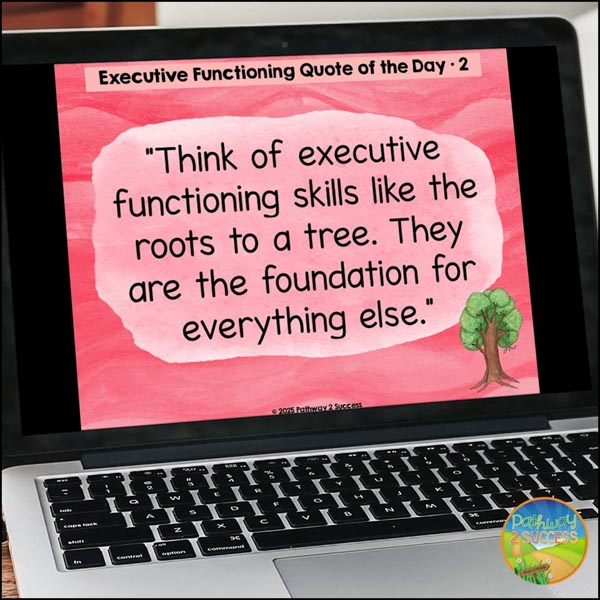
“Think of executive functioning skills like the roots to a tree. They are the foundation for everything else.”
What it means: Executive functioning skills are the invisible mental processes that help us plan, organize, get started, manage our time, and work through challenges. They are present in almost every conscious action we take, serving as the foundation for starting a chore, focusing during a conversation, or working through a difficult problem. Understanding that these skills form a foundational root system helps learners embrace the importance of strengthening them.
Questions to Consider:
What are some activities or hobbies you truly enjoy doing?
How do skills like planning, focus, and organization help you succeed in those activities?
Why is it vital to understand and train these mental "roots"?
2. Self-Control
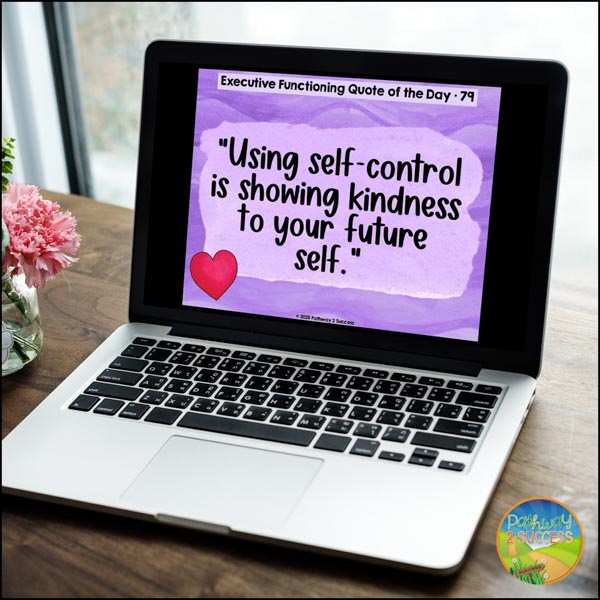
“Using self-control is showing kindness to your future self.”
What it means: Self-control is our ability to pause, stop, and think before making a choice. With practice, it empowers us to make decisions that benefit our long-term well-being. In many ways, practicing self-control is an act of self-kindness. For instance, organizing a school binder or starting an assignment early may feel tedious in the moment, but it reduces stress and creates success later. That is true self-kindness.
Questions to Consider:
What does it genuinely mean to exhibit self-control in daily life?
How can withholding an impulsive reaction or completing a task early be viewed as a gift to your future self?
What is one practical way you can show kindness to your future self today?
3. Task Initiation
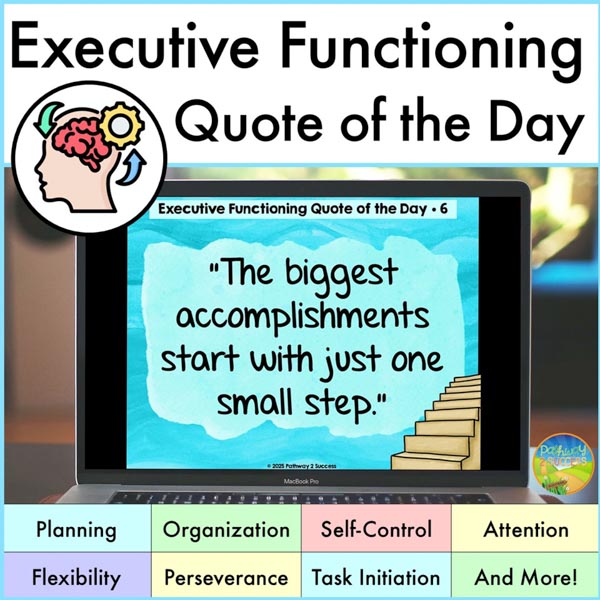
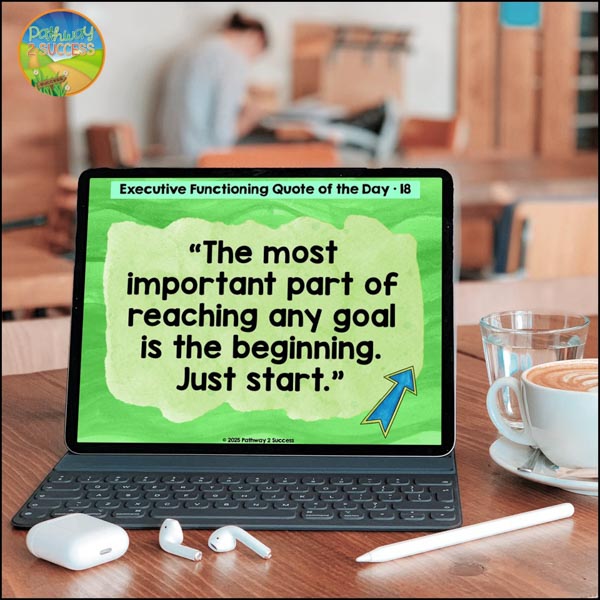
“The most important part of reaching any goal is the beginning. Just start.”
What it means: Task initiation is the mental spark required to get moving on a project, even when motivation is low. Often, the psychological barrier of starting is far more daunting than the task itself. Once momentum is established, it becomes much easier to sustain effort and see the project through to completion.
Questions to Consider:
Why does getting started on a major task often feel like the hardest part of the process?
What are some practical micro-strategies you can use to overcome procrastination and take that crucial first step?
4. Attention
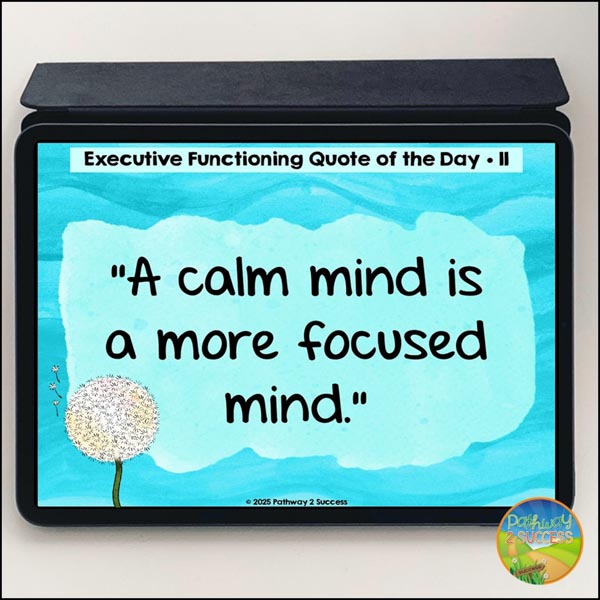
“A calm mind is a more focused mind.”
What it means: Emotional and mental calmness allows us to process information clearly, think critically, and produce our best work. This connection reveals that building emotional regulation and calming strategies can directly enhance our ability to concentrate and sustain attention.
Questions to Consider:
Why do you think your brain is able to focus more effectively when you feel calm rather than upset, anxious, or overwhelmed?
What specific relaxation or mindfulness strategies help clear your mind and prepare it for focused work?
5. Perseverance
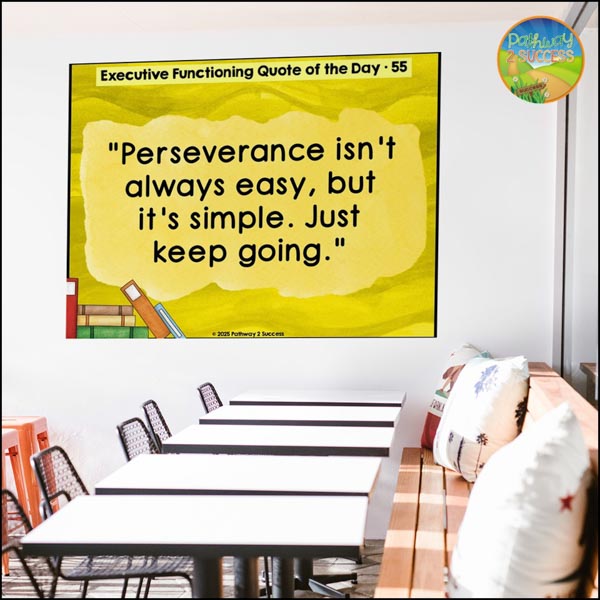
“Perseverance isn’t always easy, but it’s simple. Just keep going.”
What it means: Perseverance represents our capacity to press onward toward a goal despite obstacles, fatigue, or setbacks. While the emotional and physical execution of perseverance can be grueling, the core principle remains beautifully straightforward: refuse to quit and find a way forward.
Questions to Consider:
How would you define true perseverance in your own words?
What is a significant challenge you have successfully persevered through in the past?
What internal or external strategies help you keep going when you feel like giving up?
6. Cognitive Flexibility
“Every problem has a solution. Most have many.”
What it means: Cognitive flexibility is the mental agility required to think in diverse ways, perspective-take, cope with unexpected changes, and navigate challenges. When faced with a roadblock, flexible thinking allows us to step back, brainstorm alternative approaches, and realize that there is rarely only one rigid path to success.
Questions to Consider:
What is a specific problem you faced recently, either in school or outside of it?
What were some different ways you could have approached or solved that problem?
Why is it empowering to remember that most problems have multiple potential solutions?
Future Outlook: The Next Generation of Cognitive Classrooms
As educational methodologies continue to evolve, the integration of social-emotional learning and executive functioning training is shifting from an experimental enrichment activity to a recognized pillar of standard curricula.
Looking forward, educators, school psychologists, and curriculum developers are collaborating to create comprehensive, year-long frameworks—such as daily quote bell-ringer sets and specialized educator guides—that remove the guesswork from teaching cognitive skills. By standardizing these gentle, reflective interventions, schools are removing the stigma often associated with learning differences and executive dysfunction.
Furthermore, as artificial intelligence and digital tools take over routine data processing and memorization tasks in the modern economy, human executive functioning skills—such as complex problem-solving, cognitive flexibility, empathy, and self-regulation—are becoming the most prized competencies in the global workforce.
By utilizing simple yet profound pedagogical tools like thoughtful quotations, modern educators are planting the seeds for these vital mental roots. Through daily reflection, deep discussion, and practical application, students are learning not just how to memorize facts, but how to master their own minds—preparing them to navigate an increasingly complex and dynamic world with confidence, resilience, and grace.