
Executive Overview
In the modern educational landscape, digital learning tools have become ubiquitous, yet ensuring their utility across diverse student populations remains a formidable challenge. For students with moderate to severe disabilities, traditional digital quizzes and gamified learning platforms can often present insurmountable barriers—from complex text-heavy interfaces to rigid response formats. However, educators on the front lines of special education are pioneering innovative adaptations to bridge this accessibility gap.
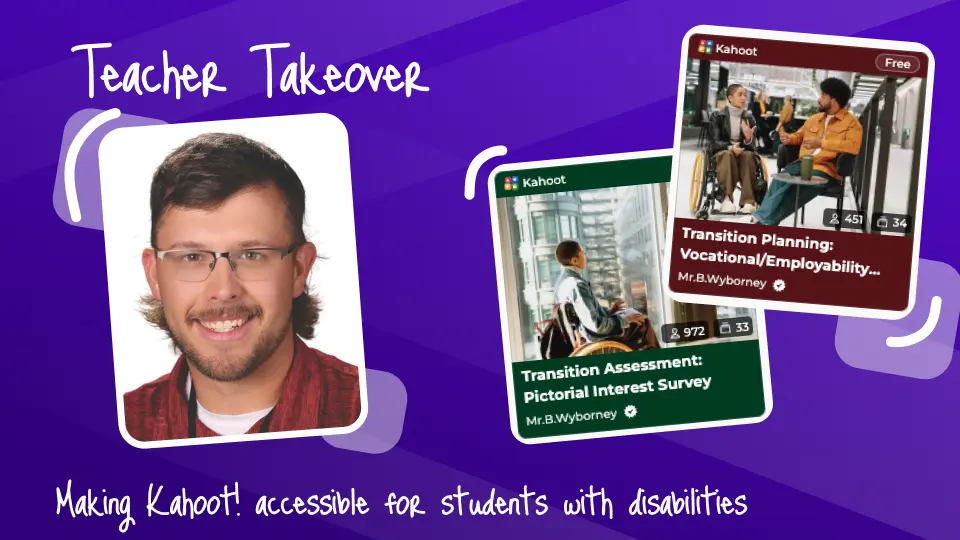
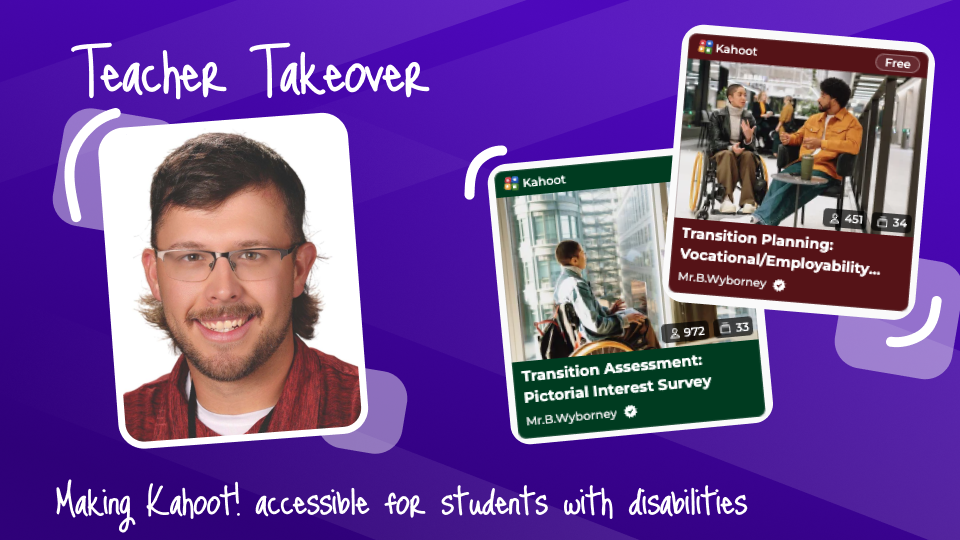
Enter Brett Wyborney, a seasoned educator with eight years of experience spanning Alaska and Washington state, and a designated Kahoot! Ambassador. Throughout his career, Wyborney has taught across a broad spectrum of educational environments, including functional academics classrooms for students with significant disabilities aged 14 to 22, resource rooms for students with Specific Learning Disabilities (SLD) or Other Health Impairments (OHI), general education settings, and advanced gifted programs.
Faced with a critical shortage of age-appropriate, accessible materials for his life skills students, Wyborney turned to Kahoot!, systematically re-engineering its popular gamified platform into a powerful, inclusive medium. By reimagining visual answer options, restructuring question design, and applying the tool to complex transition assessments, Wyborney has established a blueprint for inclusive digital pedagogy. This report explores Wyborney’s methodologies, the pedagogical theory behind accessible gamification, and the broader implications for special education data collection and student autonomy.
Detailed Chronology: The Evolution of an Inclusive Classroom Strategy
Recognizing the Gap in Special Education Resources
When Wyborney stepped into his role as a functional academics teacher serving students aged 14–22 with significant disabilities, he immediately confronted a systemic resource deficit. While digital platforms like Kahoot! were widely celebrated in general education for boosting engagement and formative assessment, standard implementations were ill-equipped for a classroom ecosystem defined by profound diversity.
A typical classroom under Wyborney’s guidance comprised six to eight students with an array of complex needs. Most students required one-on-one para-educator support; many were nonreaders or nonspeaking; some managed visual impairments; and others came from households where English was not the primary language. Standard multiple-choice questions laden with text were fundamentally inaccessible to this demographic, risking student alienation and exclusion from vital classroom activities.
Experimentation and Adaptation
Recognizing the intrinsic motivational appeal of Kahoot!’s game-show format, Wyborney resolved to adapt the software rather than abandon it. He realized that the platform’s core infrastructure—its speed, visual layout, and interactive potential—could be harnessed if the content delivery was decoupled from heavy literacy demands.
Over several academic cycles, Wyborney systematically tested and refined a suite of modifications. He transitioned away from text-heavy prompts, introduced touch-sensitive visual interfaces, and experimented with variable answer counts. Through iterative classroom trials, these adjustments transformed the platform from a standard trivia game into a robust assistive technology tool that supported autonomous student participation.
Expanding into Transition Assessments and Beyond
With the core instructional methodology validated, Wyborney expanded the application of his adapted kahoots beyond daily formative checks into high-stakes secondary transition planning. Developing "High School and Beyond Plans" and Individualized Education Programs (IEPs) requires gathering accurate data regarding student interests, career preferences, and post-secondary goals. Historically, these transition assessments relied heavily on reading, writing, or verbal expression, frequently obscuring true student preferences behind communication barriers.
By applying his visual accessibility strategies to transition surveys—such as the creation of the “Transition Assessment: Pictorial Interest Survey”—Wyborney enabled nonreading students to articulate their goals independently using simple visual prompts like thumbs-up or thumbs-down indicators. This phase marked a significant shift, proving that gamified assessment tools could be repurposed to drive critical, legally mandated special education outcomes.
Supporting Context & Metrics: Breaking Down the Accessibility Framework
Wyborney’s success in the functional academics classroom rests upon four foundational pedagogical pillars designed to eliminate cognitive and physical barriers.
1. Utilizing Images as Answer Options
For students who are nonreaders or processing visual information more effectively than text, traditional multiple-choice formats act as a bottleneck. Wyborney leveraged Kahoot!’s image-based answer functionality to bypass literacy hurdles.
- Integration with Visual Supports: Images were paired with Picture Exchange Communication System (PECS) symbols, photographs, and familiar icons that students encountered daily in their life skills curriculum.
- Synergy with Assistive Technology: Many students experienced fine-motor challenges that rendered standard computer mice and trackpads difficult to operate. Pairing picture-based answers with touchscreen tablets allowed students to interact directly and independently with the interface, fostering personal agency over their learning paths.
2. Reducing the Number of Answer Options
Standard quizzes typically present four potential answers. For students with cognitive or processing differences, extraneous options can create unnecessary cognitive load, masking their actual comprehension.
- Scaffolding Complexity: Wyborney frequently reduced choices down to two options (e.g., distinguishing whether a dog or a fish is a mammal).
- Enlarged Touch Targets: Reducing choices physically enlarged the on-screen buttons, making them significantly easier to target for students with motor impairments. The goal was never to dilute academic rigor, but to eliminate extraneous friction so students could accurately demonstrate mastery.
3. Incorporating Multiple Correct Answer Options
In traditional gaming environments, single-correct-answer formats can penalize individual preferences or experiential realities. To address this, Wyborney utilized questions with multiple correct options, transforming closed queries into inclusive preference inventories.
- Fostering Engagement Without Penalization: When asking students about recreational preferences (e.g., selecting favored activities among basketball, art, music, and reading), marking all applicable choices as correct ensured that every student’s preference was validated.
- Equitable Scoring: Unlike traditional open polls, formatting these questions with multiple correct answers allowed all participating students to earn points and secure spots on the leaderboard, driving peer-to-peer engagement and positive reinforcement.
4. Streamlining Data Collection and Assessment Reporting
Data collection is one of the most time-intensive responsibilities for special educators. Wyborney discovered that transitioning assessments to Kahoot! dramatically streamlined administrative workflows.
- Automated Reporting: Student responses were automatically logged within Kahoot! Reports, providing an instantaneous digital paper trail for progress monitoring and IEP documentation.
- Longitudinal Repeatability: The digital format enabled seamless replication of identical assessments over time without the logistical burden of resetting physical 1:1 protocols. Educators could easily track longitudinal trends, compare class-wide data, and verify whether student preferences remained consistent across academic terms.
Official Statements & Expert Perspectives
The pedagogical implications of Wyborney’s work extend far beyond a single classroom, reflecting a broader industry push toward universal design for learning (UDL) in digital spaces. Reflecting on his journey, Wyborney emphasizes the philosophical anchor of his work:
"I realized that Kahoot! could be the perfect platform for creating materials that were appropriate for my students’ unique needs." — Brett W., Washington, USA
Addressing the balance between technology and professional intuition, Wyborney notes that digital tools must serve as augmentations to, rather than replacements for, rigorous educator oversight:
"Kahoot! wasn’t replacing professional judgment or other transition assessment methods. Instead, it became one additional tool for collecting meaningful student data in a way that was accessible to my students." — Brett W., Washington, USA
Special education specialists have increasingly echoed these sentiments, noting that platforms featuring high customizability allow educators to tailor digital content precisely to the diverse cognitive, sensory, and motor profiles found within modern inclusive classrooms.
Future Outlook: The Next Frontier of Inclusive Gamification
As educational technology continues to evolve, the methodologies pioneered by educators like Brett Wyborney offer a clear roadmap for software developers and classroom practitioners alike. The convergence of accessible design, touchscreen integration, and automated data analytics points toward a future where digital learning platforms are inherently inclusive by design, rather than requiring retroactive adaptation.
Key Takeaways for the Future of Special Education Tech:
- Universal Design Integration: Future educational software must bake visual customization, adjustable answer counts, and multi-modal response options directly into core authoring tools.
- Autonomous Assessment: Transition planning tools must prioritize non-verbal, pictorial, and assistive-tech-friendly interfaces to ensure neurodivergent and nonspeaking students retain full autonomy over their educational and post-secondary futures.
- Data-Driven Empowerment: Automating formative assessment reporting will continue to relieve administrative burdens on special educators, allowing them to redirect critical hours toward direct, individualized student instruction.
By proving that mainstream digital tools can be creatively adapted to meet the most rigorous accessibility standards, Brett Wyborney’s work underscores a vital truth: when technology is shaped to fit the learner—rather than forcing the learner to fit the technology—every student gains the opportunity to play, learn, and lead.

