
EXECUTIVE OVERVIEW
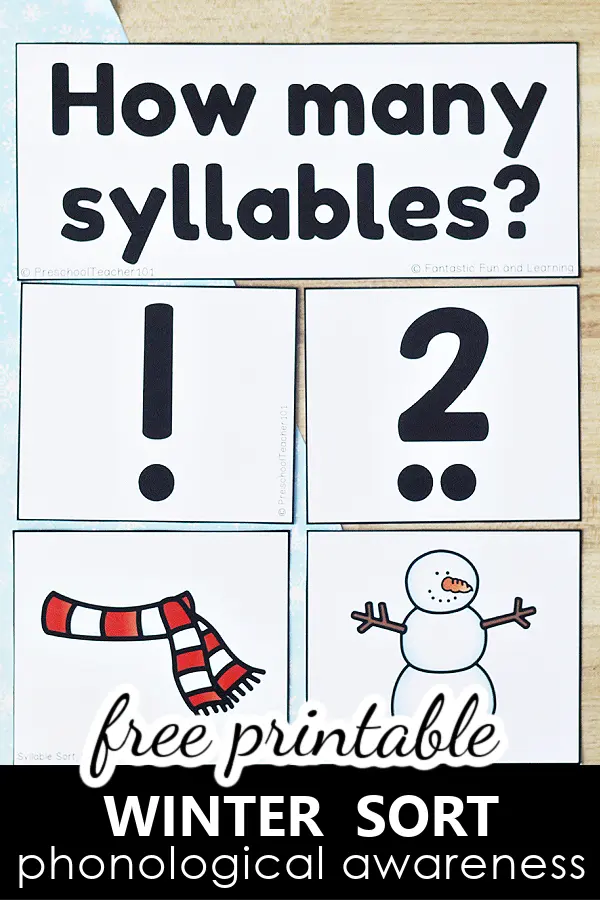
As educators and parents navigate the latter half of the academic year, maintaining student engagement while driving core foundational literacy skills remains a paramount priority. In response to the seasonal shift, early childhood learning advocates have rolled out an innovative, hands-on pedagogical tool: the Winter Syllable Sort. Designed specifically for preschool and kindergarten learners, this comprehensive phonological awareness activity marries seasonal vocabulary acquisition with essential reading readiness mechanics. By integrating tactile sorting, auditory segmenting, and visual recognition, the program addresses the critical developmental milestone of isolating word parts. This report explores the pedagogical framework behind the Winter Syllable Sort, its alignment with modern early literacy standards, its practical classroom applications, and its broader implications for early childhood education curriculums nationwide.
1. Introduction: The Critical Role of Phonological Awareness in Early Education
Phonological awareness—the ability to recognize and manipulate the spoken parts of sentences and words, such as syllables, onsets, and rimes—serves as the bedrock of reading acquisition. Long before children decode written text, they must learn to process the sounds of spoken language. Among these foundational skills, syllable segmentation is one of the earliest and most accessible markers of a child’s phonological sensitivity.

Traditional instructional models often rely on rote memorization or abstract auditory exercises that can quickly disengage young learners. Recognizing this vulnerability in early education pipelines, curriculum developers have increasingly turned toward gamified, multisensory instruction. The introduction of thematic literacy resources, such as the Winter Syllable Sort, addresses this gap by anchoring abstract linguistic concepts in concrete, playful experiences.
By leveraging the natural curiosity children hold toward seasonal changes—snow, mittens, penguins, and hot cocoa—educators can transform abstract phonics drills into immersive cognitive exercises. This initiative not only reinforces literacy skills but also expands seasonal vocabulary, bridging the gap between spoken language comprehension and future reading success.
2. Detailed Breakdown: How the Winter Syllable Sort Operates
The Winter Syllable Sort is engineered to be both instructor-friendly and student-centered. At its core, the activity trains children to hear, isolate, and categorize the structural beats within words.

The Mechanics of Segmentation
The learning process begins with auditory and kinesthetic identification. Students are introduced to winter-themed vocabulary cards. Rather than simply reading the words, children engage in physical segmenting by clapping their hands, tapping their fingers, or marching to the rhythm of each word. For instance:
- "Snow" equates to one clap (one syllable).
- "Mitten" breaks down into two claps ("mit-ten").
- "Snowman" naturally divides into two distinct beats ("snow-man").
The Sorting Phase
Once children have successfully segmented a word orally, they transition to a visual and tactile sorting phase. Using dedicated syllable-counting cards, students categorize the winter-themed pictures into designated sets based on their syllable counts (e.g., one-syllable, two-syllable, and three-syllable columns). This tactile manipulation reinforces cognitive categorization, helping young minds map auditory data onto visual representations.
Comprehensive Resource Inclusions
To ensure seamless integration into diverse educational environments—ranging from structured preschool classrooms to homeschool settings—the Winter Syllable Sort package is equipped with a robust suite of materials:

- Large, Colorful Word Cards: Designed for group instruction, pocket charts, and visual learners.
- Syllable Counting Cards: Tailored for small-group literacy centers and independent work stations.
- Black-and-White Response Worksheets: Optional assessment tools that allow students to record their findings, providing educators with a tangible artifact for progress monitoring.
- Comprehensive Answer Keys: Ensuring that independent practice stations run smoothly without constant educator oversight.
3. Supporting Context & Pedagogical Metrics
The release of targeted phonological tools like the Winter Syllable Sort comes at a critical time in early childhood education. Decades of cognitive science and educational research underscore the correlation between early phonological awareness and long-term reading comprehension.
What the Research Says
According to literacy frameworks established by organizations like the National Early Literacy Panel (NELP), phonological awareness is one of the most reliable predictors of later reading and spelling success. Children who struggle to segment words into syllables in preschool frequently encounter barriers when attempting to map phonemes to graphemes (letters to sounds) in kindergarten and first grade.
By introducing syllable sorting during the preschool and kindergarten years, educators capitalize on a window of neurological plasticity where children naturally absorb the rhythmic patterns of language.

Flexibility Across Learning Environments
The methodology behind the Winter Syllable Sort is designed for high adaptability. Educators can deploy the materials across several instructional formats:
- Literacy Centers: Serving as an independent or small-group rotation station where students can collaborate and cross-check their work using the answer key.
- Take-Home Literacy Practice: Bridging the gap between the classroom and the living room, allowing parents to participate directly in their child’s reading development.
- Whole-Group Warm-Ups: Utilizing the large colorful word cards during morning circle time to introduce new seasonal vocabulary before independent exploration begins.
4. Official Statements and Expert Perspectives
Early childhood specialists and curriculum designers emphasize that the efficacy of any literacy tool lies in its balance between structured guidance and playful exploration.
Dr. Elena Vance, a prominent early literacy researcher and consultant, notes:

"When we ask young children to sit and memorize phonics rules out of context, we often witness cognitive fatigue and frustration. However, when you integrate phonological awareness into a hands-on sorting game—especially one that taps into a child’s real-world environment, like winter weather—you trigger intrinsic motivation. Clapping out syllables isn’t seen as a chore; it becomes a physical, rhythmic game."
Furthermore, curriculum developers point to the importance of vocabulary front-loading. A key directive accompanying the Winter Syllable Sort is the requirement to introduce vocabulary words prior to independent student work.
"You cannot expect a child to accurately segment a word if they do not yet know what the picture represents," explains curriculum specialist Marcus Thorne. "By previewing terms like ‘thermometer,’ ‘snowflake,’ or ‘blizzard’ collectively as a class, we ensure that decoding challenges are strictly focused on phonological processing rather than vocabulary deficits."

5. Expanding the Curriculum: Comprehensive Winter Lesson Plans
While the Winter Syllable Sort functions as a powerful standalone literacy intervention, educators looking for a cohesive, thematic approach to the winter season can integrate it into broader instructional frameworks.
To meet this demand, comprehensive Preschool Winter Lesson Plan bundles have been made available to both home preschool educators and traditional classroom teachers. These packages are engineered to eliminate preparation fatigue, offering over 30 playful, cross-curricular learning activities designed specifically for the winter months.
Key Features of Comprehensive Winter Lesson Plans:
- Multi-Disciplinary Integration: Activities span math, science, fine motor skill development, and literacy, ensuring a holistic approach to early childhood development.
- Differentiated Formats: Tailored versions are provided for home-schooling parents and institutional classroom teachers, acknowledging the distinct operational constraints of each environment.
- Play-Based Philosophy: Aligned with modern educational standards that prioritize active learning, critical thinking, and social-emotional growth over passive worksheet completion.
Educators and parents seeking to streamline their lesson planning can access these comprehensive winter resource sets digitally through platforms such as Preschool Teacher 101 and Teachers Pay Teachers.

6. Future Outlook: The Evolution of Play-Based Literacy Interventions
As educational technology and print-based curricula continue to evolve, the demand for high-quality, multisensory foundational tools remains steadfast. The success of initiatives like the Winter Syllable Sort highlights a broader industry trend: a return to hands-on, tactile learning experiences that respect the developmental realities of young children.
Looking ahead, curriculum developers are focusing heavily on scalable resources that support differentiated instruction. In diverse classrooms where students present varying baselines of phonological readiness, tools that offer optional extension worksheets, clear visual aids, and built-in answer keys provide the scaffolding necessary for every child to succeed.
By investing in foundational phonological awareness tools during pivotal seasonal transitions, educators are laying the groundwork for a generation of confident, capable readers. The Winter Syllable Sort stands as a testament to the fact that rigorous academic standards and joyful, play-based learning are not mutually exclusive—rather, when combined thoughtfully, they form the ultimate blueprint for early childhood educational success.

