In an era defined by rapid technological advancement and complex global challenges, the methodologies we use to solve problems are more critical than ever. Whether designing a next-generation aerospace component, writing intricate software code, or coordinating a complex family dinner after a long workday, the underlying framework for success remains remarkably consistent. At the core of this problem-solving framework is the Engineering Design Process (EDP)—a systematic, iterative methodology deployed by engineers, innovators, and everyday problem-solvers to bridge the gap between abstract concepts and functional realities.
While technical literature often presents the Engineering Design Process as a rigid, linear sequence, its true power lies in its cyclically iterative nature. It is a continuous loop of ideation, creation, evaluation, and refinement. Far from being restricted to high-tech laboratories and corporate research and development wings, this structured approach governs how humans interact with and improve their physical environment.
This comprehensive report examines the five core stages of the Engineering Design Process. By tracing this methodology through a relatable, everyday scenario—preparing a family meal from scratch using disparate pantry resources—we illuminate the mechanics of engineering thinking. Furthermore, this analysis differentiates the Engineering Design Process from the Scientific Method, providing a clear boundary between scientific inquiry and engineering innovation, while offering actionable educational tools for educators and students alike.
Detailed Chronology: The 5-Step Engineering Design Framework in Action
To fully comprehend the mechanics of the Engineering Design Process, one must observe it in motion. While academic and industrial models frequently expand the process into eight or ten granular stages, nearly all variations consolidate efficiently into five core phases: Ask, Imagine, Plan, Create, and Improve.
To ground these concepts in reality, consider a common domestic challenge: a busy household where evening approaches, no dinner plans have been established, and the pantry contains only a disparate collection of garden vegetables and leftover proteins. How does an engineering mindset resolve this daily dilemma?
Step 1: Ask — Defining the Problem and Constraints
Every engineering endeavor begins with a clearly defined problem statement and a set of operational constraints. In our domestic scenario, the family convenes an impromptu kitchen meeting. Hunger is the primary driver, but constraints quickly emerge: time is limited, energy levels are low, and the kitchen’s thermal environment must not be exacerbated by running a hot oven on an already warm day.
Furthermore, the inventory is constrained strictly to what is currently available in the refrigerator, freezer, and pantry. By explicitly asking, "What are we trying to achieve, and what limitations do we face?" the team establishes the foundation for targeted problem-solving.
Step 2: Imagine — Brainstorming and Conceptualization
With the parameters established, the family moves into the divergent thinking phase. Brainstorming yields multiple conceptual solutions. Roasting a large cut of meat is quickly discarded: it violates the time constraint and generates excessive ambient heat.
However, a surplus of freshly harvested root vegetables from grandparents’ garden demands immediate use to prevent spoilage. The conceptual pivot lands on a hearty vegetable stew. Recognizing the nutritional need for a complete amino acid profile, the team identifies proteins as a necessary additive. Leveraging digital tools, team members conduct rapid online research to cross-reference compatible vegetable and protein pairings, compiling a robust matrix of potential culinary solutions.
Step 3: Plan — Structuring the Blueprint
Ideation must transition into execution through rigorous planning. The family aggregates their research into a formalized ingredient list: potatoes, carrots, tomatoes, zucchini, summer squash, turnips, green beans, beets, and peas, paired with potential protein vectors such as dried kidney beans, organic tofu, and fresh eggs.
A major design conflict arises during the planning phase: stakeholder preferences diverge regarding protein integration. Rather than forcing a single compromised solution—which would violate user satisfaction metrics—the lead engineers (parents and older children) adjust the project architecture. They decide to pivot to a multi-channel production model: three separate cooking vessels, allowing parallel prototyping with distinct protein configurations.
Step 4: Create — Prototyping and Execution
The construction phase requires coordinated labor and division of tasks based on skill level and safety considerations. Younger participants handle preliminary processing tasks—shelling peas, snapping green bean ends, and using blunt table knives for softer squashes. Experienced operators deploy high-precision cutting implements (sharp chef’s knives) for dense root vegetables.
The family segregates into three autonomous working teams, each taking full ownership of one soup vessel. Water, standardized herb and spice profiles, and distinct vegetable-protein combinations are introduced to the pots. One team deliberately stages its protein addition (eggs) for a later thermal cycle to prevent over-coagulation.
Step 5: Improve — Testing, Evaluation, and Iteration
The hallmark of the Engineering Design Process is testing and subsequent refinement. As thermal energy transforms the raw inputs into aromatic stews, quality control checks reveal critical design flaws:
Structural Integrity Failure: The tofu cubes, subjected to prolonged boiling, begin to disintegrate into a mushy consistency.
Chemical Bleed / Aesthetic Contamination: The red pigments (betalains) within the whole beets leach aggressively into the cooking broth, turning the potatoes, turnips, and surrounding liquid an unexpected pink hue.
Immediate engineering adjustments are mandated:
The Beet Correction: The beets are extracted via slotted spoons before further structural discoloration occurs, diverted to cold storage for alternative applications. Carrots are substituted to maintain volumetric consistency without pigment contamination.
The Tofu Protocol: Compromised tofu is removed. A senior team member re-engineers the protein preparation method, utilizing a separate skillet to pan-fry fresh tofu cubes in oil until a golden-brown exterior shell forms, ensuring structural integrity before reintroducing them to the thermal bath.
Thermal Timing Adjustment: Eggs are introduced precisely at the terminal phase of the cooking cycle, rapidly solidifying into structured whites enclosing rich yolks.
Finally, taste testers execute empirical evaluations via sampling spoons. The kidney bean prototype remains texturally sub-optimal (too firm), requiring an extended thermal dwell time with burners engaged. The other vessels meet optimal organoleptic benchmarks, prompting burners to be powered down and lids secured for final resting.
Supporting Context & Metrics: The Engineering Mindset in Daily Life
The application of the Engineering Design Process to culinary arts is more than an entertaining metaphor; it highlights the universal applicability of STEM (Science, Technology, Engineering, and Mathematics) concepts. Modern education and workforce development initiatives increasingly emphasize that engineering is not merely a job title, but a cognitive framework.
Comparative Metrics of Problem-Solving Frameworks
Metric / Attribute
Scientific Method
Engineering Design Process
Primary Goal
To discover new knowledge and explain natural phenomena.
To create functional solutions, products, or systems to meet human needs.
Starting Point
An observation or a question about the natural world.
A specific human need, problem, or technological challenge.
Core Mechanism
Hypothesis testing, controlled experimentation, data analysis.
Iterative prototyping, brainstorming, building, testing, and refining.
Acceptance Criteria
Verification of a hypothesis through reproducible data.
Functionality, efficiency, cost-effectiveness, and user satisfaction.
Physical products, software code, optimized infrastructure, or technical blueprints.
When analyzing the kitchen experiment through these metrics, it is evident that while the family utilized research (a crossover skill), their primary objective was functional—producing a viable meal within constraints—rather than establishing a universal truth about thermodynamics or culinary chemistry.
Official Statements & Expert Perspectives
To contextualize the integration of the Engineering Design Process into everyday learning and professional development, leading educators and industrial innovators have weighed in on its significance.
"The fundamental misconception in modern education is that engineering begins and ends in heavy industry. In reality, engineering is the human impulse to shape our environment efficiently. When we teach students to cycle through the Ask-Imagine-Plan-Create-Improve loop, we are teaching resilience. We are teaching them that failure is not an endpoint, but merely data for the ‘Improve’ phase."
— Dr. Aris Thorne, Professor of STEM Pedagogy and Curriculum Development
Industry leaders echo this sentiment. In technical project management, the cost of failing to properly iterate during the "Plan" and "Create" phases can result in catastrophic market failures.
"Whether you are architecting a suspension bridge or troubleshooting a domestic soup recipe, the vulnerability points are identical. If you fail to account for material properties—such as tofu disintegration or beet pigment bleeding—your prototype fails. The discipline of the Engineering Design Process forces teams to pause, evaluate telemetry (or taste, in this case), and pivot dynamically without emotional attachment to the original failed design."
— Elena Vance, Senior Systems Engineer and Industrial Consultant
Future Outlook: Bridging Science and Engineering in Modern Education
As society looks toward the future, the integration of scientific discovery and engineering design will only accelerate. Understanding how these two distinct methodologies complement one another is vital for the next generation of innovators.
The Intersection: Beets, Science, and Engineering
Consider the humble beet from both disciplinary perspectives. Through the lens of the Engineering Design Process, our family determined that whole beets were structurally problematic for a mixed vegetable stew due to their aggressive pigment leaching (unless, of course, one is intentionally engineering a batch of traditional Eastern European borscht, where deep red coloration is a desired design specification).
Conversely, through the lens of the Scientific Method, researchers examining beets have uncovered profound physiological mechanisms. Clinical studies utilizing scientific experimentation have demonstrated that inorganic nitrates found in beet juice are converted by the human body into nitric oxide. This signaling molecule promotes vasodilation, enhancing blood flow to cerebral and muscular tissues while effectively reducing systemic hypertension.
Thus, while an engineer utilizes a beet (or discards it) based on mechanical and aesthetic constraints, a scientist studies its biochemical composition to expand human physiological knowledge. Both pathways are essential, highly collaborative, and mutually reinforcing.
Empowering the Next Generation of Problem-Solvers
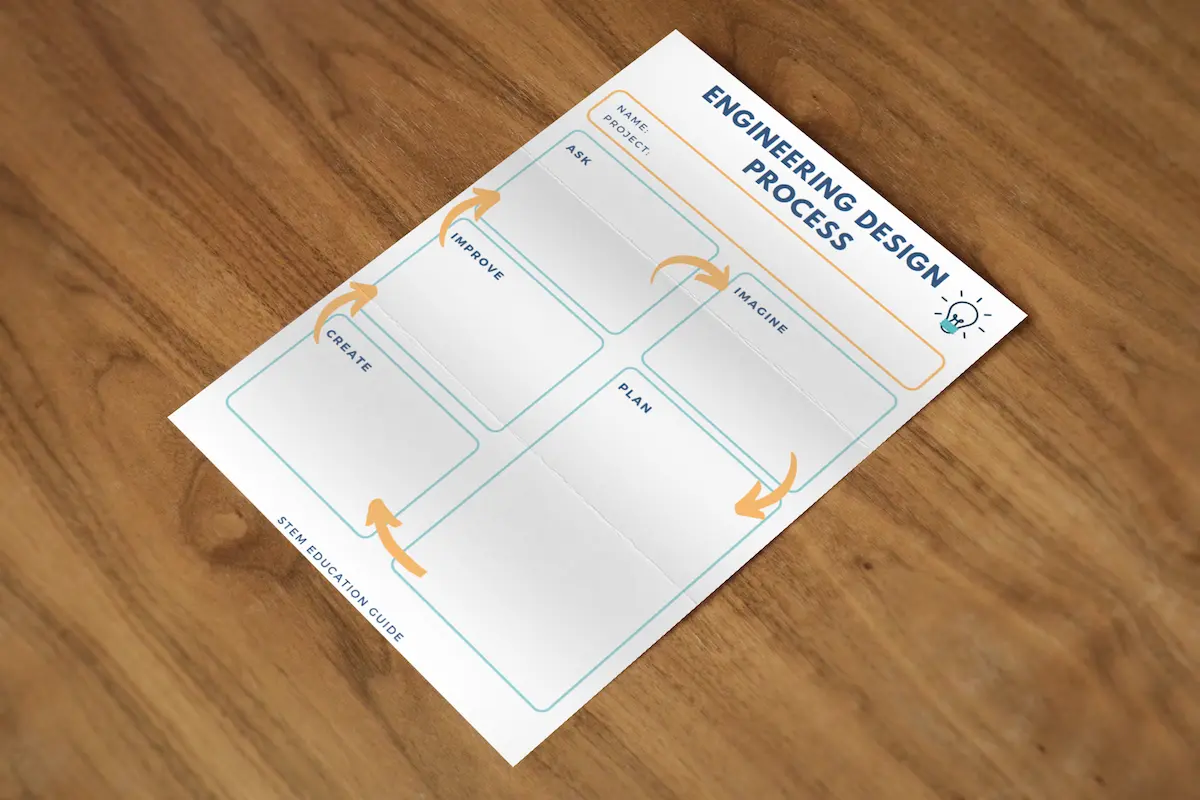
To foster these critical thinking skills in young learners, educators and parents are increasingly utilizing structured pedagogical tools, such as the Free Engineering Design Worksheet (available via leading educational resource platforms). These worksheets provide students with a physical canvas to map out their questions, brainstorm solutions, sketch blueprints, record prototype builds, and document their iterations.
By transforming everyday hurdles—ranging from kitchen challenges to community logistics—into active engineering design problems, we cultivate a culture of relentless innovation. The Engineering Design Process ensures that whether humanity is launching payloads into orbit or refining a family dinner recipe, we do so with purposeful intent, adaptability, and an unwavering commitment to continuous improvement.

![What is the Engineering Design Process? [Plus, a Free Worksheet] - STEM Education Guide](https://stemeducationguide.com/wp-content/uploads/2020/04/enginereering-design-process-worksheet.png)
![What is the Engineering Design Process? [Plus, a Free Worksheet] - STEM Education Guide](https://stemeducationguide.com/wp-content/uploads/2020/04/Engineering-Design-Process.png)

