
Executive Overview
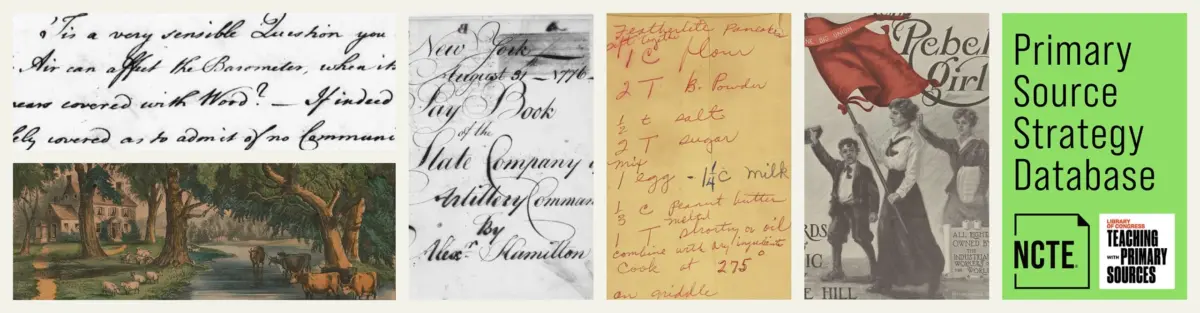
In an era defined by rapid technological change, shifting cultural norms, and an endless stream of digital information, educators are increasingly turning to primary sources to ground students in critical thinking and historical literacy. At the forefront of this educational evolution is a powerful partnership between the National Council of Teachers of English (NCTE) and the Library of Congress. Operating under the umbrella of the Teaching with Primary Sources Consortium, this ambitious initiative aims to fundamentally transform how literacy teachers and students integrate historical artifacts into their daily learning habits.
At the heart of this collaboration is a newly expanded, highly searchable digital database designed to bridge the gap between archival history and contemporary English language arts (ELA) instruction. Featuring curated teaching strategies for more than 150 specific items from the Library of Congress’s vast digitized collections, the platform represents the collective vision of over two dozen educators and ELA leaders. These experts have meticulously articulated the specific literacy merits of each artifact, aligning them with suggested themes, thematic units, and state standards.
Among the crown jewels of this database is a deep dive into In the Suburbs, a 1957 promotional video produced by Redbook Magazine. Long before the era of targeted digital advertising, this mid-century artifact captured the economic optimism, strict gender roles, and burgeoning consumerism of post–World War II America. By examining how this video depicts the nexus between homeownership and the "American Dream," modern students are given a powerful prism through which to evaluate mid-twentieth-century social mores—and to measure them against the realities of the twenty-first century. This article explores the mechanics of the NCTE-Library of Congress initiative, the pedagogical value of artifacts like In the Suburbs, and the broader implications for media literacy in the modern classroom.
Detailed Chronology: From Post-War Promotional Film to Modern Pedagogical Tool
To fully understand the educational weight of In the Suburbs (1957), one must trace its journey from a mid-century marketing artifact created by Redbook Magazine to a sophisticated primary source utilized in contemporary high school curricula.
- 1957: Production and Cultural Release
Produced by Carlo Arcamone, Tracy Ward, Bert Spielvogel, On Film, Inc., and commissioned by Redbook Magazine, In the Suburbs was released during the height of the post–World War II economic boom. Designed to appeal to young, growing families, the video celebrated the mass migration from urban centers to newly minted suburban enclaves. It highlighted the modern conveniences of tract housing, automotive dependency, and a lifestyle centered around domesticity and consumer acquisition. - The Late 20th Century: Archival Preservation
As decades passed, cultural artifacts of the 1950s were increasingly recognized not merely as historical curiosities, but as vital windows into the ideological mechanics of the Cold War era. The video eventually found its home within the Copyright Collection housed at the Library of Congress, preserved as a digital item under catalog reference loc.gov/item/2019600440. - The 21st Century Partnership: NCTE and the Library of Congress
Recognizing the need to elevate primary source analysis in literacy education, the Library of Congress forged its ongoing partnership with the NCTE through the Teaching with Primary Sources Consortium. Education leaders and ELA curriculum specialists began scouring the archives to extract materials that could seamlessly integrate historical inquiry with language arts standards. - Present Day: Integration into the Searchable Database
In the Suburbs was selected for inclusion in the NCTE’s searchable database. Tagged strategically with markers like picturebook and argument, the video was paired with comprehensive instructional frameworks. Today, educators utilize it alongside complementary materials—such as instructional films on the rise of 1950s suburban areas—to engage students in rigorous cross-curricular analysis spanning history, economics, and media literacy.
Supporting Context & Metrics: The Anatomy of a Mid-Century Primary Source
The educational efficacy of In the Suburbs lies in its rich layered textuality. While it was originally engineered to sell magazines and promote a specific lifestyle, today it serves as a sophisticated text for deconstructing historical propaganda and societal expectations.
Instructional Value and Curriculum Integration
The 1957 video offers a realistic yet deeply idealized portrayal of post-WWII suburban living. For ELA and social studies teachers, it provides a tangible anchor for exploring complex thematic concepts:
- Gender Roles: The video explicitly maps out the societal expectations placed upon men as breadwinners and women as domestic managers within the nuclear family framework.
- Consumerism and the American Dream: By linking homeownership directly to civic virtue and personal happiness, the film illustrates how economic optimism was commercialized.
- Media Literacy: Students are challenged to look past the charming aesthetics of mid-century advertising to analyze how media shapes cultural norms and perpetuates historical stereotypes.
Furthermore, the video bridges disciplines, serving as a prime text for cross-curricular work in economics. When paired with questions regarding the definition of a "home" and its psychological connection to the American Dream, students are prompted to evaluate historical continuity and change.
Alignment with Rigorous State Standards
The NCTE database ensures that the use of these primary sources is never arbitrary; every artifact is tied directly to state educational frameworks. For instance, the instructional guide for In the Suburbs aligns with rigorous senior-level ELA standards, such as Louisiana State Standards RI.11-12.4 and RL.11-12.4.
These standards require students to:
- Determine the meaning of words and phrases as they are used in a text, including figurative, connotative, and technical meanings.
- Analyze how an author uses and refines the meaning of key terms over the course of a text.
- Evaluate the impact of specific word choices on meaning and tone, assessing language that is particularly engaging, persuasive, or culturally loaded.
By applying these literary analysis skills to a historical video rather than a traditional print text, students expand their definition of "text" to include visual, auditory, and multi-modal media.
Official Statements and Pedagogical Philosophy
The collaboration between the Library of Congress and the NCTE represents a paradigm shift in how literacy is taught in American classrooms. By moving beyond traditional textbook narratives, educators are encouraged to bring students into direct contact with primary source materials, fostering historical empathy and critical inquiry.
While the primary source database is expansive—cataloging strategies for over 150 distinct artifacts—the overarching philosophy remains consistent: literacy instruction must empower students to decode the world around them. Creators and contributors to the database emphasize that tags such as argument and picturebook are not merely organizational tools, but conceptual gateways. They allow teachers to seamlessly weave rhetorical analysis, historical contextualization, and creative writing into unified, thematic instructional units.
In the case of In the Suburbs, the curated lesson plans encourage educators to prompt students with critical focus questions: How did mid-century media define the ideal life? Whose voices and experiences were systematically erased from the idealized suburban landscape? And how do these historical tropes continue to influence modern notions of success and homeownership?
Future Outlook: The Evolution of Primary Source Literacy
As the Teaching with Primary Sources Consortium continues to expand its reach, the future of ELA and social studies instruction looks increasingly interdisciplinary and digitally integrated. The success of searchable databases like the one developed by the NCTE proves that teachers are hungry for vetted, high-quality primary sources that transcend standard textbook boundaries.
Looking ahead, several key trends are likely to shape this educational space:
- Expanded Digital Archives: As more historical video, audio, and print collections are digitized by institutions like the Library of Congress, platforms like the NCTE database will continue to grow, offering educators an ever-widening array of lenses through which to view history.
- Enhanced Media Literacy Focus: In an age characterized by deepfakes, algorithmic bias, and digital misinformation, the critical viewing skills honed by analyzing 1950s propaganda films like In the Suburbs are more vital than ever. Teaching students to interrogate a 1957 advertising video directly translates to evaluating twenty-first-century social media feeds.
- Deeper Cross-Curricular Collaboration: The seamless blending of history, economics, and language arts demonstrated in these lesson plans points toward a future where rigid subject-area silos are dismantled in favor of holistic, thematic project-based learning.
Ultimately, initiatives of this scale remind us that history is not a static list of dates and dead names, but a living, breathing dialogue between the past and the present. By equipping teachers with the tools to bring artifacts like In the Suburbs into active classroom debate, the NCTE and the Library of Congress are helping to cultivate a generation of critical thinkers who are fully prepared to question, analyze, and write the next chapter of the American story.

