From the towering skyscrapers that redefine city skylines to the microscopic microchips powering modern smartphones, innovation rarely happens by accident. Behind every technological leap, physical structure, and mechanical fix lies a rigorous, structured methodology known as the Engineering Design Process. While often viewed as a dense academic framework reserved for heavy industry and aerospace laboratories, this iterative problem-solving model is, at its core, a universal blueprint for addressing challenges.
At its most fundamental level, the Engineering Design Process is a systematic, step-by-step method deployed by engineers, designers, and innovators to solve complex physical problems or conceptual challenges. Whether repairing a malfunctioning household appliance, refining an existing technology, or conceptualizing a product entirely from scratch, innovators across all domains leverage math, science, and empirical reasoning. They evaluate workable solutions, draft strategic blueprints, prototype concepts, and rigorously test ideas until a viable solution emerges.
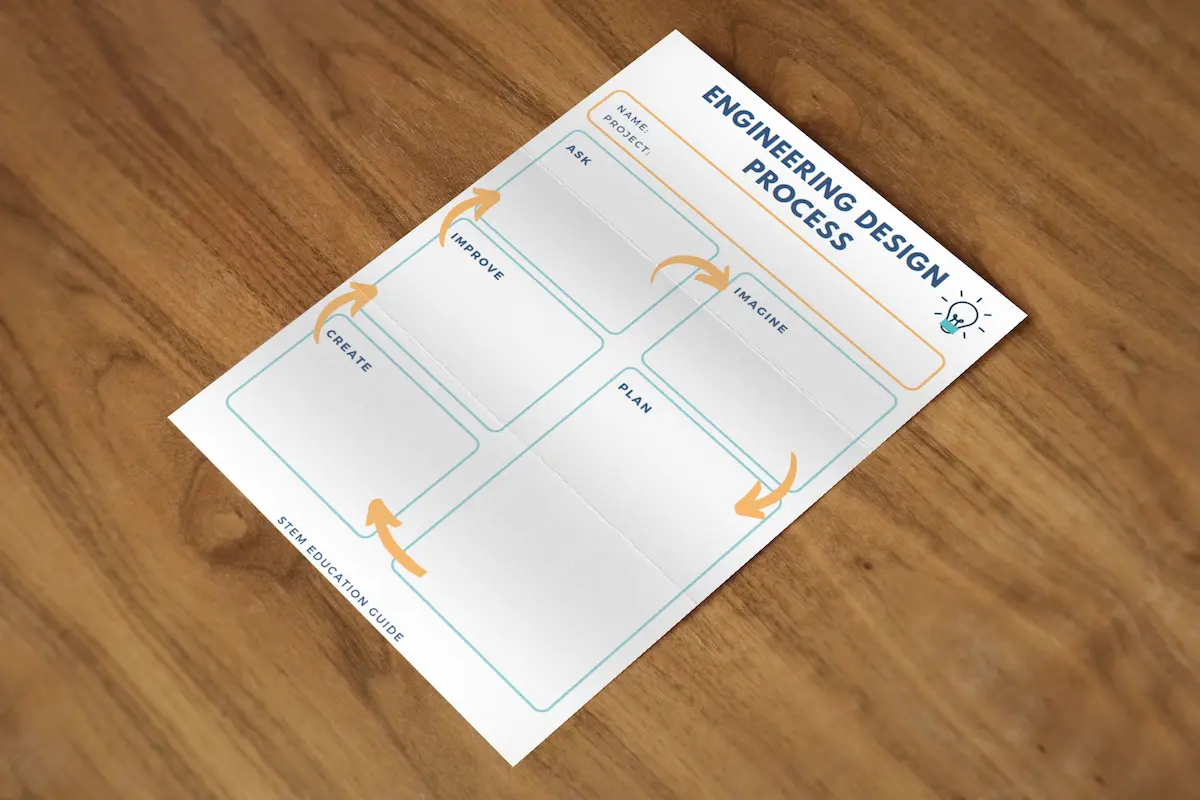
Rather than a rigid, linear path, this framework functions as a continuous feedback loop. Once a solution is deployed, evaluators inspect the results, identify flaws, refine the design, and restart the cycle. To demystify this process for students, educators, and everyday problem-solvers, this article breaks down the five core phases of the Engineering Design Process. By applying these concepts to a universally relatable scenario—preparing a family dinner from scratch with limited ingredients—we can observe how systemic engineering principles govern even the most mundane daily routines. Furthermore, we will examine how this framework contrasts with the traditional Scientific Method, highlighting the distinct roles that science and engineering play in advancing human capability.
Detailed Chronology: The Five-Step Design Lifecycle in Action
To fully grasp the mechanics of the Engineering Design Process, one must observe it in a dynamic environment. Imagine a busy household at the end of a long workday. Parents and children return home exhausted from school and jobs, only to realize a critical oversight: no one planned or shopped for dinner.
A rushed family meeting in the kitchen sparks a collective rummaging through the refrigerator, freezer, and pantry. The challenge is clear, immediate, and hungry. Here is how the family navigates the challenge using the five universal stages of the Engineering Design Process.
Every engineering endeavor begins by identifying the parameters of the problem. In our kitchen scenario, the challenge is defined by strict constraints:
Time constraint: Family members are fatigued and require a meal quickly.
Resource constraint: Grocery shopping has not occurred, meaning the team must rely exclusively on on-hand inventory.
Nutritional goal: The meal must provide a balanced intake of vegetables and protein.
By posing targeted questions—What ingredients are available? What cooking equipment is functional? How much time do we have?—the family establishes a clear design brief before taking any physical action.
Step 2: Imagine (Brainstorming and Researching)
With parameters established, the family transitions into the ideation phase. A family of six gathers around the kitchen island to brainstorm potential meal concepts that bypass lengthy preparation times. For instance, roasting a large cut of meat is quickly discarded; it requires hours in the oven, which would dangerously elevate the ambient temperature of an already warm house.
However, a breakthrough emerges from a surplus of garden-fresh root and summer vegetables gifted by grandparents. To prevent spoilage, these vegetables must be utilized immediately. The consensus points toward a hearty vegetable stew.
To ensure nutritional balance, the team recognizes the need for a reliable protein source. Leveraging mobile devices, family members conduct rapid digital research to evaluate which available proteins pair best with garden vegetables, reviewing cook times and flavor profiles.
Step 3: Plan (Drafting Specifications and Division of Labor)
With potential solutions conceptualized, the team moves to the planning phase. The family aggregates a master list of approved agricultural ingredients:
Vegetables: Potatoes, carrots, tomatoes, zucchini, summer squash, turnips, green beans, beets, and peas.
Proteins: Dried kidney beans, tofu, and eggs.
A design conflict arises during this phase: not all family members agree on a single protein source due to divergent dietary preferences. Applying engineering flexibility, the team pivots from a monolithic design to a modular one. Instead of one pot of stew, the plan expands to three distinct culinary modules, allowing for parallel prototyping of different protein integrations.
Step 4: Create (Prototyping and Execution)
With the blueprint finalized, the physical fabrication—or in this case, cooking—begins. Labor is divided based on skill levels and safety parameters. Younger children handle low-risk tasks such as shelling peas, snapping green bean ends, and dicing soft ingredients with table knives. Adults manage denser root vegetables requiring sharper instrumentation.
The household splits into three distinct production teams, each overseeing one cooking vessel. Water, dried herbs, and spice selections are measured and distributed. Each group introduces its designated vegetable base, while the egg-focused team sets its protein aside for a later deployment phase to prevent overcooking.
Step 5: Improve (Testing, Evaluating, and Redesigning)
As the aromas fill the kitchen, the teams enter the critical evaluation phase. In engineering, prototypes rarely succeed perfectly on the first try, and the kitchen is no exception. Two significant engineering failures manifest:
Structural Failure: The tofu cubes, subjected to a rapid boil, begin to disintegrate into a mushy consistency.
Chemical Cross-Contamination: The red beets in one pot leach their potent pigments into the broth, turning the potatoes, turnips, and liquid a striking, unintended shade of pink.
Immediate engineering adjustments are required. The team halts production on the beet-heavy pot, extracting the root vegetable with tongs and replacing them with carrots to maintain textural integrity without altering the broth’s color profile.
Concurrently, a team member uses a slotted spoon to salvage the disintegrating tofu. A parent steps in to re-engineer that specific protein component: the tofu is transferred to a skillet, stir-fried with oil until golden-brown and structurally sound, and reintroduced to the soup at a controlled thermal stage.
Finally, the egg team introduces six eggs into their simmering pot near the terminal phase of cooking, monitoring how the albumen rapidly coagulates to encase the yolks. Taste-testers sample spoonfuls from each vessel. The kidney bean stew requires additional thermal energy, prompting the team to keep the burner engaged, while the other two pans are sealed and removed from heat. The iterative testing phase successfully resolves structural and aesthetic flaws.
Supporting Context & Metrics: The STEM Landscape
To understand the broader relevance of this culinary exercise, one must examine the quantitative and qualitative impact of STEM education models in modern academics. Educational analysts and workforce economists emphasize that early, hands-on exposure to the Engineering Design Process yields measurable cognitive benefits in youth:
Cognitive Retention: Studies in educational psychology indicate that problem-based learning models increase long-term concept retention by up to 45% compared to passive, lecture-based instruction.
Cross-Disciplinary Synergy: The design process inherently merges multiple disciplines. A 2023 meta-analysis by the National Science Teaching Association (NSTA) revealed that students trained in iterative engineering models demonstrated a 30% improvement in applied mathematical reasoning during standardized testing.
Industry Alignment: Modern engineering firms increasingly prioritize candidates who display "agile prototyping" mindsets—a direct professional evolution of the Create-Test-Improve loop practiced in classrooms and home kitchens alike.
Official Perspectives & Expert Insights
Industry leaders and educational theorists frequently emphasize that teaching the mechanics of problem-solving is vastly more important than memorizing static facts.
Dr. Aris Thorne, a senior curriculum developer at the Global STEM Institute, notes:
"The beauty of the Engineering Design Process lies in its complete lack of punitive failure. In traditional academic testing, a wrong answer is a terminal penalty. In the design process, a collapsed tofu cube or a discolored broth is not a failure—it is simply new data. It forces the innovator to ask: What variable caused this outcome, and how do we adjust our parameters for the next iteration?"
Furthermore, culinary engineers and food scientists validate the real-world chemistry observed during our household experiment. Food technologist Sarah Jenkins explains that plant pigments—such as the betalains found in red beets—are water-soluble compounds that leach rapidly into aqueous environments under heat.
"When a home cook or an industrial food engineer experiences ‘pigment bleed,’ they are encountering the exact same chemical diffusion principles that chemical engineers manage when designing dyes, pharmaceuticals, or processed food colorings. Recognizing the problem and swapping beets for carrots is a textbook application of material substitution."
Engineering Design Process vs. Scientific Method: A Comparative Analysis
As the family sits around the dining table, enjoying hearty bowls of freshly engineered soup accompanied by artisanal bread, conversation turns to academic theory. One participant recalls previous lessons on the Scientific Method and poses a fundamental question: How does the Engineering Design Process differ from the Scientific Method?
While both frameworks represent foundational pillars of STEM education and rely on empirical observation, their ultimate objectives and operational pathways diverge significantly.
+-------------------------------------------------------------------------+
|                  THE SCIENTIFIC METHOD                                  |
|   Ask a Question -> Form Hypothesis -> Conduct Experiment -> Analyze    |
|   Data -> Draw Conclusion -> Publish Findings                           |
|   (Objective: To discover HOW and WHY nature works)                     |
+-------------------------------------------------------------------------+
                                    vs.
+-------------------------------------------------------------------------+
|                ENGINEERING DESIGN PROCESS                               |
|   Ask/Identify Problem -> Imagine/Brainstorm -> Plan -> Create          |
|   Prototype -> Test & Improve -> Share Solution                         |
|   (Objective: To CREATE products, structures, or solutions to human needs)|
+-------------------------------------------------------------------------+
Divergent Paths: Discovery vs. Invention
Scientists focus primarily on understanding the natural world. They investigate phenomena occurring in nature or controlled laboratory settings. Utilizing the Scientific Method, they formulate hypotheses, run controlled experiments, and analyze data to discover underlying truths. Ultimately, scientists share their findings through peer-reviewed journals, academic monographs, and lectures to expand humanity’s collective knowledge base.
Engineers, conversely, focus on creation and optimization. They build entirely new products, construct infrastructure, or fine-tune existing technologies developed by others. In their daily labor, engineers apply scientific discoveries to practical ends. Once their design process yields a functional prototype or technology, they release it to the commercial market or public sphere to solve real-world problems.
Case Study: The Dual Life of Beets
To illustrate this distinction, we can return to our humble beet.
Through the lens of the Engineering Design Process, our family evaluated the beet as a physical material component within a meal design. Finding that its water-soluble betalain pigments negatively interfered with the aesthetic and culinary goals of the potato-turnip broth, the engineering decision was made to substitute it with carrots.
However, viewing the beet through the lens of the Scientific Method reveals a completely different domain of inquiry. A family member recalls reading a peer-reviewed nutritional study examining the physiological benefits of concentrated beet juice. Researchers utilizing the Scientific Method hypothesized that inorganic nitrates naturally occurring in beets would convert within the human body into nitric oxide.
Through rigorous clinical trials and control groups, scientists proved that this biochemical conversion enhances vascular endothelial function, improves blood flow to cerebral and muscular tissues, and measurably reduces high blood pressure.
Thus, while the engineer discarded the beet from the soup pot due to unwanted aesthetic coloration, the scientist validated its biochemical capacity to save lives and improve human performance. Both approaches are equally valid, mutually dependent, and essential for human progress.
Future Outlook: Scaling the Design Process for Tomorrow’s Challenges
As global society faces increasingly complex systemic challenges—ranging from climate change and renewable energy distribution to sustainable urban planning and automated food production—the demand for structured, iterative problem-solving has never been more acute.
The next generation of innovators will not merely memorize static scientific laws; they will wield the Engineering Design Process as a dynamic toolkit to adapt, prototype, and build resilient infrastructure. Whether applied to high-tech aerospace engineering or the improvisational demands of a family kitchen on a Tuesday evening, the five-step framework—Ask, Imagine, Plan, Create, and Improve—remains our most reliable roadmap for turning human challenges into functional, elegant solutions.
By embracing failure as data, valuing iterative prototyping, and welcoming cross-disciplinary collaboration, we empower every individual to think, build, and innovate like an engineer.

![What is the Engineering Design Process? [Plus, a Free Worksheet] - STEM Education Guide](https://stemeducationguide.com/wp-content/uploads/2020/04/enginereering-design-process-worksheet.png)
![What is the Engineering Design Process? [Plus, a Free Worksheet] - STEM Education Guide](https://stemeducationguide.com/wp-content/uploads/2020/04/Engineering-Design-Process.png)

