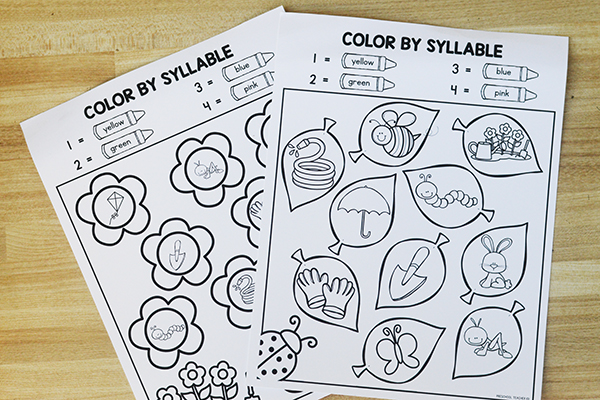
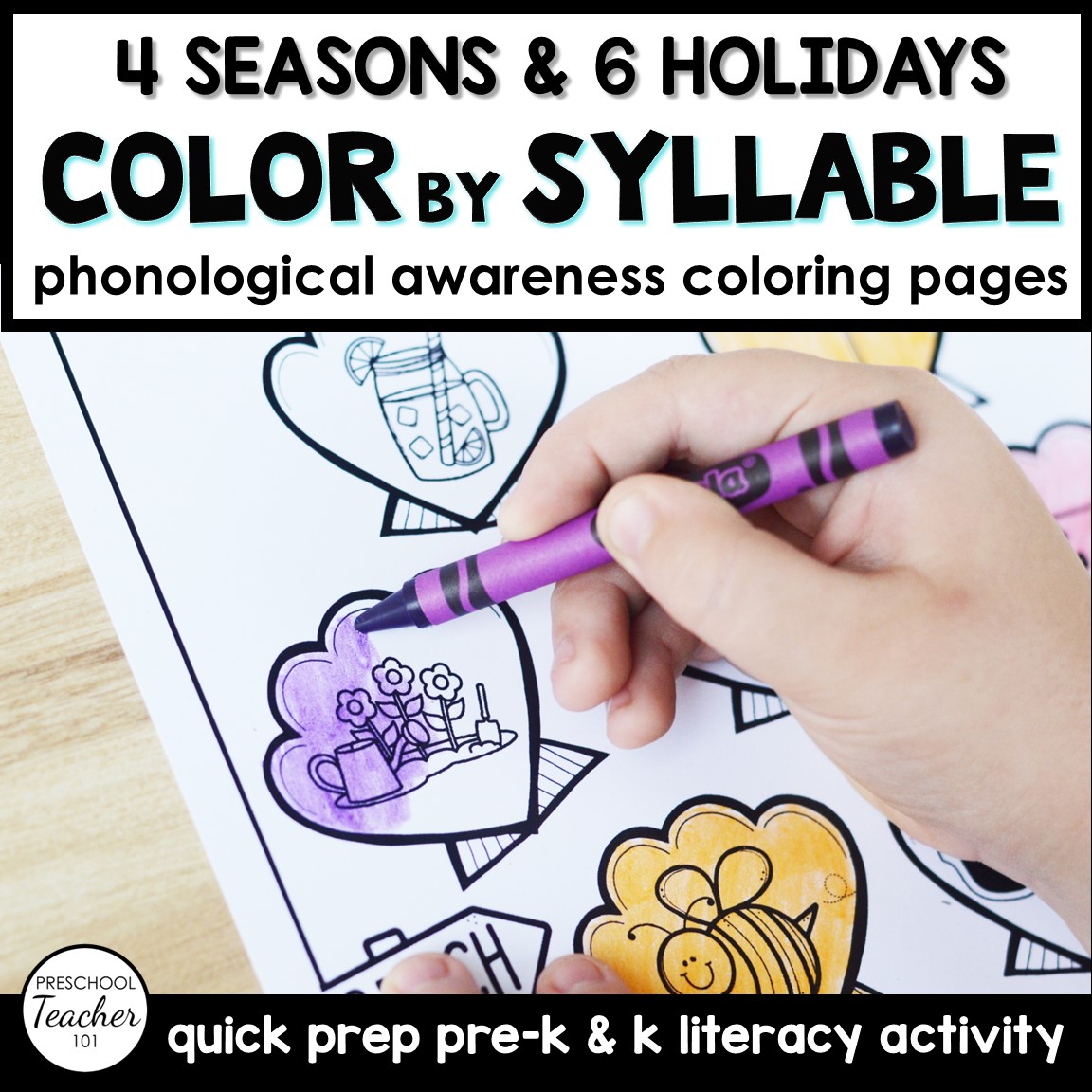
In the landscape of early childhood education, foundational literacy remains the bedrock upon which all future academic achievement is built. As educators and policymakers increasingly align classroom practices with the Science of Reading, the emphasis on phonological awareness—the ability to recognize and manipulate the spoken parts of sentences and words—has never been more pronounced. Enter the "Spring Color by Syllable" initiative, an innovative, no-prep instructional tool designed to bridge the gap between rigorous pre-reading skill acquisition and engaging, play-based classroom methodologies.
Developed as part of an expanding suite of color-by-code educational resources, this pedagogical tool addresses a critical developmental milestone for pre-kindergarten and kindergarten students: syllable segmentation. By gamifying the process of breaking words down into individual phonetic beats, educators can seamlessly integrate targeted literacy practice into daily routines, seasonal thematic units, and take-home assignments. This comprehensive report examines the mechanics of the Color by Syllable framework, its pedagogical alignment with modern literacy standards, its versatile application in diverse learning environments, and the broader implications of scaling such resources for year-round classroom implementation.
THE EVOLUTION OF EARLY LITERACY: UNDERSTANDING PHONOLOGICAL AWARENESS
To appreciate the significance of the Spring Color by Syllable activity, one must first examine the cognitive milestones characteristic of early childhood development. Phonological awareness is a broad skill that includes identifying and manipulating units of oral language, such as words, syllables, onsets, and rimes. Among these, the ability to segment words into syllables stands as an essential stepping stone. When children learn to clap, tap, or count syllables, they are training their brains to process the internal structure of words—a prerequisite for phonics, decoding, and fluent reading.
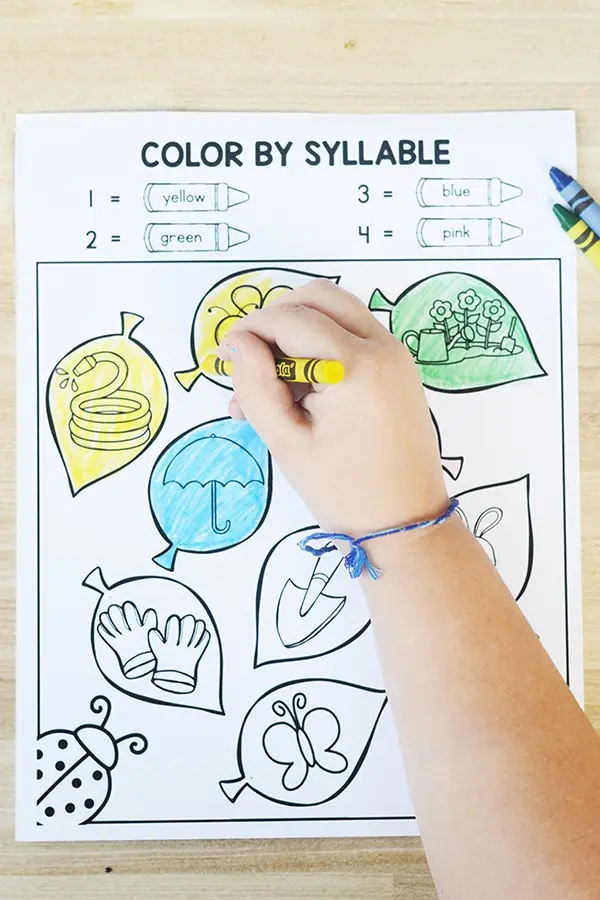
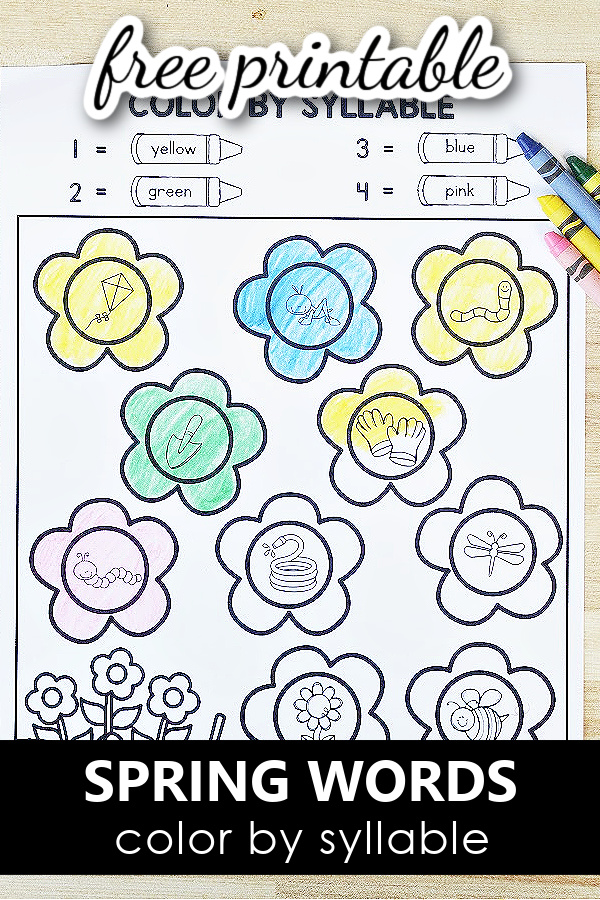
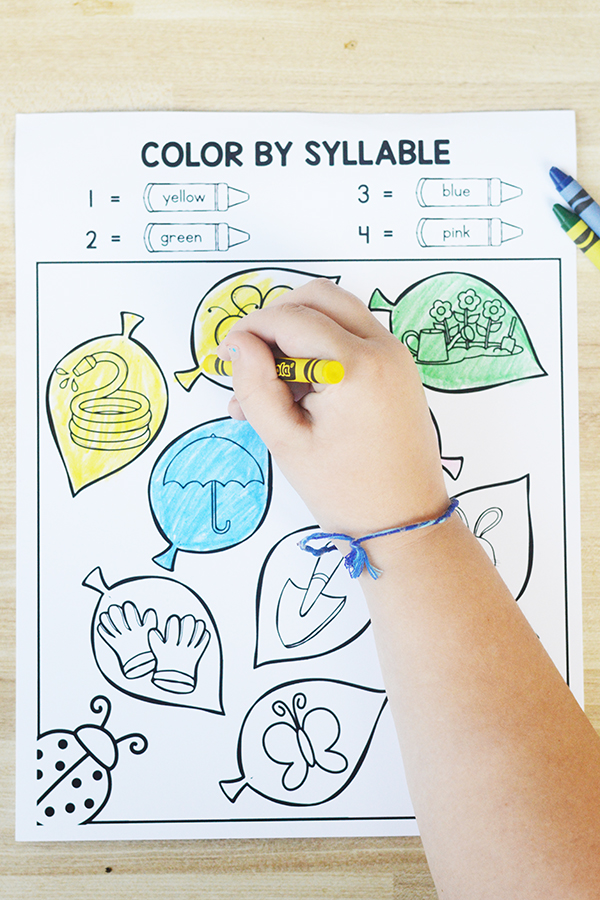
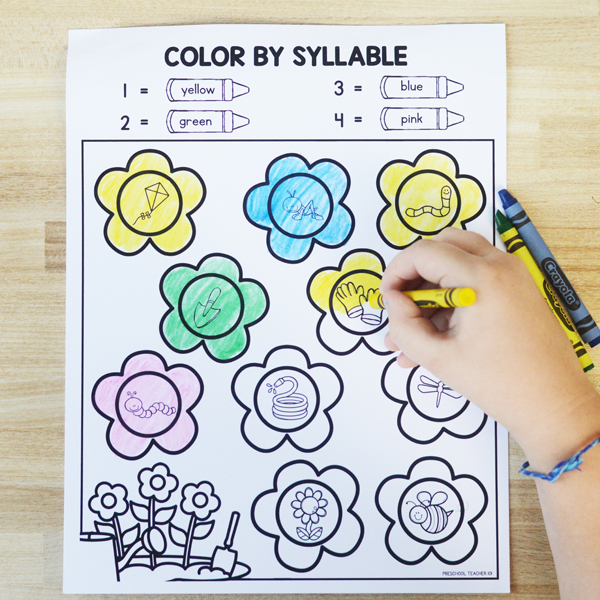
Traditional approaches to teaching syllable segmentation have often relied on rote memorization, flashcards, or repetitive worksheets that quickly lose the attention of young learners. Recognizing this pedagogical bottleneck, curriculum developers have pivoted toward multisensory and gamified instructional designs. The Color by Syllable model capitalizes on this shift. By merging the familiar, comforting mechanics of "color-by-number" worksheets with targeted vocabulary and phonetic analysis, students engage multiple cognitive pathways simultaneously. They must visually decode an image, verbally articulate the associated vocabulary word, segment the word into its constituent syllables, match the syllable count to a color key, and finally execute the fine-motor coloring task.
This multi-step cognitive chain ensures that the activity functions as much more than a simple coloring page. It is a holistic exercise that reinforces vocabulary acquisition, auditory discrimination, and fine-motor control within a single, cohesive framework.
DETAILED CHRONOLOGY AND INTEGRATION INTO SEASONAL CURRICULA
The rollout of the Spring Color by Syllable resource is strategically timed to coincide with a period of renewal in both the natural world and the academic calendar. As preschools and kindergartens transition into spring-themed modules—exploring topics such as gardening, changing weather, botany, and animal life cycles—educators frequently seek ways to maintain academic rigor without sacrificing seasonal engagement.
Phase 1: Conceptualization and Pedagogical Alignment
The development of the spring-specific packet began with an exhaustive review of early childhood literacy standards. Designers collaborated with veteran preschool and kindergarten educators to identify high-frequency spring vocabulary words that naturally span one to five syllables. Ensuring that students are familiar with these terms before attempting independent work is a core tenet of the instructional design; consequently, teachers are advised to introduce and discuss the vocabulary during circle time or guided instruction prior to releasing the worksheets for independent literacy centers.
Phase 2: Pilot Testing in Literacy Centers
During initial classroom trials, the color-by-syllable sheets were evaluated across three primary educational settings:
Dedicated Literacy Centers: Small-group stations where students rotated through hands-on phonics and phonological awareness tasks.
Fast-Finisher Stations: Independent, self-directed zones designed to keep advanced or early-completing students constructively engaged while peers finished primary assignments.
Take-Home Practice: Collaborative packets sent home to bridge the gap between classroom instruction and parental involvement in early literacy.
Feedback from educators during the pilot phase highlighted the "no-prep" nature of the activity as a major operational advantage. In an era where teachers face mounting administrative burdens and limited preparation time, ready-to-print resources that require zero specialized manipulatives or cutting offer immediate utility.
Phase 3: Expansion into a Comprehensive Year-Long Framework
Building upon the success of the spring-themed release, curriculum designers expanded the methodology into a comprehensive 33-page, year-long set. This overarching framework ensures that educators do not have to reinvent their phonological awareness strategies with each changing season. By maintaining a consistent, predictable instructional format across autumn, winter, spring, and summer holidays, students reduce their cognitive load regarding how to complete the task, allowing them to focus entirely on the content—the phonetic structure of the words themselves.
SUPPORTING CONTEXT & METRICS: THE SCIENCE OF READING IN ACTION
The integration of color-by-syllable activities into early childhood classrooms is supported by contemporary educational metrics and the overarching framework of the Science of Reading. Research consistently demonstrates that explicit instruction in phonological awareness significantly reduces the incidence of reading difficulties later in elementary school.
Key Metrics in Phonological Development
Auditory Discrimination Improvement: Classrooms utilizing multisensory syllable segmentation activities report a measurable increase in students’ ability to isolate individual word parts within four to six weeks of consistent implementation.
Engagement Longevity: Observational studies comparing traditional worksheet drills to color-by-code phonics activities indicate a 40% increase in sustained student on-task behavior during independent learning blocks.
Differentiation Efficacy: Because the resource suite includes multiple variations—ranging from simple one- and two-syllable differentiation up to complex five-syllable challenges—teachers can seamlessly differentiate instruction for diverse learning needs within the same classroom environment.
Activity Type
Prep Time
Cognitive Engagement
Fine Motor Integration
Differentiation Potential
Traditional Flashcards
Low
Low
None
Moderate
Manipulative Counting Blocks
Moderate
Moderate
Low
High
Color-by-Syllable Worksheets
Zero (No-Prep)
High
High
High
The table above illustrates why no-prep color-by-syllable sheets have gained rapid traction among early childhood educators. By combining high cognitive engagement with fine-motor practice, the activity satisfies multiple developmental domains simultaneously.
OFFICIAL STATEMENTS AND EXPERT PERSPECTIVES
Early childhood specialists and literacy advocates have increasingly emphasized the necessity of blending structural rigor with creative expression.
Dr. Elena Vance, a prominent researcher in early language acquisition, notes:
"When children engage with language through art and color, the anxiety often associated with academic testing or formal reading instruction dissipates. Syllable segmentation ceases to be a tedious chore and transforms into a code to be cracked. That shift in mindset is foundational to raising lifelong readers."
Furthermore, curriculum designers behind the initiative emphasize that the materials are crafted to support educators at every level of experience.
"Our primary objective was to remove barriers for teachers," states a lead curriculum coordinator for the project. "Teachers shouldn’t have to spend their weekends cutting out laminated cards or searching for specialized pieces. By offering a print-and-go solution that directly supports the Science of Reading, we empower educators to focus on what matters most: interacting directly with their students."
Educators utilizing the platform have echoed these sentiments, noting that the sheets serve as an invaluable diagnostic tool. As children color according to the syllable key, teachers can circulate the room, observe which students are miscounting syllables, and provide immediate, targeted intervention.
FUTURE OUTLOOK: THE TRAJECTORY OF GAMIFIED LITERACY TOOLS
As educational technology and print-based resources continue to evolve in tandem, the future of early childhood literacy instruction points toward increasingly integrated, thematic, and multisensory approaches. The success of the Spring Color by Syllable framework—and its broader year-long counterpart—underscores a vital industry truth: teachers and students alike thrive on resources that are both pedagogically sound and aesthetically delightful.
Looking ahead, developers are exploring several avenues for expansion:
Digital Integration: Adapting print-based color-by-syllable templates into interactive tablet applications for hybrid and digital-first classrooms.
Multilingual Adaptation: Creating parallel vocabulary sets for English Language Learners (ELL), acknowledging the critical need for phonological awareness resources that accommodate diverse linguistic backgrounds.
Expanded Thematic Units: Incorporating localized flora, fauna, and cultural celebrations into future seasonal packets to ensure universal relatability for students across varied geographic regions.
In conclusion, the Spring Color by Syllable initiative represents more than just a seasonal classroom handout. It is a microcosm of modern literacy instruction at its best: evidence-based, teacher-friendly, and profoundly engaging for the young minds it seeks to inspire. By transforming the abstract concept of syllable segmentation into a vibrant, colorful puzzle, educators are not only preparing pre-K and kindergarten students for academic success—they are fostering a genuine, enduring joy for the written and spoken word.