
Executive Overview
In the high-stakes landscape of modern education, instructional coaching and school leadership are frequently positioned as catalysts for institutional improvement. However, when coaches step into classrooms to guide instructional reforms, they routinely encounter friction. Teachers push back. Traditionally, this pushback has been diagnosed as an isolated pathology belonging solely to the educator—a stubborn resistance to change, an obstinate refusal to innovate, or an entrenched comfort with the status quo.
In her landmark ninth book, How to Coach Resistance: Turning Pushback Into Possibility, renowned educational consultant, author, and instructional coach Elena Aguilar dismantles this long-standing narrative. Aguilar posits that resistance is not an isolated behavioral flaw, but rather a dynamic, reciprocal interaction between two people. By examining how coaches inadvertently escalate tension through defensive reactions, Aguilar offers a paradigm shift: coaches hold significantly more agency over these interactions than they realize.
Through practical frameworks such as the ACE (Acknowledge emotions, Cultivate compassion, Expand the story) model and the Gaps Framework, Aguilar challenges the educational community to look past superficial labels of unwillingness. Instead, she urges leaders to investigate underlying emotional drivers, accurately diagnose true developmental gaps—ranging from skill and capacity to cultural competence—and even honor legitimate, "righteous" pushback when top-down directives miss the mark. This comprehensive report explores Aguilar’s transformative insights, offering an investigative look at how reframing teacher pushback can unearth unprecedented pathways for professional growth.
Detailed Chronology: The Evolution of Coaching and the Paradigm Shift
To understand the weight of Aguilar’s latest contribution to educational literature, it is necessary to examine how instructional coaching has evolved over the past several decades.
The Historical Context of Directorial Coaching
In the early iterations of formal instructional coaching, the model was largely hierarchical and prescriptive. School leaders and district-appointed coaches operated from a deficit model. When implementing new reading curriculums, math frameworks, or pedagogical styles, the primary objective was compliance.
If a teacher voiced hesitation regarding a new mandate, the historical protocol was simple: double down on implementation fidelity, reinforce administrative expectations, and view the educator’s hesitation as a failure of adoption. This top-down pressure frequently created an adversarial environment. Teachers felt micromanaged, unheard, and undervalued, while coaches felt chronically frustrated by their inability to drive systemic behavioral change.
The Emergence of Relational Coaching
Over the last ten years, progressive educational theorists began advocating for a relational shift, emphasizing trust, psychological safety, and adult learning theories. Yet, despite these progressive shifts, a fundamental blind spot remained: the underlying assumption that "resistance" was something a teacher had, rather than something a coaching dyad created.

Aguilar’s How to Coach Resistance marks the next major milestone in this chronological evolution. By drawing on decades of field experience, Aguilar documents how modern coaching must move beyond mere rapport-building to actively deconstruct the emotional and psychological friction that occurs in real-time professional conversations. Her framework marks a departure from managing teachers toward truly partnering with them.
Supporting Context & Metrics: Unpacking the Anatomy of Pushback
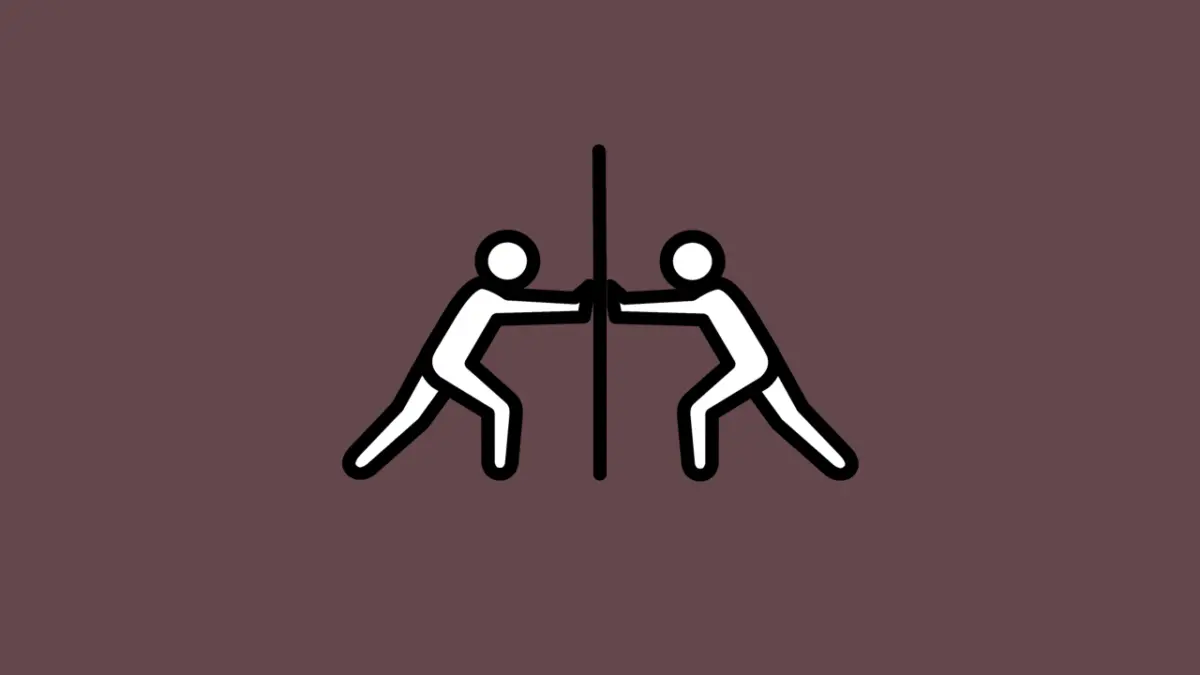
To effectively reframe pushback, educators and school leaders must analyze the mechanics of interpersonal friction. Aguilar compares coaching resistance to two hands pushing forcefully against one another. The resulting pressure is not a one-sided imposition; it is co-created.
The Emotional Undercurrents
When a coach brings urgency to a classroom observation—driven by systemic pressures, test-score mandates, or institutional accountability metrics—that urgency can easily register as judgment to an already overwhelmed teacher.
- The Fear Response: Teachers may harbor acute anxieties regarding their competence, job security, or the immediate emotional fallout of managing unruly student behavior under a new paradigm.
- The Defensive Loop: Faced with perceived criticism, the teacher defends their current methods. In turn, the coach—fearing that their guidance is failing or that they will not meet their own leadership objectives—doubles down on their prescribed solution.
Aguilar’s core thesis is disarmingly simple yet revolutionary: Drop your hand. By stepping back from defensive assertions and choosing curiosity over coercion, the coach breaks the feedback loop.
The ACE Framework in Practice
To operationalize this shift, Aguilar introduces the ACE framework, designed to help coaches navigate the intense emotional terrain that invariably surfaces when pushback is addressed constructively:
- Acknowledge Emotions: Eschewing clinical therapy, coaches simply pause to name the emotional climate in the room. By offering exploratory validation—such as observing that fear or fatigue seems present—the coach communicates profound professional acceptance.
- Cultivate Compassion: Self-judgment often cripples struggling educators. Aguilar suggests prompting teachers to extend the same kindness to themselves that they would offer a trusted colleague. Crucially, Aguilar notes that coaches must first cultivate self-compassion; otherwise, their invitations to vulnerability will ring hollow.
- Expand the Story: Every defensive posture is anchored to an underlying narrative (e.g., "My students cannot handle this rigorous text" or "Administration doesn’t understand my classroom realities"). Unpacking and gently expanding these limiting beliefs allows educators to re-envision what is pedagogically possible.
Diagnosing Real Gaps vs. Assumed Deficits
A critical pitfall in traditional coaching is misinterpreting the root cause of a teacher’s hesitation. When an educator resists a new initiative, administrators frequently diagnose a Will Gap—the assumption that the teacher simply lacks the motivation or desire to improve.
Aguilar’s Gaps Framework categorizes adult professional needs into six distinct domains:

- Skill
- Knowledge
- Capacity
- Will
- Emotional Intelligence
- Cultural Competence
As Aguilar illustrates through her work with secondary math educators resisting literacy-heavy curriculums, what appears to be a "will gap" is frequently a foundational lack of training or knowledge in instructional strategies outside their specific discipline. Accurately diagnosing the gap changes the intervention from punitive supervision to targeted professional development.
Official Perspectives and Expert Insights
Elena Aguilar’s body of work, synthesized through Bright Morning Consulting and her extensive catalogue of publications, represents a gold standard in systemic equity and adult professional learning.
In recent interviews surrounding the release of How to Coach Resistance, Aguilar has underscored that resistance is not an inherently negative phenomenon. In fact, it can frequently serve as a vital indicator of institutional health and professional integrity.
"There are times when resistance is righteous, and there needs to be resistance," Aguilar notes. "Resistance in and of itself is not a bad thing."
When a kindergarten educator is instructed to force five-year-old children to sit rigidly on a carpet for an hour of didactic instruction, their pushback is not a failure of will; it is an alignment with child development best practices. In such scenarios, effective coaches do not attempt to browbeat the teacher into compliance. Instead, they validate the educator’s professional ethics, explore avenues for agency, and help strategize how valid pedagogical concerns can be communicated up the administrative ladder.
Educational leadership experts have echoed these sentiments, noting that school cultures thrive only when dissent is treated as valuable data rather than insubordination. When coaches adopt an ethos of partnership—communicating explicitly, "I’m not here to judge you; I want to be a partner and help you work through this"—the traditional power dynamic dissolves, clearing the path for genuine innovation.
Future Outlook: Implications for School Leadership and Professional Development
As educational institutions navigate post-pandemic recovery, teacher retention crises, and shifting curricular standards, the methodologies outlined in How to Coach Resistance arrive at a critical juncture. The traditional playbook of top-down mandates and compliance-driven coaching is proving unsustainable, contributing directly to educator burnout and high turnover rates.

1. Redefining Professional Development (PD)
School districts must reevaluate how they train instructional coaches and administrative leaders. Professional development programs can no longer focus solely on curricular mastery and observation checklists. They must integrate rigorous training in emotional intelligence, somatic awareness of stress responses, and collaborative dialogue frameworks like the ACE model.
2. Cultivating Systemic Empathy
Building resilient school cultures requires systemic empathy. When coaches and administrators are trained to view resistance as an invitation for inquiry rather than an obstacle to be crushed, schools transform from rigid bureaucracies into vibrant professional learning communities.
3. Empowering Educator Voice
Ultimately, Aguilar’s work signals a future where teachers are actively integrated into the design of instructional change. By honoring legitimate pushback and addressing true developmental gaps across skill, capacity, and emotional intelligence, educational systems can harness the collective wisdom of their teaching corps.
Turning pushback into possibility is not merely a coaching technique; it is a foundational prerequisite for creating sustainable, equitable, and thriving educational environments for educators and students alike.

