In the ongoing national dialogue surrounding literacy in education, the spotlight has long been monopolized by reading instruction. Debates over phonics, fluency, and reading comprehension routinely dominate school board meetings, legislative agendas, and professional development seminars. Yet, a glaring omission persists within this educational discourse: writing instruction.
Despite the deep, inseparable symbiosis between reading and writing, the latter is frequently sidelined. This systemic oversight leaves educators unequipped to handle the heavy cognitive demands placed on students when they are asked to put pen to paper.
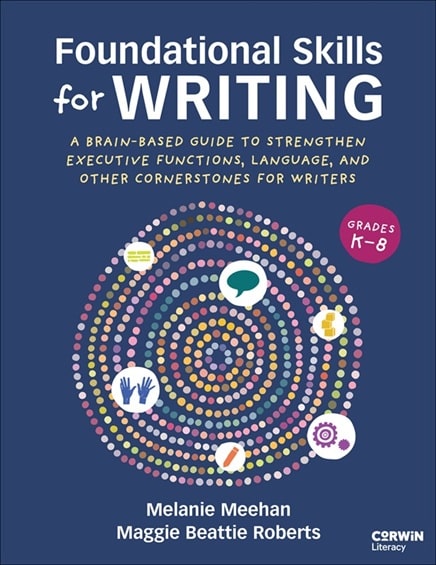
To address this critical imbalance, literacy experts Melanie Meehan and Maggie Roberts have released a groundbreaking resource titled Foundational Skills for Writing: A Brain-Based Guide to Strengthen Executive Functions, Language, and Other Cornerstones for Writers. Meehan, a former curriculum coordinator and writing center founder, and Roberts, a literacy consultant and veteran classroom teacher with two decades of experience, dive deep into the neurological mechanics of writing. Their work highlights what the human brain must accomplish during composition and identifies the invisible barriers that trip up developing writers.
At the heart of their pedagogical framework are "Minute Moves"—short, highly flexible micro-activities designed to be seamlessly integrated into daily classroom transitions. By automatizing foundational transcription skills, sentence structures, and executive functions, these strategies liberate vital cognitive energy, empowering students to focus on the higher-order art of storytelling and persuasive argument.
Detailed Chronology and Pedagogical Evolution
The journey toward Foundational Skills for Writing began long before the book’s publication in early 2026. For years, Meehan and Roberts observed a recurring disconnect in language arts classrooms: students were expected to produce multi-paragraph essays and creative narratives without ever being systematically taught the underlying cognitive mechanics required to do so.
As literacy frameworks shifted toward structured literacy—largely focusing on decoding and word recognition—writing instruction was often relegated to an afterthought of "just write more." This approach overwhelmed students who struggled with the physical act of handwriting, the mental gymnastics of spelling, or the structural complexities of syntax.
Recognizing that reading and writing are reciprocal processes that draw upon overlapping cognitive systems, Meehan and Roberts synthesized years of classroom observation, cognitive science, and curriculum design. They mapped the writing process to core brain functions, categorizing them into three pillars:
Transcription Skills: The mechanical processes of handwriting, keyboarding, spelling, and gross/fine motor control.
Oral Language: The speaking and listening precursors to text, encompassing vocabulary and sentence construction.
Executive Functioning: The cognitive control systems—including working memory, cognitive flexibility, and inhibitory control—that govern planning and revision.
Earlier this month, the release of their book formalized this research-backed framework, offering educators actionable, low-stakes routines designed to build neurological pathways incrementally.
Supporting Context and Mechanics: The "Minute Moves" Framework
To make brain-based writing instruction manageable for busy educators, Meehan and Roberts developed the concept of "Minute Moves." These are bite-sized, two-to-three-minute interventions that can be dropped into hallway transitions, utilized as warm-ups, or practiced on the walk to the cafeteria. By targeting specific cognitive chokepoints, these exercises prevent cognitive overload.
The framework is divided into three major domains:
1. Spelling Minute Moves: Unlocking the Code
Spelling is frequently taught as a matter of rote memorization, creating heavy burdens on working memory. The authors advocate for a morphological approach, inspired by spelling researcher Rebecca Treiman, which treats words as interconnected families rather than isolated lists.
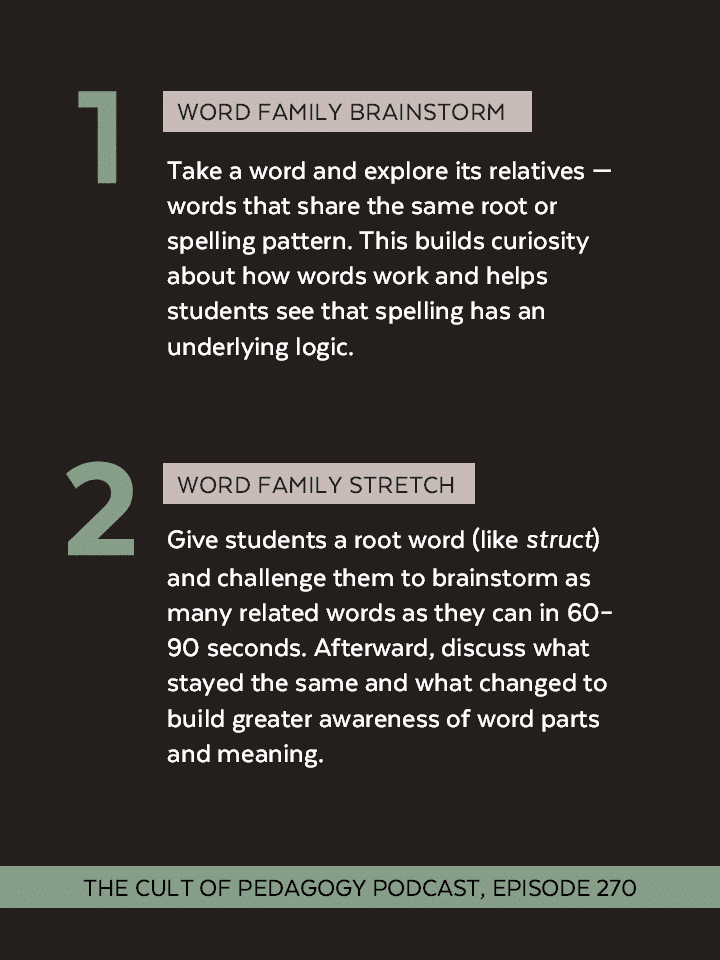
Word Family Brainstorm: Instead of treating homophones like two, to, and too as isolated anomalies, educators connect two to morphological relatives like twin, twine, and twenty, revealing a shared concept of "twoness." Similarly, tracing complex words like decision back to decide, incision, and scissors uncovers a shared Latin root meaning "to cut," embedding the spelling permanently into the student’s cognitive network.
Word Family Stretch: Students are given a bound or free root—such as struct (meaning "to build")—and given 60 to 90 seconds to brainstorm derivatives like structure, destruction, construct, and instruction. A subsequent debrief analyzes how prefixes and suffixes shift meaning, internalizing structural patterns across academic vocabulary.
Prefix Swap: By systematically altering prefixes on base words (e.g., transforming form into reform, transform, inform, and deform), students observe how subtle morphological tweaks shift definitions. This is particularly advantageous for multilingual learners, who frequently recognize roots like bene and mal from their native languages.
2. Sentence Construction Minute Moves: Moving Beyond Choppy Prose
Many students become trapped in a loop of writing short, isolated sentences because constructing complex syntax demands more working memory than they have available.
Sentence Scramble: Instructors break a sentence down into individual word cards, scramble them, and have students physically reconstruct the sentence. Follow-up discussions prompt students to justify their organizational choices, building an internalized grammar map.
Sentence Expander: Moving away from abstract grammatical terms like "subject" and "predicate," teachers use intuitive framing such as "doer" and "doing." Starting with a kernel sentence like The cat purrs, students answer iterative questions (Which cat? What color? Where? When? Why?) to organically grow the sentence into a rich, complex structure.
Sentence Combining: A high-impact strategy where students merge bare-bones sentences (e.g., My cat is orange and My cat is big into My big orange cat…). Gradually introducing conjunctions teaches students how to synthesize information efficiently, a skill that transfers directly to independent essay composition.
Cognitive flexibility—the ability to shift perspectives, revise approaches, and entertain alternatives—is essential for mature writing.
What’s Another Way?: Students take an existing sentence and radically alter its form. They practice starting with dependent clauses, swapping nouns for pronouns, or compressing verbose statements into punchy, high-impact declarations. Meehan emphasizes that students find profound empowerment when they realize they are practicing an advanced executive function.
New Angle: Zooming out to the narrative level, students retell familiar stories, historical events, or short animated films from an alternative character’s perspective. By stepping into the shoes of a secondary character or even an opposing force, students develop empathy, perspective-taking, and advanced narrative control.
Official Statements and Expert Insights
Throughout their interviews and professional guides, Meehan and Roberts emphasize the profound psychological and neurological benefits of playful, low-stakes writing practice.
"The more that you can get kids curious and thinking words are cool, the better," Melanie Meehan notes, highlighting how curiosity disarms the anxiety often associated with spelling and grammar.
On the structural level, Maggie Roberts points out the immense pedagogical return on investment provided by targeted sentence-level work:
"Sentence combining is a really high-impact, quick way for kids to graduate from writing a series of simple sentences to ones that are more syntactically complex, interesting, and precise."
Furthermore, the implications of these exercises extend far beyond the margins of a notebook. Meehan observes that narrative perspective-shifting exercises—such as rewriting a scene from multiple points of view—build capacities fundamental to democratic discourse:
"It’s not just about writing and it’s not just about watching this show, but it’s also about democracy and thinking about how other people think and what their perspectives are."
Future Outlook: Integrating Writing into the Broader Literacy Wave
As school districts nationwide continue to re-evaluate their language arts curricula under the banner of the "Science of Reading," experts argue that the movement must inevitably evolve into a comprehensive "Science of Literacy." Reading and writing cannot continue to occupy isolated silos in the daily schedule.
By grounding writing instruction in brain-based cognitive science and breaking complex compositional tasks down into manageable, micro-interventions like "Minute Moves," educators can dismantle the invisible barriers holding students back. As Foundational Skills for Writing gains traction in professional learning communities, it signals a promising shift toward a more holistic, neurologically sound approach to literacy education—one where every child is equipped not only to decode the world around them, but to write their own place within it.