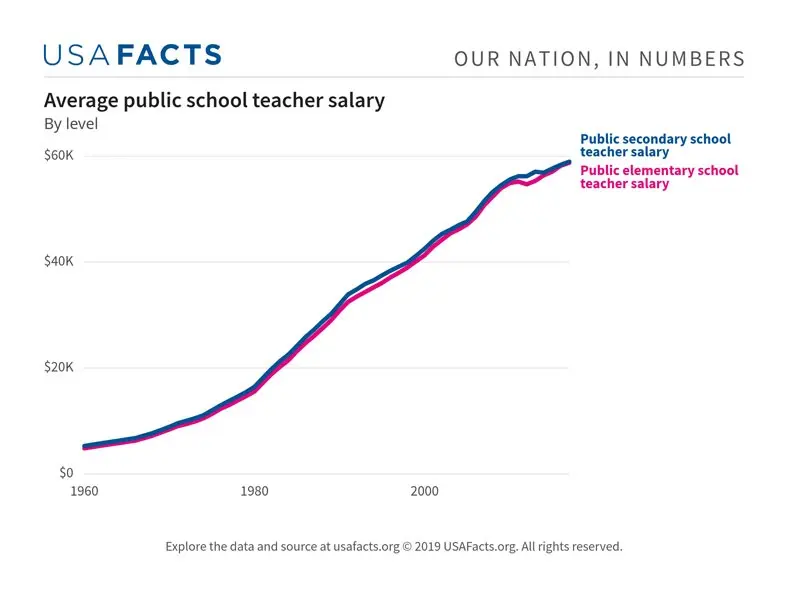
For educators navigating the economic realities of the twenty-first century, the phrase "teachers’ salaries" has become synonymous with a challenging fiscal balancing act. While educators play a foundational role in shaping future generations, median national compensation often struggles to keep pace with the rising costs of housing, childcare, and everyday inflation. According to recent data from the U.S. Bureau of Labor Statistics (BLS), median annual wages sit at $63,970 for elementary school teachers, $64,370 for middle school teachers, and $72,040 for high school teachers. Even with top-earning high school educators reaching the 90th percentile at approximately $107,600, the financial gap between educator pay and modern living expenses remains wide.
To bridge this fiscal divide, a growing number of educators are turning to side hustles. However, teaching is an intensely demanding profession characterized by lesson planning, grading, extracurricular duties, and emotional labor. Consequently, a successful side hustle cannot simply be another grueling job; it must strategically leverage an educator’s existing skill set, fit seamlessly around the academic calendar, and respect precious personal downtime.
This comprehensive report examines the economic landscape of modern teaching, explores the 10 most viable side hustles for educators—ranked by setup speed and scalability—and provides a critical framework for balancing supplemental income without risking professional burnout.
Detailed Chronology: The Evolution of the Educator Economy
The modern teacher’s economic landscape has evolved significantly over the past decade, driven by structural shifts in labor markets, the widespread adoption of remote learning technologies, and fluctuating state-level funding structures.
Pre-2020: Historically, teacher moonlighting primarily took the form of traditional, localized secondary jobs. Educators typically worked as summer camp directors, community pool lifeguards, local retail associates, or after-school babysitters. While these roles provided quick supplemental cash, they rarely capitalized on the advanced pedagogical training, curriculum design expertise, or specialized subject-matter knowledge intrinsic to the teaching profession.
2020–2022 (The Remote Pivot): The global pandemic fundamentally altered the educational technology landscape. As schools rapidly transitioned to hybrid and remote models, teachers mastered digital whiteboards, asynchronous video recording platforms, virtual classroom management, and cloud-based assessment tools. This technological baptism by fire inadvertently equipped educators with digital entrepreneurship skills. Suddenly, a tutor was no longer restricted to driving across town for a single client; they could seamlessly connect with students statewide or internationally via video conferencing platforms.
2023–Present (The Digital Marketplace Expansion): Today, the educator economy is defined by digital scalability. Platforms like Teachers Pay Teachers (TpT), Etsy, Udemy, and specialized online coaching marketplaces allow educators to monetize their daily lesson plans, instructional frameworks, and specialized coaching skills. Rather than trading direct hours for dollars through low-wage gig work, forward-thinking educators are building digital assets that generate passive or semi-passive revenue streams year-round.
Supporting Context & Metrics: Educator Salaries and Job Outlook
Understanding why educators seek secondary income requires examining hard data regarding compensation mechanics and long-term labor projections. Teacher salaries are primarily determined by two core metrics: years of continuous classroom experience and geographic location (state and district funding models). While advanced degrees and National Board Certification can bump compensation tiers, compensation schedules vary wildly across municipal lines.
National Wage and Employment Projections (BLS & Projections Central)
Occupation
Median Annual Wage
Projected Job Growth (2024–2034)
Estimated Annual Openings
Elementary School Teachers
$63,970
-2.0%
~91,000
Middle School Teachers
$64,370
-2.0%
Not explicitly isolated
High School Teachers
$72,040
-1.6%
~66,200
Note: Data reflects May 2025 BLS figures and Projections Central long-term projections accessed in August 2026. While percentage growth shows a slight structural decline, massive retirement waves and career transitions ensure tens of thousands of annual job openings.
Beyond direct salary, school districts provide robust benefit packages—including comprehensive health insurance, state pensions, and paid leave—that standard gig-economy side hustles cannot replace. Nonetheless, these benefits alone often fail to cover immediate financial strains like escalating mortgages, student loan repayments, and soaring daycare expenses. This economic reality makes a well-chosen side hustle an invaluable financial stabilizer.
The 10 Best Side Hustles for Teachers
When evaluating a side hustle, educators must weigh three vital factors: What do I already know how to do? What time do I realistically have (free periods, weekends, or summer break)? Am I looking for immediate liquidity or long-term passive growth?
1. Tutoring and Academic Coaching
Tutoring remains the most direct translation of classroom expertise into extra income. Whether conducted in-person, through specialized virtual agencies, or independently, private tutoring commands high hourly rates. Furthermore, English as a Second Language (ESL) tutoring opens global markets, allowing teachers to work with international students across different time zones. It is the fastest hustle to launch, requiring little more than subject-matter mastery, a defined rate card, and open calendar blocks.
2. Curriculum Development and Lesson Planning
Every day, teachers design innovative worksheets, differentiated reading packets, and engaging unit assessments. Platforms like Teachers Pay Teachers (TpT), Etsy, and personal author websites allow educators to package these materials and sell them to a global audience. While building a following takes patience, this hustle operates on a "build once, sell repeatedly" model, generating ongoing passive income long after the initial creation phase is complete.
3. Online Teaching and Asynchronous Course Creation
For educators looking to scale beyond one-on-one tutoring, platforms like Udemy or Teachable provide the infrastructure to host structured online courses. By recording comprehensive test-prep modules, specialized study skills workshops, or professional development courses for fellow educators, teachers can monetize their expertise without trading live hours. Given the continuous growth of global e-learning markets, digital course creation serves as an ideal summer project.
4. Freelance Writing and Content Creation
Educators are inherently skilled communicators, editors, and researchers. Freelance writing platforms and digital marketing agencies actively seek out professionals who can translate complex concepts into clear, engaging copy. Whether writing educational blog posts, drafting curriculum summaries, or contributing to digital design platforms like Canva, freelance content creation offers fast payouts and complete schedule flexibility independent of the traditional school calendar.
5. Educational Consulting for Homeschool Families
The steady expansion of homeschooling and alternative education pods has created robust demand for private educational consultants. Families frequently hire experienced teachers to design personalized scopes and sequences, track student academic progress, and coordinate social enrichment activities. This role appeals strongly to teachers who want steady, retainer-based client relationships rather than fluctuating, one-off tutoring gigs.
6. Arts, Crafts, and Handmade Goods
For educators with a creative flair—ranging from custom classroom decor and motivational bulletin board displays to bespoke arts and crafts—online marketplaces like Etsy offer a remarkably low-cost entry barrier (with minimal listing fees starting at around $0.20 per item). It provides a low-risk environment to test product viability before committing significant personal time.
7. Extracurricular Coaching and Youth Sports Leadership
School districts, local municipal recreation departments, and private athletic clubs perpetually seek qualified coaches and youth mentors. Teachers who already manage school sports teams or clubs can easily extend their expertise into summer leagues, specialized sports camps, or community aquatic programs (such as swimming instruction and lifeguarding), turning a seasonal passion into steady auxiliary cash.
8. Summer School Teaching and Camp Counseling
For teachers who prefer structured environments over entrepreneurial ventures, summer school programs administered directly through their home districts offer familiar routines with enhanced daily pay. Conversely, camp counseling provides an energetic, highly active alternative that offers a refreshing mental break from the rigorous academic testing cycles of the traditional school year.
9. Short-Term Property Rentals
Educators who own multi-room homes, mother-in-law suites, or properties left vacant during summer travels frequently leverage short-term rental platforms like Airbnb to generate substantial revenue. (For context, strategic partnerships—such as historic programs established via NEA Member Benefits—have historically sought to assist educators with hosting frameworks). While property management requires significant upfront setup regarding insurance, furnishings, and guest turnover, it yields high returns during peak travel seasons.
10. Delivery, Rideshare, and On-Demand Driving
For absolute schedule autonomy, on-demand driving and delivery services provide unmatched flexibility. Teachers can log on for a single lunch hour or weekend afternoon without coordinating schedules with clients or managing administrative prep work. While vehicle maintenance, fuel costs, and mileage tracking must be factored into net earnings, it remains the ultimate plug-and-play emergency income source.
Official Statements and Expert Perspectives
Balancing a demanding pedagogical career with secondary entrepreneurial pursuits requires strict boundary management. Industry experts and experienced educators emphasize that side hustles should enhance professional stability rather than catalyze professional burnout.
"Working teachers have already mapped out which side hustles are worth a colleague’s limited time and which ones just eat into a weekend for a little cash. Most teachers who take on a side hustle manage to fit it in without it swallowing the rest of their week—the ones who burn out are usually the ones who never set a limit in the first place."
— Amanda R. Castillo, M.Ed. (Education Writer & Former K–12 Educator)
Furthermore, legal and ethical considerations must guide an educator’s choice of secondary employment. Ethically and contractually, educators must ensure their side hustles never create conflicts of interest—such as privately tutoring students currently enrolled in their own daytime classrooms, even when district policies technically permit it. Professional boundaries protect both student equity and educator well-being.
Future Outlook: Building Sustainable Income and Long-Term Mobility
While side hustles provide crucial short-term relief against inflationary pressures, experts advise viewing them as bridges rather than permanent crutches. Long-term financial security in education ultimately relies on structural career advancement. Pursuing a master’s degree, earning specialized subject endorsements, obtaining National Board Certification, or transitioning into administrative and instructional leadership roles ensures higher base compensation year after year.
As remote learning infrastructures continue to mature, the toolkit available to modern educators will only expand. By thoughtfully selecting a side hustle that aligns with their lifestyle, setting strict hourly limits, and treating secondary income as a strategic supplement rather than a permanent lifestyle replacement, educators can successfully navigate economic challenges while continuing to shape the minds of tomorrow.