
Executive Overview
In an era dominated by hyper-connectivity, digital screens, and tightly scheduled routines, educators, parents, and developmental psychologists are increasingly searching for methods to cultivate foundational brain-based capabilities in children and adolescents. At the forefront of this developmental movement is a surprisingly accessible resource: the natural world.
Recent research underscores a profound correlation between outdoor engagement and the enhancement of executive functioning skills—the core neurological processes that govern our ability to plan, focus attention, remember instructions, juggle multiple tasks successfully, and regulate impulse control. Far from being merely a recreational outlet, nature acts as an organic, multi-sensory gymnasium for the developing brain.
This comprehensive report explores the intersection of environmental psychology and neurodevelopment, detailing how natural greenspaces alleviate cognitive fatigue, promote self-regulation, and build psychological resilience. Furthermore, this piece outlines an extensive, actionable catalog of over a dozen practical outdoor and nature-integrated activities designed to purposefully strengthen executive functioning in kids and teens, regardless of whether they live in rural landscapes or dense urban environments.
Detailed Chronology: The Evolution of Nature-Based Cognitive Interventions
The scientific acknowledgment of nature’s impact on human psychology is not entirely new, but its application to targeted neurodevelopmental growth—specifically executive functioning—has evolved significantly over the past several decades.
Phase 1: The Recognition of Environmental Restoration (Late 20th Century)
In the 1980s and 1990s, environmental psychologists pioneered foundational frameworks like Attention Restoration Theory (ART). Researchers posited that urban environments demand "directed attention," a draining cognitive resource required to filter out constant stimuli, traffic, and digital notifications. Conversely, nature engages "soft fascination"—effortless attention sparked by clouds, rustling leaves, or moving water. This shift allows the brain’s prefrontal cortex to replenish its energy reserves.
Phase 2: The Shift Toward Holistic Child Development (Early 2000s)
As childhood increasingly migrated indoors, public health advocates and educators noted rising diagnoses of attention deficits, anxiety, and self-regulation challenges. Seminal works, such as Richard Louv’s Last Child in the Woods (2005), popularized the concept of "nature deficit disorder," prompting educators to experiment with outdoor classrooms, forest schools, and experiential learning environments to combat sedentary lifestyles and mental exhaustion.
Phase 3: Modern Neuro-Scientific Validation (2010s–Present)
Recent advances in neuroimaging and large-scale public health studies have transformed outdoor education from an intuitive preference into an evidence-based intervention strategy. Contemporary research confirms that regular exposure to greenspaces measurably alters brain chemistry, reduces stress hormones, and physically supports the maturation of the neural networks responsible for executive control. Today, schools and pediatric developmental specialists utilize targeted nature-based activities to intentionally build cognitive flexibility, working memory, and impulse control in youth.
Supporting Context & Metrics: The Science Behind the Green Gym
To understand why nature is uniquely suited for building executive functioning skills, one must examine the empirical data linking environmental exposure to psychological and cognitive well-being.
- The 20-Minute Stress Reduction Window: According to landmark research published by Harvard Health Publishing, spending as little as 20 minutes outside connecting with nature measurably decreases cortisol (stress hormone) levels. Lower stress directly correlates with enhanced prefrontal cortex functioning, allowing for better emotional regulation and impulse control.
- The Two-Hour Well-Being Threshold: A large-scale population study published in Scientific Reports, surveying over 20,000 participants, revealed that individuals who spent at least 120 minutes (two hours) a week outdoors reported significantly higher levels of psychological well-being and vitality compared to those with zero nature exposure.
- Cognitive Function and Attention: An extensive peer-reviewed meta-analysis highlights robust associations between natural environments and improved mental health, enhanced sleep architecture, elevated cognitive processing speeds, and heightened attentional capacity in youth.
Executive functioning skills—which include working memory, cognitive flexibility, and inhibitory control—are the invisible conductors of human behavior. They dictate how a child transitions between tasks, organizes long-term projects, resolves interpersonal conflicts, and bounces back from frustration. Because nature is inherently unpredictable, dynamic, and calming, it provides an ideal backdrop for practicing these critical brain-based skills.
Official Statements and Expert Insights
Developmental specialists and educational researchers emphasize that building executive functioning does not require elaborate, expensive technological apparatuses or rigid classroom drills.
"Nature is the original classroom," notes educational development literature from leading behavioral specialists. "Being outside provides a motivational, engaging context filled with infinite opportunities to expand thinking. When kids interact with greenspaces, they aren’t just playing; they are actively exercising the neural circuits responsible for planning, self-control, and attention."
Furthermore, clinical psychologists highlight the role of unstructured environmental interaction in fostering intrinsic motivation. When children are removed from the hyper-curated, instant-gratification loops of digital devices, nature forces them to invent their own boundaries, solve spatial puzzles, and navigate physical challenges cooperatively. This self-directed engagement is foundational for developing executive control that translates directly into academic achievement and emotional resilience.
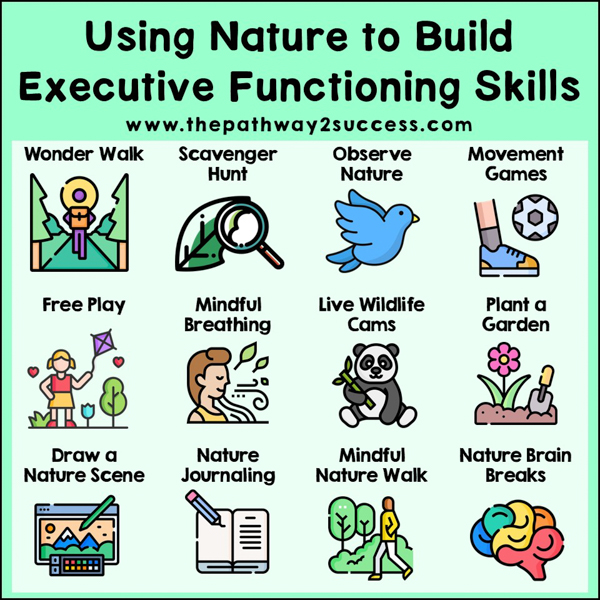
Practical Applications: Over a Dozen Nature Activities to Build Executive Functioning
Any accessible greenspace—whether a school courtyard, a suburban backyard, a local neighborhood park, or a rugged wilderness trail—can serve as a developmental laboratory. Below are 15 structured and unstructured nature-based activities categorized by the specific executive functioning skills they target.
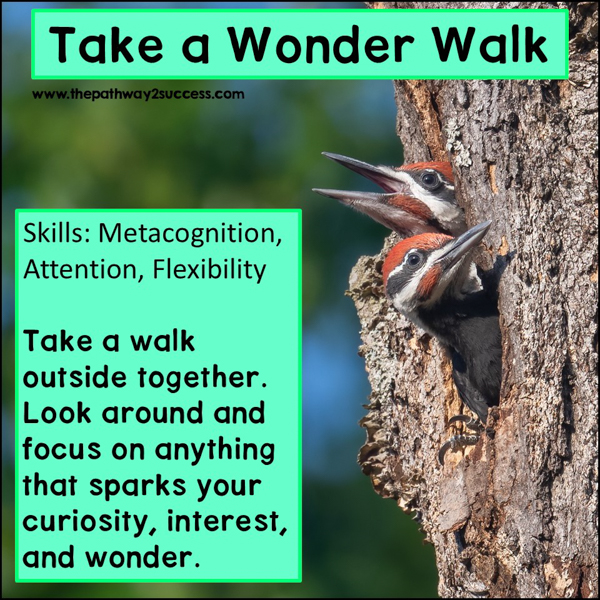
1. Take a Wonder Walk
- Target Skills: Metacognition, attention, cognitive flexibility, intrinsic motivation.
- Implementation: Lead children on a walk where the explicit goal is to focus on elements that spark curiosity. Encourage them to compile a "wonder list"—a collection of questions about natural phenomena (e.g., "Why are pinecones shaped like spirals?" or "How do ants communicate?"). Later, support them in taking action by researching the answers together.
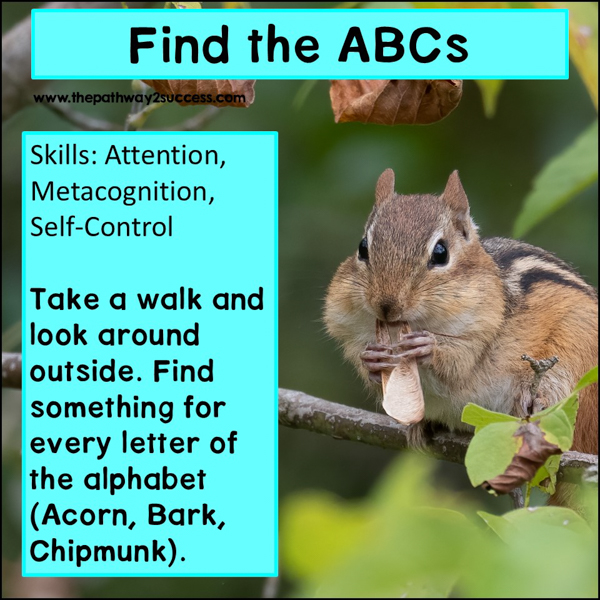
2. Find the ABCs
- Target Skills: Metacognition, attention, self-control.
- Implementation: While navigating an outdoor path, challenge participants to find a natural object starting with each letter of the alphabet sequentially, beginning with ‘A’ (e.g., air, acorns, ants). This game teaches learners that attention can be intentionally directed and reclaimed when distractions arise.
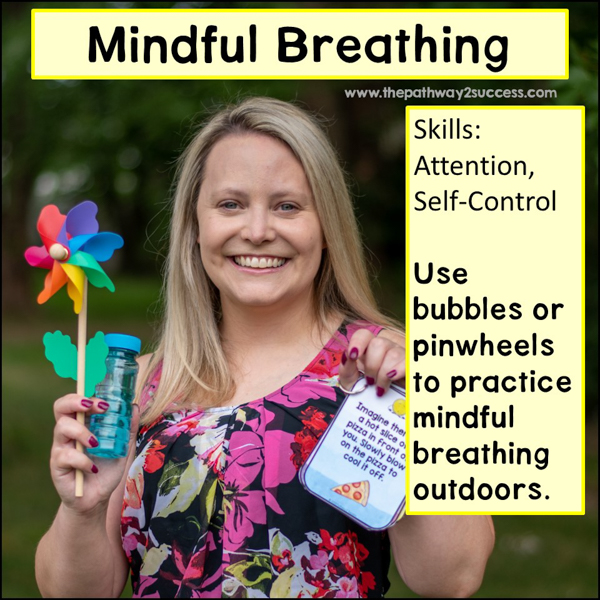
3. Outdoor Mindful Breathing
- Target Skills: Self-control, attention.
- Implementation: Combine deep breathing exercises with sensory elements of the outdoors. Practice slow inhales and exhales while blowing bubbles, using pinwheels in the breeze, or utilizing themed techniques like "bear breathing" or "butterfly breathing." This builds an accessible, portable self-regulation tool for high-stress moments.
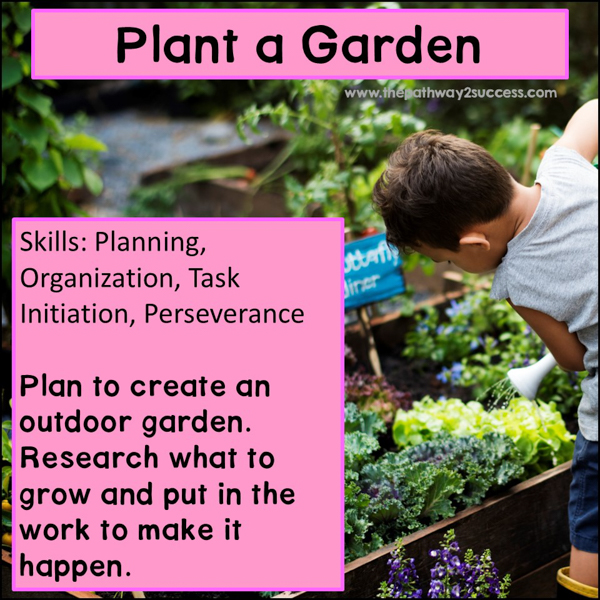
4. Plant a Garden
- Target Skills: Planning, organization, task initiation, perseverance.
- Implementation: Involve kids in every phase of establishing an outdoor garden, from researching plant varieties and listing required tools (soil, seeds, watering cans) to executing the physical planting. Gardening instills long-term project management and the patience required to see a goal through to completion.
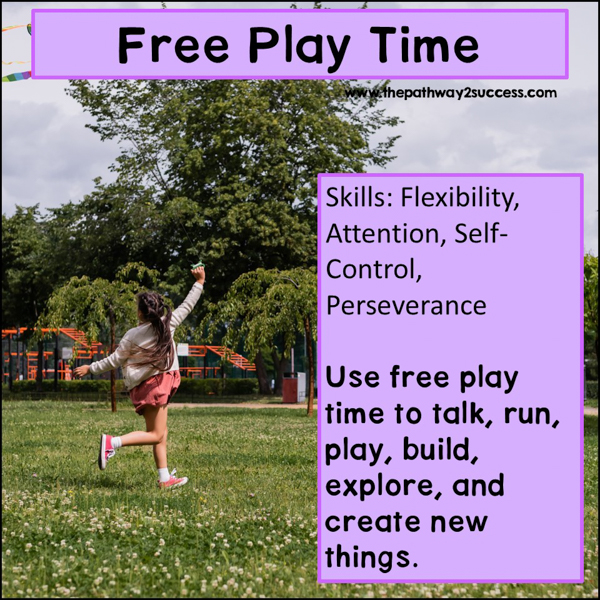
5. Free Play
- Target Skills: Flexibility, attention, self-control, perseverance, time management.
- Implementation: Provide unstructured, unscripted time in a natural area. Without adult-imposed rules or games, groups of kids must negotiate social dynamics, invent rules, resolve disputes, and explore independently, fostering deep cognitive and emotional flexibility.
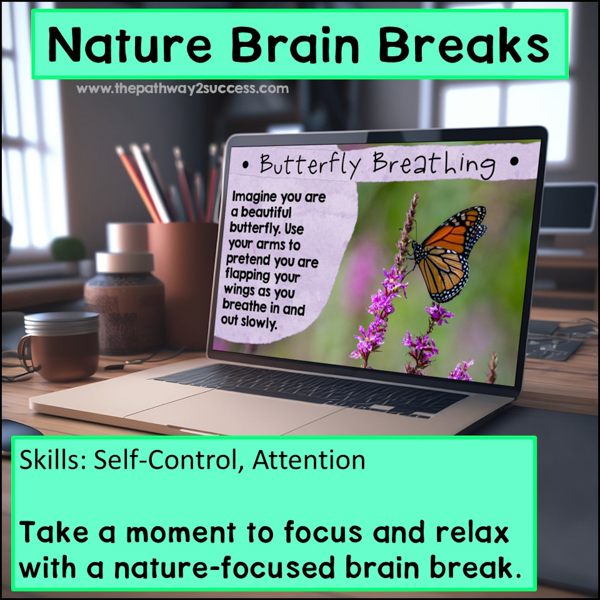
6. Nature Brain Breaks
- Target Skills: Self-control, attention.
- Implementation: Integrate short, nature-themed somatic breaks into study sessions—such as pretending to soar like a hawk with outspread arms while practicing deep diaphragmatic breathing. These micro-breaks restore depleted attentional resources.
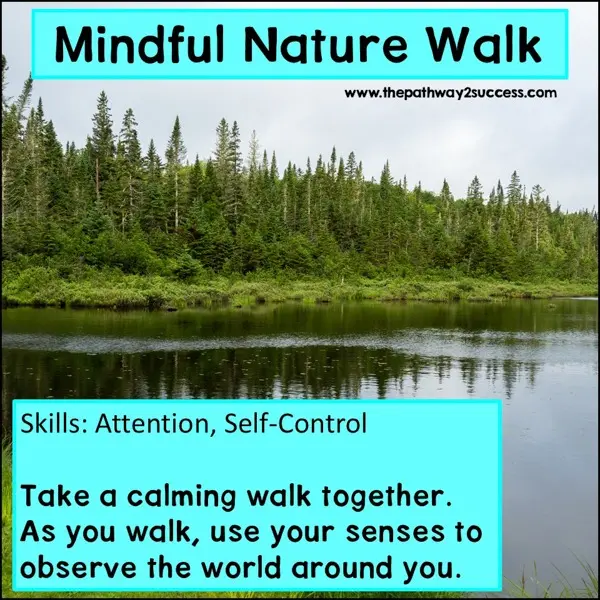
7. Mindful Nature Walk
- Target Skills: Attention, self-control, emotional regulation.
- Implementation: Walk slowly and deliberately through a greenspace, pausing to engage all five senses: what can be seen, heard, smelled, and felt? Afterward, facilitate reflection by having participants list at least three specific details they observed.
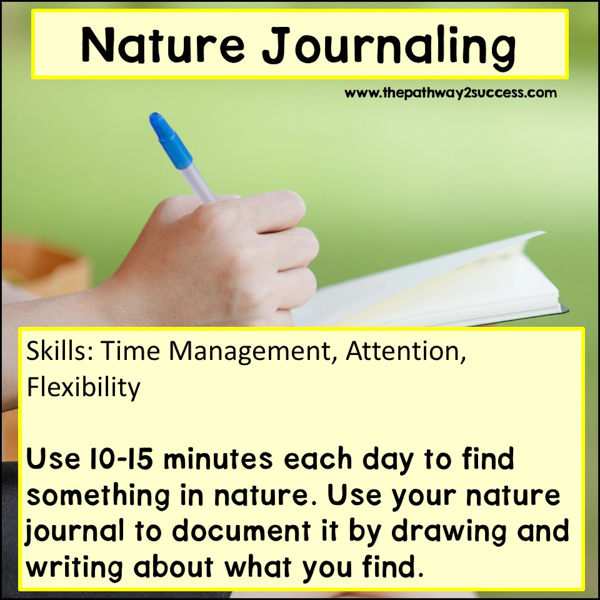
8. Start a Nature Journal
- Target Skills: Time management, attention, cognitive flexibility.
- Implementation: Equip children with a blank notebook to dedicate a few uninterrupted minutes daily to sketching and describing an interesting natural object or phenomenon, fostering observational discipline and reflective writing.
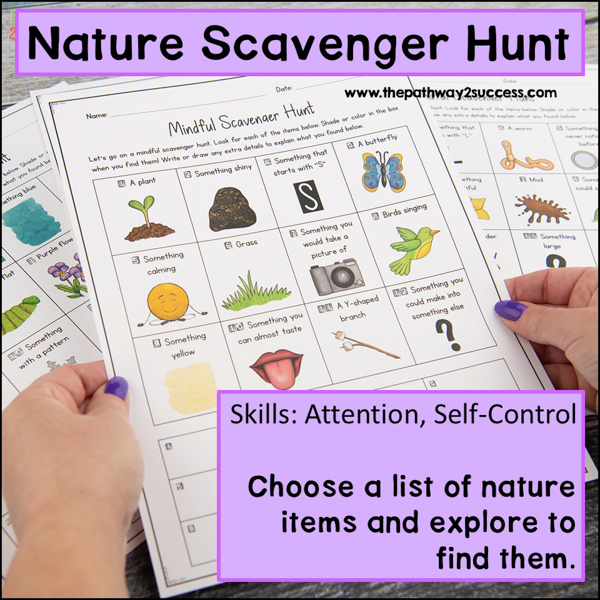
9. Nature Scavenger Hunt
- Target Skills: Attention, self-control, working memory.
- Implementation: Create a collaborative checklist of items to locate (e.g., smooth stone, feather, patch of moss, specific leaf shape). Co-creating the list activates background knowledge and maintains engagement.
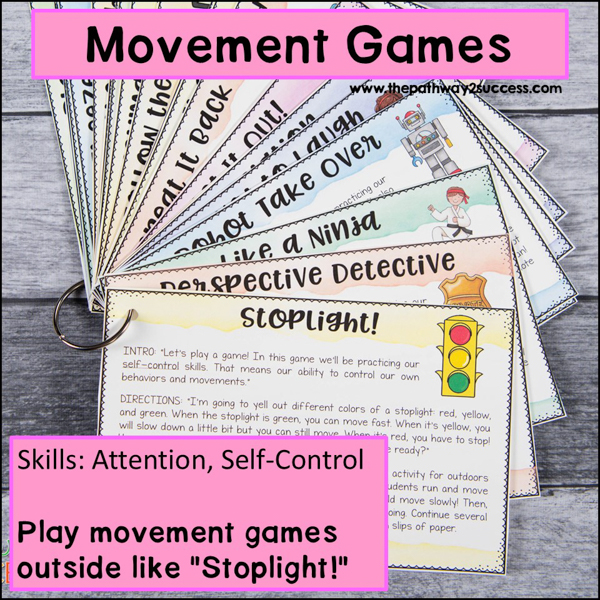
10. Play Movement Games
- Target Skills: Attention, self-control, working memory.
- Implementation: Utilize classic active games adapted for outdoors, such as "Stoplight," "Simon Says," or "Follow the Beat" (where participants replicate rhythmic claps or foot-stomps). These games demand strict inhibitory control and auditory working memory.
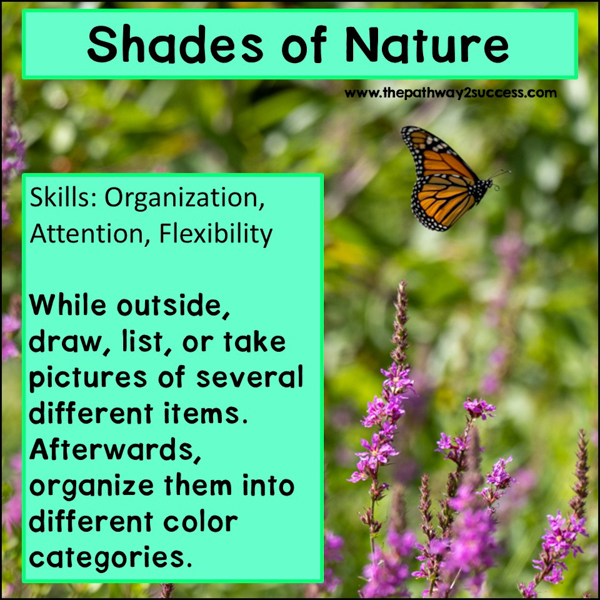
11. Shades of Nature
- Target Skills: Organization, attention, categorization.
- Implementation: Give learners a clipboard and task them with finding multiple natural items matching specific color categories (e.g., finding distinct shades of green, brown, or yellow), promoting visual discrimination and systematic organization.
12. Observe Nature (Stillness Practice)
- Target Skills: Attention, self-control, impulse inhibition.
- Implementation: Challenge participants to locate a stationary creature—such as an ant on a stem or a bird resting on a branch—and spend five full minutes silently watching without interfering. This builds intense impulse control and sustained focus.
13. Positive Affirmations
- Target Skills: Attention, emotional self-regulation, cognitive reframing.
- Implementation: Integrate positive self-talk phrases and wildlife-themed affirmations into an outdoor setting, helping children learn how supportive internal dialogue aids in task initiation and emotional resilience.
14. Use Live Wildlife Cams
- Target Skills: Attention, cognitive flexibility.
- Implementation: When outdoor access is restricted, utilize bookmarked live feeds of nesting birds (like ospreys and eagles) or global zoo habitats to observe animal behavior over time, bridging digital engagement with biological curiosity.
15. Clean Up and Stewardship
- Target Skills: Organization, task initiation, time management, empathy.
- Implementation: Partner with youth to plan and execute a clean-up project in a local park or schoolyard. Organizing waste collection and clearing debris instills civic responsibility, project coordination, and community empathy.
Future Outlook: Integrating Outdoor Cognition into Modern Life
As society continues to grapple with the technological acceleration of daily life, the intentional integration of nature into developmental frameworks will become increasingly vital. The evidence is clear: cultivating executive functioning skills does not require retreating entirely from modern advancements, but rather restoring a healthy equilibrium between indoor structure and outdoor freedom.
Looking forward, urban planners, school administrators, and pediatric health providers must prioritize the preservation and creation of accessible greenspaces. By embedding outdoor "wonder walks," mindfulness practices, and unstructured free play into educational curricula and daily routines, we can equip the next generation with the robust cognitive architecture they need to navigate a complex, fast-paced world with focus, flexibility, and resilience.

