
Executive Overview
For millennials who grew up in the late 1990s and early 2000s, Pokémon was far more than a passing media trend—it was a foundational cultural ecosystem. Millions of children defined their formative years by the dog-eared pages of official pocket monster handbooks, the agonizing wait for weekly syndicated television broadcasts, and the delicate trade negotiations executed on primary school playgrounds over first-edition holographic Charizards.
Today, that generation has grown into parenthood, inadvertently creating one of the most fascinating demographic shifts in modern entertainment: the intentional, enthusiastic transfer of childhood fandom to their own offspring. Rather than merely tolerating their children’s media consumption, millennial parents are actively curating a shared universe of pocket monsters, trading cards, and animated series.
This multi-generational adoption is not merely a nostalgic exercise in reliving youth; it has transformed into a robust parenting strategy. By leveraging the timeless appeal of Pikachu, Charizard, and the Kanto region, parents are bypassing contemporary preschool media in favor of retro-leaning adventures. Furthermore, the tangible nature of the Pokémon Trading Card Game (TCG) is acting as an organic educational tool, fostering early childhood literacy, mathematical reasoning, and organizational skills completely devoid of screen-time fatigue.
Supported by a welcoming, cross-generational community at local card shops and validated by industry leaders at major conventions, Pokémon has evolved from a simple trading card game and anime into an enduring cultural heirloom. This comprehensive feature explores how this beloved franchise has bridged a 30-year gap, uniting the inner child of the millennial parent with the developing imagination of the modern preschooler and kindergartener.
Detailed Chronology: From 1990s Diehard to Second-Generation Trainer
The Genesis: A Millennial Childhood
To understand the depth of today’s second-generation Pokémon phenomenon, one must look back to the cultural landscape of the late 1990s. For children coming of age during the franchise’s initial global explosion, Pokémon was a badge of identity.
Countless hours were spent packing well-worn copies of official handbooks into elementary school backpacks, reading strategy guides until the bindings frayed, and memorizing the Pokedex. Cinematic releases, such as Pokémon The Movie 2000, served as major social events, while worn VHS tapes of the Pokémon Indigo League were played on loop. It was an era defined by physical media, playground trades, and an insatiable appetite for anything bearing the likeness of Pikachu.
The Torch Passes: A Pokémon-Themed Infancy
Decades later, those same children grew up, found partners who shared their nostalgic affection for the franchise, and started families of their own. For one dedicated family, the transition into parenthood offered an immediate opportunity to integrate their long-held fandom into family traditions.
For their son’s very first Halloween, the parents orchestrated a themed ensemble: mother and father dressed as iconic anime protagonists Ash Ketchum and Misty, while their infant son—blessed with naturally rosy, prominent cheeks—was outfitted in a fuzzy, rounded Pikachu costume.
Aside from a brief, obligatory detour into Cars-themed apparel (Lightning McQueen) at age two, the child’s Halloween trajectory quickly solidified into something much more permanent: an annual tradition of wearing a plush Charizard costume complete with detachable Velcro wings.
The Spark: Unearthing the Metal Zapdos Box
The true catalyst for the child’s independent fandom, however, occurred at age four. During a visit, the child’s grandmother unearthed a vintage collection of trading cards belonging to the father from his own childhood. Together, they unlatched a weathered, little metal Zapdos storage box, flipping through each card to examine the unique artwork, health points, elemental types, and dramatic attack names.
Fascinated by the creatures, the child quickly transitioned to the animated series. Much like his parents decades prior, he found himself captivated by the bright colors, slapstick humor, and heroic journeys of Ash and his companions.
By the time he reached age five, the obsession had graduated from casual viewing to a full lifestyle immersion. His bedroom transformed into a shrine of Pokémon literature, action figures, sticker compendiums, and plushies. Far from experiencing media fatigue, the parents embraced the immersion, recognizing the profound joy of gifting their child items that would have served as the ultimate objects of desire during their own youth.
Supporting Context & Metrics: The Cognitive and Social Benefits of Pocket Monsters
While millennial parents undoubtedly enjoy the nostalgic hit of revisiting the Kanto region—often preferring the charmingly low-resolution aesthetic of 90s animation over modern hyper-stylized toddler programming like Blippi or Paw Patrol—the enduring appeal of Pokémon offers tangible developmental benefits.
Organic Literacy and Mathematical Development
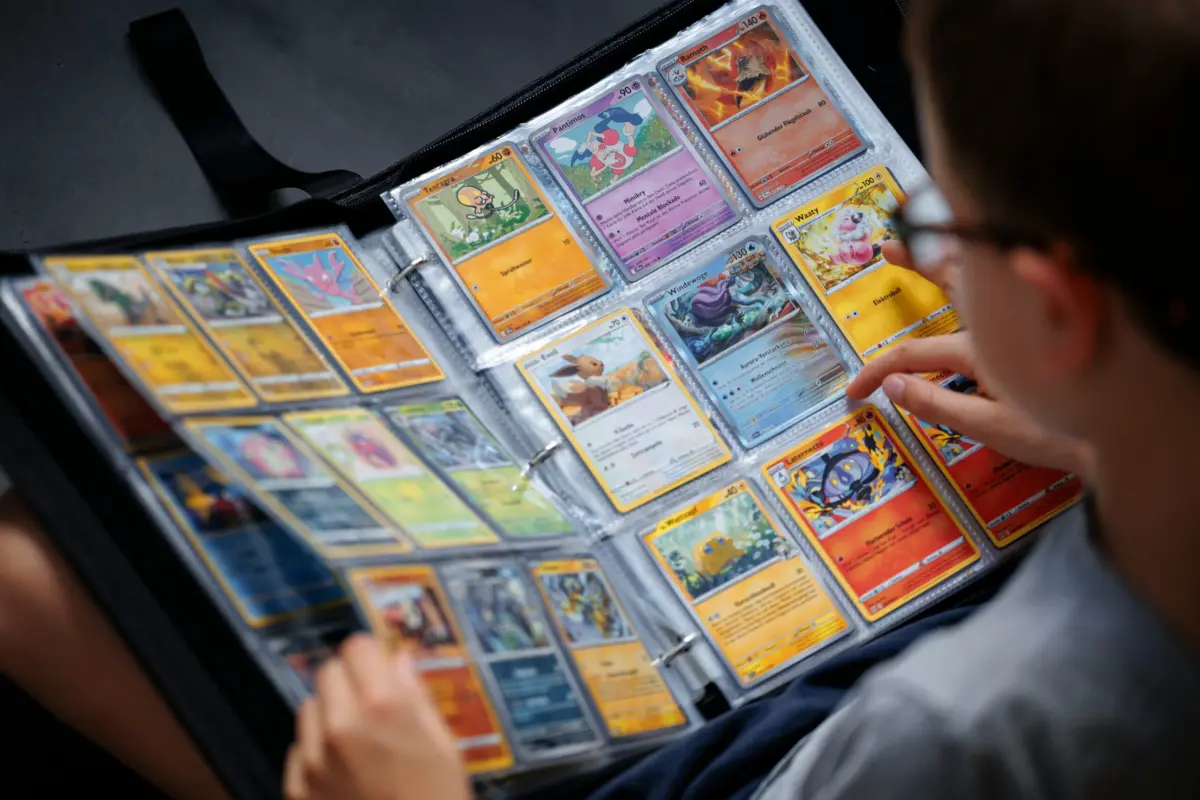
In an era dominated by passive tablet screens and algorithmic video feeds, the Pokémon Trading Card Game provides a masterclass in tactile, active learning. Over the summer months, card collections frequently serve as an antidote to screen fatigue. Children naturally gravitate toward organizing and reorganizing their card inventories, cycling through various classification systems:
- Taxonomical Sorting: Grouping cards by elemental type (Fire, Water, Grass, Electric, Psychic, etc.).
- Numerical Comparison: Analyzing the numeric values displayed in the top right-hand corners of the cards to evaluate attack power and health pools, inadvertently engaging in mathematical exercises (e.g., determining whether 320 is greater than 280).
- Alphabetical Ordering: Laying entire collections across the living room floor to sort hundreds of cards alphabetically.
Through these self-directed play patterns, children master foundational concepts typically reserved for structured educational workbooks—such as sorting, comparative mathematics, and alphabetical sequencing—without ever viewing the activity as formal instruction.
The Social Fabric of the Local Card Shop
Beyond cognitive development, the physical infrastructure surrounding the Pokémon TCG fosters genuine community engagement. Unlike purely digital games, Pokémon encourages face-to-face interaction through local hobby and card shops.
Weekend excursions to neighborhood card stores have become a staple routine for many modern families. These visits involve hours spent thumbing through bulk inventory sections, hunting down specific artwork variants, or completing evolutions of favorite characters like Eevee.
Crucially, the adult Pokémon community plays a vital role in nurturing the next generation of fans. Local card shop employees often recognize young regulars by name, celebrating developmental milestones—such as finishing the first week of kindergarten—and frequently gifting special cards from their personal collections to encourage young collectors. This cross-generational camaraderie ensures that the fandom remains inclusive, welcoming, and fundamentally supportive.
Official Statements: Industry Perspectives on Preschool Engagement
The phenomenon of children entering the Pokémon universe at preschool and kindergarten ages is not accidental; it is the result of deliberate design philosophy that has spanned nearly three decades.
During a featured panel at PokémonXP, Tsunekazu Ishihara, President and CEO of The Pokémon Company, addressed the foundational appeal of the franchise for very young audiences. Ishihara emphasized that the animated television series serves as a natural, frictionless point of entry for preschool-aged children.
Unlike the complex competitive mechanics of the official trading card game—which require advanced reading comprehension, strategic foresight, and mathematical calculation—the animated series relies on universal visual storytelling. Children do not need to read rulebooks or understand competitive synergy to fall in love with recognizable, expressive characters like Pikachu, Psyduck, and Snorlax.
Industry analysts note that this accessible entry point ensures a continuous cycle of generational renewal. By capturing the attention of children before they even learn to read, The Pokémon Company secures lifelong brand loyalty, paving the way for those same children to become adult collectors, parents, and eventual mentors to their own kids.
Future Outlook: A Multigenerational Legacy
As the Pokémon franchise approaches its 30th anniversary, its long-term viability looks more assured than ever. The transition from a disruptive 1990s fad into an established, multi-generational heirloom media property represents a rare achievement in the entertainment industry.
For the parents who grew up tracking down missing cards on school playgrounds, the Saturday morning routine of donuts and local card shop visits represents a profound full-circle moment. While the lifespan of childhood obsessions can be notoriously unpredictable—questions remain regarding how long young children will eagerly don Velcro-winged Charizard jumpsuits or spend hours alphabetizing cardboard inventories—the underlying bond forged between parents and children remains permanent.
Ultimately, the enduring success of Pokémon lies in its ability to reconcile generations. It successfully bridges the gap between the chaotic, imaginative world of random pocket monsters, elemental powers, and sentient home appliances, and the practical realities of modern parenting. In doing so, it provides a rare, joyful space where the inner child of the adult parent and the blossoming imagination of the young child can meet, play, and grow together.

