
Executive Overview
In an era defined by an overflow of digital information, navigating nuance, evaluating arguments, and discerning credible evidence have never been more critical for students. To address this educational imperative, the National Council of Teachers of English (NCTE) has forged a dynamic, ongoing partnership with the Library of Congress as part of the esteemed Teaching with Primary Sources (TPS) Consortium.
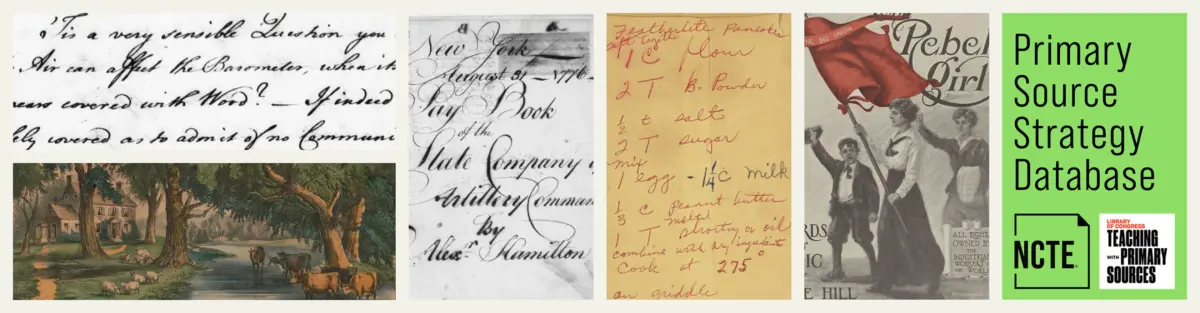
This nationwide initiative is specifically designed to embed historical artifacts directly into the daily pedagogical habits of English language arts (ELA) teachers and students. At the heart of this collaboration is a robust, searchable database featuring instructional strategies for more than 150 meticulously curated items drawn straight from the Library of Congress’s vast digitized collections.
Crafted by more than two dozen educators and ELA leaders, these resources bridge the gap between dusty archives and modern classrooms. Each entry outlines the explicit literacy merits of a given artifact, tying it seamlessly to standard curricula, thematic units, and state learning benchmarks. Educators can easily filter content using intuitive tags such as picture book, argument, and various historical topics ranging from arts and culture to government, law, and politics.
Among the standout artifacts featured in the database is an 1851 letter to the editor titled “The New Costume,” published in The Mountain Sentinel. This primary source serves as a microcosm of the NCTE-Library of Congress initiative: it challenges students not only to examine a historical moment in nineteenth-century fashion and gender norms, but also to dissect the rhetorical strategies, bias, and persuasive mechanics of early American journalism.
This article explores the mechanics of the NCTE and Library of Congress partnership, examines the profound educational value of artifacts like “The New Costume,” outlines aligned educational standards, and details the future outlook for primary-source-driven literacy instruction in American schools.
Detailed Chronology: The Evolution of the NCTE-Library of Congress Partnership
The integration of primary sources into modern ELA instruction did not happen overnight. It represents a deliberate, multi-year evolution in how literacy educators approach informational texts, historical documents, and multimodal learning.
- Foundation of the TPS Consortium: The Library of Congress established the Teaching with Primary Sources program to help educators connect students to the nation’s history using its unparalleled collections. By collaborating with universities, school districts, and national educational organizations, the program built a nationwide professional development network.
- The NCTE Integration: Recognizing the natural synergy between historical inquiry and English language arts—where reading comprehension, critical analysis, and argumentative writing intersect—the NCTE joined the TPS Consortium. This partnership sought to shift the paradigm: rather than viewing primary sources exclusively as the domain of social studies and history classrooms, educators began leveraging them as rich, complex informational texts for literacy development.
- Collaborative Curriculum Design: Over successive phases, the NCTE mobilized dozens of ELA teachers, curriculum coordinators, and literacy leaders. Their objective was to audit the Library of Congress archives specifically for literacy merit, translating historical documents into actionable, standards-aligned classroom strategies.
- Launch of the Searchable Database: The culmination of these efforts is a comprehensive digital repository hosted by the NCTE. Designed with user-friendly search tags like argument and picturebook, the database empowers teachers to rapidly locate primary sources that match their instructional goals, grade levels, and pedagogical themes.
- Continuous Expansion: Today, the database features instructional strategies for over 150 specific items. The repository continues to grow as new educators contribute innovative lesson plans, alternative texts, and differentiated approaches for diverse student populations.
Supporting Context & Metrics: Analyzing the 1851 "The New Costume" Artifact
To understand how the NCTE database transforms archival material into rigorous pedagogical tools, one must examine a specific entry. The 1851 letter to the editor entitled “The New Costume,” published in The Mountain Sentinel, offers a brilliant lens through which students can explore nineteenth-century societal expectations, rhetorical devices, and gender roles.
Historical Context of the Bloomer Costume
The letter fiercely defends the controversial "Bloomer costume," a revolutionary style of women’s dress named after Amelia Bloomer, a prominent women’s rights advocate and the editor of the feminist newspaper The Lily. Interestingly, Bloomer was not the inventor of the style; the look was originally designed by Elizabeth Smith Miller. However, Bloomer popularized the fashion statement nationwide by wearing it publicly and fiercely advocating for dress reform within her publication.
The style itself was deceptively simple yet radically disruptive: it featured a shorter skirt paired with trousers or pantaloons underneath. In mid-nineteenth-century Victorian society, this challenged deeply ingrained norms regarding modesty and femininity. Traditionalists argued that women’s clothing should emphasize delicacy and restricted movement, reinforcing patriarchal structures.
Critics loudly decried the Bloomer costume as unfeminine and morally degrading. Conversely, supporters championed its practical benefits. The letter’s author, writing under the pseudonym “Amicus” (Latin for "friend"), praised the costume’s unprecedented comfort and significant health benefits. Compared to the dangerously restrictive corsets and heavy, trailing skirts of the era—which frequently caused respiratory issues, restricted mobility, and muscle atrophy—the Bloomer costume represented physical liberation.
Although the initial craze surrounding the Bloomer costume eventually waned as social backlash intensified, the garment left an indelible mark. It endures as a powerful historical symbol of women’s early organized fight for equality, bodily autonomy, and self-expression.
Instructional and Literacy Value
For ELA teachers, “The New Costume” is an exceptional pedagogical text. Unlike modern informational articles, nineteenth-century letters to the editor require students to decode archaic syntax, identify embedded cultural assumptions, and evaluate persuasive techniques across a generational divide.
The letter provides students with concrete opportunities to:
- Analyze Rhetorical Devices: Students can examine how the author "Amicus" uses emotional appeals, logical reasoning, and vivid diction to persuade a skeptical readership.
- Engage with Opposing Viewpoints: The text forces readers to confront the friction between emerging progressive ideals and entrenched conservative values.
- Explore Themes of Identity: The discourse surrounding clothing directly ties into broader classroom themes of gender roles, societal control, and individual self-expression.
Furthermore, the accessible language of the letter makes it an ideal entry point for middle and high school students who are just beginning to build historical analysis skills. It bridges the gap between literary non-fiction and deep historical context.
Official Statements and Educational Standards Alignment
The integration of primary sources into ELA curricula is deeply rooted in contemporary educational standards. State learning models across the country explicitly require students to evaluate arguments, dissect rhetorical strategies, and analyze authorial intent—skills that primary source documents cultivate naturally.
State Learning Standards Connections
Taking Missouri’s Learning Standards as a representative model of rigorous ELA frameworks nationwide, the NCTE database aligns specific historical documents directly to state educational mandates:
- MLS.9-10.RI.2.B: Analyze how an author uses rhetoric to advance point of view or purpose.
- Application in the Classroom: When studying “The New Costume,” ninth and tenth-grade students examine how "Amicus" strategically frames the health benefits of pants over corsets to disarm conservative critics and sway public opinion.
- MLS.11-12.RI.2.D: Evaluate an author’s argument and reasoning for effectiveness, validity, logic, credibility, and relevance of the evidence.
- Application in the Classroom: Eleventh and twelfth-grade students take their analysis a step further. They assess whether the author’s evidence regarding physical health and societal progress holds up logically, examining the credibility of the publication (The Mountain Sentinel) and the cultural validity of the arguments presented.
The Pedagogical Philosophy
Educational leaders within the NCTE and the Library of Congress TPS Consortium emphasize that history and literacy are inseparable. By shifting instruction away from passive textbook consumption and toward active artifact interrogation, classrooms transform into laboratories of critical thinking.
When students touch, read, and debate authentic historical letters, political cartoons, early photographs, and broadsides, they are no longer merely memorizing dates. They are learning how to read the world, interrogate bias, and construct evidence-based arguments of their own—essential skills for active participation in a democratic society.
Future Outlook: The Next Frontier in Literacy and Archival Education
As educational technology evolves and digital archives expand, the collaboration between the National Council of Teachers of English and the Library of Congress is poised to scale new heights. The ongoing work of the Teaching with Primary Sources Consortium signals a permanent shift in how instructional materials are curated and deployed in American schools.
Expanding the Database and Multimedia Integration
Looking ahead, the NCTE database is expected to expand far beyond its current roster of 150 items. Future updates will likely incorporate a richer variety of multimodal primary sources, including early audio recordings, moving images, digitized broadsides, and interactive maps. By broadening the scope of media, the initiative aims to support diverse learners, English language learners (ELL), and students with varying reading abilities.
Professional Development and Teacher Empowerment
A primary focus for the consortium moving forward is teacher professional development. Recognizing that many ELA educators are formally trained in literature rather than historical archival research, the NCTE is developing specialized workshops, webinars, and micro-credentialing programs. These initiatives will train teachers on how to effectively scaffold primary source analysis, design inquiry-based units, and navigate sensitive or challenging historical topics safely and productively in the classroom.
Cultivating Critical Literacy for the 21st Century
Ultimately, the longevity and importance of this partnership lie in its alignment with modern media literacy. In an age dominated by social media algorithms, deepfakes, and polarized news cycles, the skills required to analyze an 1851 letter to the editor are identical to the skills required to evaluate a modern digital news feed.
By institutionalizing the use of Library of Congress primary sources in ELA classrooms, the NCTE is equipping the next generation of students with the intellectual armor they need. Through rigorous inquiry, historical empathy, and sharp textual analysis, students are learning not just how to read the past, but how to intelligently shape the future.

