
Executive Overview
Every year, hundreds of thousands of families across the United States experience the earth-shattering reality of preterm birth. For Stephanie Roberson, a routine second pregnancy changed in a single, quiet moment while putting her toddler to bed at 24 weeks gestation. What followed was a high-stakes medical emergency: a 13-day hospital bedrest, an emergency delivery at 25 weeks and six days, and an 87-day trial by fire in the Neonatal Intensive Care Unit (NICU).
While Roberson’s son, Myles, ultimately beat the odds to become a thriving, healthy four-year-old, her journey exposed the deep, systemic fractures plaguing American maternal and neonatal healthcare. Armed with a profound sense of systemic privilege—possessing a supportive partner, stable employment, and comprehensive paid medical leave—Roberson witnessed firsthand the profound inequities faced by families navigating the same crisis without a safety net.
Her experience catalyzed a transition from private trauma to public advocacy. Today, as the board chair of Chamber of Mothers, Roberson is channeling her lived experience into a nationwide movement. This investigative report examines the multi-layered financial, psychological, and policy crises facing NICU families in America, highlighting the staggering economic burdens, the mental health epidemic of perinatal post-traumatic stress disorder (PTSD), and the urgent legislative push for universal paid family and medical leave.
Detailed Chronology: From Normal Pregnancy to the 87-Day NICU Odyssey
The Unthinkable Turn at 24 Weeks
Stephanie Roberson’s second pregnancy had been textbook. Every routine ultrasound yielded reassuring metrics, and all preliminary screening markers fell safely within normal ranges. There was no clinical indicator to suggest that her body would prematurely initiate labor.
The crisis arrived abruptly. While lying beside her two-year-old son during bedtime routines, Roberson felt her water break. She was exactly 24 weeks pregnant—a critical threshold of fetal viability, yet a dangerously early stage for extrauterine survival. Maintaining composure, she walked to the bathroom, placed a protective towel beneath her legs, and contacted her obstetrician. The directive was immediate and urgent: she needed to transport herself to a tertiary care facility equipped with a high-level NICU.
"I have this core memory of stepping off the towel, and it was completely soaked except for two dry footprints where I was standing," Roberson recalls, reflecting on the surreal nature of the moment. With her husband traveling out of state for work, logistics moved at a frantic pace. She coordinated with a neighbor to care for her toddler while her visiting mother drove her through the night to the hospital.
Hospitalization and the Calculus of Survival
Upon admission, clinical protocols dictated strict, indefinite bedrest until delivery. The reality of extreme prematurity set in rapidly during consultations with specialized neonatologists. Medical professionals walked Roberson through the harrowing statistical landscape of 25-week survivorship, where national survival rates hover around 80 percent, but carry substantial risks of severe developmental, respiratory, and neurological morbidity.
"They try to present the information in a positive way, but it’s still very scary," Roberson notes. Her cognitive processing narrowed to a singular, consuming focus: infant survival, intertwined with the terrifying realization of how a medically fragile child would permanently alter her family’s trajectory. To cope with the overwhelming uncertainty, Roberson turned to her natural inclination for organization. She ordered specialized literature on prematurity, memorized complex medical terminology, and absorbed long-term prognostic data. "I was just trying to learn as much as I possibly could, to be the best advocate that I could for him." Beneath her intellectual preparation, however, lay an undercurrent of profound maternal guilt—a persistent, internalizing shame that her body had somehow failed her developing child.
Following 13 days of intensive inpatient monitoring and bedrest, spontaneous labor commenced at 25 weeks and 6 days. Her husband had returned home to manage their toddler, and the delivery proceeded with terrifying velocity. "We exited the room at 11:22, and he was born at 11:36."
The Sounds of Life: Entering the NICU
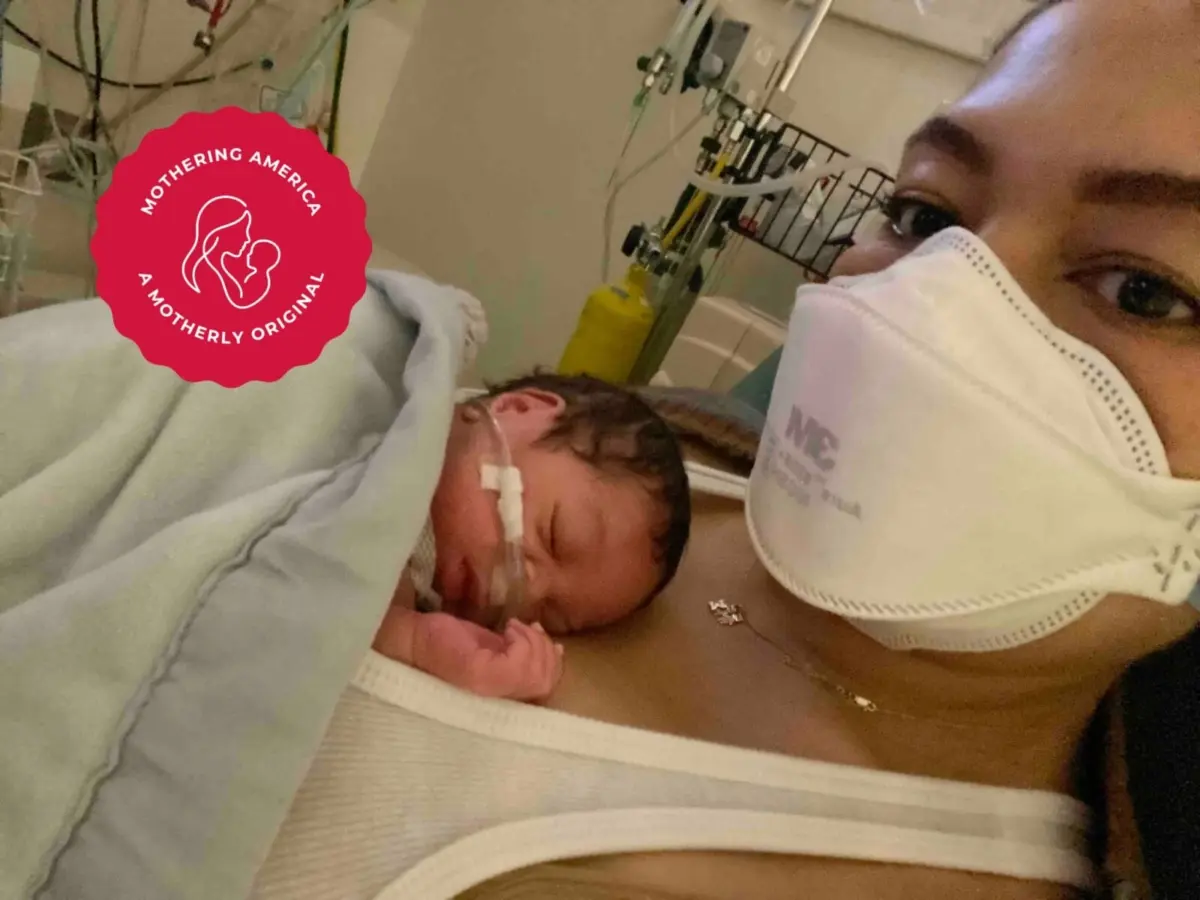
The delivery suite was surrounded by a full multidisciplinary NICU team ready to intervene immediately. As clinicians assessed the newborn, Myles, Roberson heard the sound every NICU parent desperately awaits: a cry.
"The cry was so tiny that it sounded like a baby a couple of rooms away," she remembers. Despite his microscopic scale, Myles registered strong Apgar scores. Clinicians allowed a fleeting moment of contact—"They smooshed him against my cheek, and then off he went"—before rushing him to the neonatal unit.
For the next 77 days, Myles experienced recurrent episodes of apnea, pausing his breathing multiple times daily—a common neurological manifestation of extreme prematurity. Treatment involved the administration of caffeine to chemically stimulate his underdeveloped brainstem, occasionally supplemented by manual physical stimulation from nurses to restart his respiratory drive.
The psychological environment of the NICU proved uniquely punishing. Surrounded by an orchestra of biomedical monitoring alarms, Roberson bore witness not only to her son’s precarious stability but also to the collective trauma of neighboring families. "You’re hearing everything that’s going on, and you wind up sitting in a whole lot of grief," she explains, recalling the haunting memory of watching extended family members file into the unit to say final farewells to an infant who would not survive.
Miraculously, Myles avoided surgical intervention and never required mechanical intubation. Upon his discharge after 87 cumulative days, the chief of neonatology delivered a definitive verdict: "I hope you know that he’s a one-in-a-million miracle baby." By his first birthday, Myles had fully closed developmental gaps, eventually surpassing standard milestones. Today, he is a vibrant, healthy four-year-old. Yet, the echoes of the unit remain, propelling Roberson to look beyond her own miraculous outcome to the broader systemic landscape.
Supporting Context & Metrics: The Anatomy of a Broken System
The Financial Chasm: Million-Dollar Bills and Out-of-Pocket Realities
Myles’s survival carried a staggering price tag: an itemized hospital bill totaling nearly $1.5 million. While robust private insurance covered the vast majority of the expenditure, Roberson was left personally responsible for $1,300 to clear her annual deductible.
For the average American family, however, the economic penalty of a high-level NICU admission is catastrophic. Health policy data indicates that infants admitted to Level III or IV NICUs average over $3,000 in direct out-of-pocket medical expenditures within their first two years of life even under private health plans. This baseline figure excludes the crushing incidental expenses of daily hospital parking, local hotel accommodations, specialized infant nutrition, long-term outpatient therapies, and deferred earnings. Daily non-medical overheads for displaced families frequently scale into hundreds of dollars per day.
During her time in the unit, Roberson observed mothers engaged in desperate telephone negotiations with commercial health insurance providers over denied claims. She recalls meeting a mother who had traveled out of town for Thanksgiving, experienced sudden preterm labor four hours away from home, and was left stranded in a distant city. Facing the impossible math of maintaining employment, caring for an older child preparing to return to school, and managing a critically ill neonate hundreds of miles away, the mother posed a universal question of despair: "How do I do this?"
The Invisible Crisis of Maternal Mental Health
The trauma experienced by NICU parents extends far beyond the physical walls of the hospital. Clinical research demonstrates that parents of preterm and medically fragile infants face exponentially elevated risks of developing perinatal mood and anxiety disorders (PMADs), specifically postpartum depression, generalized anxiety, and full-threshold Post-Traumatic Stress Disorder (PTSD).
Roberson processed her trauma through months of specialized psychological therapy. Yet, her access to mental health resources highlights a luxury unavailable to most. Driven by systemic insurance barriers, exorbitant copays, and a critical shortage of culturally competent, trauma-informed maternal mental health providers, an alarming 75% of mothers suffering from perinatal mental health conditions receive zero treatment. The resulting human and economic toll manifests as fractured families, diminished workplace productivity, and long-term developmental impacts on children.
The Paid Leave Desert
The United States remains a glaring international outlier as the only wealthy industrialized nation lacking a federally mandated paid family and medical leave policy.
Under the federal Family and Medical Leave Act (FMLA), eligible workers are theoretically entitled to 12 weeks of job-protected leave. However, this safety net contains foundational structural flaws:
- FMLA is entirely unpaid, forcing many low- and middle-income families to forego leave entirely to avoid destitution.
- The timing mismatch: For NICU parents, utilizing FMLA upon the birth of a premature infant means consuming weeks or months of their entitled leave while the baby remains institutionalized, leaving no protected time for bonding and home-based medical management once the child is finally discharged.
Only 14 states and Washington, D.C. have enacted statutory paid family and medical leave programs, leaving roughly 27% of the American workforce with access to employer-sponsored or state-subsidized paid family leave.
Roberson utilized nine and a half months of combined medical, maternity, and state-funded family leave to heal physically and emotionally while managing her son’s complex transition home. "I could recognize the privilege that I had in the situation," she reflects. "It really sort of tore something open, seeing how that didn’t apply to everyone."
Official Statements and Perspectives
"There are basic things that we all deserve to have. Once my eyes were open to it, I couldn’t unsee it, and it pushed me hard to say: Everybody deserves better."
— Stephanie Roberson, Board Chair, Chamber of Mothers
Roberson’s transition from a trauma survivor to a national policy advocate underscores the core mission of Chamber of Mothers, a nonpartisan organization uniting over 100,000 members across 52 local chapters nationwide. The organization’s institutional platform focuses on three non-negotiable pillars:
- Federal and State Paid Family and Medical Leave: Establishing universal, guaranteed wage replacement for all working parents.
- Accessible and Affordable Childcare: Dismantling structural barriers that keep parents—particularly mothers—trapped outside the formal workforce.
- Historic Investments in Maternal Health: Remodeling prenatal, intrapartum, and postpartum clinical frameworks to eliminate preventable maternal morbidity and mortality.
Public health economists and maternal advocacy groups echo Roberson’s urgency, noting that comprehensive postpartum and neonatal support is not merely a social welfare issue, but a fundamental macroeconomic imperative. When families are forced to choose between financial survival and caring for a medically fragile newborn, the long-term societal costs—measured in chronic health disparities, lost workforce participation, and developmental delays—far outweigh the legislative investment required to fix the system.
Future Outlook: Pushing for Legislative and Cultural Transformation
The path toward systemic reform is slowly gaining legislative traction, driven largely by the grassroots mobilization of mothers turning personal pain into public policy.
At the state level, progressive policy victories are beginning to take root. Jurisdictions such as Colorado and Illinois have formally amended their state-administered paid family leave frameworks to explicitly account for and accommodate NICU stays, ensuring that parents do not exhaust their allotted bonding time while their child is confined to an incubator.
At the federal level, momentum is building. In the winter legislative session, Roberson and delegations from Chamber of Mothers traveled to Capitol Hill in Washington, D.C., to lobby in favor of newly drafted federal legislation designed to secure dedicated NICU leave provisions for working parents across all 50 states. These proposed policy mechanisms aim to decouple medical hospitalization leave from traditional postpartum bonding leave, granting parents the protected time they need to shepherd their fragile infants through acute medical crises without fear of termination or financial ruin.
Ultimately, Roberson’s journey from the bedside of a 25-week preemie to the boardroom of a national advocacy organization serves as both a cautionary tale and a blueprint for action. The American NICU system saves miraculous lives every single day, yet it routinely abandons the families tasked with sustaining those lives once the hospital doors close. By dismantling the barriers of the paid leave desert, expanding mental health access, and treating maternal healthcare as a fundamental human right, advocates like Roberson are laying the groundwork for a future where no mother has to navigate a million-dollar medical miracle entirely alone.

