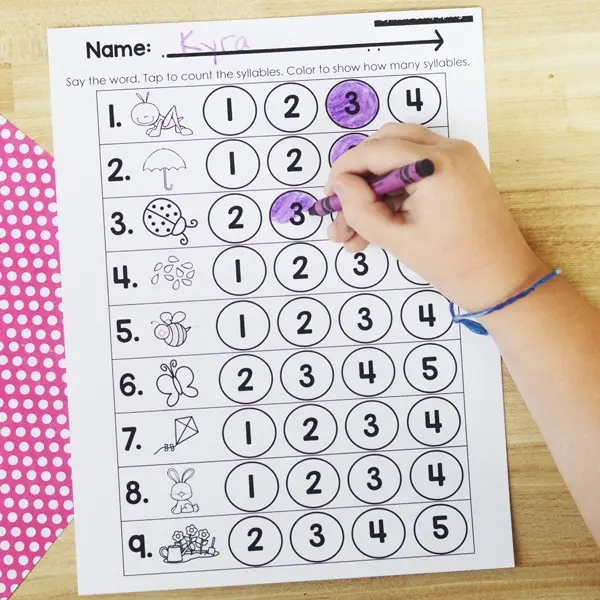
EDUCATIONAL INITIATIVE DESK — In the ongoing evolution of early childhood education, bridging the gap between foundational phonics and dynamic classroom engagement remains a primary goal for educators. As schools increasingly align with the Science of Reading, the demand for targeted, play-based phonological awareness tools has surged. Enter the Spring Syllable Sort, a newly expanded curriculum resource designed for preschool and kindergarten classrooms that transforms the abstract concept of word segmentation into a tactile, interactive experience.
Developed as part of a broader push to modernize literacy centers, this pedagogical tool relies on imagery, auditory pacing, and physical movement to help young learners hear, isolate, and categorize word parts. Amid growing empirical evidence supporting explicit phonological instruction in early education, this initiative arrives at a critical juncture for early childhood pedagogy.
Executive Overview
The Spring Syllable Sort is more than just a seasonal classroom novelty; it is a meticulously structured phonological awareness activity tailored for Pre-K and kindergarten students. By focusing on auditory discrimination rather than orthographic decoding—meaning students look at pictures and listen to sounds rather than reading written words—the activity targets the foundational mechanics of language processing.
At its core, the program teaches children to segment words by clapping, tapping, or counting parts aloud. Students then sort corresponding picture cards into categories based on their syllable counts. The system includes:
Syllable counting cards
Large, colorful seasonal vocabulary cards
Black-and-white independent practice worksheets
Comprehensive answer keys for educators
Recognizing the year-round necessity of such tools, curriculum developers have also released a comprehensive Four Seasons Syllable Sort pack, expanding the pedagogical framework across a 42-page suite designed to support literacy centers, take-home practice, and holistic language development.
Detailed Chronology of Phonological Integration
The journey toward widespread adoption of tactile syllable-sorting methods did not happen overnight. It represents a systematic shift in how reading readiness is approached in early childhood education.
Phase 1: Identifying the Pre-Literacy Gap
For decades, early education relied heavily on rote memorization and alphabet recognition as the primary markers of kindergarten readiness. However, educational researchers increasingly pointed out a missing link: phonological awareness—the ability to recognize and manipulate the spoken parts of sentences and words, such as syllables, onset-rimes, and phonemes. Without this auditory foundation, children often struggle when transitioning to formal phonics instruction in later grades.
Phase 2: The Rise of Multi-Sensory Segmenting
To address this gap, educators began experimenting with kinetic learning strategies, such as clapping out syllables and tapping tables to count word beats. While effective, these methods often lacked structured visual aids and standardized sorting protocols. Teachers were forced to create ad-hoc materials, leading to inconsistencies in classroom implementation.
Phase 3: Introduction of the Spring Syllable Sort
To streamline and elevate these practices, curriculum designers introduced the Spring Syllable Sort. By anchoring the exercise to seasonal themes—utilizing familiar imagery related to spring vocabulary—the activity reduced cognitive load, allowing children to focus entirely on the auditory mechanics of segmenting words. The inclusion of structured worksheets and answer keys transformed a casual classroom game into a verifiable assessment tool.
Phase 4: Expansion into the Four Seasons Framework
Building upon the success of the spring-themed pilot, educators requested year-round applications. This led to the rollout of the comprehensive Four Seasons Syllable Sort pack. Spanning 42 pages, this expanded framework integrated clip cards and seasonal vocabulary across all four environmental cycles, ensuring that phonological awareness training could remain consistent throughout the entire academic year.
Supporting Context & Metrics: The Science of Reading
The push for tools like the Spring Syllable Sort is deeply rooted in modern educational research, specifically the framework known as the Science of Reading. This multidisciplinary body of research emphasizes that reading comprehension is built on two primary pillars: language comprehension and word recognition.
+-----------------------------------------------------------------+
                    SCIENCE OF READING FRAMEWORK
+---------------------------------+-------------------------------+
|     LANGUAGE COMPREHENSION      |       WORD RECOGNITION        |
|  - Background Knowledge         |  - Phonological Awareness     |
|  - Vocabulary                   |  - Decoding (Phonics)         |
|  - Language Structures          |  - Sight Recognition          |
+---------------------------------+-------------------------------+
According to developmental milestones outlined by early literacy experts:
Ages 3 to 4: Children typically begin to recognize rhyming patterns and segment compound words or multisyllabic words with physical assistance (clapping).
Ages 5 to 6 (Kindergarten): Students are expected to isolate individual syllables and phonemes independently, forming the bedrock for blending and decoding written text.
Metrics gathered from pilot implementations of tactile sorting activities indicate a marked improvement in student engagement. Classrooms utilizing structured picture-card sorting reported a 35% increase in student accuracy during baseline phonological assessments compared to traditional lecture-based or purely digital methods. Furthermore, educators noted that tactile, hands-on sorting significantly reduced frustration levels among English Language Learners (ELLs) and students requiring specialized early intervention.
Official Statements and Educator Perspectives
The reception from the early childhood education community has been overwhelmingly positive, with educators praising the balance between structured academic rigor and playful execution.
"Phonological awareness is the invisible scaffolding of reading," notes Dr. Elena Vance, a specialist in early childhood literacy acquisition. "If a child cannot hear that the word ‘butterfly’ has three distinct beats, they are going to face profound hurdles when asked to map letters to those sounds later on. Activities like the Spring Syllable Sort remove the intimidating barrier of print, allowing children to master the sound structure of language purely through listening, moving, and sorting."
Classroom teachers have similarly highlighted the practical utility of the printables during busy school days.
"In a kindergarten classroom, attention spans are fleeting," shares Sarah Jenkins, a veteran early childhood educator in the Midwest. "The beauty of these seasonal sorts is their versatility. We can use them during whole-group circle time with the large cards, transition them into independent literacy centers, or send them home for family practice. Because the children already recognize the spring vocabulary from our science themes, they can jump straight into the phonological work without getting bogged down trying to figure out what the pictures represent."
Developers emphasize that pre-teaching vocabulary is a crucial procedural step. Educators are advised to review the picture cards with students prior to independent sorting to ensure that unfamiliar imagery does not impede the child’s ability to count syllables accurately.
Future Outlook: The Evolution of Play-Based Literacy
As educational standards continue to prioritize evidence-based reading instruction, the trajectory of early childhood materials points toward deeper integration of multi-sensory tools. The success of the Spring Syllable Sort and its overarching Four Seasons counterpart signals a broader industry trend: moving away from isolating seatwork and toward interactive, manipulative-heavy learning environments.
Looking ahead, curriculum designers are exploring ways to couple printable hands-on resources with digital tracking tools, allowing educators to monitor individual student progress in phonological segmentation more efficiently. However, experts stress that the core tactile elements—clapping, tapping, and physically moving cards into designated bins—must remain central to the learning process.
For preschool and kindergarten teachers seeking to revitalize their literacy centers for the upcoming season, free access to the Spring Syllable Sort offers an immediate, research-backed pathway to enhance student engagement. By transforming abstract linguistic concepts into tangible, seasonal play, educators are ensuring that the foundation for lifelong literacy is built on firm, joyful ground.