
Executive Overview
In the landscape of early childhood education, foundational literacy remains the bedrock upon which all future academic achievement is built. Educators and reading specialists continuously search for innovative, engaging, and scientifically grounded tools to help young learners navigate the complexities of phonics. Enter the newly released Long Vowel Team Puzzles, a supplementary educational resource designed to transform how children in kindergarten through early elementary grades read and spell words featuring long vowel teams.
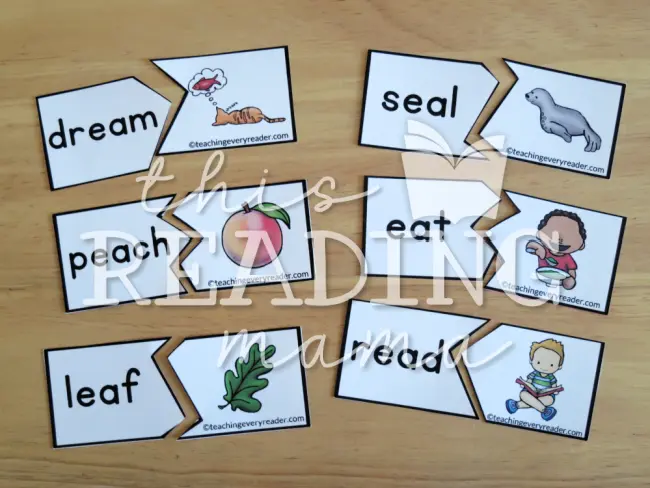
Developed by literacy advocate and educator Becky of This Reading Mama, this free resource bridges the gap between mechanical decoding and active cognitive engagement. By converting abstract phonics rules into tactile, puzzle-based activities, the intervention addresses a critical hurdle in early reading development: mastering the slippery mechanics of vowel teams, trigraphs like igh, VCC patterns, and the long e sound produced by a final y (as seen in words like baby and happy).
This report provides an exhaustive investigation into the mechanics, pedagogical value, and broader classroom implications of the Long Vowel Team Puzzles. Drawing from educational frameworks, literacy intervention strategies, and teacher best practices, we explore how this tool fits into the modern phonics ecosystem, offering a detailed guide for educators, homeschoolers, and reading specialists seeking to optimize student outcomes.
Detailed Chronology of the Resource’s Development and Release
The conceptualization and rollout of the Long Vowel Team Puzzles did not happen in a vacuum; rather, they are part of a continuous effort by educational content creators to meet the demands of modern literacy instruction, particularly in the wake of post-pandemic learning gaps.

Phase 1: Identifying the Pedagogical Need
For years, reading coaches have noted that vowel teams—where two vowels work together to represent a single long vowel sound (such as ea in bread or meat, oa in boat, or ai in rain)—pose one of the steepest learning curves for developing readers. Unlike single consonants or short vowels, vowel teams are notoriously inconsistent and less predictable, often defying the simple adage, "When two vowels go walking, the first one does the talking."
Recognizing a persistent demand for hands-on, low-prep materials that target these specific patterns, the creator behind This Reading Mama began drafting a puzzle-based framework that would allow students to physically manipulate word parts, aligning visual orthography with auditory phonemes.
Phase 2: Design and Pattern Expansion
Initial prototypes focused purely on foundational vowel digraphs. However, feedback from primary educators prompted an expansion of the scope. Developers incorporated critical variations to ensure comprehensive phonics coverage:
- Trigraphs: The inclusion of complex patterns such as igh (e.g., night, light).
- VCC Patterns: Words where vowels are followed by two consonants yet still produce a long vowel sound.
- Final y Variations: Addressing the long e sound produced by a trailing y in multisyllabic and high-frequency words like happy and baby.
Phase 3: Digital Launch and Ecosystem Integration
The official release of the Long Vowel Team Puzzles went live on digital educational platforms, accompanied by complementary resources such as the K-3 Summer Learning Games Bundle. Designed for seamless accessibility, the resource was made available via a direct PDF download, bypassing traditional paywalls to support equitable access to literacy tools. Furthermore, the release coincided with updates to The Library, a curated digital repository offering ad-free teaching assets for educators seeking streamlined classroom preparation.

Supporting Context & Metrics: The Science of Vowel Teams in Early Literacy
To understand the value of the Long Vowel Team Puzzles, one must examine the cognitive science underpinning reading acquisition. Literacy research emphasizes the importance of orthographic mapping—the mental process that allows humans to store words for instant, effortless retrieval.
The Cognitive Challenge of Vowel Teams
According to data from the National Assessment of Educational Progress (NAEP) and various literacy task forces, reading proficiency heavily relies on systematic, explicit phonics instruction. Vowel teams represent a transition from simple decoding (consonant-vowel-consonant, or CVC words) to advanced word analysis.
- Multisensory Learning: Cognitive studies consistently show that tactile engagement accelerates memory retention in young children. Puzzles require spatial reasoning alongside phonetic decoding, engaging both the left hemisphere (language processing) and motor-skill circuits in the brain.
- Dual-Purpose Design: The puzzles are structured to serve two distinct cognitive operations:
- Reading Practice (Decoding): Students piece together fragmented components to recognize and read whole words, reinforcing the connection between graphemes (letters) and phonemes (sounds).
- Spelling Practice (Encoding): Students are prompted to construct words from auditory cues or pictures, strengthening the neural pathways required for writing.
Usability Metrics and Accessibility
The democratization of educational resources has become a major metric for success in digital publishing. The deployment of the Long Vowel Team Puzzles reflects this trend:
- Format: High-resolution PDF compatible with standard classroom printers.
- Preparation Time: Classified as a "low-prep" or "no-prep" activity, drastically reducing administrative burdens on teachers who often spend hours cutting and laminating materials.
- Differentiation Potential: Suitable for whole-group instruction, small-group intervention (Response to Intervention, or RTI frameworks), literacy centers, and homeschool environments.
Official Statements and Pedagogical Guidelines
The release of the puzzles is accompanied by strict pedagogical guidelines from the creator, emphasizing that proper timing and prerequisite skill mastery are vital for student success.

The Prerequisite Rule: Mastery Before Independent Practice
A cornerstone of effective literacy intervention is preventing cognitive overload. The developer explicitly notes:
"Before you set your learners free to do these on their own, be sure they have mastered this phonics and spelling pattern! There’s nothing more frustrating for a learner than to be given a task that they’re not able to do yet."
This guidance aligns with Vygotsky’s Zone of Proximal Development (ZPD). If a child is handed a vowel team puzzle without prior explicit instruction on how specific teams operate, the activity devolves into mindless guessing rather than targeted phonics reinforcement. Educators are advised to use these puzzles after initial direct instruction, serving as a consolidation and practice tool rather than an introductory lesson.
Implementation Strategies for Educators
Reading specialists recommend a phased approach to utilizing the puzzles:

- Guided Introduction: The teacher models how to assemble a puzzle, explicitly sounding out the vowel team (e.g., blending /ō/ /a/ /t/ for boat).
- Collaborative Practice: Students work in pairs or small groups, discussing why certain puzzle pieces fit together based on phonetic rules.
- Independent Stations: Once mastery is demonstrated, the puzzles transition into literacy centers, allowing students to reinforce skills autonomously.
Future Outlook: The Evolution of Phonics Interventions in the Digital Age
As educational paradigms shift toward evidence-based reading models (often referred to broadly as the "Science of Reading"), supplementary tools like the Long Vowel Team Puzzles point the way toward the future of instructional design.
The Balance Between Digital and Tactile
While ed-tech applications and screen-based learning platforms have proliferated, educators increasingly recognize the cognitive benefits of physical, tactile learning materials—especially for primary-age students (K-3) whose fine motor skills and spatial awareness are still developing. The hybrid model—discovering resources digitally via web platforms and printing them for hands-on classroom use—represents a sustainable, highly effective compromise.
Expanding the Resource Ecosystem
Looking ahead, educational creators are moving toward comprehensive, interconnected resource libraries. Initiatives like The Library membership model indicate a shift away from ad-supported, fragmented internet searches toward centralized, high-trust professional learning communities. For teachers navigating resource scarcity and time constraints, having immediate, ad-free access to validated phonics interventions is invaluable.
Conclusion
The Long Vowel Team Puzzles represent more than just a free printable worksheet; they are a thoughtfully engineered pedagogical tool rooted in the realities of cognitive development and classroom workflow. By targeting the notoriously tricky mechanics of vowel teams, trigraphs, and specialized phonics patterns through tactile puzzle play, this resource offers educators a powerful weapon in the ongoing effort to build fluent, confident, and competent readers. As schools continue to prioritize evidence-based literacy practices, tools that combine scientific rigor with low-prep convenience will undoubtedly remain at the forefront of primary education.

