
Executive Overview
In an era dominated by digital interfaces, standardized testing, and increasingly urbanized learning environments, public education faces a persistent challenge: how to cultivate deep-seated confidence, emotional resilience, and authentic leadership in young people. This challenge is particularly acute in historically under-resourced urban communities, where access to nature and experiential outdoor learning remains severely restricted.
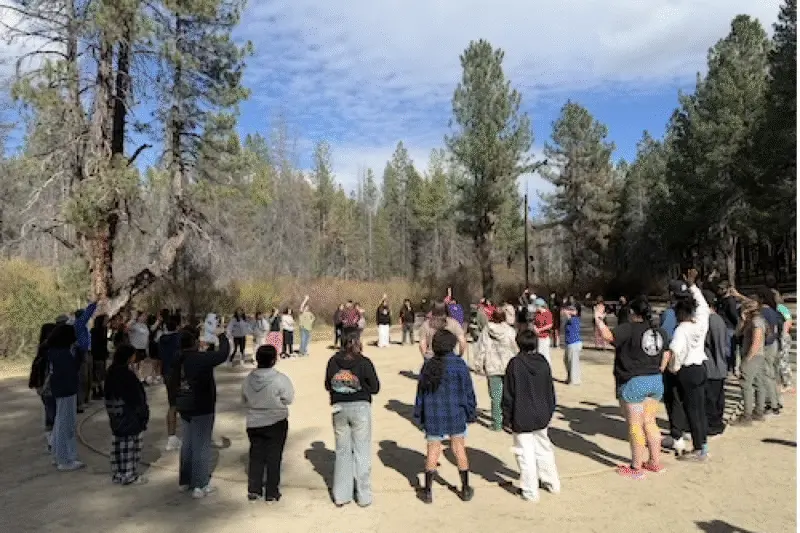
A recent landmark collaboration between the Girls Athletic Leadership School Los Angeles (GALS LA) and the historic R.M. Pyles Camp offers a compelling blueprint for addressing this equity gap. During spring break, a cohort of middle school girls from GALS LA traveled to the southern Sierra Nevada, becoming the first-ever female participants in the nearly 75-year history of R.M. Pyles Camp—a program originally founded to serve young men facing structural adversity.
This initiative represents more than a symbolic milestone for gender inclusion; it serves as a case study in the transformative power of outdoor, movement-based education. By taking learning beyond the traditional classroom and placing middle school girls into challenging wilderness environments, the program demonstrated significant cognitive, behavioral, and social-emotional dividends. As educators and policymakers search for scalable solutions to post-pandemic learning loss, chronic absenteeism, and youth mental health crises, this historic expedition underscores the imperative of integrating outdoor experiential learning into mainstream public education frameworks.
Detailed Chronology: Breaking New Ground in the Sierra Nevada
+-----------------------------------------------------------------------------------+
|                            TIMELINE OF HISTORIC EXPEDITION                        |
+-----------------------------------------------------------------------------------+
|  • 1949: R.M. Pyles Camp founded as an all-male wilderness leadership retreat.    |
|  • Pre-Trip Phase: GALS LA selects inaugural middle school female cohort.          |
|  • Spring Break Expedition: First female cohort arrives in the Sierra Nevada.     |
|      - Low-ropes course & team-building dynamics                                  |
|      - Backcountry navigation & wilderness survival skills                        |
|      - Expedition beneath the Giant Sequoias                                      |
|  • Post-Trip Re-entry: Observable academic, behavioral, and social shifts on campus|
+-----------------------------------------------------------------------------------+
A 75-Year Tradition Pivots Toward Inclusion
Founded in 1949 by oil executive R.M. Pyles, the R.M. Pyles Camp was established with a singular mission: to provide low-income, at-risk young men across California with wilderness experiences designed to build character, self-reliance, and leadership. For nearly three-quarters of a century, the camp’s rustic facilities nestled among the Giant Sequoias operated exclusively as a male domain, developing a long-standing curriculum centered on wilderness survival, physical conditioning, and mentorship.
Recognizing the evolving needs of urban youth and the systemic lack of outdoor leadership opportunities for young women of color, camp leadership partnered with GALS LA—a public charter school dedicated to empowering young women through physical activity, academic rigor, and socio-emotional support. This partnership laid the groundwork for the inaugural female expedition, marking a historic shift in the camp’s institutional trajectory.
The Spring Break Expedition
During the school’s spring recess, the selected cohort of GALS LA middle school students departed the high-density urban environment of Los Angeles for the rugged terrain of the southern Sierra Nevada. For the vast majority of the participants, the trip represented a series of profound "firsts": their first time leaving the urban basin, their first experience camping overnight in the wilderness, and their first direct engagement with an alpine ecosystem.
                           [ Urban Los Angeles ]
                                     │
                                     ▼
                     [ Sierra Nevada Wilderness Arrival ]
                                     │
           ┌─────────────────────────┴─────────────────────────┐
           ▼                                                   ▼
[ Low-Ropes & Physical Dynamics ]                   [ Wilderness Navigation ]
 - Team Trust Exercises                              - Trail Map Reading
 - High-Element Problem Solving                      - Backcountry Hiking
           │                                                   │
           └─────────────────────────┬─────────────────────────┘
                                     │
                                     ▼
                     [ Return to Campus & Classroom ]
                      - Elevated Academic Engagement
                      - Stronger Peer Advocacy
The multi-day curriculum was structured around progressive physical and mental challenges:
- Low-Ropes and Team-Building Courses: Students participated in dynamic balance and trust exercises requiring coordinated group communication, emotional vulnerability, and real-time conflict resolution.
- Backcountry Navigation and Hiking: Guided by experienced outdoor educators, the girls learned to read topographic maps, manage personal gear, navigate technical trails, and cheer one another across mountain creeks.
- Wilderness Survival and Campcraft: Participants were tasked with operational responsibilities, including shelter setup, fire management, and backcountry meal preparation, reinforcing practical self-reliance.
- Reflection Beneath the Sequoias: The physical challenges were paired with structured, facilitated debriefs beneath the ancient Sequoia canopy, encouraging students to translate physical achievements into internal self-worth.
The Post-Expedition Campus Re-entry
The impact of the wilderness experience became immediately apparent upon the students’ return to their urban Los Angeles campus. Teachers, administrators, and peers observed a distinct shift in classroom culture and individual student behaviors.
Students who had previously exhibited academic anxiety or reluctance to participate in class discussions began volunteering answer choices, taking intellectual risks, and stepping into peer leadership roles. The shared hardship and triumphs of the trail effectively dismantled existing social cliques, replacing them with a culture of mutual support, heightened empathy, and collective accountability across the student body.
Supporting Context & Metrics: The Science and Equity Gap of Outdoor Learning
Empirical Evidence for Outdoor Pedagogy
The observed transformations at GALS LA align closely with a growing body of quantitative and qualitative research across developmental psychology, neurobiology, and educational theory. Experiential outdoor education is increasingly recognized not as an extracurricular novelty, but as a high-impact pedagogical tool that directly influences core cognitive and academic metrics.
| Outcome Category | Primary Benefit | Research Findings & Developmental Impact |
|---|---|---|
| Academic Performance | STEM & Literacy Growth | Studies published in the National Institutes of Health (NIH) demonstrate statistically significant improvements in standardized math, reading, and science scores following structured outdoor learning. |
| Cognitive Function | Executive Function & Focus | Exposure to natural environments reduces mental fatigue, improves working memory, and increases attention span, particularly in youth diagnosed with ADHD. |
| Social-Emotional | Self-Efficacy & Resilience | Adventure-based wilderness interventions directly correlate with lower cortisol levels, enhanced self-efficacy, and reduced incidence of anxiety and depression. |
| School Culture | Engagement & Attendance | Outdoor-integrated curricula are linked to reduced chronic absenteeism, lower disciplinary referral rates, and improved student-teacher rapport. |
Research indicates that physical challenge combined with nature exposure stimulates neuroplasticity. When students navigate real-world obstacles—such as ascending a steep mountain trail or clearing a high-ropes course—their brains build neural pathways associated with grit, executive function, and stress regulation. These neurological adaptations directly translate into academic environments, enabling students to approach complex mathematical problems or difficult literacy tasks with increased stamina and reduced panic.
       PHYSICAL CHALLENGE (Hiking/Ropes) + NATURAL ENVIRONMENT
                                  │
                                  ▼
             NEUROPLASTICITY & STRESS-REGULATION ADAPTATION
                                  │
                                  ▼
        ACADEMIC APPLICATION (Grit, Problem-Solving, Stamina)
Quantifying the Outdoor Equity Divide
Despite the robust scientific evidence endorsing outdoor education, access to nature remains one of the most starkly unequal dimensions of the American educational landscape. This disparity falls along clear socioeconomic, racial, and geographic fault lines.
+-----------------------------------------------------------------------------------+
|                         THE OUTDOOR EDUCATION EQUITY GAP                          |
+-----------------------------------------------------------------------------------+
|  High-Income/Suburban Schools:                                                    |
|  [██████████████████████████████████████████████████] High Outdoor Access        |
|                                                                                   |
|  Low-Income/Urban Schools (e.g., GALS LA Cohort):                                 |
|  [██████████] Limited Outdoor Access                                              |
+-----------------------------------------------------------------------------------+
Urbanization, municipal funding constraints, and an intense instructional focus on high-stakes standardized testing have progressively squeezed outdoor experiences out of the public school day. Schools serving predominantly low-income students of color are disproportionately affected:
- Demographic Context: At GALS LA, 96 percent of students identify as youth of color, and the vast majority come from low- to moderate-income households residing in densely populated urban neighborhoods with limited green space.
- Resource Disparities: Wealthier suburban school districts routinely fund outdoor education, environmental field trips, and overnight science camps through private donations and parent-teacher associations. Conversely, Title I urban schools often lack the baseline operational funding, transportation logistics, and insurance coverage required to facilitate wilderness excursions.
- The "Nature Deficit": This systemic exclusion leaves urban youth vulnerable to what researchers term "nature deficit," compounding the stress of structural poverty and limiting opportunities for physical and emotional development outside the traditional classroom wall.
Official Statements and Leadership Insights
The GALS LA Perspective: Movement as a Pedagogical Catalyst
Vanessa Garza, Executive Director and Founding Principal of GALS LA, views the partnership with R.M. Pyles Camp as an extension of the school’s core mission. With an extensive background in urban educational leadership—including key roles at the Partnership for Los Angeles Schools, Green Dot Public Schools, and PUC Schools—Garza has long advocated for holistic, movement-based learning models.
"As a school leader, you learn to recognize the moments that quietly reshape
 what students believe is possible for themselves... When students move,
 they build confidence. When they build confidence, they take risks.
 And when they take risks, they begin to see themselves differently."

 — Vanessa Garza, Executive Director & Founding Principal, GALS LA
Garza emphasizes that physical movement in education is frequently mischaracterized as merely physical education or athletic competition. In reality, movement-focused education serves as a fundamental vehicle for cognitive activation and self-discovery.
"Movement-focused education extends far beyond athletics," Garza observed following the expedition. "It lives in the act of hiking a trail, navigating a challenge course, or working as a team to solve a real problem in real time. The impact doesn’t stay in the woods. It comes back into classrooms, into group work, into how students carry themselves and support one another. It shows up in confidence, in persistence, and in a willingness to try."
Institutional Reflections from Camp Leadership
Representatives from R.M. Pyles Camp underscored the institutional significance of welcoming their first all-female cohort. The collaboration challenged decades-old assumptions about how wilderness leadership programs operate, proving that the camp’s core tenets—courage, integrity, and peer support—are universally applicable regardless of gender.
Outdoor educators on-site noted that the middle school girls demonstrated extraordinary collaborative problem-solving abilities. Where traditional instruction often rewards individual performance, the backcountry environment required collective risk management, forcing participants to rely on empathy and distributed leadership to complete daily objectives.
Future Outlook & Strategic Implications
Scaling Experiential Outdoor Models in Public Education
The success of the GALS LA and R.M. Pyles Camp pilot offers critical lessons for school districts, educational policymakers, and philanthropic organizations seeking to modernize public education frameworks. To replicate and scale these outcomes, educational leaders must address structural barriers through targeted policy interventions:
                            [ POLICY RECOMMENDATIONS ]
                                        │
     ┌──────────────────────────────────┼──────────────────────────────────┐
     ▼                                  ▼                                  ▼
[ Funding Realignment ]      [ Cross-Sector Alliances ]    [ Curriculum Integration ]
 Reallocate Title I &         Establish public-private      Embed outdoor pedagogy
 SEL funds for outdoor        partnerships with wilderness   into standard STEM and
learning experiences. camps & conservancies. humanities frameworks.- Strategic Reallocation of Funding: School boards and state departments of education should consider explicitly authorizing the use of Title I, Title IV, and Social-Emotional Learning (SEL) funds for overnight outdoor experiential learning initiatives.
- Cross-Sector Partnerships: Urban school districts should establish formalized, multi-year partnerships with local, state, and national park services, as well as outdoor non-profit organizations. Utilizing existing camp infrastructure during off-peak seasons provides a cost-effective pathway for public schools.
- Curricular Integration: Outdoor education should not exist in isolation. Integrating pre-trip environmental science lessons and post-trip reflective writing assignments ensures that physical wilderness experiences are tightly bound to state academic standards.
Long-Term Trajectory and Gender Equity
The inclusion of young women in historically male wilderness programs like R.M. Pyles Camp has far-reaching implications for gender equity in leadership. Women—particularly women of color—remain starkly underrepresented in environmental science, outdoor leadership industries, and executive management positions.
By exposing middle school girls to high-stakes, physically demanding wilderness environments during a formative developmental window, programs like GALS LA build foundational self-efficacy. When young women learn to conquer physical summits, navigate backcountry trails, and command space in the outdoors, they develop an internalized blueprint for overcoming institutional and professional barriers later in life.
If public education aims to fulfill its promise as a driver of social mobility and human potential, system leaders must look beyond the perimeter of the schoolyard. True educational equity requires giving every student—regardless of zip code or background—the opportunity to step into the wilderness, confront real-world challenges, and discover the full extent of their capabilities.

