
Executive Overview
In the modern educational landscape, instructional coaching and school leadership are heralded as the primary catalysts for institutional improvement. Yet, whenever a coach or administrator attempts to guide an educator toward refining their pedagogical practice, they frequently encounter a formidable barrier: teacher pushback. Traditionally, this resistance has been diagnosed as a personal defect of the educator—characterized as an unwillingness to adapt, a rigid adherence to outdated methods, or a general aversion to innovation.
However, renowned instructional coach, author, and consultant Elena Aguilar challenges this long-standing narrative in her ninth and most recent publication, How to Coach Resistance: Turning Pushback Into Possibility. Aguilar posits that teacher resistance is rarely a localized issue residing entirely within the educator. Instead, it is a complex, co-created dynamic shaped by both parties in the professional interaction. By recognizing that instructional coaches and professional development providers often inadvertently fuel the pushback they experience, leaders can reclaim agency over these challenging encounters.
This comprehensive report examines Aguilar’s transformative framework for educational leadership. It explores the psychological underpinnings of pushback, the mechanics of emotional avoidance, the structural realities of growth gaps, and the validity of righteous resistance. Ultimately, this article offers a blueprint for shifting the educational paradigm from punitive compliance to collaborative, sustainable professional growth.
Detailed Chronology: The Evolution of Coaching Dynamics
To understand the current state of instructional coaching and the nature of teacher resistance, it is necessary to examine how the relationship between teachers and pedagogical leaders has evolved over the past several decades.
The Era of Compliance-Driven Supervision (Late 20th Century)
Historically, classroom observation and teacher evaluation were rooted in compliance. Administrators acted primarily as inspectors rather than partners. Evaluation frameworks were designed to check boxes against standardized criteria, leaving little room for professional dialogue or collaborative problem-solving. In this environment, teacher "resistance" was treated as insubordination. Pushback was met with administrative directives, creating an adversarial relationship where teachers masked their true instructional challenges to avoid negative evaluations.
The Rise of Instructional Coaching (Early 2000s to 2010s)
As educational research shifted toward the importance of adult learning theory, schools began adopting the model of the instructional coach. Unlike evaluators, coaches were intended to be non-evaluative thought partners. The objective was to support teachers through targeted feedback, co-teaching, and professional learning communities. Despite these positive intentions, many coaching programs maintained a top-down orientation. Coaches often arrived in classrooms with a predetermined agenda—frequently tied to new curriculum rollouts or district-wide initiatives—expecting teachers to quickly implement these changes. When educators expressed hesitation, the old paradigm reemerged: coaches defaulted to viewing teachers as "resistant to change."
The Paradigm Shift: Aguilar’s Relational Approach (Present Day)
With the release of How to Coach Resistance, the educational field is experiencing a crucial evolution in how professional friction is understood. Aguilar’s work marks a departure from viewing resistance as a pathology to be cured. Instead, it positions pushback as valuable data. By examining the micro-interactions between coaches and teachers, this modern era of coaching emphasizes emotional intelligence, systemic empathy, and collaborative inquiry. The chronology of a coaching intervention has shifted from a sequence of "Diagnosis, Prescription, and Compliance" to "Curiosity, Emotional Acknowledgment, and Co-Creation."

Supporting Context & Metrics: The Anatomy of Professional Friction
The necessity for a revised approach to coaching is underscored by current systemic pressures within the teaching profession. High rates of educator burnout, chronic underfunding, sweeping legislative mandates, and constant curriculum overhauls have left teachers operating in a state of chronic stress.
When a coach enters a classroom under these conditions, the psychological stakes are exceptionally high. Data from educational psychology reveals several critical factors that amplify professional friction:
- The Fight-or-Flight Response in Professional Settings: According to organizational psychology research, perceived threats to professional competence trigger the same neurological defensive mechanisms as physical threats. When a teacher is asked to alter their practice, the underlying message perceived by the brain is often, "What you have been doing is wrong." This elicits defensiveness.
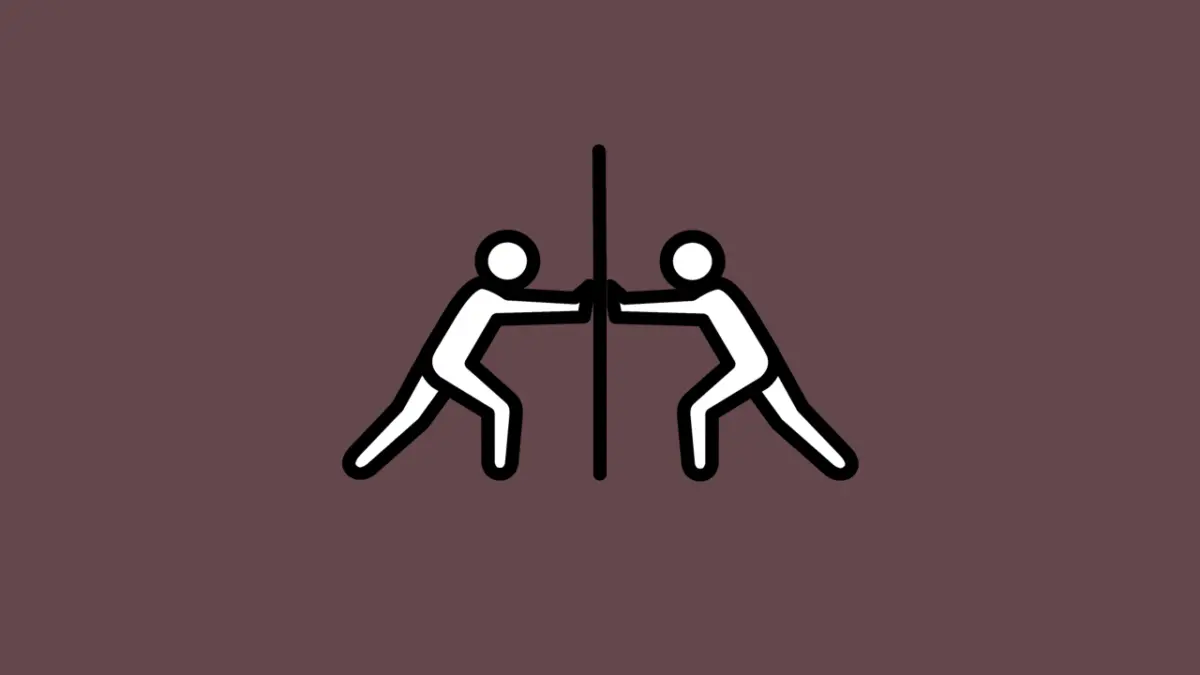
- The Cycle of Escalation: Aguilar describes resistance metaphorically as two hands pushing against one another. Quantitative observations of high-stress coaching sessions show that when a coach increases verbal pressure (e.g., reiterating the necessity of a curriculum or citing policy mandates), the teacher’s verbal pushback and closed-off body language increase proportionally.
- The Cost of Misdiagnosis: Misidentifying a teacher’s growth barrier leads to wasted professional development capital. Districts frequently invest in superficial workshops (addressing "will") when the educator’s actual barrier is a lack of specialized training or institutional capacity.
By analyzing these dynamics through frameworks like Aguilar’s ACE (Acknowledge emotions, Cultivate compassion, Expand the story) and her Gaps Framework, educational systems can systematically address the root causes of friction rather than penalizing its symptoms.
Official Insights & Frameworks from Elena Aguilar
Elena Aguilar’s extensive body of work—built upon years of frontline coaching and organizational consulting through Bright Morning Consulting—provides actionable methodologies for transforming conflict into opportunity. Her insights are broken down into four foundational pillars:
1. Recognizing Our Contribution to the Pushback
The cornerstone of Aguilar’s philosophy is the understanding that resistance is a relational phenomenon.
"What we experience as resistance is actually the dynamic between two people," Aguilar notes.
When an educator expresses doubt about a new initiative, it is frequently met with counter-arguments from the coach. Both parties become entrenched in defensive postures. Aguilar uses the powerful imagery of lowering one’s hand in a pushing match: "If you don’t want to experience resistance, drop your hand. Stop exerting your own pressure against their pressure."

This does not imply capitulation or abandoning high standards. Rather, it demands radical curiosity. By replacing demands with exploratory questions, coaches dismantle the adversarial wall, creating a safe psychological space where true dialogue can occur.
2. Navigating the Emotional Subtext via the ACE Framework
Beneath nearly every instance of professional pushback lies a complex web of unexpressed emotions—fear of failure, imposter syndrome, exhaustion, or grief over lost autonomy. To navigate this emotional terrain without requiring a clinical background, Aguilar developed the ACE framework:
- Acknowledge Emotions: Coaches must pause before problem-solving to validate what the teacher is feeling. This process should be exploratory rather than prescriptive. Instead of telling a teacher, "You seem angry," a coach might observe, "It sounds like there’s some apprehension here; does that feel accurate?" Utilizing tools like Aguilar’s Core Emotions resource helps educators pinpoint underlying feelings such as distress, shame, or fear.
- Cultivate Compassion: Self-judgment often prevents educators from embracing new strategies. Aguilar suggests asking teachers what they would advise a best friend facing the exact same challenge. This fosters self-compassion, which in turn enables educators to extend grace to themselves, their students, and their administrators. Crucially, Aguilar stresses that coaches must model this self-compassion authentically.
- Expand the Story: Every piece of resistance is tied to a narrative—a deeply held belief about what students are capable of, what an administration expects, or what the teacher’s professional identity represents. Coaches must help educators unpack these beliefs, examine the stories they are telling themselves, and deliberately choose to expand their perspectives.
3. Diagnosing True Needs Through the Gaps Framework
When the conversation finally pivots to instructional practice, identifying the correct form of support is paramount. Aguilar’s Gaps Framework categorizes professional hurdles into six distinct areas, reframing them not as personal deficits, but as growth opportunities:
- Skill: The mechanical ability to execute a strategy.
- Knowledge: Understanding the conceptual foundation behind a practice.
- Capacity: Having the necessary time, physical energy, or operational bandwidth.
- Will: The internal motivation and desire to engage in the work.
- Emotional Intelligence: The ability to manage emotional responses within the classroom environment.
- Cultural Competence: The awareness and responsiveness needed to support diverse student populations.
Labeling a teacher as "resistant" typically misattributes a structural issue—such as a lack of knowledge or capacity—as a failure of will. For instance, a high school math teacher objecting to reading-heavy curricula may not be recalcitrant; they may simply lack formal training in literacy instruction. Identifying the precise gap ensures that interventions are tailored and effective.
4. Validating "Righteous Resistance"
A vital and often overlooked contribution of Aguilar’s work is the validation of legitimate pushback. Not all resistance is rooted in fear or skill gaps; sometimes, institutional mandates are pedagogically unsound, ethically questionable, or developmentally inappropriate.
Aguilar provides the example of early childhood educators being instructed to force young children into sedentary, prolonged seatwork—a practice completely at odds with developmental science. In such cases, resistance is not only justified; it is professional integrity in action. Coaches and leaders must maintain the humility to listen when educators push back against policies that harm students, exploring avenues for advocacy, institutional pushback, or collective problem-solving.
Future Outlook: Transforming Educational Leadership and School Culture
As school districts nationwide grapple with retention crises, teacher fatigue, and the rapid evolution of educational standards, the traditional models of supervision and coaching are proving obsolete. Punitively driving compliance through top-down pressure yields short-term compliance at the cost of long-term burnout and institutional disillusionment.

The future of educational leadership lies in relational resilience and emotional intelligence. By adopting Aguilar’s principles—moving from adversarial pressure to genuine curiosity, utilizing structured emotional frameworks like ACE, accurately diagnosing growth gaps, and respecting legitimate professional pushback—schools can redefine their organizational cultures.
When teachers feel truly seen, heard, and partnered with rather than managed or coerced, the energy previously consumed by resistance can be redirected toward student learning and professional innovation. As Aguilar summarizes, the ultimate goal of coaching is captured in a simple sentiment:
"I’m not here to judge you. I’m not going to tell you what to do. I want to be a partner. I want to help you work through this."
Embracing this ethos is no longer merely a progressive ideal for instructional coaching; it is an urgent necessity for the health, vitality, and future of the teaching profession.

