
Executive Overview
In the rapidly evolving landscape of modern education, digital literacy has shifted from an elective luxury to a foundational requirement. Long gone are the days when computer science education began and ended with static textbooks, dense reference manuals, or passive YouTube tutorials that frequently alienate young learners. Today, educators and parents face a pressing challenge: how to introduce real, industry-standard programming languages to children in a way that is both intellectually rigorous and genuinely captivating.
Enter CodeMonkey, an award-winning, game-based educational platform designed to bridge the gap between playful engagement and professional coding competency. Catering to a diverse demographic—ranging from preschoolers taking their first digital steps to eighth graders tackling complex logic—CodeMonkey transforms the intimidating world of syntax and algorithms into an intuitive quest. By tasking students with guiding a virtual monkey to collect bananas through the clever application of code, the platform successfully demystifies computer science.
Rather than relying on overly simplified "toy" languages that have no real-world application, CodeMonkey bridges the gap early, introducing students to robust programming languages like CoffeeScript, Python, and JavaScript. Whether deployed in traditional classrooms, integrated into virtual learning environments, or utilized within dynamic homeschooling routines, the platform has established itself as an authoritative leader in STEM pedagogy. This comprehensive review examines the architectural design, educational methodology, technical curriculum, and real-world impact of CodeMonkey, offering a definitive guide for educators, administrators, and parents seeking to empower the next generation of digital creators.
Detailed Chronology of the CodeMonkey Platform
To understand the current maturity and pedagogical depth of CodeMonkey, it is helpful to trace its evolution from a novel concept to a globally recognized STEM curriculum. The platform’s development timeline reflects a dedicated effort to meet the changing demands of K–8 computer science education.
- Foundation and Conceptualization: Recognizing a distinct void in early childhood computer science education—specifically the lack of accessible text-based coding tools for non-readers and young students—developers set out to create a visual medium where logic precedes syntax. The core mechanic was born: a puzzle-based environment where immediate visual feedback reinforces coding logic.
- Expansion into Real Languages: Early iterations focused heavily on foundational logic, but developers quickly integrated languages that offer genuine career utility. By introducing CoffeeScript as an accessible bridge to JavaScript, and later incorporating Python—one of the world’s most widely adopted professional languages—CodeMonkey shifted from a basic game to a legitimate career pipeline.
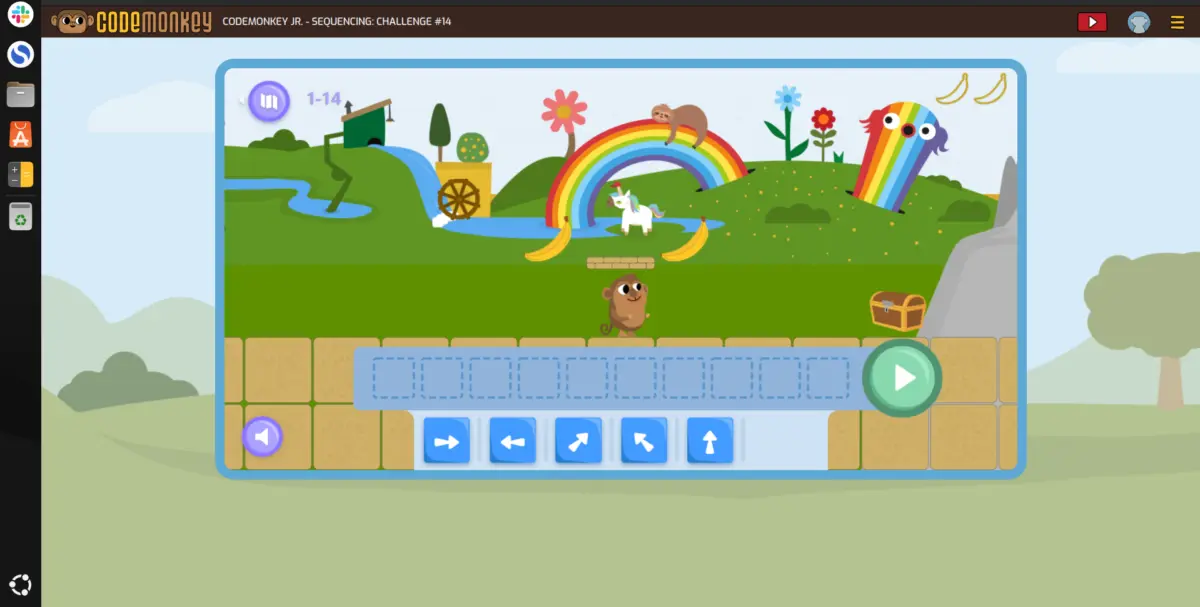
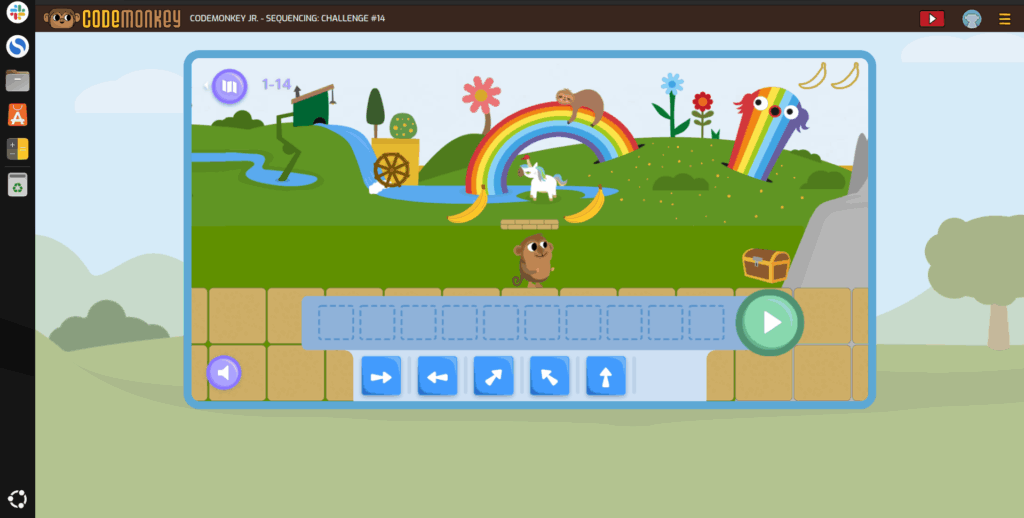
- Curriculum Diversification (CodeMonkey Jr.): To address the growing demand for early-years STEM exposure, the platform launched CodeMonkey Jr. This adaptation extended the platform’s reach down to preschoolers and early elementary students, utilizing block-based mechanics and visual puzzles to instill computational thinking before formal literacy is even fully established.
- Advanced Content and Game Builder Integration: As the user base grew into middle school (up to 8th grade), the curriculum expanded to include nearly 400 distinct challenges, advanced looping structures, functions, arrays, and objects. The introduction of the Game Builder tool marked a pivotal milestone, transitioning students from passive puzzle-solvers to active software creators capable of designing and publishing their own playable games.
Supporting Context & Metrics: The Mechanics of Gamified Learning
At the heart of CodeMonkey’s success is its mastery of gamification—the strategic application of game-design elements in non-game contexts. Educational research consistently demonstrates that gamification enhances intrinsic motivation, reduces cognitive anxiety associated with complex subjects, and drastically improves knowledge retention.
The Curriculum in Numbers
- 400+ Progressive Challenges: The flagship Coding Adventure course features nearly 400 meticulously structured puzzles. Each level incrementally increases the cognitive load, ensuring that students never experience abrupt difficulty spikes.
- Three-Star Rating System: Performance is evaluated instantaneously, rewarding students with up to three stars per puzzle based on efficiency and accuracy. This immediate feedback loop encourages iterative problem-solving and debugging.
- Preschool to 8th Grade Span: The platform’s scalability accommodates a massive developmental window, allowing children to mature alongside the software as they transition from spatial reasoning to advanced text syntax.
Core Programming Concepts Mastered
CodeMonkey does not shy away from advanced computer science concepts; rather, it breaks them down into digestible, relatable analogies:
- Loops: Instead of forcing a student to write redundant lines of code—such as instructing a digital entity to take a single step one hundred times—CodeMonkey introduces loops. The analogy is simple: instructing a robot to clean up toys by creating a repeatable rule rather than writing out every individual command.
- Functions & Function Calls: Students learn to write modular "recipes" of code that can be executed repeatedly throughout a program, drastically reducing code bloat and enhancing readability.
- Variables and Conditions: Operating as digital storage boxes, variables hold numeric or textual data. Boolean conditions and if-else statements teach students how programs make dynamic decisions based on changing environmental states (e.g., evaluating whether a player’s score has surpassed a specific threshold).
- Objects and Arrays: Moving beyond basic variables, students learn to organize data structures. Arrays function like neatly organized lines of data, allowing young programmers to manipulate, sort, and sequence information efficiently.
Official Statements and Educational Philosophy
Educators, homeschool parents, and institutional administrators have increasingly championed platforms that remove the friction from STEM instruction. The pedagogical philosophy underpinning CodeMonkey centers on scaffolding—a teaching method that enables a student to solve a problem or achieve a goal that would be beyond their unassisted efforts.
"Kids don’t need prior coding experience to start. Younger students can begin with block-based coding, while older ones transition into text-based languages, gaining confidence step by step."
Furthermore, industry experts emphasize that CodeMonkey’s approach addresses the modern requirement for digital literacy without overwhelming the learner. By connecting abstract programming concepts to tangible, real-world applications—such as understanding how websites utilize data cookies or how game physics operate—students develop a holistic appreciation for computer science.
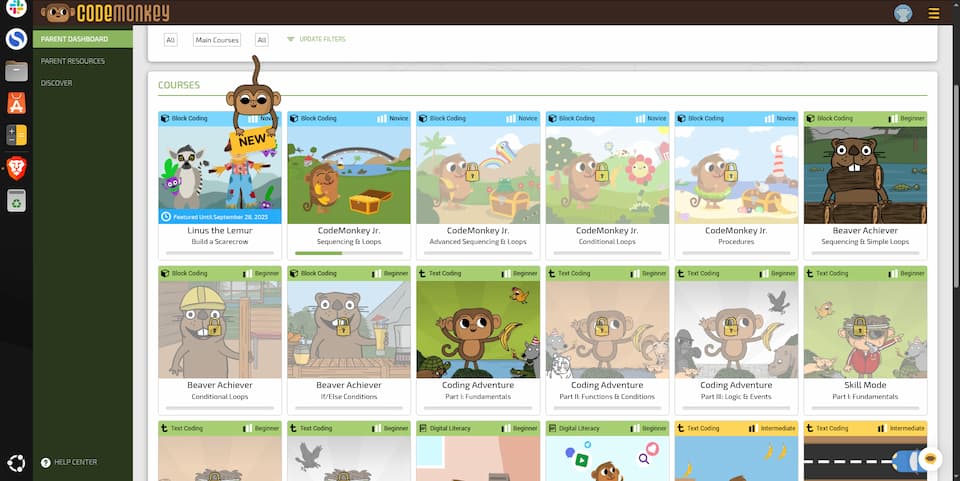
Homeschooling parents have similarly praised the platform’s intuitive dashboards and automated grading systems. Because the software evaluates code instantly and tracks progress through a dedicated "skill mode," parents and educators maintain a top-down perspective of student mastery without requiring an advanced degree in computer science themselves. As one educator noted regarding the platform’s integrated support structures:
"There’s a special ‘skill mode’ that shows what coding concepts you know… The program grades your work automatically. You don’t have to wait for someone to check it. You can move on to the next lesson right away when you’re ready so there is no slowing down."
Future Outlook: The Evolution of Early STEM Platforms
As artificial intelligence, automation, and software engineering continue to reshape the global workforce, early exposure to computational thinking is no longer optional; it is essential infrastructure for the 21st-century economy. Platforms like CodeMonkey point the way forward by proving that rigorous technical education can be seamlessly integrated with play.
Looking ahead, the trajectory of early-childhood coding platforms points toward deeper integration with collaborative environments, expanded multi-language support, and enhanced AI-driven tutoring chatbots. These advancements will further personalize the learning journey, ensuring that every student—regardless of geographic location, socioeconomic background, or initial aptitude—can progress at an optimized, individualized pace.
For parents, teachers, and school districts evaluating how best to prepare students for an increasingly digitized future, CodeMonkey offers a proven, scalable, and deeply engaging solution. By turning the daunting task of learning JavaScript and Python into an exciting journey of collecting bananas and building custom games, CodeMonkey ensures that the programmers of tomorrow begin their journey with curiosity, confidence, and joy.

