
Executive Overview
In the modern middle and high school classroom, diversity of thought, background, and perspective is a cornerstone of a vibrant educational environment. However, bringing together a dynamic group of adolescents naturally creates friction. From a science lab team gridlocked over experimental methodology to a student feeling isolated after being excluded from a collaborative social group, interpersonal friction is an inevitable aspect of daily school life.
Historically, educational institutions often viewed classroom conflict as a disciplinary disruption—an aberration to be swiftly punished or suppressed. Today, progressive pedagogical research reveals a paradigm shift: conflict is not inherently negative, nor is the ultimate objective to eradicate disagreements entirely. Instead, leading educators and child psychologists champion a proactive framework focused on teaching kids and teens how to independently navigate, manage, and resolve disputes in healthy, constructive ways.
Implementing structured conflict resolution strategies yields profound secondary benefits. Beyond simply mitigating hallway disputes or classroom arguments, intentional social-emotional learning (SEL) frameworks foster deeper peer connections, enhance active listening, promote emotional regulation, and build essential self-advocacy skills. As educators face increasing pressure to balance rigorous academic standards with student well-being, mastering conflict resolution has transformed from an optional classroom management tool into an essential pillar of adolescent development.
Detailed Chronology: The Evolution of Classroom Conflict Resolution
To understand how contemporary educators approach student disputes, it is valuable to examine how conflict management has evolved within the American educational landscape over the past several decades.
Era of Punitive Correction (Pre-1990s)
For generations, school responses to student conflict were largely reactive and punitive. When arguments escalated, the standard protocol involved administrative intervention, detention, suspension, or mandated apologies without emotional processing. This approach treated the symptoms of conflict rather than the root cause, often leaving adolescents unequipped to handle similar disagreements in future social or professional settings.
The Rise of Peer Mediation and SEL (1990s–2010s)
As educational psychology advanced, schools began recognizing the value of Social-Emotional Learning (SEL). The late 1990s and 2000s saw the widespread introduction of peer mediation programs, where trained student mediators helped disputants talk through issues. While largely successful, these programs were often siloed as standalone interventions rather than integrated directly into daily classroom instruction.
The Modern Proactive Framework (2020s–Present)
In the wake of post-pandemic educational shifts, contemporary classrooms require a more systemic approach to emotional regulation and interpersonal communication. Today’s best practices integrate conflict resolution directly into the academic curriculum. Educators utilize daily relationship-building exercises, structured class meetings, scenario-based problem-solving, and explicit instruction in active listening. Rather than stepping in as arbiters at the first sign of disagreement, modern teachers act as facilitators, guiding adolescents to leverage their developing neural pathways to choose peaceful, collaborative solutions.
Supporting Context & Metrics: Why Focus on Conflict Resolution?
Adolescence is a period of intense neurological and social development. The prefrontal cortex—the region of the brain responsible for executive functions, impulse control, and long-term planning—is still under construction well into a person’s twenties. Concurrently, the amygdala, which governs the brain’s emotional and "fight-or-flight" responses, is hyper-reactive during the middle and high school years.
When a student feels disrespected, overwhelmed, or misunderstood, the amygdala hijacks rational thought, leading to impulsive reactions, raised voices, or emotional withdrawal. Equipping students with explicit conflict resolution tools bridges the gap between biological reactivity and rational decision-making.
Key Benefits of Proactive Conflict Resolution:
- Enhanced Academic Engagement: Classrooms characterized by psychological safety and low peer friction report higher rates of collaborative engagement and academic risk-taking.
- Reduction in Bullying and Exclusion: Teaching students how to voice their needs assertively and listen actively helps prevent social isolation and relational aggression.
- Long-Term Societal Impact: Skills acquired in middle and high school—such as respecting differing viewpoints, practicing active listening, and self-advocating—translate directly into workplace competency and civic engagement.
Official Statements and Expert Perspectives
Educational researchers and child development advocates emphasize that conflict resolution must be viewed as an ongoing practice rather than a one-time lesson.
"Conflict is a natural byproduct of human interaction. When we teach young adults that disagreements are not crises, but rather opportunities to understand different perspectives and articulate their own needs, we change the entire trajectory of their social development."
— Dr. Elena Vance, Director of Adolescent Social-Emotional Learning Initiatives
Furthermore, instructional specialists note that integrating these strategies does not require carving out hours of precious instructional time.
"Teachers do not need a separate curriculum to build these skills. By embedding active listening protocols into group projects, utilizing brief daily reflection prompts, and treating classroom disagreements as teachable moments, educators can seamlessly weave conflict resolution into math, science, humanities, and arts education alike."
— Marcus Sterling, National Curriculum Design Consultant
Actionable Strategies for the Middle and High School Classroom
Implementing a robust conflict resolution framework requires a multi-layered approach. Educators can utilize the following comprehensive strategies to foster a peaceful, collaborative classroom culture:
1. Prioritize Relationship-Building First
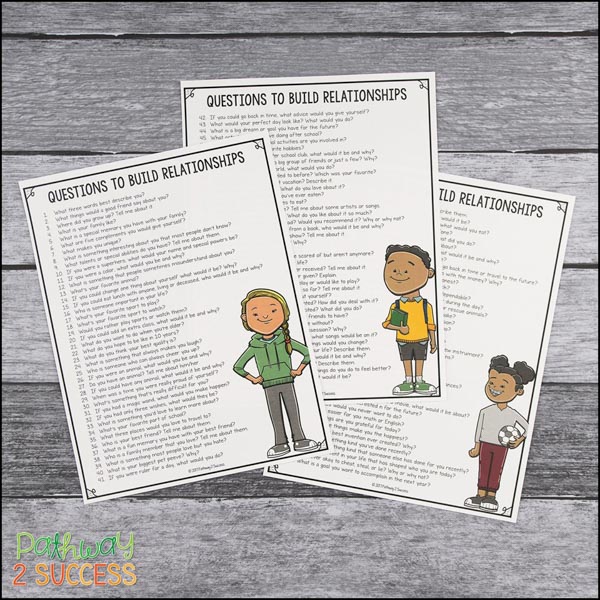
The bedrock of effective conflict resolution is relational trust. Navigating disagreements is inherently difficult; it requires vulnerability and mutual respect. When students feel genuinely connected to their peers and teachers, the emotional cost of resolving a dispute drops significantly.
- Implementation: Dedicate time to structured group conversations using targeted relationship-building prompts. Open-ended questions about personal values, hobbies, and experiences help humanize students to one another, making collaborative problem-solving much smoother when tensions arise.
2. Explicitly Teach Conflict Resolution Strategies
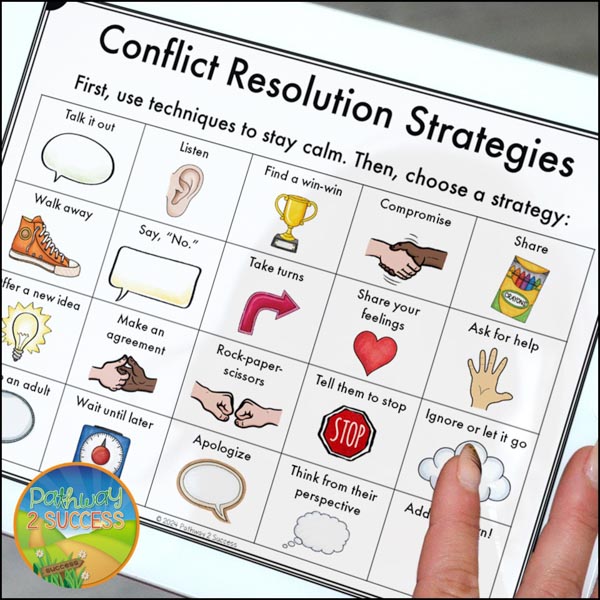
Proactive instruction means arming students with tools before crises occur. Adolescents must understand that different scenarios require different tactics. For example, a creative disagreement over a science project calls for active listening and compromise, whereas feeling pressured to share test answers requires assertive self-advocacy and a clear "no."
- Implementation: Utilize visual anchor charts, scenario cards, and explicit mini-lessons to walk students through various response options tailored to unique social and academic situations.
3. Cultivate Active Listening
True active listening goes beyond remaining silent while another person speaks; it involves processing, internalizing, and seeking to understand the speaker’s perspective before formulating a response.
- Implementation: Integrate structured protocols—such as "speaker-listener" pairings or paraphrase-back routines—into group work, ensuring every student feels heard and validated.
4. Practice and Prioritize Calming Strategies
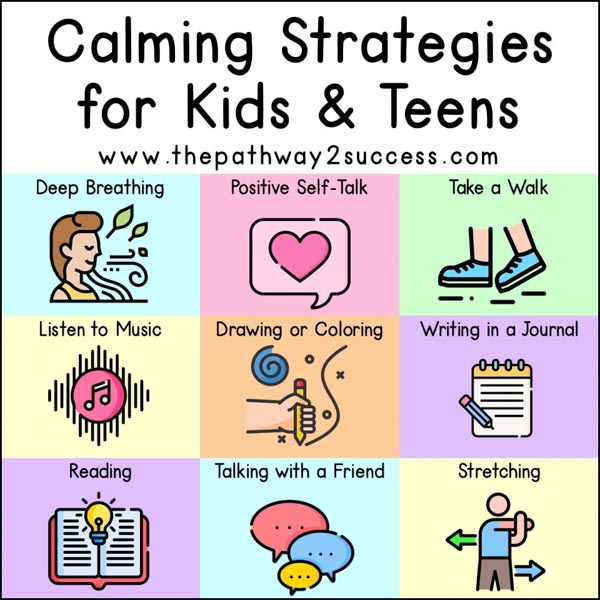
Because the adolescent brain defaults to emotional reactivity under stress, teaching physiological and psychological calming techniques is vital.
- Implementation: Incorporate brief mindfulness breaks, deep-breathing exercises, or silent reflection periods into the daily schedule. Normalize practices like positive self-talk and journaling as healthy outlets to defuse emotional escalation before attempting to resolve a conflict.
5. Analyze Conflict Scenarios in a Safe Environment
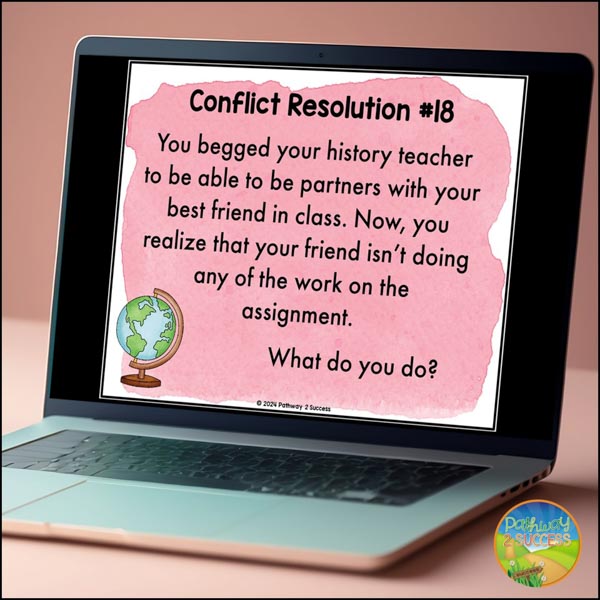
Role-playing or discussing hypothetical conflict scenarios allows students to analyze interpersonal friction without the high emotional stakes of a real-time personal dispute.
- Implementation: Present students with realistic scenarios—such as a group member not pulling their weight or friends gossiping—and facilitate open discussions on identifying the root problem and brainstorming multiple peaceful resolutions.
6. Institutionalize Class Meetings
Regularly scheduled class meetings provide a predictable, semi-structured forum where students can address classroom-wide concerns, celebrate successes, and collaboratively establish norms.
- Implementation: Hold weekly or bi-weekly circle discussions where students take ownership of classroom culture, proposing solutions to shared challenges rather than relying solely on top-down teacher mandates.
7. Encourage and Model Self-Advocacy
Self-advocacy and conflict resolution are deeply intertwined. Students must learn how to articulate their boundaries, express their needs without aggression, and seek adult intervention when a situation exceeds their developmental capacity to resolve independently.
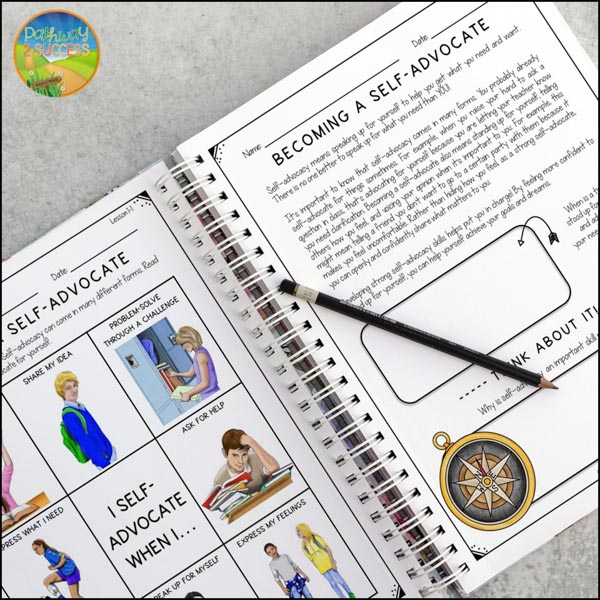
- Implementation: Teach students specific verbal frameworks for setting boundaries, such as "I feel [emotion] when [action] happens, and I need [resolution]."
8. Master the Art of Respectful Disagreement
Disagreements over music, ideas, or project directions are guaranteed. Teaching students how to disagree without being disagreeable is a lifelong gift.
- Implementation: Provide sentence stems and verbal scaffolds for respectful pushback, such as: "I see your point, but have you considered…" or "I respectfully disagree because…" Pair these lessons with high-interest, low-stakes debates to practice the mechanics of civil discourse.
Future Outlook
As educational institutions continue to adapt to the evolving emotional and social needs of today’s youth, the integration of structured conflict resolution strategies will remain a vital priority. The shift from punitive discipline to restorative, skill-building environments represents a profound maturation in how society prepares adolescents for adulthood.
Looking forward, the success of these initiatives depends heavily on institutional support, ongoing teacher professional development, and a cultural commitment to emotional intelligence as a core academic competency. By embedding relationship-building, active listening, and self-advocacy into the daily educational experience, schools are not only preserving instructional time and reducing behavioral disruptions—they are actively cultivating the empathetic leaders, critical thinkers, and effective communicators of tomorrow.

