
Executive Overview
In an era defined by rapid information consumption and polarizing public discourse, educators face an unprecedented challenge: how to teach students not just what to think about history, but how to critically analyze the raw materials from which history is constructed. Enter a powerful, transformative collaboration between the National Council of Teachers of English (NCTE) and the Library of Congress. Operating under the auspices of the prestigious Teaching with Primary Sources (TPS) Consortium, this nationwide initiative is fundamentally reshaping how English Language Arts (ELA) and literacy teachers integrate digitized historical artifacts into their everyday curricula.
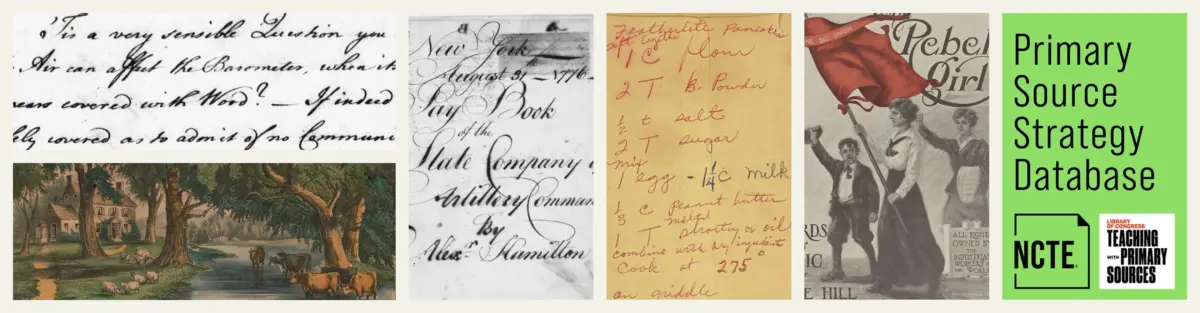
At the heart of this partnership is a newly expanded, highly searchable digital database designed to bridge the gap between archival research and classroom instruction. Featuring instructional strategies tailored to more than 150 specific items from the Library of Congress’s vast digitized collections, the platform equips educators with ready-to-use frameworks. These resources are not merely academic curiosities; they are meticulously crafted pedagogical tools created by over two dozen leading ELA educators and curriculum specialists.
By categorizing content through intuitive tags such as picturebook, argument, vocabulary, and media literacy, the database enables teachers to seamlessly align primary sources with state standards, thematic units, and cross-curricular objectives. Among the crown jewels of this repository are instructional guides centered on marginalized historical narratives—such as a historic late-19th-century Salt Lake Tribune article detailing the lives of women who lived as men. Through these recovered accounts, students are invited to examine gender norms, challenge historical erasures, and develop advanced media literacy skills. This comprehensive report explores the mechanics of this groundbreaking initiative, its profound implications for modern literacy education, and how it empowers a new generation of critical thinkers.
Detailed Chronology: The Evolution of the NCTE-Library of Congress Partnership
To understand the weight and scope of the current TPS Consortium initiative, one must examine the intentional, multi-year evolution of the partnership between the NCTE and the Library of Congress. The integration of primary sources into literacy instruction has not happened overnight; rather, it is the result of systematic capacity-building, teacher leadership development, and digital innovation.
Phase One: Laying the Foundation
For decades, primary sources were largely sequestered within the domain of social studies and history classrooms. ELA classrooms, by contrast, traditionally prioritized literary canons, creative writing, and foundational reading mechanics. However, as educational standards shifted to emphasize informational text literacy, critical analysis, and cross-disciplinary reading—codified heavily in frameworks like the Common Core and various state-level standards—leaders at the NCTE recognized an untapped opportunity.
Through early alignments with the Library of Congress’s Teaching with Primary Sources program, educational pioneers began exploring how historical documents, photographs, broadsides, and newspaper clippings could serve as rich texts for literary analysis, rhetorical study, and argumentative writing.
Phase Two: Mobilizing ELA Leadership
Realizing that general history-teaching strategies did not always translate to the specific pedagogical needs of English Language Arts classrooms, the NCTE mobilized a specialized task force. More than two dozen accomplished ELA teachers, instructional coaches, and curriculum leaders were brought together to pilot, design, and refine teaching strategies tailored explicitly to literacy instruction.
These educators did not simply pick random artifacts; they curated items from the Library of Congress’s digital archives that possessed exceptional literacy merit. They mapped these items directly to reading comprehension strategies, vocabulary acquisition, writing processes, and collaborative discussion models.
Phase Three: The Digital Rollout and Database Expansion
The culmination of this collaborative effort is the current searchable database—a dynamic, user-friendly digital hub housed within the NCTE ecosystem. By indexing instructional strategies across more than 150 specific archival items, the database broke down logistical barriers that historically prevented teachers from utilizing primary sources.
Educators could now filter searches by format, skill, or instructional goal. For instance, a high school teacher looking to strengthen students’ abilities to evaluate logical arguments (RI.9-10.8) could instantly pull up curated primary sources, complete with scaffolded focus questions, pedagogical approaches, and identified points of potential classroom friction.
Supporting Context & Metrics: Bridging Archives and the Modern Classroom
The impact of the NCTE and Library of Congress partnership is best understood through the lens of modern pedagogical theory and the specific curricular resources being deployed. At the core of this initiative is a shift away from passive textbook learning toward active, inquiry-based archival exploration.
The Pedagogical Framework: Literacy Meets History
Traditional ELA instruction often treats texts as fixed, self-contained objects. Primary source integration, however, forces students to confront the messy, subjective, and constructed nature of communication. When students engage with a digitized broadside, an editorial from the 1800s, or a transcribed news dispatch, they must immediately ask fundamental media literacy questions:
- Who authored this text?
- What was their implicit bias?
- What is omitted from this narrative?
The database supports this inquiry by organizing strategies around core ELA proficiencies:
| ELA Skill / Tag | Pedagogical Focus | Primary Source Application |
|---|---|---|
| Argument & Rhetoric | Evaluating claims, assessing reasoning, identifying fallacies (RI.9-10.8) |
Analyzing historical opinion pieces and special cable dispatches for persuasive techniques. |
| Evidence Citation | Citing strong, thorough textual evidence to support explicit analysis (RI.9-10.1) |
Examining historical profiles to extract direct textual proof supporting inferences. |
| Media Literacy | Deconstructing how media formats shape historical understanding | Investigating nineteenth-century journalism style, publication biases, and syndication practices. |
| Vocabulary & Fluency | Expanding domain-specific and historical lexicon | Parsing archaic language structures and contextualizing historical terminology. |
Case Study in Archival Recovery: Uncovering Hidden Histories
A prime example of the intellectual rigor fostered by this initiative is the instructional module built around a historical feature from The Salt Lake Tribune. Authored by London-based correspondent Rupert Neville and designated as a "Special Cable to The Tribune," the article chronicles the lives of several women—including Marie LeRoy, Madame Velasquez, Hannah Snell, Mary Ann Talbot, Catherine Coome, and Marion Edwards—who lived portions or all of their lives as men.
In the hands of a skilled ELA educator utilizing the NCTE-Library of Congress framework, this artifact becomes a catalyst for deep, cross-curricular critical thinking.
Challenging Social Norms and Historical Erasure
The instructional guide notes that these women actively defied the rigid social norms and structural limitations of their eras. By examining their stories, students are encouraged to look beyond sanitized historical narratives and confront the reality of systemic historical erasure. Many individuals who stepped outside traditional gender roles were intentionally written out of mainstream historical texts. Bringing their stories into the ELA classroom provides students with a more complete, nuanced understanding of history, demonstrating that human identity and social resistance have always been complex.
Empathy and Analytical Rigor
Furthermore, analyzing the challenges these figures faced fosters genuine empathy and historical perspective-taking. Students are not merely memorizing dates; they are evaluating how societal expectations impact individual agency. This aligns directly with advanced secondary standards, such as New Mexico’s adopted content standards for History/Social Studies literacy (RH.11-12.2), which require students to determine central ideas and map the relationships among key details in primary and secondary sources.
Official Statements and Educational Insights
The momentum behind the TPS Consortium partnership reflects a broader professional consensus regarding the future of literacy education. Leaders from both the National Council of Teachers of English and the Library of Congress have consistently emphasized that teaching with primary sources is not an "add-on" to the curriculum, but rather a vital engine for modern critical literacy.
"Primary sources bridge the gap between the past and the analytical mind of the modern student," notes curriculum development leads associated with the NCTE initiative. "When students interact with original documents, photographs, and historical journalism, they stop viewing reading as a passive exercise. They become investigators, rhetoricians, and active participants in the construction of knowledge."
Educational specialists emphasize that the database’s collaborative design—built by teachers for teachers—ensures maximum practical utility. Because the strategies were drafted by classroom educators who understand the constraints of instructional time, standardized testing requirements, and diverse student needs, the resources require minimal adaptation to be implemented effectively.
Moreover, literacy experts highlight the critical role these tools play in cultivating media literacy. In an age dominated by digital noise, deepfakes, and algorithmic misinformation, the foundational skills practiced through primary source analysis—evaluating evidence, cross-referencing claims, recognizing authorial intent, and identifying logical fallacies—are more urgent than ever. By learning to interrogate a 19th-century newspaper dispatch, students build cognitive armor that serves them in the 21st-century digital landscape.
Future Outlook: The Next Horizon for Primary Source Literacy
As the NCTE-Library of Congress partnership continues to expand, the implications for the future of English Language Arts education are profound. The initiative is poised for several key developments in the coming years:
1. Broadening the Archival Scope
Plans are already underway to expand the searchable database beyond the initial 150 items, incorporating even more diverse, intersectional, and globally representative primary sources from the Library of Congress’s unparalleled holdings. This expansion ensures that students from all backgrounds can see their histories reflected while engaging with rigorous literary analysis.
2. Professional Development and Educator Networks
To maximize the reach of these digital tools, the TPS Consortium is scaling up professional development offerings, virtual workshops, and collaborative networks. By training regional teacher-leaders to mentor their peers in primary source integration, the NCTE aims to institutionalize archival inquiry across school districts nationwide.
3. Deepening Digital and Media Literacy Integration
As artificial intelligence and digital media continue to transform text consumption, future phases of the initiative will likely focus on forging explicit connections between historical media literacy and modern digital information ecosystems. Teachers will be equipped with comparative frameworks that allow students to analyze historical propaganda or journalism side-by-side with contemporary digital media artifacts.
Conclusion
The collaboration between the NCTE and the Library of Congress via the Teaching with Primary Sources Consortium represents a gold standard in modern curriculum design. By transforming dry historical archives into accessible, standards-aligned, and intellectually challenging ELA resources, the initiative empowers teachers to cultivate the next generation of empathetic, critical, and articulate thinkers. Through the unearthing of silenced narratives and the rigorous application of textual analysis, students are learning not just to read history, but to question it, understand it, and shape its future.

