
Executive Overview
In an era characterized by shifting cultural norms, digital connectivity, and theological pluralism, the global Christian church faces a persistent and subtle threat: the rise of modern heresies. While historical heresies often involved complex Christological or trinitarian debates—such as Arianism or Gnosticism—contemporary theological deviations frequently manifest as a distortion of the core message of Jesus Christ: the pure gospel.
In Episode 27 of the Read, Do, & Tell podcast, hosts Amy and Becky continue a rigorous multi-part series examining heretical teachings within the modern church. Building upon their foundational discussions on heresies against God in Episode 26, the hosts turn their attention directly to "heresies against the gospel." Defining heresy not merely as a minor disagreement, but as an intentional distortion or contradiction of God’s revealed Word in Scripture, the hosts sound a clarion call for theological discernment.
This special report explores the landscape of contemporary false gospels, examining how prosperity theology, syncretistic ideologies like secular Marxism, and alternative religious movements infiltrate modern pulpits. By evaluating the gravity of these teachings through an investigative lens, this article provides a comprehensive overview of the theological battles facing the contemporary church, highlighting the urgent need for biblical literacy, critical evaluation of religious leaders, and unwavering adherence to orthodox Christian doctrine.
Detailed Chronology and Series Progression
To understand the weight of Episode 27, it is essential to trace the developmental arc of the Read, Do, & Tell podcast’s ongoing investigation into theological deviance. The conversation did not begin in a vacuum; rather, it represents a methodical unpacking of error within the church across several key installments:
- Episode 23 (Laying the Foundation): The hosts introduced the concept of heresy, establishing the biblical definition and emphasizing that distortion of divine truth is treated as a grave matter in Scripture. Listeners were challenged to view doctrine not as academic trivia, but as the foundational bedrock of spiritual life.
- Episode 24 (Identifying False Teachers): Expanding on Episode 23, the hosts dissected the characteristics of false teachers. They utilized biblical warning passages from the New Testament—such as the epistles of Peter, Jude, and Paul—to outline how wolves in sheep’s clothing manipulate congregations for personal gain, prestige, or ideological compliance.
- Episode 26 (Heresies Against God): Shifting the focus from the messengers to the object of worship, this episode targeted theological errors regarding the nature, attributes, and sovereignty of God. Concepts such as open theism, moralistic therapeutic deism, and anthropomorphic reductions of deity were brought to light.
- Episode 27 (Heresies Against the Gospel): The current focal point. Amy and Becky pivot from the general nature of God to the specific mechanics of salvation and the substitutionary atonement of Jesus Christ. This installment confronts how the evangelical message is hijacked by worldly philosophies, materialistic incentives, and social gospels that subvert the doctrine of grace.
This chronological progression demonstrates a deliberate pedagogical strategy: moving from the definition of heresy to the profile of the heretic, examining errors regarding God’s character, and finally confronting distortions of the gospel message itself.
Supporting Context and Theological Analysis
To fully grasp the implications of "heresies against the gospel," one must examine the defining characteristics of the pure gospel as outlined in historical Christian orthodoxy, juxtaposed against the prominent modern deviations addressed in contemporary theological discourse.
Defining the Pure Gospel
In historic Christian theology, the gospel (from the Greek euangelion, meaning "good news") centers on the person and work of Jesus Christ. As articulated by the Apostle Paul in 1 Corinthians 15:3–4, the core tenets include Christ’s death for our sins in accordance with the Scriptures, His burial, and His bodily resurrection on the third day. It posits that humanity is universally fallen, separated from God by sin, and incapable of earning salvation. Redemption is an unmerited gift of God’s grace, received solely through faith in Jesus Christ.
The Anatomy of Modern False Gospels
When the purity of this message is compromised, various false gospels emerge. The Read, Do, & Tell podcast highlights several primary categories of distortion:
- The Prosperity Gospel (The Word of Faith Movement):
Perhaps the most pervasive distortion in global Christianity today, the prosperity gospel teaches that financial blessing and physical health are the will of God for every believer, and that faith, positive confession, and monetary sowing (often directed toward specific ministries) are the keys to unlocking these blessings. This effectively turns God into a cosmic vending machine and reduces the cross to a transactional tool for material wealth, abandoning the biblical reality that suffering and self-denial are often hallmarks of Christian discipleship (Philippians 1:29). - Ideological Syncretism (Marxism and Secular Philosophies):
In recent years, theological drift has increasingly occurred through the infiltration of secular sociological frameworks into church leadership. The podcast calls out teachers and movements that either actively teach or passively partner with ideologies like Marxism. By replacing the biblical framework of sin and redemption with a secular framework of eternal struggle between "oppressors" and "the oppressed," these ideologies subvert the gospel. Salvation is redefined from spiritual rescue from sin to societal liberation through human political action, undermining the cross of Christ as the sole equalizer and unifier of humanity. - Alternative Movements and Pseudo-Christian Cults:
Beyond the evangelical church, various religious movements masquerade as Christian while denying foundational truths such as the Trinity, the divinity of Christ, or salvation by grace alone. These movements often append extra-biblical revelations to Scripture, creating works-based systems that directly contradict the finished work of Christ on the cross.
Official Statements and Ministry Guidance
The creators of the Read, Do, & Tell podcast—Amy and Becky—have consistently anchored their ministry in a commitment to biblical fidelity, drawing inspiration from the biblical figure Ezra, who set his heart to study the law of the Lord, to practice it, and to teach his statutes and ordinances in Israel (Ezra 7:10).
In their promotional and accompanying materials for Episode 27, the hosts emphasize the practical application of discernment. They warn that modern believers are often ill-equipped to spot theological error because of declining biblical literacy within Western Christianity. By naming specific teachers, ideologies, and movements, the podcast steps beyond abstract theological critique into direct, accountable engagement—a practice that, while controversial in an age of ecumenical appeasement, aligns with the biblical mandate to "test the spirits" (1 John 4:1) and mark those who cause divisions contrary to apostolic teaching (Romans 16:17).
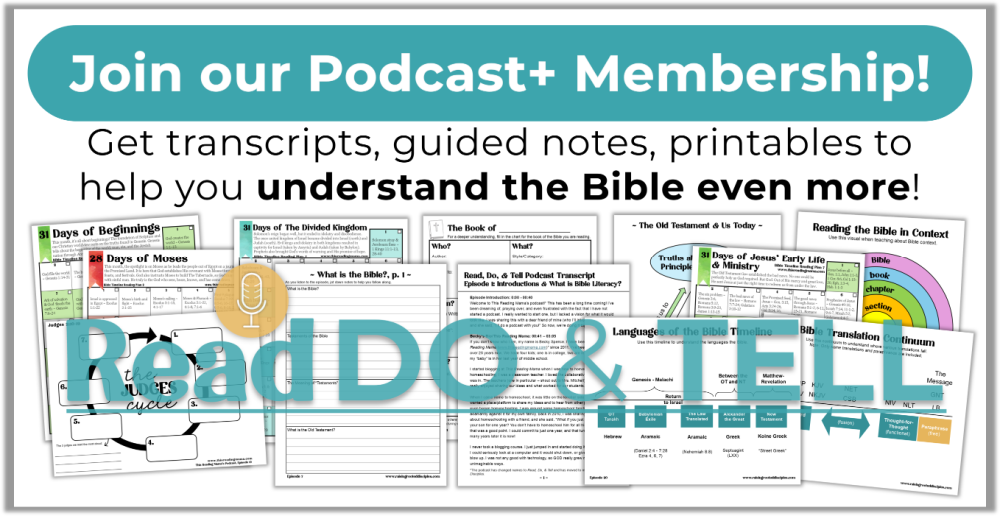
To support believers in this discernment process, the ministry provides structured resources through their Podcast+ Membership, including:
- Detailed Transcripts: Allowing individuals to read and carefully evaluate every point made during the episodes.
- Guided Notes and Study Tools: Designed to help small groups and families break down complex theological concepts.
- Bible Reading Plans: Encouraging daily, contextual engagement with Scripture as the ultimate standard by which all modern teaching must be measured.
Future Outlook: Navigating Theological Drift in the Church
As the contemporary church looks toward the future, the challenge of maintaining doctrinal purity will only intensify. The rapid dissemination of ideas via social media, podcasts, and global streaming platforms means that heretical teachings can cross international borders and infiltrate local congregations faster than at any point in church history.
Key Challenges Ahead
- The Rise of Pragmatism: Churches increasingly measure success by numerical growth, cultural relevance, and emotional resonance rather than doctrinal fidelity. This pragmatic shift opens the door to motivational speaking disguised as preaching, where biblical texts are mined merely for life-hack advice rather than redemptive truth.
- The Cult of Personality: The digital age has amplified celebrity pastors and Christian influencers. When a leader’s platform is built on charisma rather than accountability, congregations often struggle to question or confront theological deviations introduced by trusted figures.
- Biblical Illiteracy: As generational engagement with foundational Bible reading declines, believers become vulnerable to emotional manipulation and shallow theology. Without a deep, working knowledge of Scripture, the average churchgoer cannot distinguish between historic orthodox Christianity and cleverly packaged modern heresies.
The Path Forward
In response to these challenges, resources like the Read, Do, & Tell podcast serve a vital diagnostic and preventative function. The antidote to false teaching is not censorship or reactionary panic, but a return to rigorous, expositional Bible study and spiritual discernment.
Believers and church leaders are challenged to adopt an attitude of active vigilance. By evaluating contemporary movements, prosperity teachers, and ideological compromises against the uncompromising standard of the pure gospel, the global church can protect its message, honor God, and ensure that the historic Christian faith is faithfully handed down to the next generation. As Becky reminds her audience, the ultimate mission remains clear: to read the Word, to do the Word, and to boldly tell the Word of the Lord in a world desperately in need of genuine truth.

