
Executive Overview
In the modern educational landscape, technology has long been heralded as the ultimate great equalizer. From 1:1 device rollouts to cloud-based collaborative suites, classrooms have increasingly digitized to capture the fleeting attention spans of digital-native students. Yet, this digital push has collided with a complex reality: not every school boasts infinite hardware budgets, strict "no-phone" policies are making a sweeping comeback across secondary campuses, and an over-reliance on fast-paced, high-stimulus screens can inadvertently alienate students with sensory sensitivities, developmental delays, or specialized learning requirements.
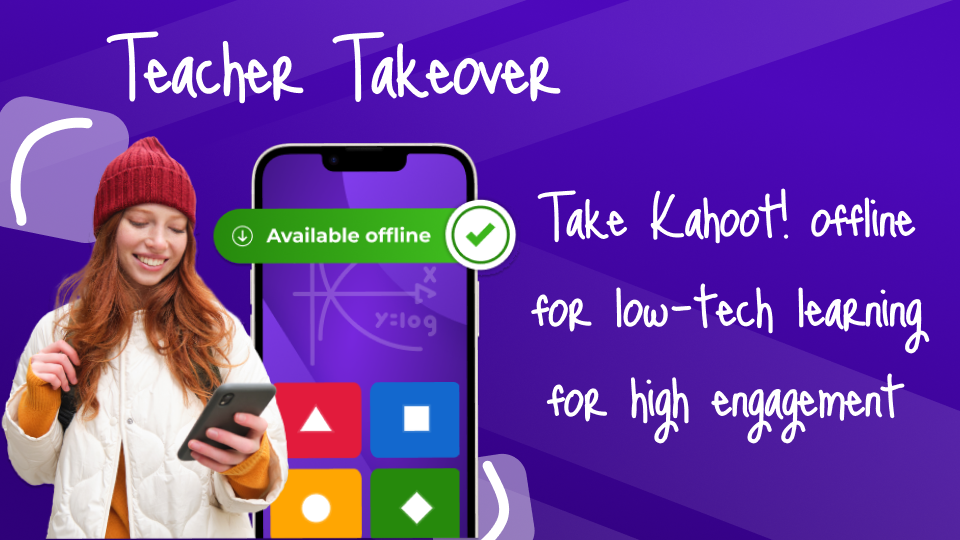
For years, platforms like Kahoot! have been synonymous with the individual device—a smartphone, tablet, or laptop in the hands of every student, racing against a ticking clock to secure a spot on the coveted podium. However, a profound pedagogical shift is underway. Educators and Teacher Ambassadors around the globe are proving that the core magic of Kahoot! was never fundamentally about the hardware; it was about the instructional architecture. By stripping away individual game PINs and personal screens, innovative teachers are discovering that high-energy engagement, collaborative problem-solving, and joyful knowledge checks can thrive entirely offline.
This movement toward low-tech and "unplugged" game-hosting is more than a workaround for device shortages—it is an intentional redesign of interactive learning. By transforming gamified quizzes into kinesthetic movement exercises, gallery walks, and tactile storyboards, educators are dismantling the myth that student engagement requires a digital device.
Detailed Chronology: The Evolution from Digital Monopoly to Flexible Accessibility
To understand the significance of the offline Kahoot! movement, one must trace the trajectory of educational technology over the past decade.
Phase One: The 1:1 Device Boom (Early to Mid-2010s)
When gamified learning platforms first surged into mainstream education, they rode the wave of the 1:1 device initiative. School districts heavily invested in hardware, operating under the assumption that maximizing screen time per student equated to modernizing the classroom. Kahoot! became a household name—and a staple of the Friday afternoon reward period—by capitalizing on individual competition, rapid-fire answering, and leaderboards that flashed live room updates onto a central projector.
Phase Two: The Friction of Implementation (Late 2010s to Early 2020s)
As the dust settled on massive tech rollouts, classroom realities began to reassert themselves. Schools faced mounting hardware replacement costs, broken screens, dead batteries, and erratic Wi-Fi connectivity. Simultaneously, educators in special education and early childhood sectors noted a counter-effect: while fast-paced digital games engaged many learners, they frequently overstimulated students with sensory processing challenges or special learning needs. The pressure of individual timers and competitive rankings created anxiety rather than intrinsic motivation.
Phase Three: The Policy Pendulum Swings Back (2023–Present)
Most recently, a sweeping cultural and administrative backlash against continuous screen exposure has taken root. School districts worldwide are enacting strict ban-policies on personal smartphones during instructional hours. Secondary campuses implementing "phone-free" zones inadvertently locked out teachers who relied on Bring Your Own Device (BYOD) frameworks.
Faced with the prospect of abandoning their favorite formative assessment tools, creative educators began asking a vital question: Can the structure of a game survive without the gadgets? The answer birthed a renaissance of offline adaptations. Teachers began experimenting with whole-group consensus, physical movement, and tactile learning materials, effectively liberating Kahoot! from the digital lobby and integrating its structural design into the physical architecture of the classroom.
Supporting Context & Metrics: Why Device-Free Gamification Works
The pivot toward offline gamification is supported by established learning theories and growing observational data from diverse educational environments.
The Psychology of Shared Anticipation
Traditional competitive quiz games rely heavily on individual achievement. While this motivates high-performing or intrinsically competitive students, it often alienates learners who fear public failure. By shifting the locus of control from the individual to the collective, unplugged Kahoot! experiences cultivate a culture of shared psychological safety.
- Reduction of Performance Anxiety: When answers are chosen via group consensus or physical movement, the fear of making a mistake diminishes. Students are more willing to take risks when the outcome belongs to the cohort rather than the individual.
- Cognitive Pacing: Removing the digital timer shifts the educational objective from speed to depth. Classrooms can engage in rich, deliberative discourse regarding why a particular answer is correct, transforming a multiple-choice check-in into a conceptual debate.
Bridging the Accessibility Gap
Accessibility in education extends far beyond physical wheelchair ramps; it encompasses cognitive access, sensory thresholds, and executive functioning support.
| Learning Environment | Traditional Barrier | Offline Kahoot! Solution |
|---|---|---|
| Special Education | Fast-paced digital timers cause sensory overload and anxiety. | Self-paced, untimed discussion formats allowing processing time. |
| No-Phone Secondary Campuses | Strict device bans prevent student-app interaction. | Kinesthetic "four-corners" movement and whole-class consensus. |
| Low-Resource Primary Schools | Insufficient hardware budgets to support 1:1 student devices. | Collaborative storyboard crafting and physical card sorting. |
| Occupational Therapy Settings | Need for fine-motor development alongside cognitive learning. | Tactile cutting, arranging, and physical manipulation of question assets. |
Official Strategies: How to Implement Unplugged Learning
Collaborating closely with global Teacher Ambassadors, educational strategists have formalized four distinct, out-of-the-box methodologies for hosting Kahoot! experiences when screens are unavailable or undesirable.
1. The Classic Unplugged Experience: Prioritizing Mastery Over Speed
Designed specifically for content review and formative assessment without the anxiety of competition, the classic unplugged format mirrors the pedagogical flow of self-study modes.
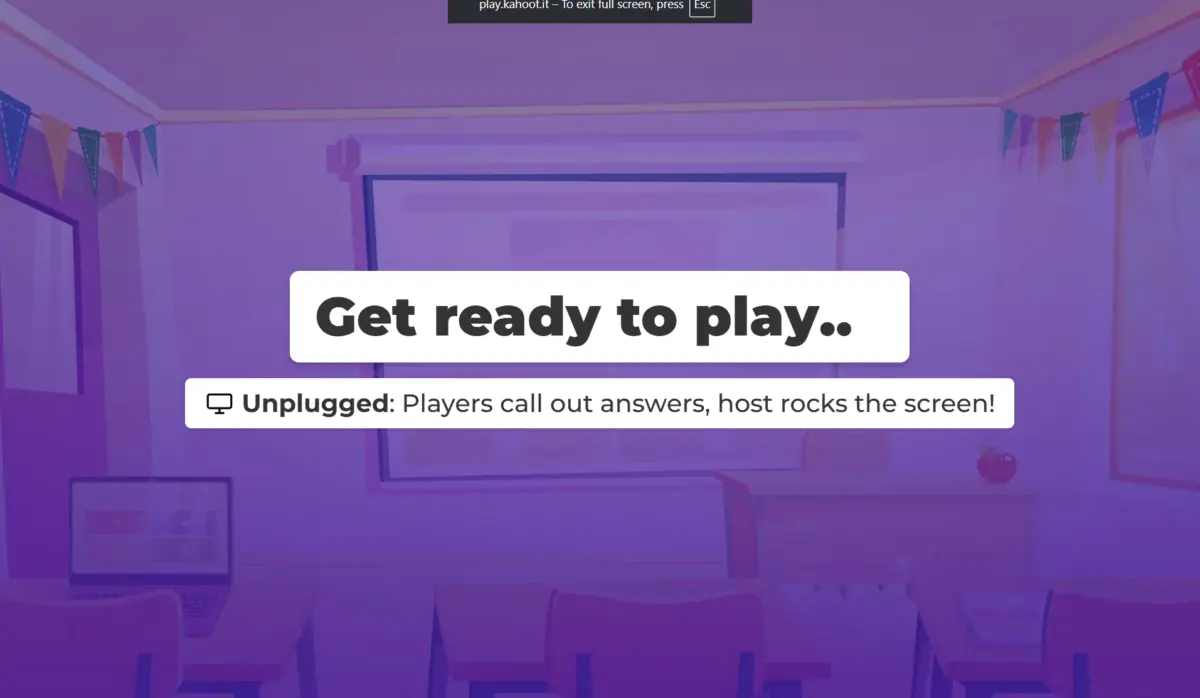
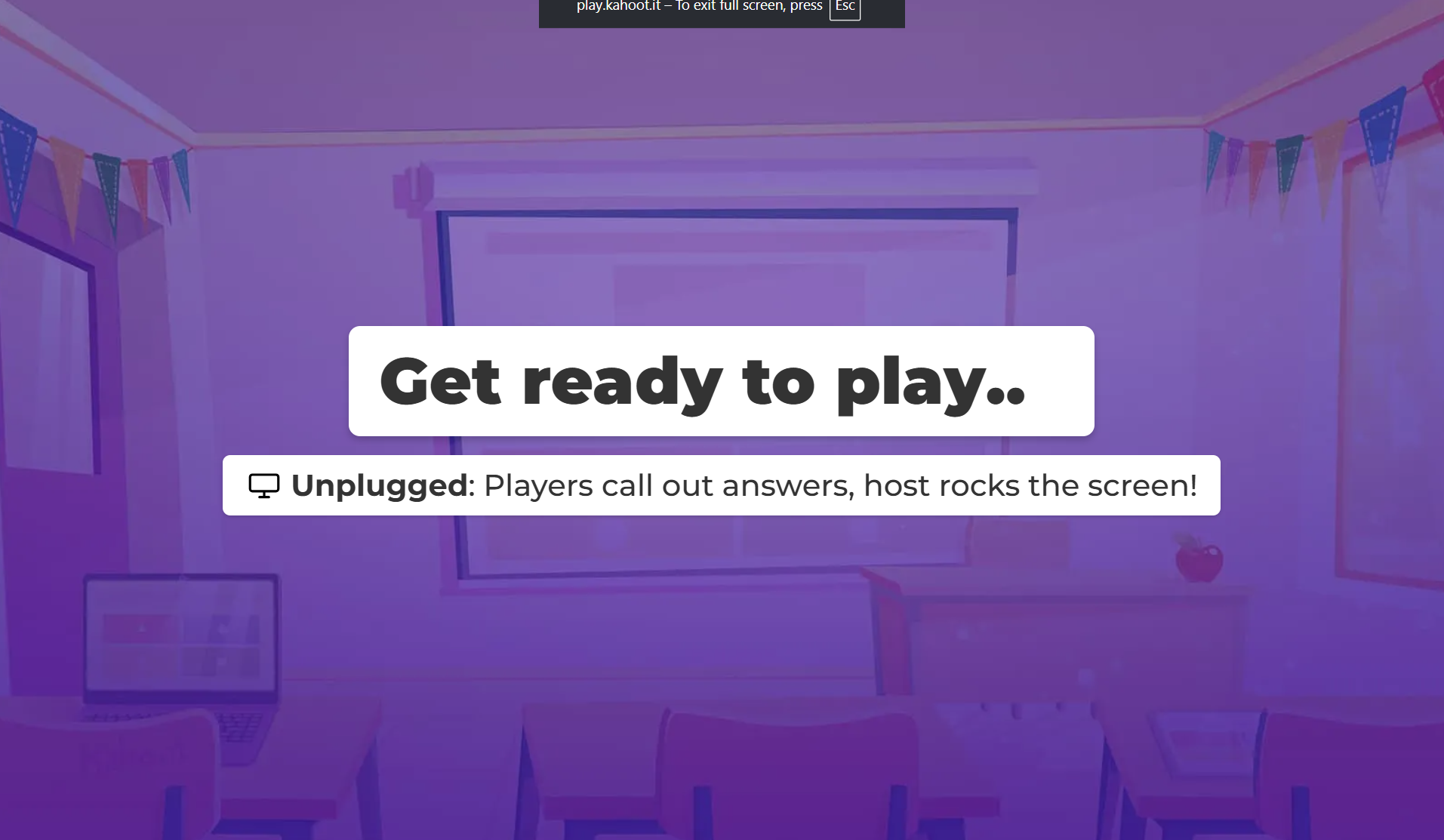
- Execution: The educator projects the question on the main screen, but students do not use individual devices or enter game PINs. Instead, the class collaborates to call out answers. The host acts as the facilitator, rocking the screen forward at the group’s chosen pace.
- Assessment Shift: There are no individual podiums or speed-based point bonuses. The final summary screen celebrates collective effort, displaying a holistic class score (e.g., 28 out of 30 total correct responses). This removes device availability as a barrier while maintaining the joyous feedback loops characteristic of the platform.
2. Kinesthetic Energizers: Turning Classrooms into Multiple-Choice Arenas
For classrooms suffering from sedentary fatigue, transforming a quiz into a whole-body physical experience offers a powerful cognitive and physical reset.
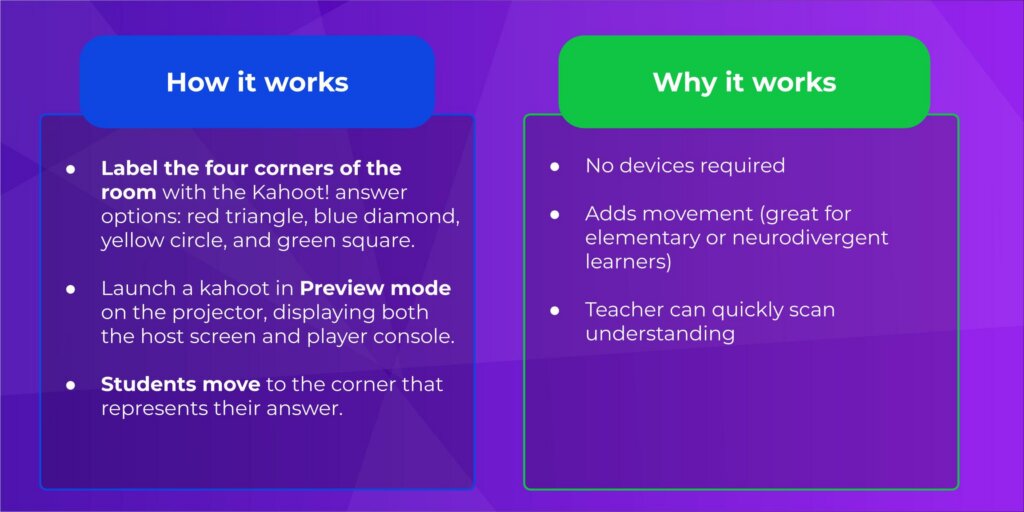
- Execution: The educator designates different physical zones or corners of the room to correspond with multiple-choice options (A, B, C, D). Utilizing the platform’s flexibility to support up to six answer options, teachers can even designate fifth and sixth spaces for expanded critical thinking.
- The Group-Think Protocol: Students physically move to the corner representing their chosen answer. The option housing the majority of the students becomes the "class-selected" answer, which the teacher then clicks on the main projector. This combines a kinesthetic brain break with collaborative peer persuasion, allowing students to physically inhabit their learning process.
3. The Gallery Walk: Fostering Student Autonomy and Permanent Artifacts
When curriculum pacing is flexible and linear sequencing is non-essential, the "Gallery Walk" format offers an individualized, differentiated approach to offline assessment.
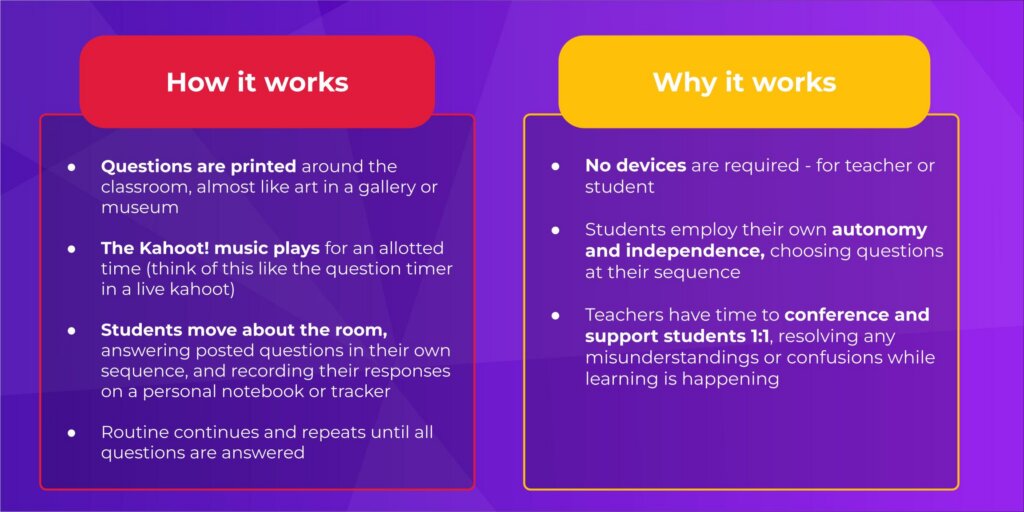
- Execution: Educators print out various questions, visual cues, and answer choices, distributing them around the room or assigning them to small groups. Students rotate through stations at their own pace, discussing and documenting their findings.
- Tangible Documentation: Unlike ephemeral digital reports, the Gallery Walk produces a permanent physical record of student discourse and reasoning. Teachers can pair this classroom activity with a digital homework assignment, reinforcing concepts through dual-modality exposure.
4. DIY Storyboards: Integrating Motor Skills with Executive Functioning
Particularly impactful in early childhood education and specialized occupational therapy settings, physical storyboards merge cognitive assessment with fine-motor development.
- Execution: Students or educators construct physical question cards containing visual cues and prompts. Learners physically manipulate, sort, and sequence the cards.
- Dual-Standard Efficiency: This method addresses multiple developmental domains simultaneously. While the primary target focuses on curriculum mastery (e.g., historical timelines or scientific processes), the physical cutting, sorting, and arranging of cards actively refines fine-motor control and executive functioning skills.
Future Outlook: The Hybrid Classroom of Tomorrow
As educational technology matures, the binary narrative of "tech-enabled versus traditional" is rapidly dissolving. The successful resurgence of offline Kahoot! methodologies signals a maturing pedagogical philosophy: technology should serve as a flexible tool rather than an absolute prerequisite for engagement.
Looking ahead, the future of interactive learning lies in hybridization. Educators are no longer constrained by the dogma that software must dictate the physical layout of a room. Whether a school district boasts state-of-the-art tablets in every backpack or operates under stringent offline mandates, the fundamental design principles of gamified learning—clear inquiry, visual scaffolding, predictable routines, and celebratory feedback—remain universally applicable.
By decoupling engagement from the device, the educational community is redefining innovation. True progress is not measured merely by the volume of screens deployed within school walls, but by the intentionality with which instructional design meets every learner exactly where they are.

