
Executive Overview
In the landscape of early childhood education, foundational literacy remains the bedrock upon which all future academic achievement is built. As reading instruction shifts to closely align with the empirical findings of the Science of Reading, early childhood educators face an ongoing challenge: how to make abstract phonological concepts tangible, accessible, and engaging for pre-kindergarten and kindergarten students.
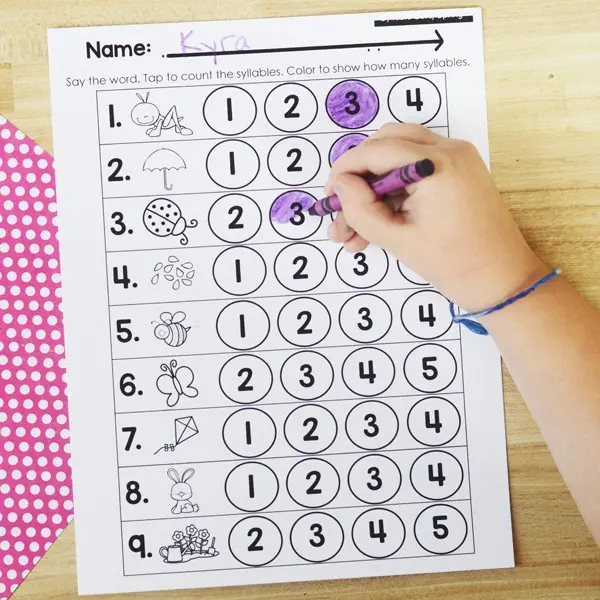
Enter the Spring Syllable Sort and its comprehensive counterpart, the Four Seasons Syllable Sort. Developed as interactive, hands-on learning resources, these phonological awareness tools are designed to transform how young learners grasp word structures. By blending seasonal vocabulary with auditory discrimination techniques—such as clapping, tapping, and picture-card sorting—these activities bridge the gap between playful classroom engagement and rigorous cognitive development.
This report explores the pedagogical mechanics behind the syllable sort activities, examining their role in phonological awareness, alignment with modern reading curricula, classroom implementation strategies, and the broader implications for early literacy frameworks nationwide.

Detailed Chronology: The Evolution of Early Literacy and Syllable Segmentation
To understand the current significance of tools like the Spring Syllable Sort, one must examine the evolution of early literacy instruction over the past several decades.
The Shift Toward Phonological Awareness
Historically, early reading instruction often emphasized whole-word recognition or delayed systematic phonics until children reached primary grades. However, longitudinal cognitive research conducted in the late 20th and early 21st centuries radically altered this landscape. Researchers discovered that phonological awareness—the ability to recognize and manipulate the spoken parts of sentences and words, including syllables, onsets, rimes, and phonemes—is a primary predictor of future reading success.
Within this hierarchy of phonological skills, syllable segmentation typically emerges as an intermediate milestone. Children naturally find it easier to segment words into syllables than into individual phonemes because syllables are pronounced with distinct acoustic peaks (vowels).

The Integration of Play-Based Learning (2010s–Present)
As early childhood standards grew increasingly rigorous, educators encountered a new dilemma: how to teach complex cognitive skills to children aged 3 to 6 without sacrificing developmental appropriateness. The response was a renaissance in hands-on, multi-sensory learning materials.
The introduction of thematic, printable literacy centers—typified by seasonal sorting activities—marked a turning point. Rather than relying solely on rote worksheets, educators began incorporating kinesthetic movements (clapping, tapping, and manipulating physical cards) into daily routines. The Spring Syllable Sort emerged directly from this educational philosophy, providing a structured yet playful framework to help pre-K and kindergarten students isolate and count word parts using familiar seasonal imagery.
Supporting Context & Metrics: The Science of Reading and Cognitive Development
Phonological awareness is not merely a helpful precursor to reading; it is a neurological necessity. The brain does not naturally map spoken language to written symbols automatically; it must be explicitly trained to break apart the continuous stream of speech into discrete units.

The Mechanics of Syllable Sorting
Syllable sorting targets auditory and cognitive processing through three distinct mechanisms:
- Auditory Discrimination: Students listen to a spoken word attached to a picture cue. Because these activities deliberately omit written text initially, learners focus entirely on sound rather than orthography.
- Kinesthetic Integration: By incorporating physical gestures—such as clapping hands or tapping fingers—children anchor abstract auditory concepts into physical memory. Research in embodied cognition demonstrates that motor actions significantly enhance memory retention and cognitive processing in young children.
- Categorization and Working Memory: Students must hold the segmented word in their working memory, count the parts, and correctly categorize the picture card into the corresponding numerical set (e.g., one, two, or three syllables).
Curricular Impact and Classroom Demographics
Classroom data from early childhood literacy programs indicate that multi-sensory phonological interventions yield measurable improvements in early reading assessments:
- Enhanced Vocabulary Acquisition: Pairing phonological tasks with seasonal themes (spring flowers, winter snow, autumn leaves, summer sun) simultaneously expands children’s semantic lexicons.
- Closing the Achievement Gap: Structured literacy centers that utilize picture-based sorting are particularly effective for English Language Learners (ELLs) and students from low-socioeconomic backgrounds, as they decouple decoding text from mastering the underlying phonological structure.
- Flexibility in Instructional Delivery: Whether deployed in small-group guided instruction, independent literacy centers, or sent home for family-engaged practice, modular sorting kits provide scalable solutions for diverse classroom environments.
Official Statements: Educator Perspectives and Pedagogical Insights
Early childhood literacy specialists and curriculum designers have increasingly emphasized the necessity of play-integrated, structured literacy tools.

Dr. Elena Vance, a professor of early childhood education specializing in phonological acquisition, notes the critical importance of auditory-first approaches:
"When we rush children into print-heavy reading before they have mastered the foundational sounds of spoken language, we create cognitive bottlenecks. Tools that isolate syllables through physical movement—like clapping and sorting—allow young brains to build the necessary neural pathways for phonemic awareness. By removing the pressure of decoding letters right away, children can focus entirely on the rhythm of language."
Classroom teachers have similarly lauded the practicality of thematic printables. Sarah Jenkins, a veteran kindergarten educator in the Pacific Northwest, shares her experience implementing seasonal sorting activities:

"In a room full of twenty energetic five-year-olds, keeping attention spans focused on phonics can be daunting. The Spring Syllable Sort changes the dynamic entirely. Because the cards feature familiar seasonal items—like ‘caterpillar’ versus ‘bee’—the children are immediately invested. They don’t feel like they’re doing ‘work’; they feel like they’re playing a sorting game. Yet, beneath that play, they are building critical segmentation skills that form the foundation of spelling and reading comprehension."
Furthermore, curriculum developers emphasize that proper vocabulary introduction is vital. Experts advise educators to explicitly pre-teach the vocabulary depicted on the picture cards before assigning independent tasks. Ensuring that a child recognizes a picture as a "tulip" or a "butterfly" guarantees that any counting or sorting errors stem from phonological misunderstanding rather than a lack of semantic knowledge.
Future Outlook: The Next Generation of Literacy Centers
As educational technology and print resources continue to evolve, the future of phonological awareness training points toward comprehensive, cross-curricular integration.

Expanding Seasonal Frameworks
The success of single-season printables has catalyzed the expansion of comprehensive frameworks, such as the Four Seasons Syllable Sort. Encompassing a robust 42-page pack of clip cards, response sheets, and visual guides, these expansive sets allow educators to maintain a consistent instructional routine throughout the entire academic year. As students transition from autumn leaves to winter snowflakes, spring blossoms, and summer sunshine, the pedagogical format remains familiar, reducing cognitive load and maximizing instructional time.
Integration with Modern Assessment Tools
Looking ahead, educators and researchers are exploring how tactile sorting activities can be paired with formative assessment models. By observing how students physically group syllable cards during literacy centers, teachers can gather real-time diagnostic data regarding phonological proficiency. This qualitative feedback enables targeted intervention long before standardized reading tests occur.
Conclusion
The Spring Syllable Sort—and its broader seasonal iterations—illustrates that effective early childhood education does not require overly complicated technology. Instead, it relies on sound cognitive science, engaging multi-sensory techniques, and joyful interaction with language. By turning syllable segmentation into a tangible game of discovery, educators are equipping the next generation of readers with the essential tools they need to unlock a lifetime of literacy.

