
EXECUTIVE OVERVIEW
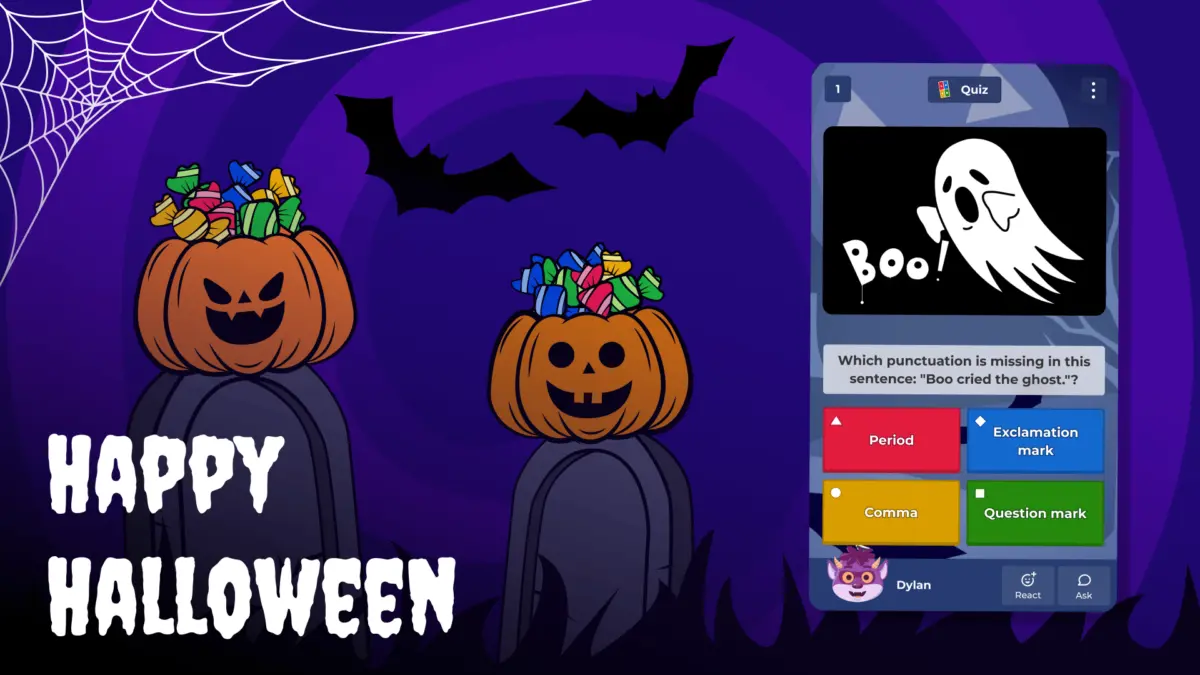
As the autumnal crispness settles in and communities worldwide prepare for the spectral festivities of October, the landscape of education and digital engagement is undergoing a fascinating transformation. Far from being a mere distraction, the Halloween season has become a powerful catalyst for pedagogical innovation. Leading this charge is Kahoot!, the global game-based learning platform, which has rolled out an expansive, meticulously curated suite of Halloween-themed educational content. Designed to bridge the gap between rigorous academic standards and spine-tingling entertainment, this initiative spans multiple demographics—transforming traditional classrooms, living rooms, and study halls into vibrant hubs of interactive discovery.
By partnering with cultural giants such as Disney, Marvel, Nickelodeon, TED-Ed, Sanrio, the Museum of Science, and the World Wildlife Fund (WWF), Kahoot! has weaponized engagement, ensuring that foundational math, advanced STEM concepts, historical inquiry, and emotional literacy are delivered with an "eerie-sistible" twist. This comprehensive report explores the mechanics of Kahoot!’s seasonal campaign, examining its structural impact on modern teaching methodologies, parent-child educational bonding, student retention during exam seasons, and adult social entertainment.
The Pedagogy of Play: Why Seasonal Content Matters in Modern Education
For decades, educators have wrestled with the perennial challenge of maintaining student focus during holiday-adjacent periods. The anticipation of festivities often fractures attention spans, leaving traditional lecture formats struggling for relevance. However, contemporary educational psychology increasingly points toward gamification and thematic contextualization as potent remedies for seasonal disengagement.
Kahoot!’s strategy capitalizes on the psychological phenomenon of situated motivation—placing academic concepts within a culturally relevant, highly anticipated framework. By leveraging iconic characters and familiar storytelling tropes, the platform lowers the affective filter of learners. When a complex mathematical equation is framed as a "monster math puzzle" alongside Groot, or when historical inquiry into the Salem Witch Trials is packaged through the dramatic lens of a TED-Ed narrative, the cognitive load shifts. The anxiety of assessment dissolves into the thrill of play.
The platform’s 2026 Halloween rollout is not merely a collection of trivial quizzes; it is a carefully structured curricular toolkit. By integrating multimedia resources from authoritative partners, Kahoot! ensures that the academic integrity of the content remains uncompromised, proving that rigorous learning and seasonal celebration are not mutually exclusive.
Detailed Chronology and Curriculum Integration: From Classrooms to Living Rooms
The rollout of Kahoot!’s Halloween ecosystem has been strategically designed to cater to distinct user segments, ensuring a seamless continuum of learning from early childhood development to adult lifelong learning.
1. For Teachers: Igniting Cross-Disciplinary Curiosity
In the formal classroom environment, educators are continually tasked with meeting core curriculum requirements while fostering critical thinking. Kahoot!’s teacher-focused collections turn the spooky season into an interdisciplinary adventure:
- TED-Ed Collaboration: History and literature classes are given a dramatic pulse through kahoots exploring legendary narratives, steering students through the historical realities of the Salem Witch Trials and the literary evolution of figures like Dracula.
- Nickelodeon & Disney Channels: Pop culture meets academia as students encounter SpongeBob SquarePants and Teenage Mutant Ninja Turtles, alongside Disney’s magical realms, to explore foundational topics in science, language arts, and social studies.
2. For Parents: Sweet Learning Beyond the School Bell
Recognizing that education extends far beyond the physical school gates, Kahoot! has curated home-friendly experiences designed to keep young minds active without invoking academic fatigue:
- Sanrio’s Hello Kitty and Friends: Preschoolers and early elementary learners dive into cognitive exercises and foundational math puzzles set against the backdrop of decorating haunted houses.
- Marvel’s Midnight Monster Math: Youngsters tackle counting, addition, and subtraction challenges alongside Groot and his cosmic companions.
- The Peanuts Gang: Addressing the vital arena of social-emotional learning, a dedicated collection centered around It’s the Great Pumpkin, Charlie Brown helps children navigate complex emotions such as disappointment, while embracing imagination and wonder.
3. For Students: Surviving the Pre-Exam Scaries
Autumn often coincides with the onset of rigorous mid-term examinations, a period notorious for spiking student stress and burnout. Kahoot! addresses this by framing study sessions as immersive adventures:

- Museum of Science & SciShow Kids: Students tackle complex STEM topics, exploring lunar cycles ("Why Does the Moon Change?") and the ecological mechanics of creepy-crawly insects.
- WWF Wild Classroom: Biology and environmental science take center stage as learners uncover the ecological benefits of nature’s most misunderstood, "spooky" animals, such as bats, owls, and spiders.
- Wiktionary: Vocabulary acquisition is elevated to competitive sport through challenging semantic modules featuring unusual and historic English terms.
4. For Lifelong Learners: Frightfully Fun Social Entertainment
Learning is a lifelong pursuit, and adult gatherings—whether corporate team-building events, family reunions, or friendly get-togethers—benefit immensely from structured play:
- Wikipedia & Star Wars: From deep dives into the anthropological origins and folklore of Halloween traditions to intergalactic trivia featuring Padawans and Jedi Masters in Star Wars: Happy Ghoul-actic Halloween, these collections prove that intellectual curiosity does not retire with youth.
Supporting Context, Metrics, and the Digital Ecosystem
To fully appreciate the scale of Kahoot!’s seasonal initiatives, one must examine the technological infrastructure that supports them. Operating across HTML5 browsers, Android, and iOS ecosystems, Kahoot! has optimized its platform for frictionless accessibility. Whether deployed on a classroom smartboard, a student’s smartphone, or a family tablet in a living room, the platform’s multi-platform compatibility guarantees high concurrency and low latency.
Data consistently demonstrates that gamified formative assessments yield superior knowledge retention compared to traditional rote memorization. By embedding feedback loops, real-time leaderboards, and interactive graphics—such as the visual breakdowns of moon phases or character-driven math prompts—Kahoot! transforms passive consumption into active cognitive processing. The inclusion of schema-optimized video games and structured assessment metadata ensures that educators can directly map these interactive modules to established educational standards, such as the Next Generation Science Standards (NGSS).
Furthermore, the expansion of premium offerings—such as the Kahoot!+ Gold plans tailored for K-12 institutions, independent students, and personal household users—underscores a broader industry shift toward subscription-based, cloud-hosted micro-learning ecosystems.
Official Statements and Visionary Leadership
While specific corporate executive statements for the current cycle emphasize the democratization of engaging education, the overarching philosophy of Kahoot! remains anchored in its core mission: "making learning awesome."
Industry analysts tracking the edtech sector note that platform collaborations with intellectual property powerhouses like Disney, Marvel, and Lucasfilm represent a masterclass in modern digital marketing and pedagogical alignment. By speaking the language of modern youth culture, educational platforms are successfully dismantling the historic dichotomy between entertainment and instruction. As educational technologists frequently assert, the future of learning does not lie in stripping away the fun to focus on the work, but rather in elevating the work until it possesses the compelling pull of play.
Future Outlook: The Evolution of Seasonal Gamification in Education
Looking ahead, the success of campaigns like Kahoot!’s Halloween learning collections signals a permanent shift in how digital platforms will approach seasonal programming. We are moving toward an era of hyper-personalized, dynamically adaptive learning adventures where cultural calendar events—from Halloween and Earth Day to Black History Month and winter holidays—serve as natural scaffolding for global curricula.
As augmented reality (AR), artificial intelligence (AI), and interactive video integration continue to mature, platforms like Kahoot! are poised to transform flat quizzes into immersive spatial environments. Imagine a future where students do not merely answer questions about the moon phases alongside SciShow Kids, but navigate an AR-rendered lunar surface while solving mathematical equations.
For educators, parents, and students alike, the message is clear: the intersection of technology, popular culture, and academic rigor offers a boundless frontier. By embracing the playful, the mysterious, and the outright spooky, Kahoot! has demonstrated that when learning is wrapped in joy, curiosity outlasts the season—resonating long after the jack-o-lanterns have faded and the school bell rings for the next great academic challenge.

