
By Investigative Staff
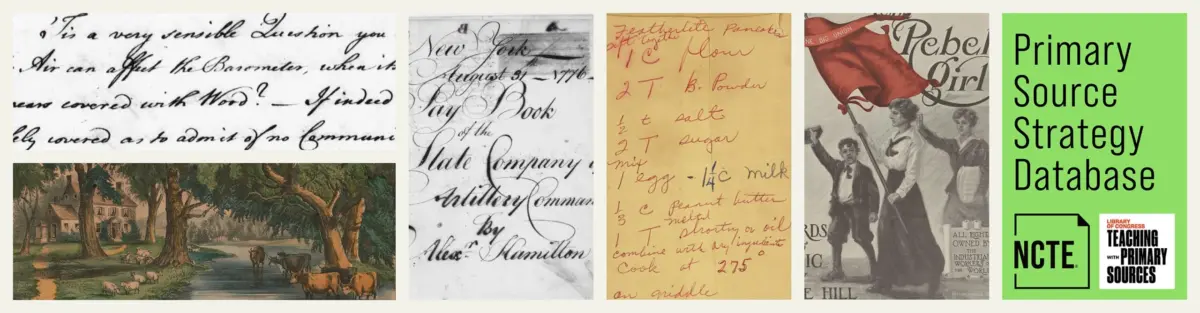
In an era where digital media bombards students with out-of-context soundbites, educators face an uphill battle teaching critical thinking, source evaluation, and historical literacy. Enter a transformative alliance between the National Council of Teachers of English (NCTE) and the Library of Congress. Through the Teaching with Primary Sources (TPS) Consortium, these institutions are reshaping how English Language Arts (ELA) and literacy classrooms engage with history, moving students past textbook summaries and directly into the raw, unvarnished archives of the past.
At the heart of this initiative is a robust, searchable database housing pedagogical strategies for over 150 specific artifacts from the Library of Congress’s vast digitized collections. Developed by more than two dozen distinguished ELA teachers and educational leaders, this repository bridges the gap between historical inquiry and language arts instruction. By tagging content with intuitive markers such as picture book and argument, the platform empowers educators to seamlessly integrate primary sources into existing curricula, align lessons with state standards, and foster interdisciplinary learning that resonates far beyond the classroom walls.
Executive Overview: Bridging Literacy and Historical Inquiry
The core mission of the NCTE-Library of Congress partnership is simple yet profound: to embed primary source analysis into the daily habits of literacy teachers and their students. For too long, history has been siloed in social studies classrooms, while ELA curricula have remained strictly within the realm of literature and fictional narratives. This initiative dismantles those artificial boundaries.
By leveraging original manuscripts, photographs, prints, and personal ledgers, educators can teach students how to read, question, and construct arguments based on real-world evidence. The newly expanded database does not merely offer a digital archive; it provides actionable, standards-aligned teaching strategies that demonstrate the precise literacy value of each artifact.
Take, for instance, the Frederick Douglass Papers: Financial Papers, 1847–1928; Bank books. Far from being dry, bureaucratic records, these documents offer a startlingly intimate look at the economic survival and strategic independence of one of the 19th century’s most formidable abolitionists and orators. Through such resources, students learn that history is not just a sequence of dates and names, but a complex web of economic, social, and political realities navigated by real people.
Detailed Chronology: The Evolution of the TPS Partnership and the Financial Papers of Frederick Douglass
To understand the gravity of this educational shift, it is necessary to examine both the timeline of the NCTE-TPS collaboration and the historical arc of the primary source material now being introduced to modern classrooms.
The Path to the TPS Consortium
- Early Foundations: The Library of Congress established the Teaching with Primary Sources program to help educators tap into its millions of online historical artifacts.
- The NCTE Integration: Recognizing the natural synergy between historical documents and literacy instruction, the National Council of Teachers of English joined the TPS Consortium. The goal: create a bridge between archival research and ELA pedagogy.
- Collaborative Curriculum Design: Over two dozen ELA teachers and instructional leaders convened to draft pedagogical frameworks for more than 150 specific Library of Congress items.
- Database Launch and Expansion: The resulting searchable database went live, allowing teachers to filter resources by thematic tags like argument, picture book, and specific historical eras, complete with state standards alignment.
The Life and Ledger of Frederick Douglass (1847–1928)
The inclusion of the Frederick Douglass Financial Papers within this database marks a milestone in how economic history is taught alongside civil rights narratives.
- 1847: Following the publication of his autobiography and his return from a speaking tour in Great Britain legally a free man (having his freedom purchased by British supporters), Douglass began establishing his financial footing. This period marks the beginning of the bank books and financial records preserved in the collection.
- Mid-to-Late 19th Century: As a fugitive-turned-editor, lecturer, and advisor to presidents, Douglass utilized financial stability as a shield against systemic vulnerability. His bank books document deposits, withdrawals, and operational expenses that funded his abolitionist newspapers (The North Star, Frederick Douglass’ Paper) and his active role in the Underground Railroad.
- 1928: The chronological endpoint of the financial collection spans past Douglass’s death in 1895, reflecting the management of his estate and the enduring paper trail of his enterprise.
- Modern Era: Digitized by the Library of Congress and integrated into the NCTE database, these ledgers transition from historical curiosities into vibrant pedagogical tools for 21st-century classrooms.
Supporting Context & Metrics: Unpacking the Instructional Value of Financial Literacy in History
The integration of economic documents into ELA instruction addresses a critical blind spot in traditional education: the intersection of personal finance, systemic racism, and civil rights activism.
The Economic Reality of Freedom
For African Americans in the 19th century, physical emancipation was only the first hurdle. True autonomy required economic survival in a landscape dominated by institutionalized racial barriers, discriminatory banking practices, and wage suppression. The Frederick Douglass Papers: Financial Papers, 1847–1928; Bank books reveal the meticulous monetary discipline required for a prominent Black leader to maintain independence.
As a primary source, these bank books provide a tangible connection between Douglass’s activism and his hands-on approach to economic resilience. They show students that:
- Independence was self-funded: Douglass’s public speaking and publishing enterprises relied on careful money management.
- Economic literacy equals empowerment: By controlling his capital, Douglass resisted co-optation by political allies and hostile institutions alike.
- Systemic barriers were quantifiable: The records highlight the hurdles faced by Black Americans attempting to secure fair economic opportunities in a hostile financial sector.
Interdisciplinary Learning and Standards Alignment
The database does not leave teachers guessing about how to apply these concepts. For educators following state guidelines—such as the Louisiana State Standards highlighted in the curriculum—the framework provides direct connections to high-level cognitive and analytical skills:
- Louisiana ELA Standard W.11-12.1(a): Students learn to introduce precise, knowledgeable claims, establish the significance of those claims, distinguish them from opposing arguments, and organize evidence logically. Using Douglass’s financial records as evidence, students can draft argumentative essays evaluating whether economic stability was a prerequisite for effective political radicalism in the abolitionist movement.
- World History Standard WH.1: Students analyze ideas and events from 1300 to 2010, tracking how concepts of freedom, capital, and civil rights progressed, changed, or remained stagnant over time.
- World History Standard WH.4: Students utilize primary and secondary sources to construct historical narratives, moving past passive consumption of textbook summaries to active archival investigation.
Official Perspectives: Educators and Institutions Speak
The partnership between the NCTE and the Library of Congress represents a philosophical shift in literacy education, championed by leading voices in curriculum development.
"Primary sources do more than illustrate history—they interrogate it," notes an NCTE curriculum strategist involved in the TPS Consortium. "When students handle documents like Frederick Douglass’s bank books, they realize that history was lived by real people making calculated, strategic choices under immense pressure. It transforms reading comprehension from a passive exercise into an active detective story."
Educators participating in the pilot rollout of the database have reported a marked increase in student engagement. By pairing traditional literary texts with historical artifacts, teachers can anchor abstract literary themes—such as justice, oppression, and resilience—in hard, verifiable evidence.
Furthermore, Library of Congress officials emphasize the democratization of archives. Through this collaboration, rare manuscripts once locked away in climate-controlled Washington, D.C., vaults are instantly accessible to a high schooler in rural Louisiana or an urban center in New York, leveling the educational playing field and fostering nationwide historical literacy.
Future Outlook: The Next Frontier in Literacy Education
As the NCTE-Library of Congress TPS Consortium continues to expand, its implications for the future of education are profound. The ongoing digitization of primary sources and the continuous refinement of teacher-authored strategies point toward several key trends in ELA and history instruction:
1. Deepening Interdisciplinary Curricula
The artificial walls separating English, History, and Economics are crumbling. Initiatives like this prove that literacy is not just about reading novels; it is about decoding any text—whether it is a 19th-century abolitionist speech, a poem, or a bank ledger. Future curricula will increasingly lean on interdisciplinary modules that require students to synthesize historical context with rhetorical analysis.
2. Expanding the Database
With strategies already developed for over 150 items, the NCTE and the Library of Congress show no signs of slowing down. Future expansions are expected to incorporate an even broader array of marginalized voices, ensuring that students from all backgrounds see their histories reflected and validated in the archives. Furthermore, tagging systems will likely evolve to include more nuanced socio-political and economic categories, making the database an even sharper tool for targeted lesson planning.
3. Cultivating Critical Media Literacy
In an age dominated by digital information overload, the skills taught through primary source analysis—sourcing, corroboration, contextualization, and close reading—are more vital than ever. By teaching students to interrogate a 150-year-old bank book for bias, intent, and historical context, educators are simultaneously equipping them to evaluate modern media, corporate statements, and digital narratives.
Conclusion
The collaboration between the National Council of Teachers of English and the Library of Congress is much more than a collection of lesson plans; it is a pedagogical movement. By breathing new life into historical artifacts like the financial papers of Frederick Douglass, this initiative bridges the gap between the past and the present, arming students with the critical literacy skills necessary to navigate—and shape—the world around them.

