
Executive Overview
For generations, chemistry education has faced a persistent hurdle: introducing foundational chemical concepts—such as acids and bases—often elicits groans, sighs, and disengagement from students. Traditionally taught through rote memorization of the pH scale, chemical formulas, and abstract definitions, chemistry has frequently been perceived as an unapproachable discipline reserved for advanced laboratories. However, a pedagogical revolution led by STEM (Science, Technology, Engineering, and Mathematics) educators is reshaping this dynamic.
By integrating tactile, inquiry-based, and kitchen-chemistry experiments into standard curricula, educators are successfully transforming complex molecular interactions into intuitive, captivating experiences. Far from being isolated laboratory hazards, acids and bases are ubiquitous components of everyday life, found in refrigerators, cleaning cabinets, and the human body. This comprehensive report explores the foundational chemistry of acids and bases, details the mechanics of the pH scale, and outlines five robust, hands-on projects designed to bridge the gap between abstract textbook theory and tangible, real-world understanding.
Detailed Chronology of Chemical Education and the Shift Toward Hands-On STEM
To understand why modern science education places such high value on interactive learning, it is helpful to review the historical evolution of how chemical principles have been taught over the past century.
The Era of Rote Memorization (Early-to-Mid 20th Century)
Historically, science education—particularly in secondary and middle schools—relied heavily on the didactic method. Teachers lectured from textbooks while students copied notes on chemical definitions, such as the Arrhenius and Brønsted-Lowry theories of acids and bases. Laboratory sessions were rare, highly regimented, and restricted to older students due to perceived safety risks associated with handling corrosive substances. This approach created a significant barrier to entry, leaving younger children with little exposure to foundational chemical concepts during their critical developmental years.
The Rise of Inquiry-Based Learning (Late 20th Century)
By the late 1970s and 1980s, educational psychologists and curriculum developers began advocating for constructivist learning models. Pioneers in science education argued that children construct knowledge best through direct engagement with their environment. The "scientific method" transitioned from a theoretical list of steps in a textbook to an active process of questioning, hypothesizing, experimenting, and analyzing. Consequently, school science kits began incorporating safe household materials, allowing students to explore chemical reactions without the immediate danger of strong laboratory acids like concentrated hydrochloric acid.
The Modern STEM Framework (2000s–Present)
Today, the integration of STEM education has elevated hands-on experimentation to a core pillar of childhood development. Modern pedagogical guidelines emphasize that scientific literacy must begin early, well before high school chemistry. Acids and bases are no longer introduced as intimidating formulas ($H^+$ and $OH^-$ ions), but as observable phenomena. Educators now utilize natural indicators, such as red cabbage juice, to visually demonstrate molecular changes, bridging the gap between art, observation, and rigorous scientific inquiry.
Supporting Context & Metrics: Decoding Acids, Bases, and the pH Scale
To effectively teach children, educators must first distill the underlying chemistry into digestible concepts. At its core, the study of acids and bases is the study of ions—tiny, charged atoms or molecules that dictate the chemical behavior of everyday solutions.
Defining Acids and Bases
While words like "acid" evoke images of hazardous laboratory spills, and "base" might conjure thoughts of a baseball diamond, these substances are actually routine parts of daily life.
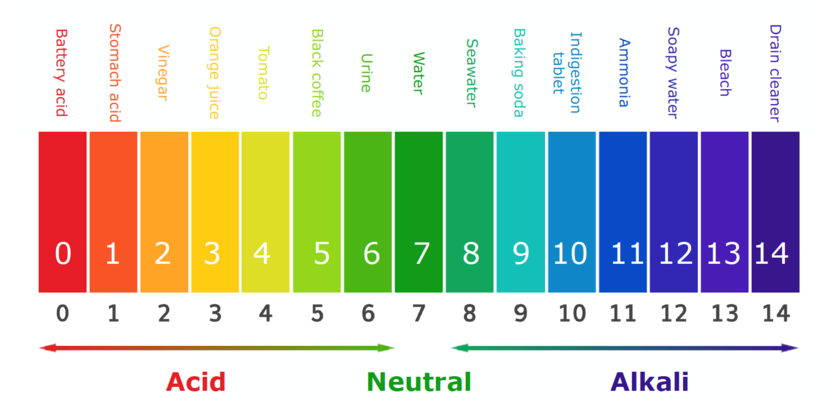
- Acids: Characterized by a high concentration of hydrogen ions ($H^+$), acids typically present a sharp, tangy, or sour flavor profile. Common household acids include citrus juices (lemons, limes, oranges) and tomatoes. While weak acids are safe to consume, strong acids—such as battery acid ($H_2SO_4$)—possess corrosive properties capable of destroying organic tissue and textile fibers.
- Bases (Alkalis): Characterized by a high concentration of hydroxide ions ($OH^-$), basic solutions often taste bitter (if edible) and feel slippery or slimy to the touch when mixed with water. Common bases include baking soda, hand soap, and chalk. Strong bases, such as household ammonia, can be hazardous when inhaled or handled improperly, particularly for individuals with respiratory sensitivities like asthma.
The Mechanics of the pH Scale
The potential of hydrogen ($textpH$) scale serves as the universal graphical tool for measuring the relative acidity or alkalinity of a substance. Ranging numerically from $0$ to $14$:
- $0$ to $<7$: Represents acidic solutions. The lower the number, the stronger the acidity.
- $7$: Represents a neutral state (pure water sits precisely at this juncture, perfectly balancing hydrogen and hydroxide ions).
- $>7$ to $14$: Represents basic (alkaline) solutions. The higher the number, the stronger the basicity.
Because direct tasting is dangerous and unreliable for unknown substances, scientists and students rely on indicator solutions. These are organic materials—such as anthocyanin pigments found in red cabbage or litmus paper derived from lichens—that undergo distinct molecular structural changes in response to varying pH levels, shifting colors to reveal a substance’s chemical identity.
| Substance | Approximate pH Level | Classification |
|---|---|---|
| Battery Acid | ~0 | Strong Acid |
| Lemon Juice | ~2 | Weak/Moderate Acid |
| Milk | ~6.5 | Weak Acid (Near Neutral) |
| Pure Water | 7.0 | Neutral |
| Baking Soda | ~9 | Weak Base |
| Household Ammonia | ~11 | Strong Base |
Official Statements and Pedagogical Expert Insights
Leading voices in science education and child development emphasize that early exposure to practical chemistry builds essential critical-thinking skills and reduces anxiety regarding STEM subjects later in life.
Dr. Elena Vance, a prominent researcher in primary science pedagogy, notes:
"When children mix household items and witness a color change or a fizzy chemical reaction, they are not just playing—they are observing cause and effect at a molecular level. By stripping away the intimidating jargon and replacing it with observable phenomena, we cultivate inquisitive minds that are unafraid to ask ‘why’ and ‘how’."
Furthermore, curriculum designers highlight that hands-on science fosters resilience. When an experiment yields unexpected results, students are encouraged to re-evaluate their hypotheses, aligning directly with the principles of the scientific method. Organizations such as the National Science Teaching Association (NSTA) continually advocate for inquiry-based labs in elementary and middle school settings, asserting that experiential learning significantly improves long-term retention of scientific concepts.
5 Hands-On STEM Projects to Teach Acids and Bases
Translating theory into practice requires engaging, safe, and accessible activities. Below are five structured projects designed for children that clearly demonstrate the properties of acids, bases, and neutralization reactions using ordinary household items.
1. Red Cabbage as a Natural pH Indicator
Instead of purchasing specialized laboratory paper, children can manufacture their own pH indicator testing strips using red cabbage. Red cabbage contains a water-soluble pigment called anthocyanin, which changes color depending on the acidity of its environment.
- Procedure:
- Chop and simmer red cabbage leaves in a pot of water on the stove until the water turns deep purple.
- Strain the liquid, reserving the purple juice (the cabbage solids can be saved for dinner).
- Dip plain white index cards into the cooled cabbage juice, lay them flat to dry, and cut them into testing strips.
- Provide children with various household liquids—such as milk, pickle juice, cola, and soapy water—and have them hypothesize whether each liquid is an acidic or basic solution.
- Dip the strips into the liquids and observe the color changes (red/pink for acids, blue/green/yellow for bases).
2. Edible Chemical Reactions: Fizzy Sherbet
While many chemical reactions are unsafe to consume, acid-base interactions can be delicious when formulated correctly. This project demonstrates how an acid and a base can neutralize each other inside the mouth, producing a characteristic fizz.
- Materials & Ingredients:
- 2 tablespoons of baking soda (Base)
- 2 tablespoons of citric acid powder or finely crushed sour candy (Acid)
- 4 tablespoons of powdered sugar (Flavoring agent)
- A mixing bowl or sealable plastic sandwich bag
- Procedure: Combine all dry ingredients in the bowl or bag and mix thoroughly. Instruct students to taste a small amount at a time. The mild, tangy acid reacts with the basic baking soda upon contact with saliva, releasing carbon dioxide micro-bubbles that create a pleasant, fizzy sensation on the tongue.
3. The Great Penny-Shining Challenge
Tarnished pennies offer a direct window into how acids and bases interact with metallic elements like copper. Over time, copper coins react with oxygen in the air to form copper oxide, creating a dull, dirty patina.
- Procedure:
- Gather several tarnished pennies.
- Set up four clear glasses filled with different liquid solutions: lemon juice (acid), cola (acid), a baking soda and water mixture (base), and plain tap water (control).
- Ask students to write down their hypotheses regarding which solution will most effectively clean and shine the copper.
- Submerge the pennies for 15 to 30 minutes, remove them, rinse with water, and compare the results against the original predictions. Acids typically strip away copper oxide rapidly due to their high hydrogen ion concentration.
4. Making an Eggshell Disappear (The "Rubber Egg" Experiment)
This classic experiment highlights the corrosive power of common acids on calcium carbonate, the primary structural component of bird eggshells and seashells.
- Procedure:
- Carefully submerge a raw chicken egg into a glass or jar filled with white vinegar (acetic acid).
- Observe the immediate formation of tiny carbon dioxide gas bubbles on the shell’s surface.
- Leave the egg undisturbed for 24 to 48 hours.
- Gently remove the egg; the hard calcium carbonate shell will have completely dissolved, leaving behind a flexible, bouncy, semi-permeable membrane—a "rubber egg." (Note: Instructors should handle the egg carefully and emphasize hygiene, as raw eggs may carry surface bacteria).
5. Neutralization: Acids Meet Bases
What happens when an acid and a base are mixed directly? This project demonstrates the concept of neutralization, where opposing chemical forces cancel each other out to move toward a neutral pH of 7.
- Procedure:
- Pour a cup of vinegar (acid) into a clear container.
- Measure the initial pH using either litmus paper or homemade red cabbage indicator strips.
- Slowly add spoonfuls of baking soda (base) to the vinegar while observing the vigorous fizzing reaction (caused by the release of carbon dioxide gas).
- Test the resulting solution again with the indicator paper. Students will observe that the color shifts closer to the neutral range, proving that mixing an acid and a base neutralizes their extreme properties.
Future Outlook
As educational methodologies continue to evolve, the integration of practical, hands-on science will only deepen. Emerging trends in STEM education point toward the incorporation of digital sensors alongside traditional kitchen chemistry, allowing students to measure exact pH levels digitally while learning the foundational concepts through tactile experimentation.
By removing the intimidation factor early in a child’s academic journey, educators are fostering a generation of scientifically literate individuals who view chemistry not as a collection of daunting formulas in a textbook, but as a dynamic, fascinating toolkit for understanding the physical world. Through continued investment in inquiry-based projects, the future of science education looks exceptionally bright—and delightfully fizzy.

