
Executive Overview
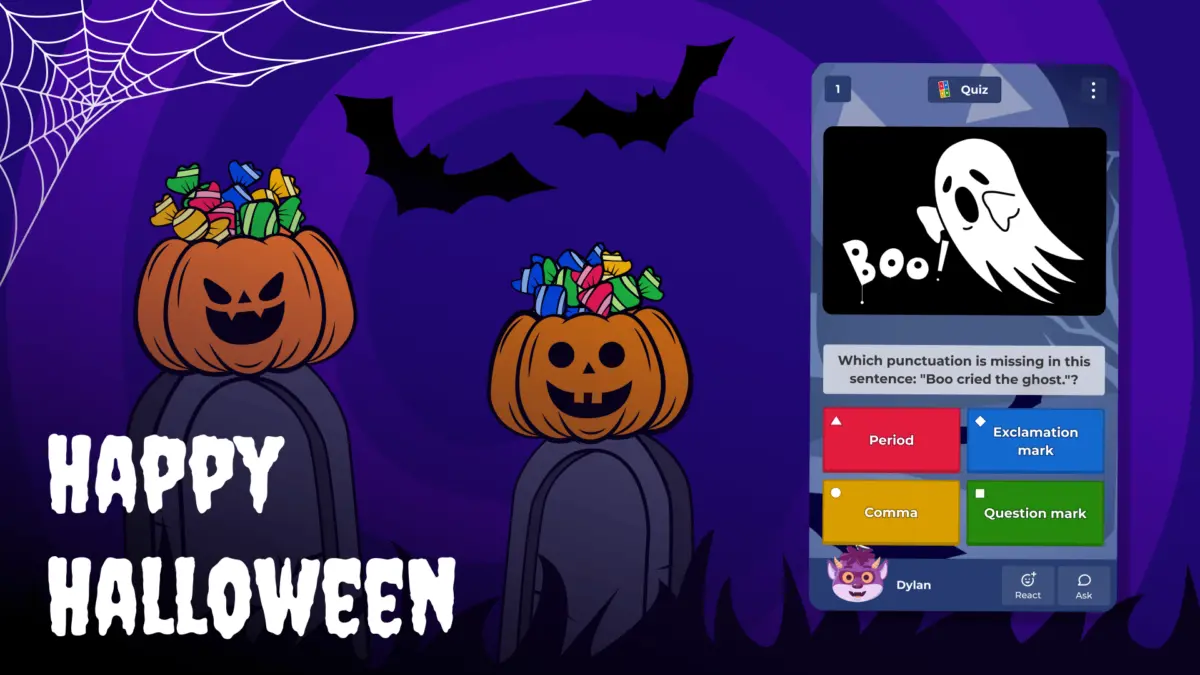
As the crisp autumn air settles and jack-o’-lanterns begin to line front porches, educational institutions and households alike are bracing for the annual arrival of the spooky season. Yet, far from signalling a disruption to academic focus, October has increasingly become a prime window for innovative pedagogy. Leading this charge at the intersection of gamification and seasonal engagement is Kahoot!, the global learning platform renowned for turning trivia into high-octane social events.
In a newly unveiled expansive curriculum initiative, Kahoot! has launched an extensive suite of ready-made, Halloween-themed learning content tailored for educators, parents, students, and lifelong learners. By leveraging globally recognized intellectual properties—ranging from Disney, Nickelodeon, and Marvel to academic powerhouses like TED-Ed, the Museum of Science, and the World Wildlife Fund (WWF)—the platform is transforming how core competencies in STEM, the humanities, and social-emotional learning are delivered.
Far from being mere seasonal fluff, these targeted interactive modules represent a calculated strategy in modern educational design: utilizing pop culture familiarity and gamified mechanics to combat student burnout, reinforce retention during critical mid-semester assessment windows, and inject joy into remote, hybrid, and traditional classrooms alike. This report provides a comprehensive examination of Kahoot!’s seasonal rollout, analyzing its pedagogical implications, structural framework, and the broader industry trend toward immersive edtech solutions.
Detailed Chronology: The Evolution of Seasonal EdTech Integration
To understand the weight of Kahoot!’s current Halloween rollout, it is essential to trace the evolution of holiday-themed digital education over the past decade.
- Phase One: The Novelty Era (Early 2010s): Initially, digital tools introduced during holidays were strictly superficial. Teachers utilized static digital worksheets, poorly formatted PDF coloring books, or basic slideshows that carried seasonal aesthetics but offered negligible cognitive challenge. These tools were deployed primarily as "babysitting" resources to manage restless classrooms on high-energy days like Halloween or the afternoon before winter break.
- Phase Two: The Gamification Breakthrough (Mid-to-Late 2010s): Platforms like Kahoot! popularized game-based response systems, shifting the paradigm from passive consumption to active competition. Educators began manually authoring custom quizzes themed around spooky history or monster math. However, these user-generated games varied wildly in quality, pedagogical accuracy, and alignment with standardized curricula.
- Phase Three: The Curated Institutional Partnership Era (Present Day): Recognizing the demand for high-quality, trustworthy content, platforms began forging formal alliances with major cultural, scientific, and entertainment entities. The current 2026 autumn initiative represents the zenith of this evolution. By securing verified partnerships with TED-Ed, Disney, Marvel, Nickelodeon, and the Museum of Science, Kahoot! has bridged the gap between Hollywood-grade entertainment and rigorous academic standards, providing turnkey digital assets that require zero prep time for educators under pressure.
Pedagogical Framework: Tailored Content Across Demographics
Kahoot!’s latest seasonal architecture is systematically categorized to address the distinct developmental and operational needs of four core user groups: teachers, parents, students, and lifelong learners.
1. For Educators: Infusing Core Subjects with Cinematic Mystery
Classroom management during October can present a formidable challenge for K-12 educators. Rather than fighting students’ preoccupation with costumes, candy, and ghost stories, Kahoot! leans directly into the psychological appeal of mystery and suspense.
Through curated collections in partnership with TED-Ed, educators can seamlessly integrate history and literary analysis into their lesson plans, guiding students through legendary narratives—from the historical realities behind Dracula to the complex sociological mechanics of the Salem Witch Trials.
Simultaneously, the Halloween with Nickelodeon and Disney: Happy Halloween! channels allow teachers to anchor complex math, science, and language arts concepts to familiar characters like SpongeBob SquarePants and the Teenage Mutant Ninja Turtles. By embedding foundational curriculum requirements within narratives kids already love, cognitive load is reduced, and intrinsic motivation is naturally elevated.
2. For Parents: Low-Stress Skill Reinforcement at Home
For families navigating the transition into the deeper months of the school year, keeping children engaged in practice without inducing academic anxiety is paramount. Kahoot!’s parent-centric portal reframes skill-building as a treat rather than a chore.
Young learners are invited to explore the Hello Kitty And Friends collection, which integrates cognitive development and foundational math puzzles within festive, cozy settings like decorating haunted houses. For older elementary students, Marvel’s Midnight Monster Math uses characters like Groot to turn counting, addition, and subtraction practice into an intergalactic adventure.

Furthermore, social-emotional learning (SEL) is given a prominent platform through the Peanuts collection, inspired by It’s the Great Pumpkin, Charlie Brown. Designed to help children process complex emotions, this module uses classic characters to explore themes of emotional literacy, navigating disappointment, and embracing the power of imagination.
3. For Students: Surviving Exam Season Through "Fa-Boo-Lous" STEM Study
October frequently marks the onset of mid-term assessments and early-year exam preparations, a period historically associated with heightened student anxiety and plummeting motivation. To counter this, Kahoot! has rolled out advanced study modules designed to make exam prep feel like recreational play.
The Museum of Science collection tackles intricate STEM topics—such as the mechanics of lunar cycles (developed in partnership with SciShow Kids)—translating spatial reasoning into interactive challenges. Meanwhile, the WWF Wild Classroom introduces students to "not-so-spooky wildlife," educating them on ecological preservation by debunking myths about misunderstood animals like owls and bats. To round out linguistic development, Wiktionary supplies advanced vocabulary challenges, introducing users to obscure, atmospheric English terminology to elevate their writing skills.
4. For Lifelong Learners: Frightfully Fun Social Trivia
Edtech is no longer confined to the traditional classroom. Adults and remote corporate teams increasingly utilize gamified platforms for team building and social gatherings. Kahoot!’s adult-oriented and general interest channels—featuring content from Wikipedia and Star Wars (Happy Ghoul-actic Halloween)—allow workplaces and adult friend groups to test their knowledge of historical holiday traditions, folklore, and pop culture lore.
Supporting Context & Metrics: The Science of Play-Based Learning
To evaluate the operational significance of these initiatives, one must examine the broader data surrounding gamified education. According to longitudinal educational research, game-based formative assessments yield measurable improvements in student engagement, knowledge retention, and peer collaboration.
- Dopamine and Memory Consolidation: Interactive trivia triggers the release of dopamine, a neurotransmitter heavily associated with reward pathways and memory retention. When students successfully answer questions within a timed, competitive environment, their brains encode the underlying factual data more effectively than through rote memorization or textbook reading.
- Reduction of Academic Anxiety: By wrapping high-stakes concepts—such as mathematical problem-solving or scientific categorization—in humorous, lighthearted Halloween aesthetics, students experience a drop in performance-related stress.
- The Rise of Digital Subscriptions: Platforms offering verified, institutional-grade content have seen exponential growth. Enterprise and educational packages, such as the Kahoot!+ Gold plans tailored for K12 institutions and universities, highlight an institutional willingness to invest in premium digital ecosystems that guarantee curriculum alignment and brand safety.
Official Statements and Industry Perspective
Industry analysts and educational technologists have praised the platform’s ability to scale high-engagement learning without compromising academic rigor.
"Halloween is a season driven by imagination, storytelling, and curiosity—the exact pillars upon which effective education should be built," notes a leading digital curriculum developer. "By partnering with trusted institutions like the Museum of Science and cultural anchors like Disney and Marvel, platforms like Kahoot! are effectively democratizing access to premium educational entertainment. They are proving that learning does not have to stop when the school bell rings or when a holiday arrives."
Educators testing the early-access autumn modules have similarly reported a dramatic shift in classroom atmosphere. Anecdotal feedback from participating schools indicates that student participation rates surge by upwards of 40% during gamified review sessions compared to traditional lecture-based formats.
Future Outlook: The Next Frontier of Seasonal and Immersive EdTech
As educational technology continues to mature, the boundary between seasonal marketing and core curriculum delivery will continue to blur. Looking ahead, industry observers anticipate several key developments in the gamified learning sector:
- Hyper-Personalization via Artificial Intelligence: Future iterations of seasonal learning content will likely utilize AI to dynamically adjust difficulty levels based on real-time student performance, ensuring that a Halloween-themed math quiz scales precisely to an individual student’s developmental needs.
- Immersive Mixed Reality (XR) Integration: As augmented and virtual reality hardware gains traction in classrooms, static 2D quiz screens will likely evolve into fully immersive spatial environments—allowing students to virtually walk through a haunted historical recreation of Salem or conduct science experiments inside a digital monster’s laboratory.
- Lifelong Community Building: The expansion of content for "lifelong learners" signals a permanent shift toward micro-learning as a form of social entertainment. Edtech companies are no longer treating education as a life stage limited to youth, but as a continuous, leisure-friendly pursuit accessible across generations.
In summary, Kahoot!’s seasonal campaign demonstrates that education and entertainment are not mutually exclusive. By treating Halloween not as an interruption to the academic calendar, but as an opportunity for creative engagement, the platform continues to chart the course for the future of interactive learning.

