
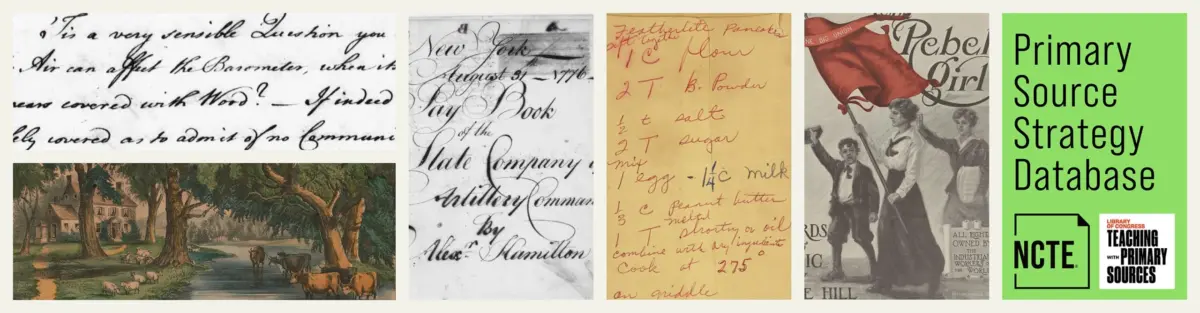
Executive Overview
In an era defined by rapid information consumption and the constant verification challenge of the digital age, educators face a monumental task: teaching students not just what to think, but how to evaluate evidence critically. To meet this challenge, a powerful nationwide collaboration is reshaping English Language Arts (ELA) and social studies classrooms. The National Council of Teachers of English (NCTE) has partnered with the Library of Congress as part of the Teaching with Primary Sources (TPS) Consortium. This ambitious initiative aims to fundamentally weave primary source material into the daily pedagogical habits of literacy teachers and students across the United States.
At the heart of this partnership lies an expansive, searchable database featuring expert-crafted instructional strategies for more than 150 specific items drawn directly from the Library of Congress’s digitized archives. Curated by over two dozen veteran educators and leaders in ELA education, these resources do more than simply offer historical artifacts—they articulate the specific literacy merits of each document, matching them to thematic units, interdisciplinary frameworks, and state educational standards.
Among the crown jewels of this collection are the Frederick Douglass Papers: Financial Papers, 1847–1928; Bank Books. Long celebrated for his spellbinding oratory and fierce abolitionist writings, Douglass is examined here through an entirely different, highly tangible lens: his personal ledger books, deposit slips, and financial records. By utilizing these documents, educators can build bridges across history, economics, and civic duty, demonstrating to students that civil rights activism and economic self-sufficiency are deeply and inextricably intertwined.
Detailed Chronology: The Evolution of the TPS Consortium and the Douglass Papers
To understand the weight of this educational movement, it is vital to trace both the timeline of the Library of Congress’s outreach initiatives and the historical trajectory of the documents themselves.
- 1847–1928: The Financial Life of an Icon
Spanning more than eight decades—stretching from Douglass’s early days as a free man and rising abolitionist voice, through the turbulence of the Civil War and Reconstruction, and into the Jim Crow era—the Frederick Douglass Financial Papers capture the economic realities of a towering historical figure. These documents meticulously record deposits, withdrawals, and monetary outlays, revealing how Douglass navigated severe institutional racism to achieve and preserve financial independence. - The Digitization Milestone
Decades after finding a permanent home in the Library of Congress Manuscript Division, these fragile manuscripts underwent state-of-the-art preservation and digitization. This technological leap transformed physical, decaying ink-and-paper ledgers into high-resolution digital assets accessible to anyone with an internet connection, setting the stage for modern digital humanities integration. - The Birth of the TPS Consortium Partnership
Recognizing that raw digital archives can sometimes overwhelm K-12 educators, the Library of Congress established the Teaching with Primary Sources Consortium. Through this network, national educational organizations like the NCTE were invited to bridge the gap between archival science and classroom pedagogy. - The NCTE Integration Initiative
More than two dozen ELA leaders and curriculum developers were mobilized to build out pedagogical strategies for the Library’s digital holdings. By tagging entries with searchable terms like picturebook, argument, African American History, and Government, Law, & Politics, the NCTE created an intuitive bridge connecting historical manuscripts to modern state standards—such as Louisiana’s rigorous ELA and world history frameworks.
Supporting Context & Metrics: Economics, Literacy, and Emancipation
The inclusion of Frederick Douglass’s financial papers in modern ELA curricula addresses a critical gap in traditional history education: the intersection of race, economics, and civil rights. For generations, history textbooks have isolated the moral and political dimensions of abolitionism while largely ignoring the material conditions required to sustain such high-stakes activism.
The Material Reality of Abolitionism
Activism does not happen in a vacuum; it requires resources. Printing newspapers like The North Star, traveling nationally and internationally to deliver lectures, harboring freedom seekers, and maintaining a household all demanded reliable capital. Douglass’s bank books provide a concrete, data-driven window into how he managed his money during a period when financial institutions routinely closed their doors to African Americans.
- Financial Autonomy as Resistance: In an era where systemic prejudice sought to reduce Black Americans to perpetual economic dependency, Douglass’s meticulous record-keeping and accumulation of property stood as acts of profound defiance.
- Interdisciplinary Learning: By bringing these documents into the ELA classroom, teachers can merge historical inquiry with economic literacy. Students do not just read about the 19th century; they analyze balance sheets, track income sources from lecture fees and publications, and evaluate how personal financial stability enabled prolonged political warfare.
Navigating Institutional Hurdles
The instructional value of these primary sources extends far beyond biographical study. They serve as a springboard for investigating broader systemic questions:
- What historical obstacles have African Americans encountered in obtaining fair economic opportunities?
- What role does financial literacy play in personal and communal empowerment?
- How do personal financial choices and habits interact with large-scale social and political movements?
By wrestling with these questions, students transition from passive consumers of history to active critical thinkers capable of connecting past structural inequities to contemporary economic discussions.
Standards Connections: Rigor in the Modern Classroom
The NCTE-curated database ensures that exploring these historical documents is not merely an engaging exercise, but a rigorous path toward meeting high academic standards. For instance, alignment with state frameworks—such as the Louisiana State Standards highlighted in the initiative—demonstrates how primary sources satisfy advanced ELA and social studies benchmarks:
- W.11-12.1(a): Students are prompted to introduce precise, knowledgeable claims regarding Douglass’s financial strategies, establish the significance of those claims, distinguish them from alternate or opposing viewpoints, and construct arguments that logically sequence claims, counterclaims, reasons, and evidence.
- WH.1 (World History): Learners analyze ideas and events from historical eras, evaluating how systems of commerce and civil rights progressed, changed, or remained resilient over time.
- WH.4: Students actively utilize primary and secondary source materials to construct historical narratives, test hypotheses, and back interpretive claims with empirical evidence pulled directly from archival records.
Through these standards-aligned approaches, teachers can easily justify the use of manuscripts and bank books within standard-bound pacing guides, proving that primary source literacy enhances rather than detracts from core academic requirements.
Official Statements and Pedagogical Vision
The overarching philosophy of the NCTE and Library of Congress partnership rests on the belief that primary sources humanize history and cultivate deep cognitive engagement.
"Primary sources force students to slow down," notes curriculum design literature associated with the TPS Consortium. "When a student looks at a faded 19th-century bank book penned by Frederick Douglass, they are no longer reading a sanitized summary written by a textbook publisher. They are confronting the raw artifact of a human life lived under immense pressure. They see the numbers, the signatures, and the institutional stamps. That visual and conceptual tangibility sparks authentic curiosity."
Furthermore, literacy experts involved in the project emphasize that teaching with primary sources directly supports the development of complex argumentation. When students encounter documents that lack modern narrative hand-holding, they must rely on textual evidence, contextual clues, and critical reasoning to construct their own interpretations. This practice aligns perfectly with the NCTE’s mission to advance professional growth, enhance teaching practices, and protect professional autonomy in English language arts classrooms nationwide.
Future Outlook: The Road Ahead for Primary Source Literacy
As the Teaching with Primary Sources Consortium continues to expand, the partnership between the Library of Congress and the NCTE points toward an increasingly digital, inquiry-driven future for K-12 education.
Expanding the Digital Ecosystem
With over 150 items currently supported by robust pedagogical strategies—and plans for continuous expansion—the searchable database is poised to become an indispensable tool for lesson planning. Educators can filter resources instantaneously by format (Manuscripts, Photographs and Prints), theme (African American History, Government, Law, & Politics), and instructional goal (such as building an argument or analyzing a picturebook).
Preparing Students for a Complex World
Ultimately, this initiative is about more than history or economics; it is about media literacy and civic readiness. In a world saturated with manipulated media and conflicting narratives, students who spend their formative years dissecting 19th-century bank books, manuscripts, and abolitionist papers develop an essential habit of mind: the instinct to interrogate sources, verify claims, seek out contextual evidence, and recognize the human agency behind every historical record.
By anchoring literacy instruction in the rich archives of the Library of Congress, educators are giving the next generation the tools not only to understand the architecture of the past, but to actively build a more just and economically equitable future.

