
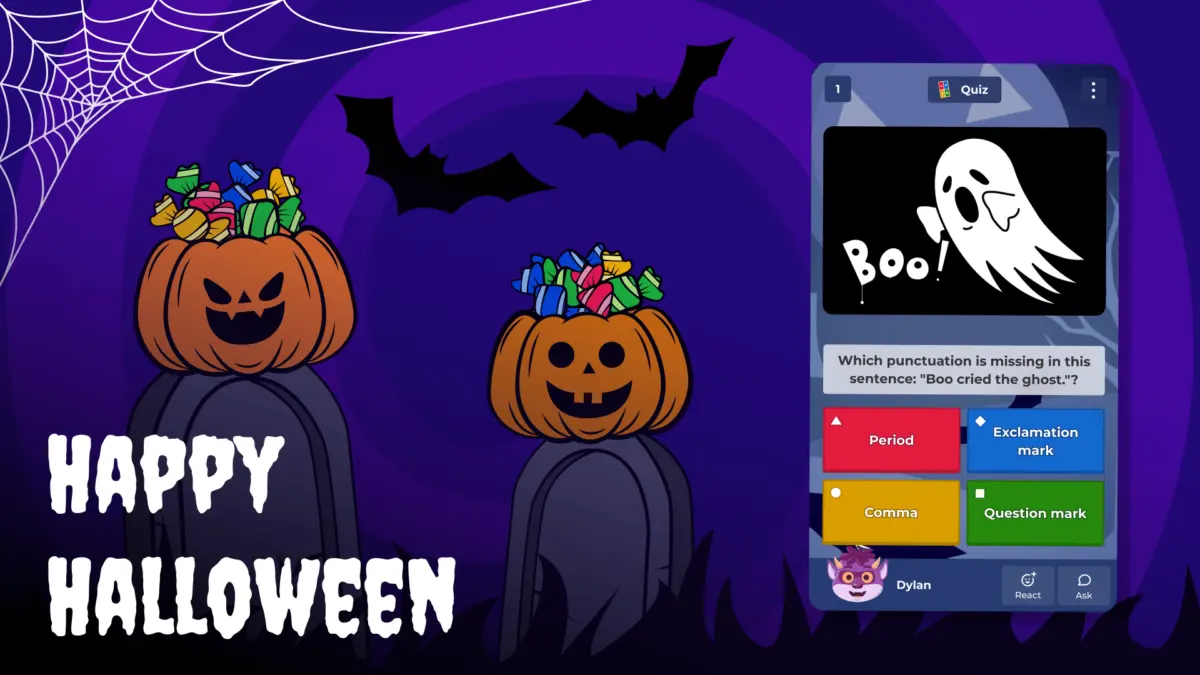
EXECUTIVE OVERVIEW
As the autumn leaves fall and the nights grow longer, educators, parents, and students alike brace for the annual challenge of maintaining classroom momentum amidst the distractions of the spooky season. In response, digital learning pioneer Kahoot! has rolled out an expansive, multi-tiered initiative designed to fuse seasonal festivities with rigorous, curriculum-aligned academic content. By leveraging iconic pop-culture partnerships—spanning entertainment giants like Disney, Nickelodeon, Marvel, and Star Wars—alongside esteemed educational institutions like the Museum of Science and TED-Ed, Kahoot! is transforming how millions approach study sessions, classroom engagement, and family game nights.
This comprehensive release of ready-made Halloween learning content arrives at a critical juncture in modern education. Educators constantly seek innovative methodologies to combat seasonal disengagement, while parents search for screen-time alternatives that foster foundational cognitive skills without inducing friction. By wrapping math, science, history, and literacy in the familiar, comforting garb of beloved characters and chillingly fun trivia, Kahoot! has established a scalable blueprint for gamified education. This report investigates the architecture of this seasonal rollout, evaluating its pedagogical underpinnings, its targeted demographics, and its broader implications for the future of interactive digital learning.
A Pedagogical Paradigm Shift: Gamification Meets the Spooky Season
The integration of gamification into formal and informal learning environments is no longer a novel experiment; it is an established pillar of modern instructional design. Gamified learning leverages intrinsic human motivators—such as competition, achievement, curiosity, and storytelling—to enhance cognitive retention and academic performance. Kahoot! has long occupied the vanguard of this movement, converting multiple-choice quizzes into high-energy, multiplayer digital showdowns.
However, the late-autumn academic cycle presents unique hurdles. The transition into the holiday quarter often correlates with dips in student attention spans. Recognizing this psychological landscape, Kahoot!’s curriculum team curates seasonal modules that harness the cultural momentum of Halloween. Rather than viewing Halloween as a disruption to the school calendar, Kahoot! reframes it as an immersive thematic hook.
By contextualizing core competencies—such as algebraic equations, historical analysis, biological ecosystems, and linguistic vocabulary—within narratives of mystery, folklore, and fantasy, the platform bridges the gap between entertainment and education. The underlying pedagogical hypothesis is straightforward: when students are emotionally invested in the narrative framework (whether tracking the phases of the moon through a cosmic lens or calculating monster math alongside Marvel’s Groot), cognitive load is distributed more effectively, leading to superior knowledge acquisition and long-term retention.
Empowering Educators: Bringing Spell-Binding Interdisciplinary Content to the Classroom
For classroom teachers, the autumn syllabus often demands covering diverse, complex subjects just as classroom management becomes increasingly demanding. Kahoot!’s newly expanded educator collections offer turnkey solutions designed to inject energy across core disciplines—science, mathematics, history, and language arts—without requiring extensive lesson-planning hours.
TED-Ed: Exploring Legendary History and Folklore
At the heart of the educator initiative is a strategic collaboration with TED-Ed. Recognizing that Halloween naturally stirs student curiosity regarding the mysterious and the macabre, TED-Ed’s curated kahoots guide learners through historical and literary milestones. Students can investigate the factual foundations and cultural anxieties underlying legendary tales, stretching from the historical roots of Bram Stoker’s Dracula to the complex socio-political dynamics of the Salem Witch Trials. These modules seamlessly marry historical inquiry with critical thinking, challenging students to separate historical reality from Gothic myth.
Nickelodeon and Disney: Fan-Favorite Characters Meet Core Curricula
To maximize student buy-in, Kahoot! has mobilized globally recognized characters through channels such as Halloween with Nickelodeon and Disney: Happy Halloween!. By featuring familiar faces like SpongeBob SquarePants and the Teenage Mutant Ninja Turtles, these educational adventures lower the affective filter of learners. When a complex scientific concept or language arts exercise is delivered in partnership with a beloved television icon, student anxiety diminishes, and participation rates soar. Similarly, Disney’s portal invites primary and middle-grade students to explore foundational topics wrapped in enchantment, proving that rigorous academic standards and magical storytelling are not mutually exclusive.
Bridging Home and School: Empowering Parents and Early Learners
Education does not terminate at the school gates. Recognizing the vital role of parental involvement in early childhood development, Kahoot! has engineered a suite of home-centric, family-friendly learning collections designed to make skill-practice feel like a sweet Halloween treat rather than a chore.
Sanrio’s Hello Kitty and Friends: Foundational Cognition with a Festive Twist
For early learners, mastering basic math and cognitive processing requires consistent, low-stress repetition. The Spooky Season with Hello Kitty And Friends collection introduces young children to mathematical puzzles and haunted house decor challenges. These games cultivate spatial awareness, pattern recognition, and basic counting skills within an aesthetic that is warm, inviting, and entirely free of genuine fright.
Marvel’s Midnight Monster Math with Groot
Moving into early elementary mathematics, the Marvel-branded collections introduce fans of the Marvel Cinematic Universe to high-energy arithmetic challenges. Featuring characters like Groot, these modules transform standard addition, subtraction, and counting drills into high-stakes cosmic adventures. Children are encouraged to practice numerical fluency in rapid-fire bursts, building automaticity in fundamental calculations while engaging with characters they adore.

The Peanuts Gang: Emotional Literacy and Seasonal Wonder
Beyond traditional STEM metrics, the inclusion of Charles Schulz’s iconic Peanuts gang—highlighted by the timeless narrative of It’s the Great Pumpkin, Charlie Brown—offers profound socio-emotional benefits. These kahoots are intentionally crafted to strengthen emotional literacy. They guide children through themes of resilience, managing disappointment, embracing imagination, and navigating the social dynamics of holiday anticipation. In an era where social-emotional learning (SEL) is recognized as a cornerstone of holistic child development, these interactive sessions provide a safe emotional vocabulary for young minds.
Supporting the Student Body: Spooktacular Study Sessions for Exam Season
As the first grading period concludes, middle, high school, and university students face the daunting approach of midterms and major examinations. Maintaining study momentum during this transition is critical, and Kahoot! has deployed targeted academic modules designed to banish academic fatigue through engaging, rigorous self-assessment.
Museum of Science and SciShow Kids: Thrilling STEM Explorations
To keep science students intellectually stimulated, the Museum of Science has partnered with Kahoot! to deliver interactive modules examining the natural world. Programs such as Why Does the Moon Change?—developed in collaboration with SciShow Kids—break down complex astronomical phenomena, aligning directly with Earth and space science standards (such as understanding the universe, its stars, and lunar phases). Concurrently, students can explore the ecological significance of creepy-crawly insects, learning how natural cycles govern our planet.
WWF Wild Classroom and Wiktionary: Ecological Realities and Advanced Lexicon
Halloween often typecasts certain animals—such as bats, spiders, and owls—as terrifying monsters. The WWF Wild Classroom counteracts this through its Not-so-spooky wildlife collection, educating students on the vital ecological services these animals provide to maintain planetary health.
On the linguistic front, advanced learners can challenge their verbal dexterity using Wiktionary-powered collections. Wicked words for Halloween (hard) pushes students to expand their lexicons by exploring obscure, highly specific, and delightfully unusual English vocabulary words. This exercise sharpens verbal reasoning and prepares students for standardized testing environments through playful competition.
Lifelong Learning and Social Engagement: Frightfully Fun Celebrations for Adults
Gamified learning is not restricted to school-aged children. Adults, professionals, and lifelong learners frequently utilize trivia and interactive platforms to build community, celebrate cultural milestones, and foster social bonding. Kahoot!’s adult-oriented offerings cater to this growing demographic.
Wikipedia and Pop-Culture Trivia: Unpacking Holiday Origins
For those hosting Halloween parties, family gatherings, or corporate team-building events, Kahoot! offers curated Wikipedia-backed collections that explore the historical origins, sociological symbols, and global traditions of All Hallows’ Eve. These trivia sessions challenge participants to separate historical fact from modern commercial myth, stimulating intellectually vibrant conversations over party snacks.
Star Wars: Happy Ghoul-actic Halloween
Intergalactic diplomacy meets spooky fun in the Star Wars Halloween collection. Designed for multi-generational fan bases, this module tests participants’ knowledge of the Jedi lore, Padawan trials, and localized galactic humor. It demonstrates how pop culture intellectual properties can be leveraged to build generational bridges, allowing parents, children, and friends to compete on a level playing field.
FUTURE OUTLOOK: THE SCALABILITY OF GAMIFIED MICRO-LEARNING
The strategic rollout of Kahoot!’s seasonal learning ecosystem highlights a broader, permanent shift in educational technology. The future of digital instruction relies on micro-learning ecosystems—agile, highly modular content units that can be deployed instantly across diverse environments, from formal K-12 classrooms to remote living rooms and corporate boardrooms.
As artificial intelligence and adaptive learning algorithms continue to mature, platforms like Kahoot! are positioned to transition from static, pre-packaged quiz collections to hyper-personalized, dynamically generated educational experiences. Imagine an AI-driven Halloween module that automatically adjusts its mathematical complexity based on a student’s real-time performance, or a science trivia game that adapts its ecological curriculum to align with regional geographic standards.
Furthermore, the commercial success of these cross-industry partnerships—uniting tech platforms, Hollywood studios, scientific institutions, and lexical authorities—signals a robust economic model for educational media. Intellectual property holders increasingly recognize that embedding educational value within entertainment franchises extends brand equity while providing genuine societal benefit.
For educators, parents, and students navigating the academic calendar, tools like Kahoot!’s Halloween collection offer more than mere amusement. They represent a fundamental reaffirmation of John Dewey’s progressive educational philosophy: that learning is most profound when it is active, social, contextualized, and deeply joyful. As the platform looks toward future seasonal expansions, it sets a gold standard for how digital tools can turn seasonal distractions into enduring educational milestones.

