
Executive Overview
For millions of families annually, a vacation to Walt Disney World represents a masterclass in logistics, financial planning, and emotional stamina. Visitors invest thousands of dollars and months of meticulous scheduling into crafting the "perfect" itinerary, often operating under the assumption that blue skies and blazing sunshine are prerequisites for a magical getaway. However, visiting Central Florida—especially during the volatile summer months and the tail end of hurricane season—invariably introduces an unpredictable variable: the relentless, torrential tropical downpour.
When a multi-day Disney vacation is suddenly hijacked by a day-long deluge, the psychological toll on unprepared travelers can be immense. Panic sets in, footwear is ruined, meltdowns multiply, and thousands of vacationers beat a hasty retreat back to their resort hotels. Yet, seasoned theme park strategists and savvy veterans view a torrential rainy day not as a catastrophic vacation failure, but as a golden, weather-induced anomaly.
A severe weather event serves as the ultimate equalizer at Walt Disney World. It instantly purges the parks of casual visitors, deters local annual passholders, and drastically thins out the staggering crowds that define modern theme park tourism. For those equipped with the correct gear, psychological fortitude, and logistical framework, a rainy day transforms the park experience. Wait times for marquee attractions—such as Star Wars: Rise of the Resistance or Avatar Flight of Passage—plummet from multi-hour ordeals to near-zero walk-on conditions.
This investigative and authoritative guide examines the anatomy of a complete washout at Walt Disney World, exploring the physiological and psychological impacts on travelers, the operational responses of the resort, and the essential, field-tested gear required to turn a disastrous forecast into the most efficient, memorable day of your trip.
Detailed Chronology: Anatomy of a Park-Wide Washout
To truly understand how to conquer a rainy day at Disney World, one must examine how a severe weather event unfolds across the property, hour by hour, and how visitor behavior shifts in response.
08:00 AM – The Morning Psychological Shift
The alarm rings, and checking the weather app reveals a grim reality: a stationary weather front has stalled directly over Central Florida, bringing a 100% chance of heavy rain for the next twelve hours. For the unprepared tourist, this moment is filled with dread. Sunk costs flash before their eyes, and the temptation to cancel the park reservation and sleep in is palpable.
However, the informed traveler recognizes this as the first critical window of opportunity. While the average guest scrambles to pivot their plans, the parks are preparing to absorb a significantly reduced crowd volume. The morning rope-drop—typically a chaotic, shoulder-to-shoulder rush—is markedly calmer. Security lines move swiftly, and the initial wave of visitors is heavily saturated with resilient veterans and locals who brought their rain gear.
11:30 AM – The Great Exodus and the Crowds Disperse
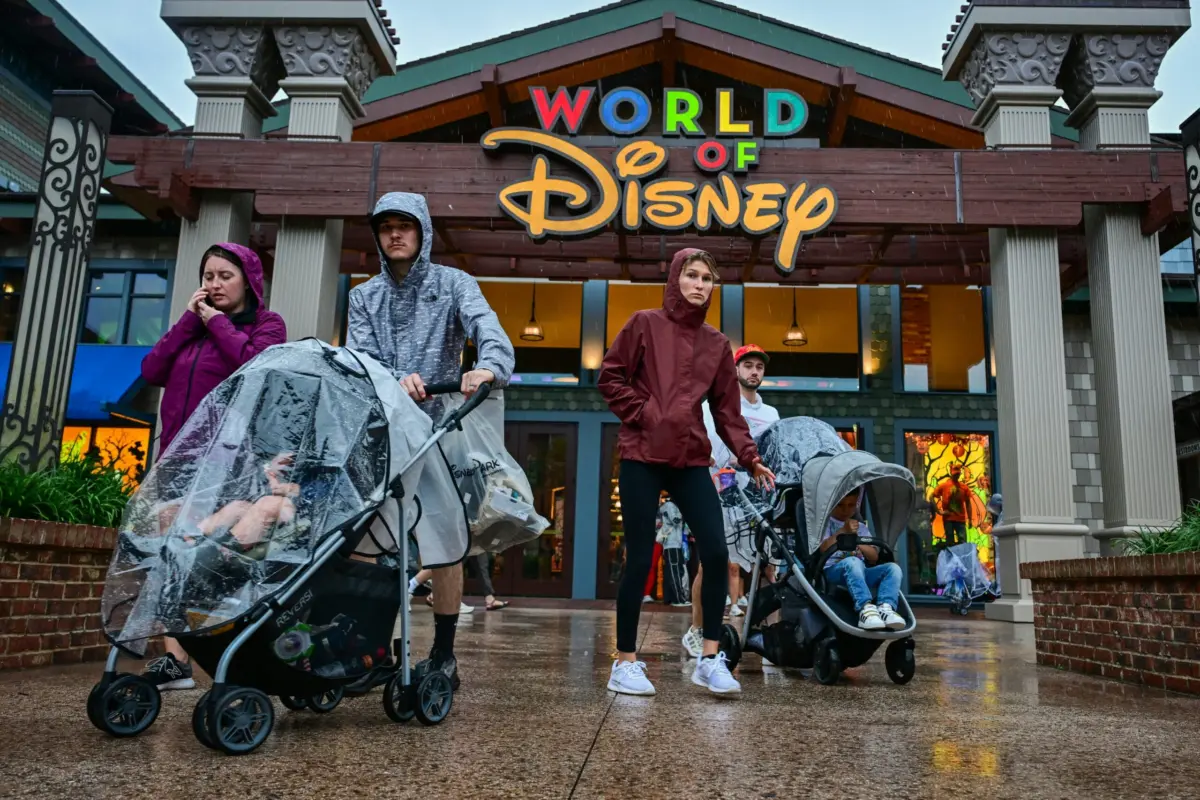
By mid-morning, the sustained downpour has taken its toll. Flimsy, disposable plastic ponchos have torn at the seams; sneakers are completely waterlogged; and damp, irritable children are pushing families to their breaking point. This is the inflection point where mass attrition occurs.
Thousands of visitors make the collective decision to exit the turnstiles, seeking refuge in resort food courts or retreating to their hotel rooms. Consequently, the internal park density drops precipitously. Main Street, U.S.A. empties out, and the main thoroughfares of Hollywood Studios, EPCOT, and the Magic Kingdom become remarkably navigable.
02:00 PM – The Sweet Spot of Peak Efficiency
Mid-afternoon on a rainy day represents the apex of theme park optimization. Because the outdoor queues for major attractions are either sheltered or significantly depopulated, ride throughput speeds up. More importantly, Disney’s vast portfolio of indoor attractions, shaded shows, and cavernous dining establishments absorb the remaining guests comfortably.
Wait times for headliner rides experience a dramatic downward correction. Attractions that routinely command a 120-minute wait time suddenly drop to 15 to 20 minutes—or, in exceptional cases, virtually zero. The rain acts as a natural bouncer, filtering out the hesitant and rewarding those who prepared for the elements.
07:00 PM – Evening Resilience and Park Magic
As evening settles in, the park takes on an ethereal, cinematic quality. The wet pavement reflects the neon lights of Hollywood Studios or the glowing spires of Cinderella Castle, creating a stunning visual backdrop with a fraction of the daytime pedestrian traffic. Parks that might otherwise feel oppressive and claustrophobic open up, allowing families to stroll leisurely, soak in the atmosphere, and capitalize on walk-on attractions right up until park closing.
Supporting Context & Metrics: The Science of Theme Park Weather Resilience
Operating a resort complex the size of San Francisco requires sophisticated meteorological monitoring and crowd management systems. Understanding the operational metrics behind a Disney rainy day reveals why staying in the park yields such staggering dividends.
Crowd Density and Wait-Time Correlation
Internal tourism analytics and crowd-tracking data consistently demonstrate an inverse relationship between precipitation volume and park wait times. When daily rainfall exceeds one inch:
- Overall Attendance Drops by 25% to 40%: The immediate cancellation and early-departure rates among single-day ticketholders are exceptionally high.
- Queue Compression: Outdoor wait times decrease drastically, though indoor queues can experience brief, localized surges as guests seek immediate shelter.
- Lightning Lane Dynamics: Disney’s Genie+ and Lightning Lane systems often experience fluid adjustments. When outdoor rides are temporarily grounded due to lightning strikes, guests holding return times are granted multi-experience passes, creating a secondary surge of capacity once the skies clear.
The Infrastructure Advantage
Unlike traditional amusement parks that feature wide-open midways with minimal shelter, modern theme parks—and Walt Disney World in particular—are engineered with extensive indoor architectural buffers.
- The Magic Kingdom features vast covered walkways around the perimeter of the hub and extensive indoor queue systems for classics like Pirates of the Caribbean and Haunted Mansion.
- EPCOT boasts massive indoor pavilions (such as The Land and The Seas with Nemo & Friends) where visitors can spend hours entirely insulated from the weather.
- Disney’s Hollywood Studios relies heavily on immersive indoor theaters and ride show buildings (like Star Wars: Galaxy’s Edge and Toy Story Land) that keep guests dry from the moment they enter the queue.
The Essential Rainy-Day Arsenal: Field-Tested Gear Recommendations
Surviving a torrential downpour at Disney World is entirely a matter of preparation. Relying on overpriced, low-quality items purchased at park kiosks is a recipe for discomfort and financial regret. Below is the definitive, field-tested inventory required to turn a rainy day into a triumph.
1. Heavy-Duty, Reusable Ponchos
Discard the flimsy, paper-thin $2 plastic ponchos sold at convenience stores or park gates. While they serve a marginal purpose on minor water rides like Kali River Rapids, they shred instantly under the friction of a full day of walking, boarding ride vehicles, and brushing against strollers. Invest in heavy-duty, reusable emergency ponchos prior to your trip. They offer superior structural integrity, provide better wind and water resistance, and ultimately save money over a multi-day vacation.
2. Ankle-Cinching Shoe Covers
Wet, waterlogged shoes are arguably the single greatest psychological hazard of a theme park vacation. Once sneakers and socks absorb water, the combination of high Florida humidity and relentless walking guarantees blisters, chafing, and profound misery. Waterproof shoe covers that cinch tightly at the ankle completely isolate your footwear from standing puddles and driving rain. They keep socks bone-dry and eliminate the dreaded squish-squash sensation with every step.
3. High-Performance Stroller Logistics via BabyQuip
Hauling a bulky stroller through airline baggage claim, wrestling it into a rental car trunk, and watching it get battered by transit is a miserable start to any vacation. Renting a rugged, all-terrain stroller—such as a BOB stroller—through a trusted peer-to-peer rental network like BabyQuip revolutionizes the park experience. High-end rentals frequently include custom, heavy-duty rain covers at no extra charge. Furthermore, coordinating a direct lobby pickup and drop-off with a local provider eliminates transit friction entirely, keeping your gear pristine and protected from the moment you arrive.
4. Durable, Wind-Resistant Travel Umbrellas
An umbrella is non-negotiable, but standard pocket umbrellas often invert and snap under the sudden gusts of wind that accompany Florida tropical storms. Pack a sturdy, wind-resistant travel umbrella and store it in an easily accessible external pocket of your park bag—never buried at the bottom. A pro-tip utilized by veteran parents: when parking your stroller in designated outdoor stroller parking zones, leave your umbrella open over the stroller handle or seat compartments to provide an extra layer of direct shelter for child accessories and belongings.
5. Level 4 Water-Repellent Backpacks
Protecting electronics, spare clothing, and park essentials requires more than a standard canvas daypack. Utilizing a high-performance, water-repellent backpack—such as the BAGSMART Faro featuring a Level 4 water-repellent exterior—ensures that internal contents remain completely bone-dry throughout a day of sustained downpours. Investing in dedicated water-resistant storage safeguards expensive smartphones, portable chargers, and dry garments against catastrophic moisture damage.
6. Specialized Skin and Personal Care Protection
Environmental exposure during a washout is deceptive. The combination of driving rain, high humidity, and friction wreaks havoc on exposed skin. Packing a targeted, high-performance lip hydrator (such as the Facecard Green Line Lip Hydrator) prevents lips from chapping and cracking. Additionally, for guests who utilize queue time to read or relax, protecting delicate items like an e-reader is paramount. Storing electronics inside a dedicated waterproof clutch (such as a Strapsicle Clutch) keeps reading materials secure, dry, and easily accessible while freeing up hands for navigation.
7. Friction-Free Footwear Management for Children
Children are exceptionally sensitive to sensory discomfort. Loose shoelaces dragging through deep, muddy puddles turn into heavy, soaked tripping hazards that require constant parental intervention. Upgrading kids’ sneakers with no-tie, elastic locking shoelaces eliminates the need to kneel in puddles to retie soggy laces, streamlining mobility and preventing sensory meltdowns.
8. Premium Airport Ground Transportation via Blacklane
While not strictly a park-day tip, managing transportation logistics during adverse weather dictates the emotional tone of your entire vacation. Landing in Orlando during a severe thunderstorm and attempting to wrangle a rideshare queue or a crowded shuttle bus is deeply stressful. Booking a reliable, pre-arranged chauffeured service—such as Blacklane—ensures that a dry, professional black car is waiting curbside the moment you exit the terminal, transforming a chaotic airport arrival into a seamless, climate-controlled transition.
Future Outlook: The Evolution of Theme Park Weather Management
As global weather patterns shift and extreme meteorological events become increasingly frequent across the Southeast United States, Walt Disney World continues to refine its operational infrastructure to maintain guest satisfaction.
Technological Advancements in Weather Forecasting
Disney’s internal meteorological operations utilize state-of-the-art Doppler radar and predictive modeling systems to track localized storms down to the minute. In the coming years, integration within the My Disney Experience app is expected to feature hyper-localized, real-time weather alerts and dynamic queue-pivoting recommendations. Visitors will receive proactive notifications suggesting optimal indoor attractions or dining reservations precisely when a storm cell is projected to pass overhead.
Architectural Innovations for Future Expansions
Future park expansions and infrastructural overhauls—such as upcoming lands and ride additions across the resort—are being designed with enhanced weather mitigation in mind. Architects are prioritizing extended covered queuing structures, climate-controlled waiting pavilions, and seamless indoor-outdoor transitional spaces to ensure that the guest experience remains insulated from environmental disruptions.
The Mindset Shift for Modern Travelers
Ultimately, the future of theme park touring relies on consumer adaptability. As booking windows tighten and ticket prices rise, the traditional expectation of flawless, sun-drenched days is giving way to a more pragmatic, all-weather mindset.
When you accept that a Florida downpour is an inevitability rather than an interruption, the psychological barrier dissolves. By equipping yourself with the proper gear—durable ponchos, shoe covers, waterproof bags, and reliable logistics—you flip the script on the average tourist. While the unprepared masses flee to their hotels in defeat, you will be walking straight onto Rise of the Resistance with a five-minute wait time, experiencing the magic of Disney World at its absolute most efficient.

