In the modern educational landscape, the debate over how best to introduce foundational literacy skills to young children continues to evolve. While digital applications and screen-based learning tools dominate the commercial marketplace, educators and developmental specialists are increasingly returning to tactile, multi-sensory approaches. At the heart of this movement is a harmonious blend of beloved classic literature and targeted, hands-on instructional materials.
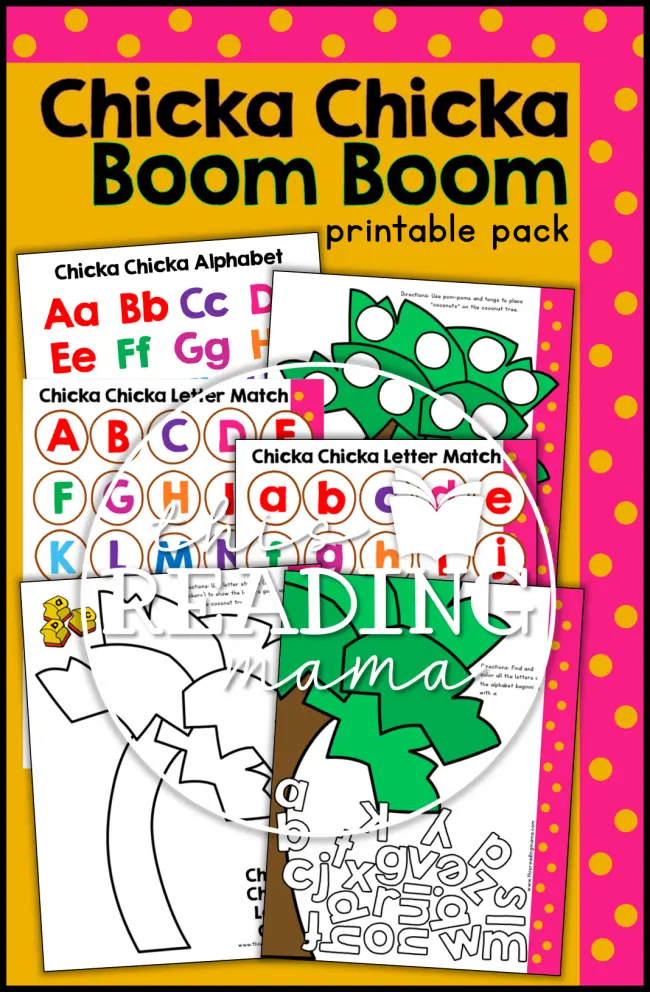
Recent developments in preschool pedagogy highlight a renewed focus on foundational alphabet mastery, leveraging timeless resources such as Bill Martin Jr. and John Archambault’s seminal 1989 children’s classic, Chicka Chicka Boom Boom. Complementing this enduring read-aloud favorite, early childhood educators are utilizing comprehensive, specialized instructional resources like the newly released Chicka Chicka Boom Boom Printable Pack.
Designed by veteran educator Becky of This Reading Mama, these resources bridge the gap between passive storytelling and active cognitive engagement. By deliberately targeting critical developmental milestones—namely, letter recognition and fine motor skill enhancement—this curriculum model addresses the pressing need for balanced, engaging, and developmentally appropriate early education strategies. This report provides an in-depth examination of the pedagogical philosophies driving this trend, the mechanics of modern early literacy toolkits, the broader context of preschool instruction, and the future outlook for early childhood education.
Detailed Chronology
The integration of Chicka Chicka Boom Boom into contemporary preschool curricula is part of a decades-long trajectory that traces the evolution of phonetic instruction and literature-based learning in early childhood education.
Phase 1: The Genesis of a Modern Classic (1989)
Upon its publication in 1989, Chicka Chicka Boom Boom disrupted traditional alphabet instruction. Authored by Bill Martin Jr. and John Archambault, with vibrant, rhythmic illustrations by Lois Ehlert, the book introduced young readers to an anthropomorphized alphabet racing up a coconut tree, only to tumble back down in a chaotic, rhythmic heap. The sing-song cadence and repetitive, hypnotic structure transformed rote memorization into a joyful, theatrical experience. Educators quickly recognized its potential not just as a bedtime story, but as a dynamic teaching tool that married auditory processing with visual letter identification.
Phase 2: The Digital Shift and the Backlash (2000s–2010s)
As educational technology proliferated through the turn of the century and the subsequent decade, preschool classrooms saw a massive influx of software, interactive whiteboards, and tablet applications designed to teach the alphabet. While these tools offered temporary engagement, early childhood researchers began documenting the unintended consequences of early screen reliance: diminished fine motor control, reduced attention spans, and a lack of tactile-kinesthetic feedback essential for neural pathway development in children aged three to five.
Phase 3: The Return to Tactile and Print-Based Interventions (2020s–Present)
In response to the limitations of digital learning, educators began aggressively reclaiming tactile methodologies. Homeschool cooperatives, preschool pods, and traditional classrooms have experienced a renaissance of hands-on learning resources.
A significant milestone in this movement occurred with the introduction of structured, thematic supplemental materials designed by educators working directly in the field. Drawing from her experiences teaching a preschool literacy class at a local homeschool co-op, educator Becky developed and released a specialized suite of printables tailored specifically to accompany read-aloud sessions of Chicka Chicka Boom Boom.
By focusing the curriculum on blackline printables, letter charts, and fine motor manipulation exercises (such as cutting, tracing, and pasting), this period marked a definitive pivot toward comprehensive, print-based literacy kits that teachers and parents could easily access and implement.
Supporting Context & Metrics
To fully understand the significance of integrating thematic printables with classic literature, one must examine the broader metrics and developmental milestones governing early childhood education.
The Science of Letter Recognition
According to developmental psychology and literacy research, letter recognition is one of the strongest single predictors of a child’s future reading success. Children who can effortlessly identify both uppercase and lowercase letters transition into phonics and decoding with significantly less friction.
Chicka Chicka Boom Boom provides an ideal scaffold for this process because it introduces letters not in an isolated, static list (such as the traditional alphabet song), but as dynamic characters with distinct identities. When combined with targeted letter charts and recognition games found in modern printable packs, children engage in repeated, low-stakes exposure that reinforces visual memory.
Fine Motor Skills as a Precursor to Literacy
A common misconception in early education is that literacy is purely a cognitive and visual exercise. In reality, fine motor control—the coordination of small muscles in movements involving the hands and fingers—is inextricably linked to writing readiness and cognitive development.
Developmental Domain
Target Skill in Literacy Packs
Long-Term Academic Impact
Visual Discrimination
Differentiating between similarly shaped letters (e.g., b and d)
Enhanced reading fluency and reduced dyslexia-like errors
Fine Motor Control
Tracing, cutting, and manipulating tactile objects
Improved pencil grip, handwriting stamina, and spatial awareness
Phonemic Awareness
Associating letter shapes with auditory sounds
Accelerated decoding and spelling capabilities
Resources that incorporate hands-on activities require children to pinch, grasp, color, and trace. These actions stimulate the somatosensory cortex, reinforcing the brain’s connection to the physical symbols of language.
The Accessibility Factor of Open-Educational Resources (OER)
The modern educational resource market is frequently plagued by high subscription costs and expensive pre-packaged curricula that strain the budgets of parents, homeschool educators, and public school teachers alike. The proliferation of free, high-quality printable packs represents a democratization of early education. By making foundational literacy tools accessible via digital libraries and resource hubs, creators bridge socioeconomic gaps, ensuring that all children—regardless of geographic or financial constraints—have access to rich, literature-based learning materials.
Official Statements
The philosophical backing for literature-infused, hands-on preschool education is championed by educators, literacy specialists, and curriculum developers who witness the daily realities of early childhood learning.
Reflecting on her hands-on classroom experiences, creator and educator Becky emphasizes the enduring necessity of alphabet review across all seasons of the academic year:
"No matter what time of year it is, it’s ALWAYS a good time to review all the letters of the alphabet. This year, I’m back in the classroom teaching a preschool literacy class at a local homeschool co-op. We spent our time this past class reading and playing with Chicka Chicka Boom Boom. This is one of my favorite alphabet books!"
Detailing the deliberate design choices behind her supplemental materials, she notes the balance between cognitive recognition and physical dexterity:
"Of course, I had to create some printables to go along with our alphabet theme. Today, I’m sharing some of them with you. In this fun pack, I have included activities for letter recognition as well as fine motor skills."
Educational theorists and developmental pediatricians continually echo these sentiments, reinforcing that children learn best through play-based, multisensory environments. When stories are brought to life through interactive charts and physical manipulation, abstract symbols become concrete concepts, laying a robust foundation for lifelong academic achievement.
Future Outlook
As the educational ecosystem looks toward the remainder of the decade, several key trends are poised to shape the trajectory of preschool literacy instruction.
1. Hybrid Learning Models in Early Childhood
While the pendulum has swung back toward tactile, offline learning, the delivery mechanism for these resources remains heavily digitized. Platforms that allow teachers and parents to instantly access, download, and print customized instructional packs will continue to dominate. This hybrid model—digital access yielding physical, tactile execution—represents the optimal compromise for modern educators.
2. Heightened Focus on Individualized Pacing
With the rise of homeschool cooperatives, micro-schools, and pod-learning environments, standardized, one-size-fits-all curricula are steadily losing ground to flexible, modular resources. Printable packs that can be mixed, matched, and scaled to a child’s individual developmental readiness allow educators to customize instruction in real time.
3. Sustainable and Reusable Educational Assets
Economic and environmental considerations are shifting preferences toward blackline printables and reusable master copies. Rather than relying on single-use workbooks, educators favor adaptable resources that can be laminated, paired with dry-erase markers, or printed as needed. This sustainability model ensures that foundational learning tools remain cost-effective and environmentally conscious.
Conclusion
The enduring appeal of Chicka Chicka Boom Boom—bolstered by thoughtfully crafted, accessible printable packs—serves as a powerful reminder that effective education does not always require technological complexity. By rooting instruction in engaging storytelling, rigorous letter recognition, and essential fine motor skill development, educators are equipping the next generation with the foundational tools necessary for a lifetime of literacy, curiosity, and academic success.