
Executive Overview
In an era defined by a relentless push for media literacy, critical thinking, and historical inclusivity, educators face a growing mandate: to teach students not just what happened, but how we know what happened, and crucially, who has been left out of the official record. Addressing this educational imperative head-on, the National Council of Teachers of English (NCTE) has forged a dynamic, ongoing partnership with the Library of Congress as an active participant in the Teaching with Primary Sources (TPS) Consortium.
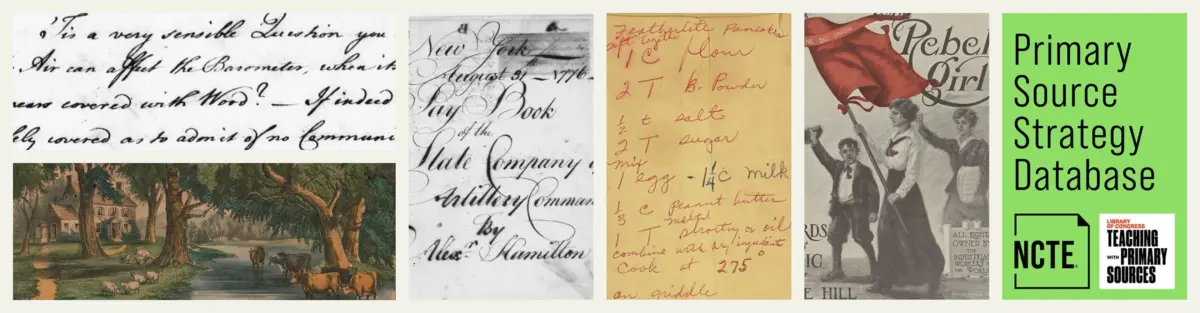
This nationwide initiative is designed to fundamentally expand the use of primary sources in the teaching and learning habits of literacy teachers and students alike. At the core of this collaboration is a robust, searchable digital database housing instructional strategies for more than 150 specific items culled directly from the Library of Congress’s vast, digitized primary source collections. Conceived, designed, and tested by more than two dozen expert teachers and leaders in English language arts (ELA) education, these pedagogical tools articulate the precise literacy merits of historical artifacts for modern curricula. They offer educators ready-to-use pathways that seamlessly integrate historical inquiry with state standards, encouraging students to interrogate texts through tags like picturebook and argument.
One striking entry within this expansive database centers on a rare, archival newspaper article originally published in The Salt Lake Tribune. Authored by London-based correspondent Rupert Neville under the designation "Special Cable to The Tribune", the piece illuminates the extraordinary lives of historical women who lived—either entirely or during specific phases of their lives—as men. Featured figures include Marie LeRoy, Madame Velasquez, Hannah Snell, Mary Ann Talbot, Catherine Coome, and Marion Edwards.
By integrating such complex primary sources into contemporary classrooms, educators are equipped to transcend traditional, sanitized historical narratives. They can foster critical conversations regarding gender roles, societal constraints, and the ongoing struggle for human equality. This article explores the mechanics of the NCTE and Library of Congress partnership, examines the pedagogical significance of recovering marginalized historical figures, and outlines the framework provided to educators to navigate these profound, sometimes challenging, intersections of history and literacy.
Detailed Chronology: The Evolution of the NCTE-Library of Congress Partnership
The integration of primary source documents into English language arts and history classrooms did not happen overnight. It represents a deliberate, decades-long evolution in educational philosophy—a shift away from passive textbook consumption toward active, source-based historical investigation.
Phase One: Recognizing the Literacy Gap
Historically, primary sources—letters, diaries, archival photographs, and period newspapers—were almost exclusively the domain of social studies and history classrooms. English language arts teachers, conversely, focused primarily on canonical literature, poetry, and narrative fiction. However, educational researchers increasingly recognized that true literacy in the 21st century demands that students possess the analytical skills required to decode informational texts, historical arguments, and primary media artifacts.
Recognizing this gap, educational leaders sought collaborative bridges between cultural heritage institutions—custodians of historical artifacts—and organizations dedicated to pedagogical excellence. The Library of Congress, possessing one of the world’s most comprehensive repositories of digitized historical materials, became the natural epicenter for this movement through its Teaching with Primary Sources program.
Phase Two: Forging the TPS Consortium
To scale these efforts nationwide, the Library of Congress established the TPS Consortium, inviting higher education institutions, school districts, and professional organizations—including the NCTE—to join forces. The partnership was built upon a shared vision: that interacting with raw, unmediated historical documents sharpens critical thinking, deepens historical empathy, and transforms students from passive learners into active investigators.
Through this alliance, NCTE mobilized its network of English language arts educators and curriculum specialists. The mission was clear yet complex: bridge the gap between raw historical archives and daily classroom practice. Educators did not just need access to digitized documents; they needed pedagogical scaffolding—pedagogical strategies aligned with modern learning standards, designed specifically to help literacy teachers unlock the rhetorical and historical value of primary artifacts.
Phase Three: Constructing the Digital Repository
Over subsequent years, more than two dozen leading ELA educators, researchers, and classroom practitioners convened to review items within the Library of Congress’s digitized collections. They curated over 150 specific historical artifacts, ranging from early American broadsides and photographs to turn-of-the-century journalistic dispatches like Rupert Neville’s Salt Lake Tribune article on women living as men.
For each item, these educators developed detailed instructional strategies. They mapped out specific literacy merits, suggested grade-level thematic units, tied content to state-level academic standards (such as New Mexico’s Adopted Content Standards for Reading and Literacy in History/Social Studies), and created searchable tagging taxonomies. Today, this living database stands as a testament to cross-institutional cooperation, empowering teachers to find, evaluate, and deploy primary sources that resonate with diverse student populations.
Supporting Context & Metrics: Uncovering the Marginalized Past
To understand the profound instructional value of resources like the Rupert Neville article within the NCTE-Library of Congress database, one must examine both the historical context of the document and the structural metrics of its application in modern classrooms.
The Historical Artifact: The Salt Lake Tribune Dispatches
The primary source featured in this specific NCTE module is a historical newspaper feature penned by Rupert Neville, a London-based journalist writing under the banner of a "Special Cable to The Tribune." The article documents the lives of several women—Marie LeRoy, Madame Velasquez, Hannah Snell, Mary Ann Talbot, Catherine Coome, and Marion Edwards—who deliberately adopted male identities to navigate a world that systematically denied women autonomy, professional mobility, and physical safety.
- Hannah Snell and Mary Ann Talbot: Eighteenth-century British figures who famously enlisted in the military and naval services disguised as men, participating in combat and enduring the rigorous demands of military life during an era when formal female participation in armed forces was entirely prohibited.
- Madame Velasquez (Loreta Janeta Velazquez): A Cuban-born woman who famously claimed to have disguised herself as a Confederate soldier (known as "Lieutenant Harry T. Buford") and worked as a spy during the American Civil War, publishing an autobiographical account of her exploits in 1876.
- Marie LeRoy, Catherine Coome, and Marion Edwards: Lesser-known historical figures whose inclusion in Neville’s dispatch underscores how widespread, yet frequently obfuscated, these occurrences were across different centuries and continents.
Pedagogical Metrics and Curricular Integration
The inclusion of such texts in the ELA classroom addresses key metrics in adolescent literacy development, particularly those outlined in state standards:
- Textual Evidence and Inference (CCSS RI.9-10.1 / New Mexico RI.9-10.1): Students are tasked with citing strong and thorough textual evidence to support explicit analyses of what Neville’s article states, as well as the inferences that can be drawn regarding Victorian and turn-of-the-century journalistic attitudes toward gender non-conformity.
- Evaluating Arguments and Claims (CCSS RI.9-10.8 / New Mexico RI.9-10.8): Learners must delineate and evaluate the author’s arguments and specific claims, assessing whether Neville’s journalistic reasoning is valid and whether his historical evidence is relevant and sufficient—all while identifying potential editorial bias or sensationalism common in period journalism.
- Central Ideas in History/Social Studies (CCSS RH.11-12.2 / New Mexico RH.11-12.2): Upper-level students determine central ideas within primary and secondary source comparisons, providing accurate summaries that clarify the relationships among key historical details and ideas.
Furthermore, the database utilizes a nuanced tagging system—incorporating keywords such as Vocabulary, Media literacy, Writing process, Reading fluency, Listening, Minilessons, and Collaboration—to ensure that teachers can adapt the historical content to fit diverse instructional frameworks. Whether used in a short collaborative minilesson or as part of an extended multi-week research unit in Arts and Culture, Government, Law, and Politics, or Journalism, the resource bridges historical inquiry with rigorous language arts skill-building.
Official Statements and Institutional Vision
The partnership between the National Council of Teachers of English and the Library of Congress represents a shared conviction about the future of education in a democratic society. Leaders from both institutions have continually emphasized that teaching with primary sources is not merely an academic exercise, but a vital democratic imperative.
"Primary sources ground students in the reality of the past, compelling them to look beyond the generalized summaries of textbooks and engage directly with the voices, artifacts, and controversies of history," notes a foundational curriculum brief from the Library of Congress’s Teaching with Primary Sources program. "When we provide teachers with the tools to bring these materials into literacy classrooms, we cultivate generations of citizens who can critically evaluate information, question institutional narratives, and appreciate the complex tapestry of human experience."
The NCTE leadership echoes this sentiment, stressing that modern literacy instruction must evolve to encompass multimodal and archival texts. In professional development materials accompanying the database, NCTE emphasizes that stories of individuals who defied social norms—such as the women chronicled in The Salt Lake Tribune dispatch—serve a dual purpose in the classroom:
- Cognitive Rigor: They challenge students to analyze period-specific language, rhetorical framing, and historical context.
- Social-Emotional Growth: They encourage empathy, self-reflection, and an understanding of the historical roots of contemporary discussions surrounding identity, civil rights, and social equity.
By curating these materials and making them freely searchable through intuitive tags like picturebook and argument, NCTE and the Library of Congress are actively removing administrative and pedagogical barriers that have traditionally kept archival research locked away from everyday classrooms.
Future Outlook: The Next Frontier in Literacy and Archival Education
As education continues to adapt to the digital age, the NCTE and Library of Congress TPS Consortium are looking toward the future, scaling their impact to meet the demands of modern learners and educators.
Expanding the Digital Footprint
Plans are currently underway to expand the searchable database beyond the initial 150 items. As the Library of Congress accelerates its digitization initiatives, the consortium of teacher-leaders will continue to vet, annotate, and align new historical artifacts with contemporary curriculum standards. Future updates will incorporate an even wider array of multimedia sources, including audio recordings, early cinematic clips, and interactive digital maps, ensuring that ELA teachers have access to resources that reflect the multimedia landscape of the 21st century.
Professional Development and Educator Empowerment
Access to resources is only half the battle; empowering teachers to use them with confidence is equally critical. The NCTE-Library of Congress partnership is expanding its professional development offerings, including virtual workshops, regional seminars, and collaborative online modules. These programs train educators on how to scaffold complex primary sources for diverse learners, including English language learners (ELL) and students with varying reading proficiencies.
Furthermore, teacher-leaders are developing targeted guides on navigating "potential for challenges"—equipping educators with pedagogical frameworks and community engagement strategies to address sensitive historical topics (such as gender non-conformity, institutional marginalization, and shifting social norms) transparently and constructively within their local school districts.
Conclusion
The collaboration between the National Council of Teachers of English and the Library of Congress stands as a national model for how cultural institutions and educational organizations can join forces to elevate classroom instruction. By transforming digitized primary sources—such as Rupert Neville’s archival dispatches on historical women—into accessible, standards-aligned literacy tools, the partnership is rewriting the playbook for English language arts education.
Students are no longer passive recipients of history; they are active inquirers, evaluating evidence, questioning societal assumptions, and gaining a deeper, more nuanced understanding of the human story and the ongoing struggle for equality. To explore these resources and access additional teaching strategies, educators can visit the official NCTE Teaching with Primary Sources portal.

