
Executive Overview
In an era defined by an overwhelming abundance of digital information, the ability to critically analyze historical documents has become a cornerstone of modern education. Recognizing this critical need, the National Council of Teachers of English (NCTE) has deepened its collaborative footprint with the Library of Congress. Operating as an active participant in the prestigious Teaching with Primary Sources (TPS) Consortium, the NCTE has spearheaded a groundbreaking initiative designed to fundamentally reshape how literacy educators and students interact with historical artifacts.
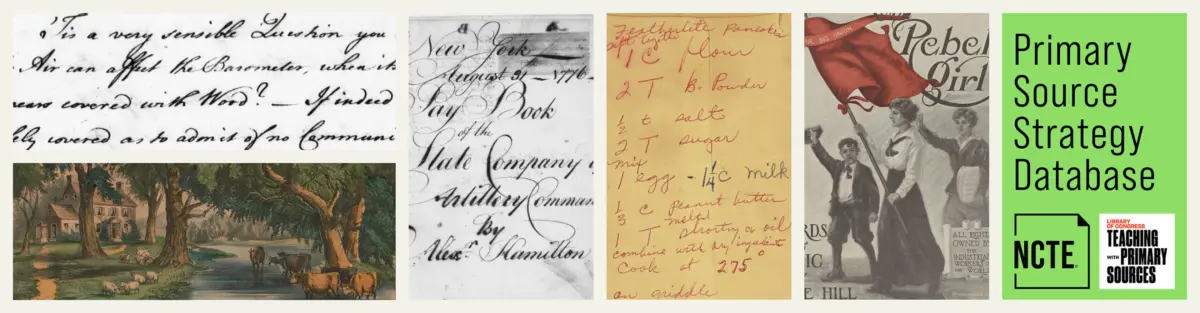
At the heart of this national effort lies a newly launched, comprehensive searchable database. This digital repository houses expert-crafted pedagogical strategies for over 150 distinct items drawn directly from the Library of Congress’s vast digitized archives. Developed by more than two dozen distinguished educators, literacy leaders, and English language arts (ELA) curriculum specialists, these resources bridge the gap between abstract historical inquiry and rigorous daily classroom instruction.
By categorizing content through intuitive metadata tags—such as picturebook, argument, government, law, and politics—the database allows teachers to seamlessly integrate authentic historical artifacts into existing curricula. More importantly, it provides concrete alignment with national educational frameworks, including NCTE Standards and Common Core State Standards (CCSS). This initiative does not merely offer lesson plans; it provides a comprehensive framework for teaching students how to unpack historical bias, evaluate rhetorical strategies, and amplify marginalized voices from the past.
Detailed Chronology: Unlocking the Past Through the Ipswich Petition
To understand the immense pedagogical value of the NCTE-Library of Congress database, one must examine the specific educational assets it champions. Among the standout entries in the repository is a deeply moving, historically significant artifact from the crucible of Puritan New England: a petition written during the height of the Salem Witch Trials.
The Winter of 1692–1693: Voices from Ipswich Jail
While mainstream historical accounts of the 17th-century witch trials in Massachusetts typically focus on the dramatic courtroom spectacles in Salem Village, the peripheral realities of those accused reveal a far more desperate human experience. A primary focal point of the NCTE database’s instructional strategies is a chilling petition drafted during the bitter winter months by ten women imprisoned in Ipswich, Massachusetts.
Having languished behind bars for many months without trial, these ten women faced a grim calculus. The physical conditions of the Ipswich jail were notoriously brutal, offering little protection against the sub-zero New England winters. Compounding this vulnerability, several of the incarcerated women were pregnant, others were severely ill, and all shared a collective, looming dread of perishing in confinement before they could even present a defense.
The Plea for Mercy and Bail
In an era when accused witches were routinely stripped of their agency and societal standing, these ten women executed an act of calculated legal and rhetorical resistance. They drafted a formal petition addressed to the local authorities, arguing passionately for their temporary release on bail.
The core of their argument was pragmatic and humane: they requested to be released to their families to survive the harsh winter months, promising to return willingly for trial when the court reconvened in the spring. Rather than passively accepting a death sentence by exposure and disease, these women leveraged the formal legal mechanisms available to them, offering a rare window into the self-advocacy of early American women under extreme duress.
Pedagogical Utility and Historical Recovery
Within the NCTE database, this specific document is celebrated for its unique instructional value. Mainstream historical curricula have historically marginalized the perspectives of women accused of witchcraft, frequently reducing them to passive footnotes in a larger cultural hysteria. This primary source disrupts that narrative by placing the actual words, fears, and legal arguments of the accused directly into the hands of students.
For educators teaching units on Puritan America, early American literature (such as Arthur Miller’s The Crucible or the writings of Anne Bradstreet), or the evolution of American jurisprudence, the Ipswich petition serves as an indispensable tool. It transforms history from a static sequence of dates into a visceral, human narrative of survival, legal rights, and gender dynamics in the colonial era.
Supporting Context & Metrics: The Mechanics of the TPS Consortium
The partnership between the NCTE and the Library of Congress is underpinned by a robust national infrastructure designed to scale inquiry-based learning. The Teaching with Primary Sources (TPS) Consortium is not merely a grant program; it is an active coalition of universities, museums, libraries, and educational associations dedicated to expanding access to the Library’s unrivaled digital collections—which currently boast tens of millions of cataloged items ranging from rare manuscripts and broadsides to early photographs and audio recordings.
Database Architecture and Searchability
Building a database of instructional strategies for over 150 complex historical artifacts requires meticulous organization. The NCTE’s curriculum design team addressed this by establishing a multidimensional tagging system. Educators can filter resources based on:
- Literary and Rhetorical Genres: Distinguishing between informational texts, personal narratives, legal petitions, and visual media.
- Thematic Units: Aligning artifacts with broad sociological themes such as civil disobedience, government power, human rights, and regional history.
- Pedagogical Approaches: Identifying whether a source is best utilized for close reading, argumentative writing, comparative analysis, or Socratic seminar discussions.
Standards Integration and Rigor
To ensure that teachers can justify the integration of primary sources within increasingly standardized educational environments, every entry in the database is explicitly mapped to national benchmarks.
- NCTE Standard 1: Students read a wide range of print and nonprint texts to build an understanding of texts, of themselves, and of the cultures of the United States and the world; to acquire new information; to respond to the needs and demands of society and the workplace; and for personal fulfillment.
- NCTE Standard 2: Students read a wide range of literature from many periods in many genres to build an understanding of the many dimensions (philosophical, ethical, aesthetic) of human experience.
- Common Core Standard L.9-10.3: Apply knowledge of language to understand how language functions in different contexts, to make effective choices for meaning or style, and to comprehend more fully when reading or listening.
By anchoring historical analysis to these rigorous literacy standards, the NCTE ensures that teachers do not have to choose between teaching history and teaching English language arts. Instead, the initiative demonstrates that historical documents are texts worthy of the same deep stylistic, rhetorical, and structural examination traditionally reserved for canonical literature.
Official Statements and Expert Insights
The collaboration between the NCTE and the Library of Congress reflects a broader philosophical shift in educational leadership toward artifact-driven, inquiry-based learning. While specific administrative statements regarding the latest database expansion highlight the urgency of media literacy and historical empathy, educational leaders across the ELA landscape have continually emphasized the transformative power of primary sources.
"When students read a petition written by a woman imprisoned for witchcraft in 1692, they are not just absorbing historical trivia; they are evaluating how language is deployed under extreme institutional pressure. They are analyzing tone, purpose, and audience in a high-stakes real-world context," noted one curriculum designer involved in the TPS Consortium.
Furthermore, educational theorists point out that primary sources naturally cultivate the exact competencies demanded by the 21st-century workplace:
- Uncertainty Navigation: Unlike textbook summaries that provide neat, pre-digested conclusions, primary sources are messy, incomplete, and often biased. Students must learn to cross-reference, evaluate provenance, and construct independent arguments based on fragmented evidence.
- Empathy Through Literacy: Encountering the raw voices of historical figures—whether they are enslaved individuals drafting freedom suits, pioneers writing diary entries during the westward expansion, or accused women begging for winter bail—humanizes the historical record in ways that secondary textbooks simply cannot replicate.
Future Outlook: The Evolution of Digital Literacy in ELA Classrooms
As the NCTE and the Library of Congress continue to expand their partnership within the TPS Consortium, the horizon for English language arts instruction is shifting toward deeper digital immersion and cross-curricular synthesis.
Scaling the Repository
The current milestone of 150+ searchable items is merely a foundation. Plans are already underway to expand the database by incorporating additional artifacts that reflect diverse geographic, cultural, and socioeconomic threads of American history. Future expansions will place particular emphasis on sourcing documents that represent historically underrepresented communities, ensuring that all students can find mirrors and windows within the historical record.
Professional Development and Teacher Empowerment
Access to a database is only as effective as the teacher’s ability to navigate it. To maximize the impact of this initiative, the NCTE is rolling out targeted professional development modules, webinars, and regional workshops. These training sessions are designed to coach educators on how to scaffold complex historical texts for diverse learners, including English language learners (ELLs) and students with varying reading proficiency levels.
The Road Ahead for Critical Inquiry
In an age where misinformation spreads rapidly across digital platforms, the pedagogical implications of the NCTE-Library of Congress partnership extend far beyond the history or literature classroom. By teaching students to interrogate historical documents—to ask Who wrote this? Who was the intended audience? What was left unsaid?—educators are instilling habits of mind that serve as a vital bulwark against modern media manipulation.
The integration of artifacts like the Ipswich witchcraft petition into everyday ELA curricula proves that the past is not a foreign country; it is a dynamic testing ground for the very linguistic, rhetorical, and ethical skills our students need to navigate the future. Through the continued dedication of the NCTE, the Library of Congress, and the nation’s literacy educators, the voices of the past will continue to shape the critical thinkers of tomorrow.

