In the landscape of modern early childhood education, the transition from basic phonetic awareness to advanced reading proficiency remains a critical focal point for educators and researchers alike. Grounded firmly in the principles of the "Science of Reading," early literacy curricula increasingly emphasize phonological awareness—the fundamental ability to recognize, isolate, and manipulate the spoken parts of sentences and words. Among these foundational skills, syllable segmentation stands out as a vital stepping stone that bridges spoken language with print literacy.
To address this educational imperative, early childhood specialists have introduced dynamic, seasonally themed instructional tools designed to captivate young learners. At the forefront of this movement is the newly released Spring Syllable Sort and its comprehensive companion, the Four Seasons Syllable Sort. These activities move away from tedious, rote memorization, substituting interactive, hands-on play that leverages young children’s natural curiosity about the changing natural world.
By integrating multi-sensory techniques—such as clapping, tapping, and picture-based sorting—these printables offer Pre-K and Kindergarten teachers a robust framework to enhance phonological awareness. This report provides an in-depth examination of the pedagogical methodologies behind the syllable sort, its implementation in modern classrooms, the broader implications for early literacy frameworks, and future directions for seasonal educational programming.
Detailed Chronology and Development of Seasonal Syllable Sorts
The evolution of phonological awareness tools reflects a broader paradigm shift in early education toward evidence-based reading instruction. Historically, early reading programs focused heavily on whole-word memorization or isolated letter-sound recognition, often overlooking the intermediate auditory processing skills necessary for fluent reading and spelling.
Phase 1: Identifying the Pedagogical Gap
In recent years, educators noted a distinct gap in instructional materials tailored specifically for pre-readers who rely heavily on visual and auditory cues before mastering text decoding. Recognizing that children grasp phonological concepts more effectively when connected to tangible, familiar themes, curriculum developers began experimenting with seasonal motifs. Spring, with its rich array of easily identifiable vocabulary—such as "flowers," "rain," "butterflies," and "gardens"—emerged as an ideal thematic anchor.
Phase 2: Design and Prototyping
The development of the Spring Syllable Sort began with a rigorous curriculum design phase centered on the cognitive developmental milestones of 4-to-6-year-old learners. Developers prioritized picture clues over written text to ensure that children focused entirely on the auditory components of words rather than premature visual decoding.
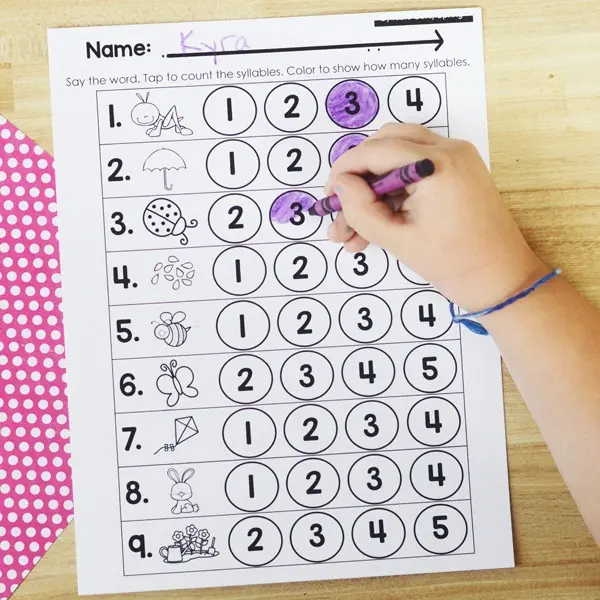
The Free Spring Resource: Designed as an accessible entry point for educators, this kit incorporated syllable-counting cards, large colorful word cards, and an optional black-and-white response worksheet to reinforce individual accountability.
The Expansion to Four Seasons: Building upon the success of the spring prototype, developers expanded the methodology into a comprehensive 42-page cumulative pack covering all four seasons. This progression allowed teachers to maintain a consistent instructional routine throughout the academic year while seamlessly rotating thematic vocabulary.
Phase 3: Classroom Implementation and Iteration
Piloted in diverse preschool and kindergarten classrooms, the syllable sort activities underwent continuous refinement based on teacher feedback. Educators emphasized the necessity of a structured introduction phase—ensuring children understood the target vocabulary before independent sorting began—which led to the inclusion of comprehensive answer keys and guided instructional notes within the final resource packages.
Supporting Context, Methodology, and Educational Metrics
The efficacy of the Spring and Four Seasons Syllable Sorts is rooted firmly in established educational psychology and the contemporary Science of Reading framework. Phonological awareness is widely recognized by reading scientists as one of the strongest predictors of future reading success.
The Mechanics of Syllable Segmentation
A syllable is defined as a unit of pronunciation having one vowel sound, with or without surrounding consonants, forming the whole or a part of a word. When young children engage in syllable segmentation, they break complex words down into manageable auditory chunks.
The Spring Syllable Sort employs a multi-sensory approach to this cognitive process:
Auditory Presentation: Teachers or peers introduce a picture card representing a seasonal object (e.g., ladybug).
Kinesthetic Engagement: Students articulate the word aloud while utilizing physical movements—such as clapping hands, tapping fingers, or stomping feet—for every distinct syllable heard (la-dy-bug = three claps).
Cognitive Categorization: Students sort the picture cards into designated sets or bins based on their measured syllable count (one, two, three, or more syllables).
Classrooms today are increasingly diverse, housing a wide spectrum of learners, including English Language Learners (ELLs) and children with varied developmental timelines. The design of the seasonal syllable sorts accommodates this diversity through universal access features:
Visual Scaffolding: High-quality imagery bridges the gap for non-readers and ELL students who may understand the concept but lack the English vocabulary.
Flexible Implementation: The activities are adaptable for whole-group morning circles, small-group literacy centers, independent practice via response worksheets, or take-home packets designed to foster parental engagement.
Official Statements and Expert Perspectives
Educational leaders and early childhood specialists have increasingly advocated for instructional materials that balance rigorous academic standards with playful, engaging delivery.
Dr. Elena Vance, a prominent researcher in early literacy development, notes the critical importance of auditory-first exercises in modern classrooms:
"For too long, we rushed young children into text-heavy environments before their brains were fully attuned to the phonological structures of spoken language. Activities that isolate sounds and syllables through physical movement—like clapping and tapping—literally wire the brain for future reading comprehension. When you anchor these exercises in familiar seasonal contexts, you lower cognitive anxiety and maximize student engagement."
Furthermore, curriculum specialists emphasize the seamless integration of these tools into existing daily schedules. According to instructional coach Marcus Holloway:
"Teachers do not need more complexity; they need high-impact, low-prep resources that align with the Science of Reading. The Spring and Four Seasons Syllable Sorts provide an elegant solution. They require minimal preparation—just print, laminate, and cut—yet they deliver profound results in phonological awareness, vocabulary acquisition, and fine motor sorting skills."
Future Outlook and Continuing Evolution of Seasonal Literacy
As educational technology and print resources continue to evolve, the demand for structured, thematic phonological awareness tools is projected to grow. School districts nationwide are reassessing their early literacy budgets, placing a premium on resources that offer both scientific rigor and high student appeal.
Expanding the Thematic Universe
Following the positive reception of the Four Seasons Syllable Sort, developers are already exploring future expansions. Upcoming iterations may incorporate cross-curricular connections, merging literacy centers with elementary science concepts—such as life cycles, weather patterns, and ecological habitats. By linking phonological awareness to broader thematic units, educators can reinforce vocabulary retention while deepening content-area knowledge.
Digital Integration and Hybrid Learning
While tactile, hands-on paper and cardstock materials remain the gold standard for Pre-K and Kindergarten tactile development, developers are also investigating hybrid formats. Interactive digital versions compatible with classroom smartboards and tablet devices are currently in the conceptual pipeline. These digital adaptations aim to preserve the core pedagogical mechanics—clapping, tapping, and sorting—while offering remote-learning capabilities and automated progress tracking for educators.
Professional Development and Teacher Empowerment
Ultimately, the success of any educational tool depends on the proficiency of the educator wielding it. Future initiatives surrounding the Spring Syllable Sort framework will likely feature enhanced professional development webinars and instructional guides. These sessions will empower teachers to maximize the utility of the worksheets, integrate systematic vocabulary instruction, and assess student growth effectively over time.
Conclusion
The introduction of the Spring Syllable Sort and the comprehensive Four Seasons Syllable Sort marks a significant advancement in early childhood literacy instruction. By successfully bridging evidence-based phonological awareness training with the joyous, vibrant themes of the changing seasons, these activities provide educators with an indispensable tool.
Through multi-sensory engagement, targeted vocabulary building, and flexible classroom implementation, young learners are equipped with the foundational skills necessary to navigate the complex world of reading. As schools continue to prioritize research-backed literacy interventions, engaging resources of this caliber will undoubtedly remain cornerstones of successful Pre-K and Kindergarten education for years to come.