The holiday shopping paradigm has experienced a fundamental transformation. Gone are the days when consumers waited in sub-freezing temperatures outside brick-and-mortar storefronts on the Friday following Thanksgiving to secure doorbuster deals. Today, the retail landscape has pivoted heavily toward an online-first model, with major retailers initiating their promotional rollouts as early as mid-November. This strategic shift is designed to mitigate supply chain bottlenecks, circumvent physical crowd congestion, and extend the holiday shopping window.
For parents, educators, and gift-givers, this prolonged sales cycle offers an unprecedented opportunity to secure high-value educational items without the traditional frantic rush. Among the most sought-after categories experiencing deep mid-November discounts are Science, Technology, Engineering, and Math (STEM) toys and learning robotics. These aren’t merely playthings designed to pass the time; they are sophisticated educational tools engineered to foster critical thinking, problem-solving, spatial awareness, and foundational coding skills.
This comprehensive report examines the shift in Black Friday retail strategies, analyzes the top 15 must-watch STEM toys and learning kits for the holiday season, and provides an authoritative breakdown of the best educational investments available during this year’s promotional window.
Detailed Chronology of the Modern Holiday Shopping Shift
To understand why Black Friday looks vastly different today than it did a decade ago, one must examine the chronological evolution of retail holiday planning.
The Traditional Era (Pre-2010s)
Historically, the holiday shopping season operated on a strict calendar. Thanksgiving served as the family-centric prelude, followed immediately by Black Friday—the single day when brick-and-mortar retailers officially tipped into profitability ("in the black"). Cyber Monday was later introduced as a digital-only afterthought for online retailers.
The Hybrid Transition (2010–2019)
As e-commerce giants gained market share, the timeline began to compress. Retailers started bleeding Black Friday deals into Thanksgiving evening, and eventually, into the entire month of November. Consumers adjusted their habits, prioritizing online price-matching and digital inventory checks over physical lines.
The Modern Online-First Paradigm (2020–Present)
Accelerated by global shifts toward remote operations and digital commerce, retailers permanently decentralized the holiday shopping calendar. Mid-November has now become the de facto launchpad for the season’s deepest discounts. Recognizing that modern consumers prefer the convenience and safety of online-only checkouts, merchants now concentrate their promotional firepower, inventory allocations, and exclusive bundles into digital storefronts weeks before Thanksgiving officially arrives.
For STEM toy manufacturers and educational brands, this extended runway is vital. Because educational kits often require careful consideration by parents—who want to match a child’s age, skill level, and developmental milestones with the right product—a rushed buying decision is rarely ideal. The mid-November sales kickoff gives families ample time to research, compare reviews, and capitalize on deep online discounts.
Supporting Context & Metrics: The Rise of Educational Play
The surging demand for STEM toys is not a passing fad; it is backed by shifting educational priorities and a broader cultural recognition of the skills required for the 21st-century workforce.
The Shift Away from Passive Screen Time: Parents are increasingly seeking active engagement alternatives. While tablets and smartphones dominate entertainment, products that merge physical manipulation with digital programming (phygital play) bridge the gap between passive consumption and active creation.
Early Childhood Coding: Studies in developmental psychology indicate that children as young as four can grasp foundational algorithmic logic if presented through tactile, gamified formats.
Bridging the Gender Gap: Specialized chemistry and engineering kits targeted toward young girls have seen a massive surge in popularity, successfully challenging historical stereotypes regarding who belongs in laboratory and engineering environments.
Market analysts note that educational toy sales consistently outperform traditional toy segments during the fourth-quarter holiday season, driven largely by parents and grandparents who view these purchases as investments in a child’s academic future rather than fleeting seasonal novelties.
The Top 15 STEM Toys and Learning Kits to Watch Out For
As retailers unleash their early-bird promotions, savvy shoppers should keep a close eye on the market leaders. Below is an authoritative breakdown of the top 15 STEM toys and learning kits featured across top educational guides this holiday season.
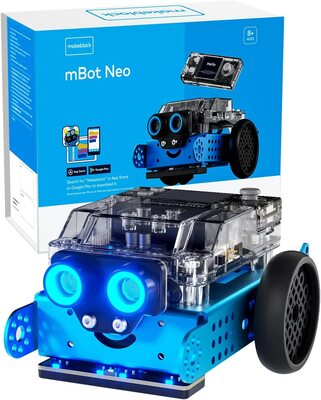
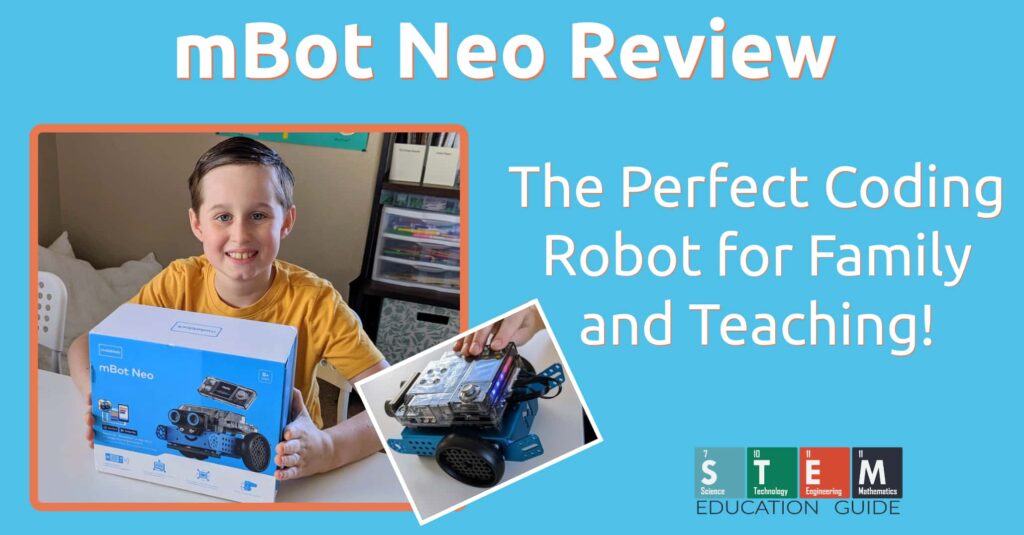
Overview: Built from sturdy aluminum and thick plastics, the mBot Neo is a robust DIY coding robot designed to withstand enthusiastic handling. Children assemble the robot piece by piece and then use an intuitive companion app to program its movements, lights, sounds, and interactive routines.
Why It’s a Top Pick: If direct coding isn’t immediately appealing to younger children, the Neo features a robust library of preprogrammed activities accessible via a handheld controller. It balances durability with deep educational potential, making it an elite choice for young robotics enthusiasts.
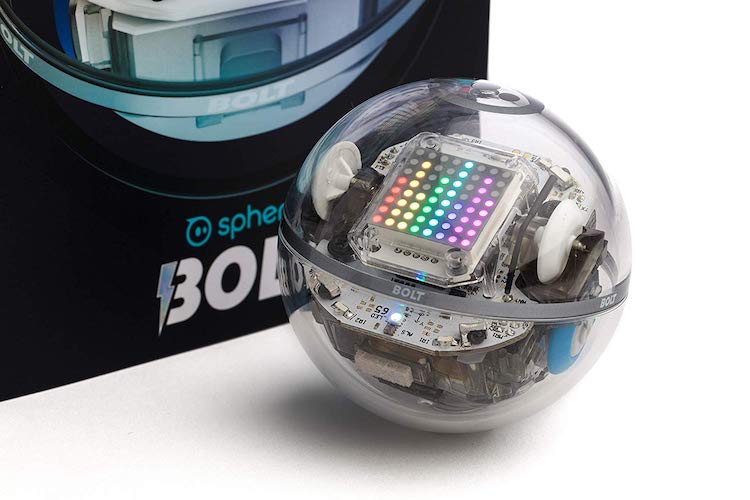
2. Sphero BOLT
Category: Programmable App-Enabled Robot Ball
Overview: The Sphero Bolt is a shock-proof, waterproof, highly durable robotic sphere that brings abstract coding concepts into the physical world. Users write code on their devices, and the BOLT executes those commands through precise rolling, lighting up, and directional tracking.
Why It’s a Top Pick: With a nearly endless library of classroom and home activities—ranging from beginner grid-based movements to advanced JavaScript programming for older kids—the BOLT scales effortlessly with a child’s growing cognitive abilities.
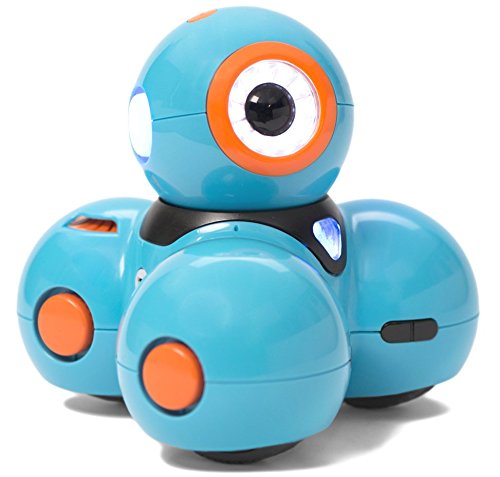
3. Wonder Workshop Dash
Category: Interactive Robotics for Ages 6+
Overview: Dash is an agile, expressive, and speedy robot designed specifically for children ages six and up. Equipped with a built-in microphone for voice playback and interactive capabilities that allow it to communicate with other Dash units, it turns any living room into an exploratory playground.
Why It’s a Top Pick: Parents intimidated by their own lack of coding knowledge will appreciate the in-app guided challenges that step learners through progressive skill levels. Look out for holiday bundles, such as the STEAM Creativity Bundle, which adds value-packed accessories.
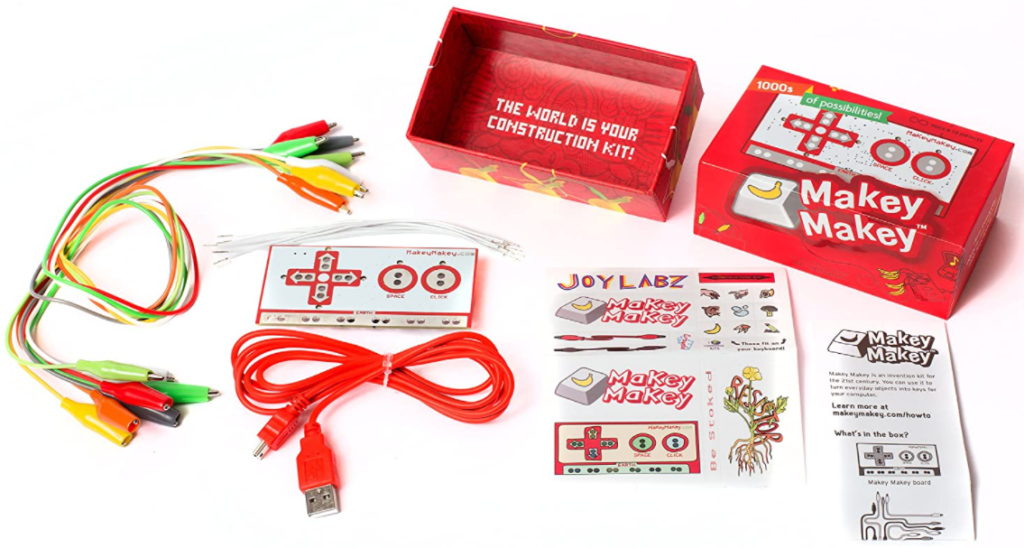
4. Makey Makey
Category: Invention & Circuitry Kit
Overview: Makey Makey transforms everyday, conductive objects—like bananas, Play-Doh, or even human hands—into computer keys and game controllers. All you need is the circuit board, a USB cable, and alligator clips.
Why It’s a Top Pick: Celebrated for its radical simplicity, this kit introduces kids to engineering and circuitry without requiring complex wiring or soldering. It is an unmatched catalyst for out-of-the-box creative invention.
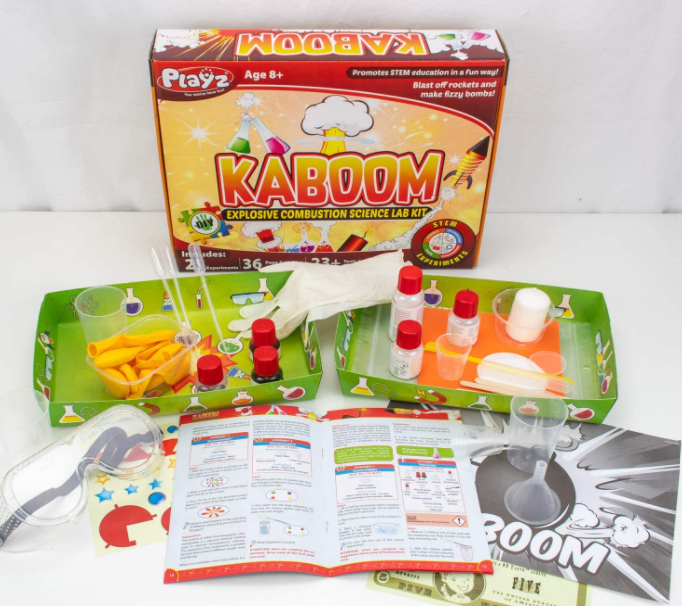
5. Kaboom Explosive Science Lab Kit
Category: Chemistry & Combustion Science
Overview: Transforming classic scientific principles into high-energy fun, this kit features over 25 explosive experiments. Children can launch backyard rockets, build fireproof balloons, and observe chemical transformations safely.
Why It’s a Top Pick: Beyond the sheer entertainment value of things going "boom," parents praise the kit for its rigorous educational explanations. It successfully bridges the gap between fun pyrotechnics and foundational chemical theory.
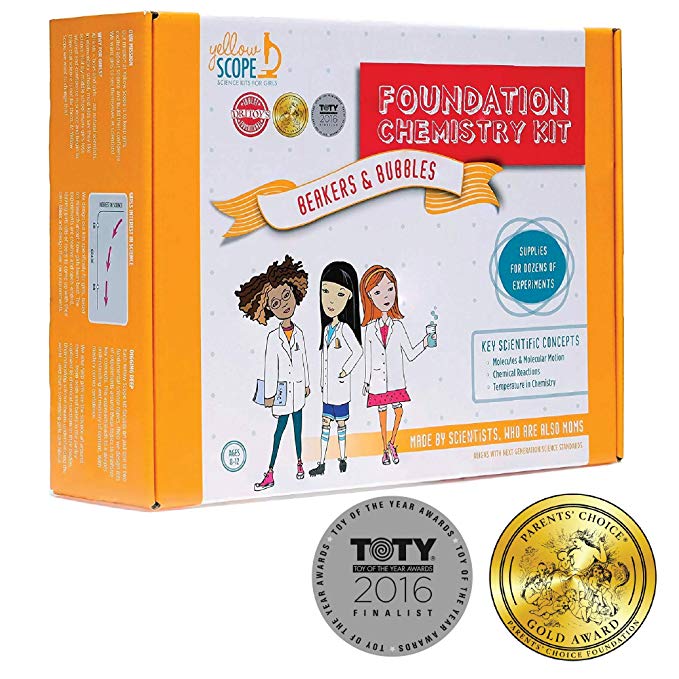
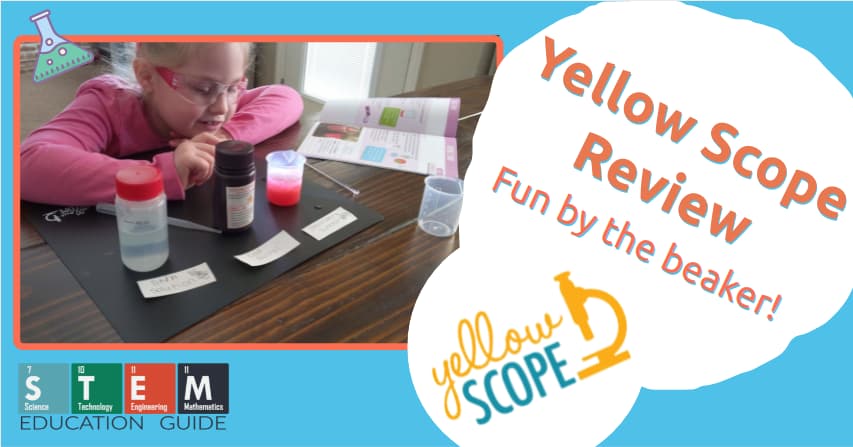
6. YELLOW SCOPE Foundation Chemistry Kit (Beakers & Bubbles)
Overview: Designed deliberately to engage girls in rigorous scientific inquiry, Yellow Scope has established a gold standard for inclusive STEM toys. The Beakers & Bubbles kit explores the fascinating chemistry behind everyday cosmetics, body care, and hair products.
Why It’s a Top Pick: It shines a spotlight on non-traditional STEM career paths, such as cosmetic chemistry, proving that laboratory science is universally accessible, creative, and profoundly engaging.
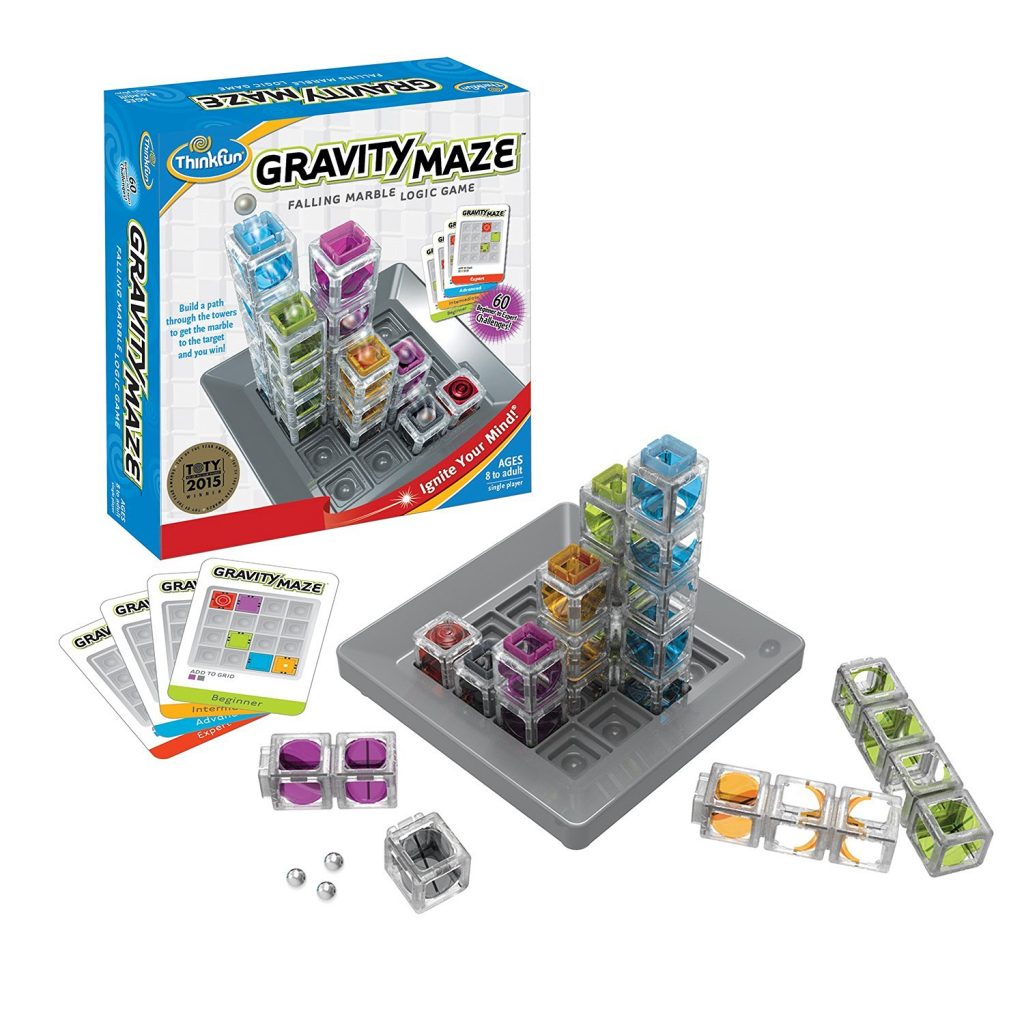
7. ThinkFun Gravity Maze Marble Run
Category: Logic Game & Spatial Reasoning
Overview: Part logic puzzle, part traditional marble run, this game challenges players to use challenge cards to route a marble through a series of towers and transparent grids by relying strictly on gravity and structural planning.
Why It’s a Top Pick: It offers limitless setup combinations, ensuring high replay value while silently training children in spatial reasoning, engineering physics, and sequential logic.
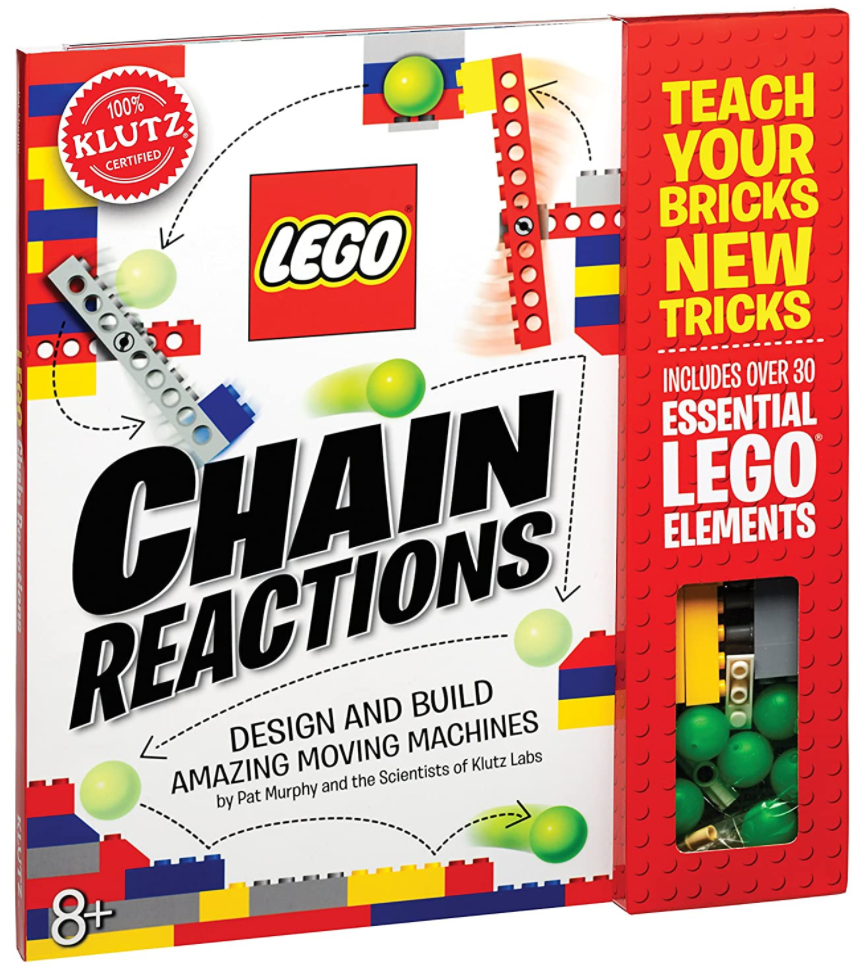
8. LEGO Chain Reactions
Category: Physics & Engineering Building Kit
Overview: Published by Klutz in partnership with LEGO, this kit provides specialized components and instructions to help kids build functional, moving contraptions, ramps, and domino-style chain reactions.
Why It’s a Top Pick: Watching a physical contraption trigger a chain reaction instills immense confidence in young engineers, proving that their mechanical designs can create real-world, dynamic effects.
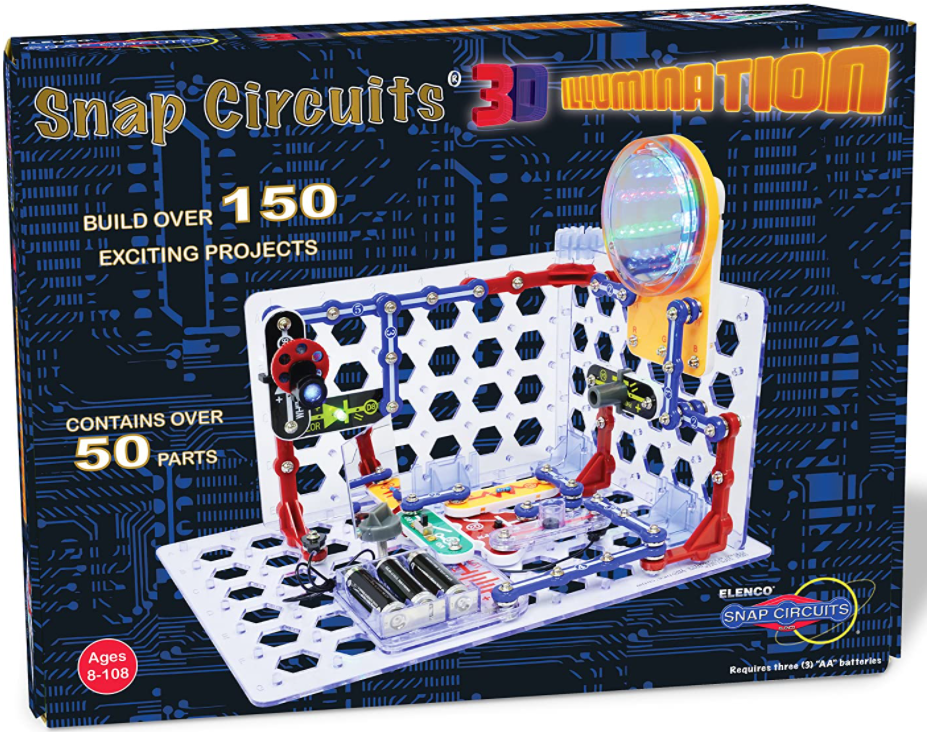
9. Snap Circuits 3D Illumination Electronics Exploration Kit
Category: Electrical Engineering & Circuitry
Overview: Snap Circuits demystifies the complex world of electrical currents. Using color-coded, snap-together plastic blocks, children can construct working radios, alarms, and 3D illuminated light displays.
Why It’s a Top Pick: The tactile, snap-fit design eliminates frustration while teaching children how electrical loops and switches operate in real time. It is a perennial favorite among homeschooling parents and classroom teachers alike.
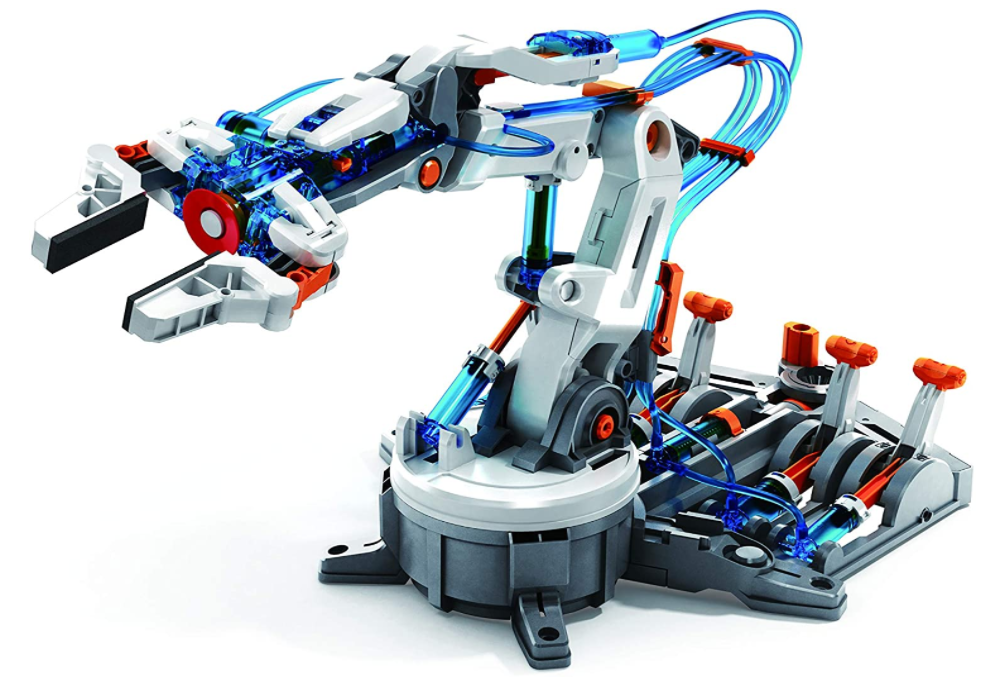
Category: Mechanical Engineering & Renewable Energy
Overview: Powered entirely by water pressure rather than batteries or motors, this hydraulic robot arm features 270-degree rotation, gripping mechanisms, and articulating joints.
Why It’s a Top Pick: It introduces children to the power of fluid mechanics and green energy, encouraging tactile exploration and fine motor control as they assemble the intricate hydraulic plungers.
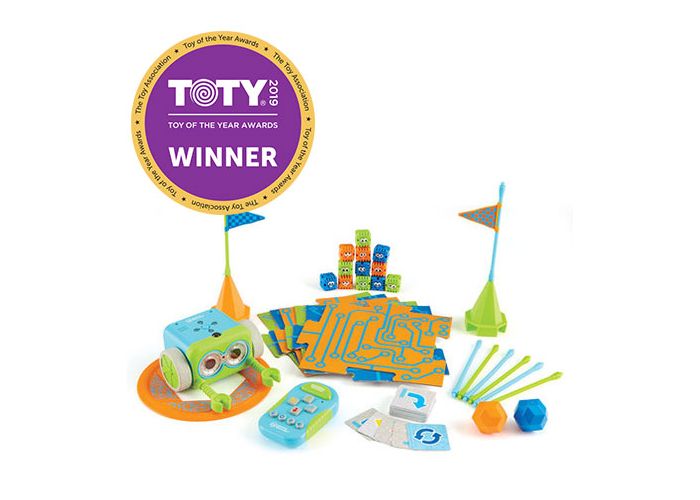
11. Botley The Coding Robot Activity Set
Category: Screen-Free Early Coding
Overview: Botley is an exceptional entry point for younger children because it requires zero screen time. Using a dedicated remote programmer, kids input directional sequences to guide Botley through obstacle courses, loops, and mazes.
Why It’s a Top Pick: For parents seeking to curb excessive tablet and computer usage while still teaching algorithmic thinking, Botley provides a tactile, highly approachable solution.
12. Elenco TEACH TECH Mech-5 Robot Kit
Category: Advanced Mechanical Coding
Overview: Stepping beyond simple remote controls, the Mech-5 is a programmable mechanical robot. Children physically plug coding tiles onto a coding wheel to dictate whether the robot kicks, lifts, throws, or spins.
Why It’s a Top Pick: It teaches binary-style logical programming through purely mechanical means, making abstract computational logic tangible and deeply engaging for older kids.
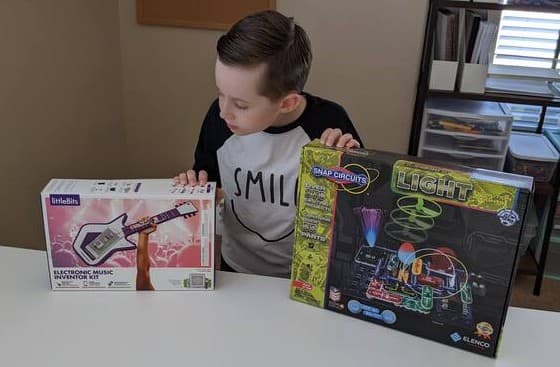
13. littleBits Electronic Music Inventor Kit
Category: Creative Technology & Sound Engineering
Overview: Combining audio engineering with modular electronics, this kit allows kids to build and code their own working musical instruments—such as electronic guitars—using magnetic, snap-together bits.
Why It’s a Top Pick: It bridges the arts and sciences (STEAM), encouraging collaborative, group-based play and demonstrating how technology intersects with creative expression.
14. Kid K’NEX (Build-A-Bunch Set)
Category: Toddler Engineering & Fine Motor Skills
Overview: Specifically designed for younger builders, Kid K’NEX features larger, softer, and more colorful plastic pieces that eliminate choking hazards while still encouraging structural connection and imaginative design.
Why It’s a Top Pick: It acts as an early stepping stone into engineering, helping toddlers develop hand-eye coordination as they build animals, vehicles, and abstract structures.
Category: Modular Physics & Robotic Building Systems
Overview: The GraviTrax system relies on a unique hexagonal grid and magnetic impulse physics to build massive, electronics-free marble tracks. Meanwhile, the LEGO Boost Toolbox bridges traditional brick-building with motorized, app-controlled robotics across five distinct builds.
Why It’s a Top Pick: Both systems represent the absolute pinnacle of open-ended construction toys, offering near-infinite replayability and deep structural challenges for children aged 7 through 12.
Official Statements and Industry Insights
Retail analysts and educational toy executives have noted a distinct behavioral shift in how families approach holiday budgeting. According to industry tracking data, parents are increasingly willing to pay a premium for toys that feature educational longevity over disposable plastic entertainment.
"The modern consumer is looking for intentional play," notes a leading retail logistics analyst specializing in holiday e-commerce trends. "When parents log online in mid-November to look for Black Friday discounts, they aren’t just searching for the lowest price point—they are searching for products that will keep their children engaged past January. STEM toys hit that sweet spot of high perceived value and long-term utility."
Furthermore, toy manufacturers have leaned into the online-only shift by providing rich digital ecosystems—such as online lesson plans, parent-child activity guides, and troubleshooting forums—which add substantial value to hardware purchases made during promotional windows.
Future Outlook: What to Expect for the Remainder of the Holiday Season
As the holiday shopping season accelerates from mid-November through Cyber Monday and into December, consumers should anticipate several key market behaviors:
Dynamic Pricing Waves: Because online retailers utilize automated pricing algorithms, discounts on high-demand STEM items like the Sphero BOLT, mBot Neo, and Snap Circuits may fluctuate rapidly. Setting price alerts and monitoring availability early is critical.
Bundle Exclusivity: Manufacturers will continue pushing value-added bundles (such as the Wonder Workshop STEAM Creativity Bundle) exclusively through digital channels to differentiate their offerings from generic competitors.
Inventory Pressures on Niche Science Kits: While mass-market toys are heavily stocked, specialized science kits—particularly those targeted toward girls, such as Yellow Scope, or advanced mechanical systems like Elenco—tend to experience localized stock depletion as the peak of Cyber Week approaches.
Final Recommendation for Shoppers
If you find a deeply discounted, highly rated STEM kit that matches your child’s developmental stage during the mid-November promotional window, secure it. Waiting for a potentially deeper markdown closer to Christmas often runs the risk of encountering out-of-stock notices and delayed shipping times. By leveraging early Black Friday online deals, you secure not only the best financial savings but also peace of mind, ensuring that the gift of learning arrives safely and on schedule.