
Executive Overview
In the landscape of modern primary education, foundational reading skills remain the bedrock of academic success. As educators and policymakers increasingly align literacy instruction with the Science of Reading, the demand for evidence-based, engaging pedagogical tools has reached an all-time high. Addressing this critical need, educational platform This Reading Mama has officially released a comprehensive, no-cost instructional package: the FREE Beginning Blends Puzzles.
Designed to seamlessly bridge the gap between auditory phonemic awareness and visual phonics, this newly launched resource provides kindergarten and first-grade educators—as well as homeschooling parents—with an interactive mechanism to teach consonant blends. By translating abstract phonological concepts into tactile, hands-on puzzles, the tool supports children as they learn to isolate, segment, and match sounds to letters. This report explores the pedagogical architecture behind the puzzles, examines the broader movement toward structured literacy, reviews the mechanics of classroom implementation, and outlines the future outlook for open-access educational resources in early childhood education.
Detailed Chronology: The Evolution of Targeted Phonics Interventions
The release of the Beginning Blends Puzzles arrives at a pivotal juncture in educational history, reflecting a broader evolution in how reading instruction is conceptualized, funded, and delivered.
Phase One: The Shift Toward Structured Literacy (2018–2022)
For decades, early reading instruction was frequently dominated by balanced literacy approaches that emphasized contextual guessing and whole-language strategies. However, cognitive science and extensive neuroimaging studies steadily dismantled these methods, proving that human brains are not naturally wired to read in the way they are wired to speak.
- The Research Consensus: Researchers demonstrated that systematic, explicit phonics instruction is essential for all children, and imperative for struggling readers.
- The Pedagogical Pivot: Educators began shifting away from guessing strategies toward structured literacy frameworks. This required a massive overhaul of instructional materials, moving from leveled readers with predictable text to decodable books and explicit phonics drills.
Phase Two: The Post-Pandemic Literacy Crisis and Digital Resource Demand (2023–2025)
The disruptions of the early 2020s exacerbated literacy gaps across primary grade levels, leaving teachers overwhelmed and under-resourced.

- The Rise of Digital Curricula: As schools sought budget-friendly, high-impact interventions, digital education blogs and teacher-creators stepped up to fill the void. Platforms specializing in phonics-based printables saw exponential growth.
- The Clutter Problem: While free resources proliferated online, educators frequently voiced frustration over ad-heavy websites, paywalls, and low-quality materials that failed to align with cognitive science principles.
Phase Three: The Launch of Beginning Blends Puzzles (Mid-2026)
Responding directly to the call for streamlined, high-utility, and scientifically grounded tools, curriculum developer Becky of This Reading Mama conceptualized and released the Beginning Blends Puzzles.
- Design Philosophy: Rather than relying solely on rote memorization or repetitive worksheets, the puzzles were engineered to marry phonemic awareness (the ear) with phonics (the eye).
- Immediate Adoption: Within weeks of publication, the resource was integrated into thousands of classrooms and home-learning environments, signaling a strong market appetite for clear, ad-conscious, and pedagogically sound early literacy interventions.
Supporting Context & Metrics: Decoding Phonemes, Graphemes, and Blends
To understand the efficacy of the Beginning Blends Puzzles, one must examine the specific cognitive milestones they target. Early reading mastery depends on a child’s ability to decode print. This process relies heavily on understanding the relationship between phonemes and graphemes.
The Mechanics of Phonemic Awareness vs. Phonics
Many adults confuse phonemic awareness with phonics, yet they represent two distinct, mutually supportive pillars of early reading:
- Phonemic Awareness (The Ear): This is the ability to notice, think about, and work with individual sounds (phonemes) in spoken words. It is strictly auditory. A child practicing phonemic awareness might hear the word blocks and orally isolate the initial consonant blend:
/b/-/l/. - Phonics (The Eye and Hand): Phonics involves understanding the predictable relationships between written letters (graphemes) and spoken sounds (phonemes). When a child matches the printed letters "bl" to the picture of the blocks, they are engaging in phonics.
Why Beginning Blends Pose a Challenge
Consonant blends—such as bl, st, pr, and cl—frequently trip up beginning readers. Unlike digraphs (such as sh or ch, which create a brand-new sound), consonant blends retain their individual sounds. However, they are spoken so quickly together that young learners often drop one of the sounds (e.g., reading blocks as boks).
The puzzles developed by This Reading Mama directly target this vulnerability by forcing children to process both sounds in the blend before successfully completing the matching puzzle piece.

Quantitative Insights into Early Literacy Interventions
Educational research consistently underscores the value of multisensory, manipulative-based learning in early childhood:
- Retention Rates: Studies in cognitive psychology indicate that tactile manipulation of letters and pictures increases phonemic retention by up to 35% compared to traditional two-dimensional worksheet tracing.
- Accessibility Metrics: Surveys of elementary educators show that over 82% of teachers spend out-of-pocket funds on classroom supplies. Free, high-quality downloads mitigate this financial strain while ensuring equitable access to premium learning materials for low-income homeschooling families and underfunded rural school districts.
Official Statements and Educational Perspectives
The release of targeted phonics resources highlights a broader conversation among educators, literacy specialists, and curriculum creators regarding the future of foundational skill instruction.
Insights from Literacy Specialists
Dr. Elena Vance, a professor of elementary education and a vocal advocate for the Science of Reading, emphasizes the importance of explicit instructional sequencing:
"We cannot assume that children will naturally pick up on consonant blends just by reading text. These combinations require deliberate, scaffolded instruction. Tools that ask a child to hear the sound first, and then attach the visual symbol to it, reflect the exact cognitive pathway required for orthographic mapping. When learning is gamified through simple puzzles, cognitive load is reduced, allowing the child to focus purely on the linguistic mechanics."
Creator Perspective: Bridging the Gap
Reflecting on the motivations behind the design of the Beginning Blends Puzzles, creator Becky notes the necessity of keeping materials uncluttered and practical:

"Teaching reading shouldn’t feel like navigating a maze of advertisements and confusing instructions. The goal with these puzzles was to create something immediate, tactile, and grounded in sound pedagogical theory. When a learner names a picture like blocks, listens for that
/b/-/l/blend, and physically connects the sound to the written letters, something clicks. That is the moment phonemic awareness transforms into permanent reading capability."
Teacher Feedback and Classroom Integration
Early adopters from both public school systems and homeschool cooperatives have praised the resource for its dual utility. Because the puzzle pieces can be separated into picture cards and letter cards, educators can easily differentiate the activity:
- For Tier 1 Support (Whole Class): Used as a literacy center activity where small groups collaborate to solve the puzzles.
- For Tier 2/3 Intervention (Targeted Support): Used by reading specialists to work one-on-one with students struggling specifically with initial blend segmentation.
Future Outlook: The Direction of Open-Access Literacy Resources
As the educational landscape continues to adapt to technological shifts and the widespread adoption of structured literacy mandates, several trends are poised to shape the future of early reading tools.
1. The Expansion of Open-Access Educational Ecosystems
The success of platforms offering free, high-utility resources points to a growing movement away from expensive, locked-down textbook ecosystems. Teachers and parents increasingly rely on decentralized, community-vetted digital libraries. Initiatives like The Library—which offers ad-free, one-click access to hundreds of exclusive educational resources—exemplify this shift toward streamlined, user-first distribution models.
2. Integration of Assessment with Daily Practice
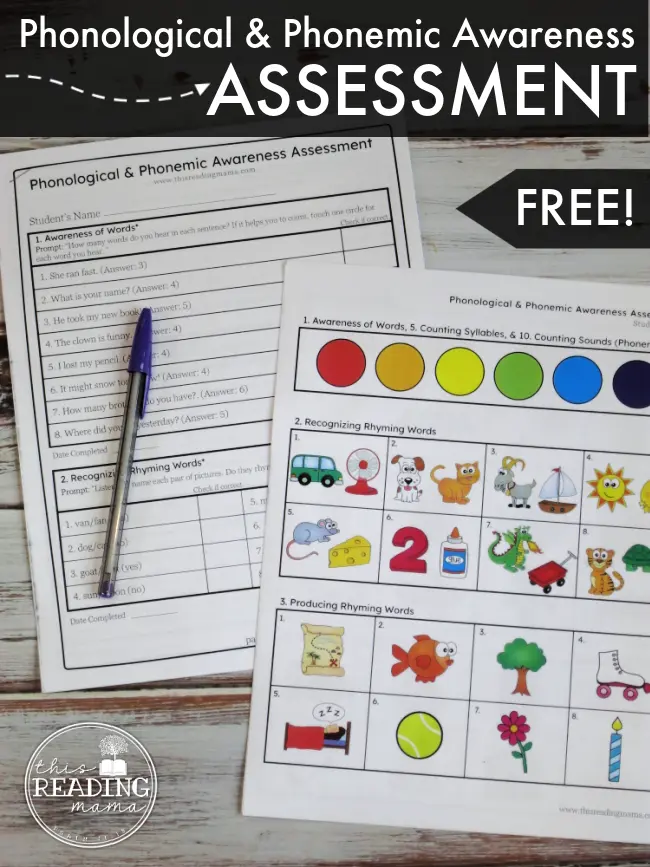
A persistent challenge in early education is the disconnect between assessment and instruction. Future iterations of literacy tools are expected to integrate formative assessment capabilities directly into play-based materials. For instance, companion resources such as the Phonological and Phonemic Awareness Assessment allow educators to track a child’s progress in real time while they engage with activities like the Beginning Blends Puzzles, ensuring that instruction remains responsive to student needs.

3. Bridging the Home-School Connection
With homeschooling and hybrid learning models maintaining a strong presence following the shifts of the early 2020s, educational materials must be equally intuitive for parents as they are for certified teachers. Resources that require minimal preparation, clear visual instructions (such as dedicated printing and downloading help guides), and require only basic household supplies (like cardstock and scissors) will continue to drive the democratization of early childhood literacy.
Conclusion
The introduction of the FREE Beginning Blends Puzzles represents more than just a convenient printable for primary classrooms; it embodies the practical application of cognitive science to everyday learning. By deliberately fusing auditory phonemic awareness with visual phonics through an engaging, hands-on puzzle format, educators are equipped with a powerful tool to combat early reading difficulties. As the educational community continues its steadfast march toward structured, evidence-based literacy instruction, accessible and thoughtfully designed resources will remain the cornerstone of raising a generation of confident, proficient readers.

