
Executive Overview
In an era defined by rapid technological shifts, digital distractions, and increasingly complex academic demands, educators worldwide are facing a silent crisis: a deficit in executive functioning skills among children and teenagers. Essential cognitive processes—such as planning, working memory, impulse control, flexible thinking, and task initiation—form the invisible scaffolding of human achievement. Without them, even the most academically gifted students can struggle to organize their assignments, regulate their emotions, or see a long-term project through to completion.
While traditional pedagogical models often treat executive functioning as an innate trait or leave its development entirely to chance, innovative classrooms are adopting creative, low-barriers-to-entry strategies to build these vital cognitive muscles. Among the most surprising and effective tools gaining traction in modern education is the intentional use of daily motivational quotes. Far from being mere decorations for bulletin boards or fleeting morning announcements, strategically selected quotations are being repurposed by educators as powerful cognitive catalysts.
By pairing thoughtful phrases with guided discussion questions, teachers are transforming daily bell-ringer routines into dynamic exercises in metacognition. This article explores the rising trend of leveraging quotes to build executive functioning skills, examining the underlying cognitive science, practical classroom applications, and expert insights shaping the future of student success.
Detailed Chronology: The Evolution of Metacognitive Bell-Ringers
The integration of reflective writing and discussion into the school day did not happen overnight. To understand how modern educators arrived at using targeted quotes for executive functioning, it is helpful to trace the evolution of classroom bell-ringers and cognitive strategy instruction.
Phase 1: The Era of Rote Bell-Ringers (Late 20th Century)
Historically, "bell-ringers" or "do-now" activities were designed primarily for classroom management. When students walked into a classroom, teachers would project a math problem, a grammar correction, or a historical trivia question on the chalkboard. The objective was simple: keep students quiet, seated, and academically engaged the moment the bell rang. While effective for transition control, these early activities rarely targeted the deeper emotional or cognitive architectures required for independent learning.
Phase 2: The Mindfulness and SEL Movement (Early 2010s)
As educational research began prioritizing Social-Emotional Learning (SEL), educators recognized that cognitive readiness depended heavily on emotional regulation. Classrooms began introducing mindfulness exercises, deep-breathing routines, and emotional check-ins at the start of periods. However, teachers often struggled to bridge the gap between abstract emotional well-being and concrete academic execution—such as how to organize a binder or initiate a daunting writing assignment.
Phase 3: The Convergence of Quotes and Executive Functioning (Present Day)
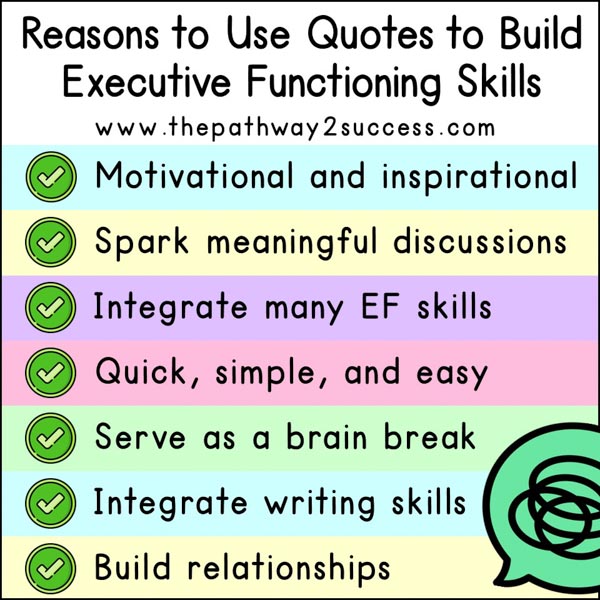
Recognizing the limitations of disconnected SEL initiatives, innovative educators began experimenting with targeted quotes designed to merge emotional intelligence with hard cognitive strategies. Rather than using generic inspirational sayings like "Dream big," modern educators are deploying precise, skill-oriented quotations that map directly onto psychological concepts like task initiation, cognitive flexibility, and self-control. This modern framework turns a simple five-minute morning reading into a scaffolded cognitive workout, giving students both the language and the framework to understand their own developing brains.
Supporting Context & Metrics: Why Executive Functioning Matters
Executive functioning refers to a family of top-down mental processes managed primarily by the prefrontal cortex of the brain. Because the prefrontal cortex is the last region of the human brain to fully mature—developing well into a person’s mid-twenties—children and adolescents are naturally prone to deficits in planning, time management, and impulse control.
The Core Pillars of Executive Functioning
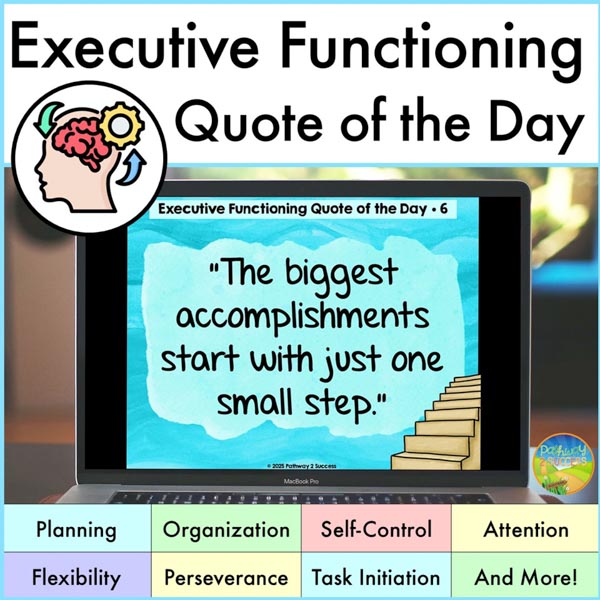
To understand why quotes are such an effective vehicle for these skills, one must look at the specific cognitive domains educators are targeting:
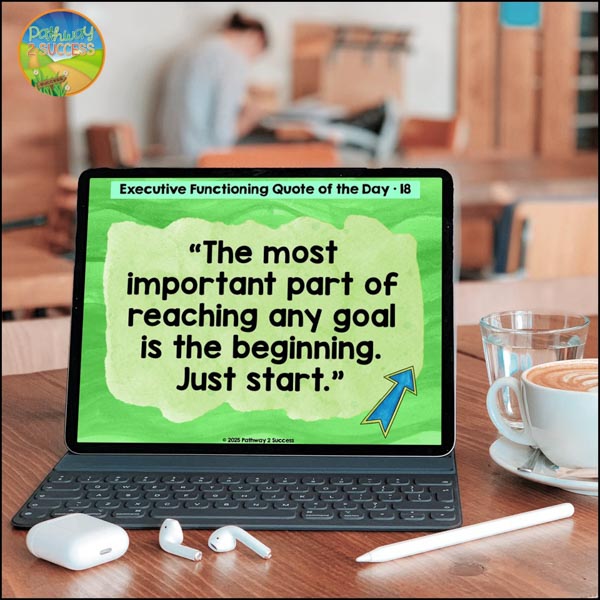
- Task Initiation: The ability to independently begin a task without procrastination. As the metaphorical quote states, "The most important part of reaching any goal is the beginning. Just start."
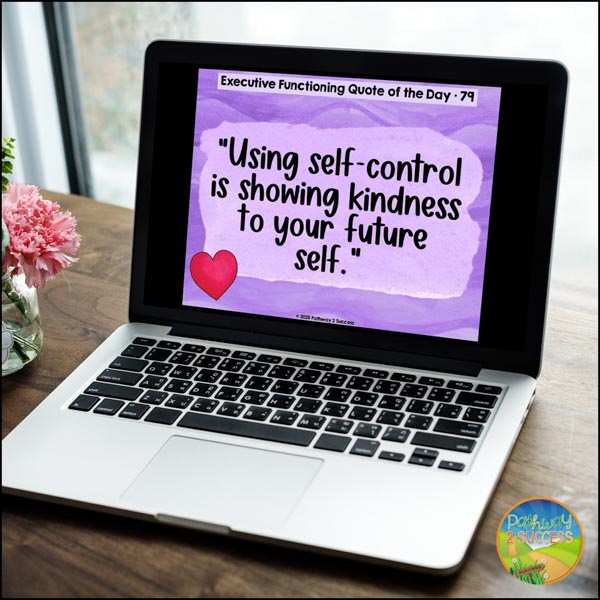
- Self-Control (Inhibitory Control): The capacity to stop, think, and resist impulsive behaviors in favor of long-term rewards. As the saying goes, "Using self-control is showing kindness to your future self."
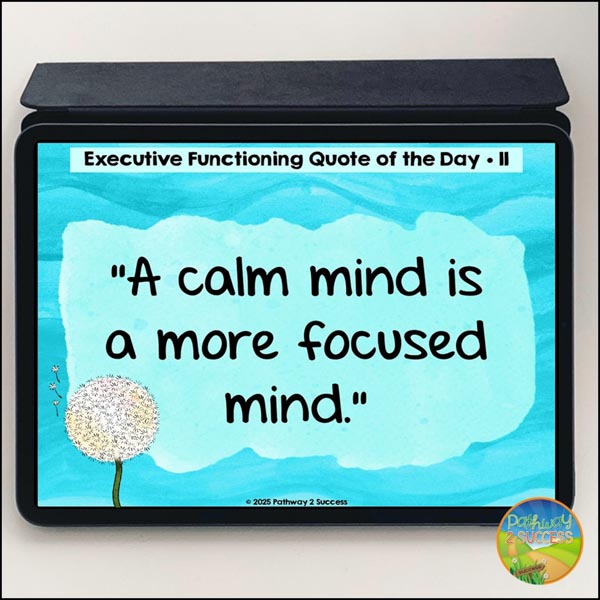
- Attention and Focus: The ability to screen out distractions and maintain mental stamina. Cognitive researchers emphasize that "A calm mind is a more focused mind."
- Perseverance (Working Through Challenges): The grit to sustain effort despite setbacks or frustration. "Perseverance isn’t always easy, but it’s simple. Just keep going."
- Cognitive Flexibility: The mental agility to switch perspectives, adapt to unexpected changes, and brainstorm multiple solutions to a single problem. "Every problem has a solution. Most have many."
The Neurological Impact of Metacognition
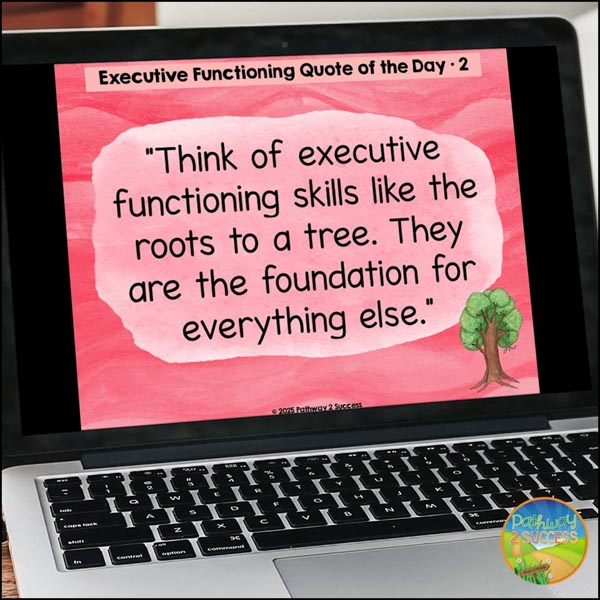
Educational psychologists emphasize that when students discuss why a quote matters—and how it applies to their personal lives—they are engaging in metacognition: thinking about thinking. Neuroimaging studies show that metacognitive practices strengthen neural pathways in the prefrontal cortex. By consistently linking abstract concepts (like patience or organization) to tangible daily actions, students build the mental "roots" necessary to anchor their academic and personal lives.
Practical Classroom Implementation: How Educators Use Quotes
Integrating quotes to build executive functioning skills does not require overhauling an existing curriculum. Instead, educators are weaving these micro-lessons into the first five to ten minutes of class. Here is a step-by-step breakdown of how effective teachers implement this strategy:
1. Strategic Selection over Random Inspiration
A quote chosen for executive functioning development must do more than sound pleasant; it must provoke deep critical thinking. Teachers select quotations that directly address a specific cognitive bottleneck common in students, such as the paralyzing fear of starting a difficult essay or the frustration of encountering an unexpected roadblock in mathematics.
2. The Bell-Ringer Routine
Upon entering the classroom, students encounter the quote of the day displayed prominently on a smartboard, whiteboard, or digital learning platform. Rather than rushing to copy it down silently, students are given a minute to read it independently, allowing the words to sink in without pressure.
3. Guided Discussion and Personal Connection
The heart of the exercise lies in the debrief. Teachers utilize open-ended, scaffolded questions that bridge the gap between the quote’s literal meaning and the student’s lived experience. For instance, when analyzing the quote "Using self-control is showing kindness to your future self," a teacher might ask students to identify one organizational task they can complete today that will make tomorrow morning significantly less stressful.
4. Continuous Integration
To ensure that these lessons translate into real-world behavior, teachers encourage students to reference the quotes throughout the week when facing classroom challenges. When a student complains that a task is too hard to start, a quick reminder of "Just start" provides an immediate, low-stakes cognitive nudge back on track.
Future Outlook: The Next Wave of Cognitive Skill-Building in Schools
As educational paradigms continue to shift away from purely rote memorization toward holistic cognitive development, the demand for practical, scalable executive functioning tools is skyrocketing.
Experts predict several key trends in the future of executive functioning instruction:
- Curricular Mainstreaming: Rather than treating executive functioning as an isolated intervention reserved for students with specific learning differences (such as ADHD), schools are moving toward universal design models where executive skill-building is embedded into general education for all students.
- Digital and Hybrid Adaptations: With classrooms increasingly utilizing digital bell-ringers, comprehensive year-long frameworks—such as structured "Quote of the Day" packages complete with educator guides and targeted prompts—are becoming staples in both physical and virtual learning environments.
- Empowering Student Agency: Perhaps the most promising outlook is the shift toward student-led reflection. As children and teens become fluent in the language of executive functioning, they are better equipped to advocate for their own learning needs, identify their cognitive stumbling blocks, and select the precise strategies required to overcome them.
Ultimately, using quotes to build executive functioning skills proves that monumental cognitive growth often begins with the simplest of tools: a powerful sentence, a thoughtful question, and a safe space to reflect. By nurturing the invisible roots of the mind, educators are setting their students up not just for academic success, but for a resilient and thriving life beyond the classroom walls.

