

Executive Overview
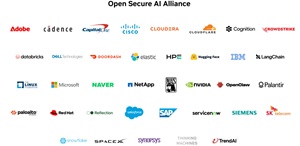
In a landmark collaborative effort that could fundamentally reshape the cybersecurity landscape for autonomous software, NVIDIA and 36 leading technology, cloud computing, cybersecurity, and enterprise software giants have officially launched the Open Secure AI Alliance.
Unlike previous industry initiatives that fixated narrowly on securing the foundational AI models themselves—such as parameter weights, alignment training, and prompt-injection vulnerabilities—this newly minted alliance takes a radically broader approach. The coalition’s primary mission is to develop, standardize, and share open technologies dedicated to protecting the entire infrastructure surrounding autonomous AI agents.
As enterprises increasingly deploy intelligent agents capable of executing complex workflows, accessing sensitive databases, and making autonomous decisions, the attack surface has expanded exponentially. The Open Secure AI Alliance aims to build a robust, transparent defense stack for this agentic era. The initiative covers critical operational layers including:
- Decentralized agent identity management
- Granular access permissions and dynamic authorization
- Secure workload isolation and sandboxing
- Execution harnesses and runtime controls
- Enterprise-grade guardrails and policy enforcement
- Comprehensive audit logging and telemetry
- Continuous evaluation and compliance systems
Spearheaded by an unprecedented coalition of multi-vendor powerhouses—including cloud providers, enterprise software vendors, and cybersecurity leaders—the alliance is rooted in a fundamental philosophy: open-source transparency is the only viable path to securing next-generation cloud infrastructure. By rejecting proprietary silos and single points of failure, the founding members aim to deliver systems that security defenders can independently inspect, adapt, and operate across the exact infrastructure they control, whether on-premises, in hybrid clouds, or spanning multi-cloud environments.
Detailed Chronology: The Genesis of the Alliance
The formation of the Open Secure AI Alliance marks a crucial turning point in the evolution of enterprise artificial intelligence. While generative AI dominated tech headlines throughout the early 2020s with chat interfaces and passive content generation, the technological horizon shifted decisively toward agentic workflows.

The Shift from Models to Agents
In the early phases of the generative AI boom, security conversations were dominated by model-centric concerns: preventing jailbreaks, filtering toxic outputs, protecting proprietary training data, and preventing data leakage through prompt injection. However, as enterprises moved beyond proof-of-concept chatbots into production-grade deployments, artificial intelligence began to transform from passive tools into active agents.
These modern AI agents do not merely suggest text; they read emails, invoke APIs, query relational databases, execute financial transactions, and provision cloud resources. This shift exposed a dangerous governance gap. Securing the model was no longer sufficient; organizations needed to secure the sprawling, complex operational infrastructure that surrounds the agent.
Recognizing this vulnerability, technology leaders behind the scenes began organizing a unified response. The culmination of these discussions resulted in the formal establishment of the Open Secure AI Alliance, boasting an initial cohort of 37 founding members.
An Unprecedented Coalition
The diversity of the alliance’s inaugural roster underscores the universal nature of the security challenge facing modern architectures. The 37 foundational partners span the entire technology stack:
- Cloud & Infrastructure Giants: NVIDIA, Dell Technologies, Hewlett Packard Enterprise (HPE), NetApp, Red Hat, and the Linux Foundation.
- Cybersecurity Leaders: Cisco, Cloudflare, CrowdShield (CrowdStrike), Palo Alto Networks, and Synopsys.
- Enterprise Software & Cloud Platforms: Adobe, Microsoft, Salesforce, SAP, ServiceNow, and Snowflake.
- Data & Analytics Innovators: Capital One, Cloudera, Databricks, Hugging Face, IBM, and Siemens.
Despite the collective weight of these industry titans, the alliance’s initial rollout has been notably pragmatic and restrained. As of its launch, the group has deliberately avoided committing to a single, monolithic integrated platform, nor has it published a rigid reference architecture or a fixed release schedule. Instead, the alliance has framed itself as an open collaboration vehicle—a forum where competing enterprises can contribute modular building blocks to form an interoperable defense stack.
Supporting Context & Metrics: Moving Cloud Identity to the Agent Layer
To understand the engineering mechanics behind the Open Secure AI Alliance, one must examine how modern cloud infrastructure handles workload authentication, and how those paradigms are now being forced to adapt to the agentic layer.
The Challenge of Heterogeneous Infrastructure
Modern enterprise applications rarely live in a single data center. They are distributed across a heterogeneous mix of public cloud providers (Amazon Web Services, Microsoft Azure, Google Cloud), private virtual machines, and containerized orchestrators like Kubernetes.
In these environments, traditional security mechanisms—such as hardcoded API keys, static passwords, and long-lived tokens—are glaring liabilities. If an autonomous AI agent is granted programmatic access to enterprise databases and APIs using a static credential, a compromise of that agent instantly exposes the entire downstream system.
The HPE Contribution: SPIFFE and SPIRE
One of the most concrete technical integrations highlighted during the alliance’s launch is Hewlett Packard Enterprise’s contribution of the Secure Production Identity Framework for Everyone (SPIFFE) and the SPIRE (SPIFFE Runtime Environment) project.
In its official statement regarding its participation in the alliance, HPE emphasized that modern AI systems are deeply systemic. They rely on complex orchestration chains comprising agent frameworks, evaluation harnesses, safety guardrails, governance mechanisms, and foundational models, all interacting dynamically within sensitive enterprise environments.
By integrating SPIFFE and SPIRE into the alliance’s conceptual framework, HPE introduces battle-tested, zero-trust identity standards to the agent layer.
- SPIFFE Standards: SPIFFE defines an open-source standard for securely and uniformly authenticating software services across heterogeneous environments. It achieves this by issuing platform-independent, cryptographically verifiable identities to workloads in the form of a SPIFFE ID, encapsulated within an X.509 certificate or a JSON Web Token (JWT).
- SPIRE Runtime: SPIRE acts as the implementation engine that operationalizes these standards. It actively attests the identity of running workloads by inspecting the underlying hosting environment—whether verifying a container image in Kubernetes, a process running on a Linux virtual machine, or an instance running in AWS—and automatically issuing short-lived cryptographic credentials.
Cryptographic Verification for Autonomous Workloads
NVIDIA underscored this architectural connection in the alliance’s launch announcements, noting that SPIFFE/SPIRE-based technologies can cryptographically verify AI agents and downstream services. This cryptographic attestation ensures that:
- Only explicitly authorized AI workloads can communicate with one another across the enterprise network.
- Agents cannot access enterprise resources or databases unless their runtime identity is verified in real time.
- Trust relationships are established dynamically, eliminating the risk of stale or leaked static credentials.
Furthermore, SPIFFE and SPIRE bring a mature ecosystem of integrations to the table. Documented integrations span cloud-native technologies such as Istio, Envoy, Sigstore, Open Policy Agent (OPA), Amazon Web Services, Microsoft Azure, Google Cloud, Dapr, and HashiCorp Consul. This enables the Open Secure AI Alliance to leverage existing, production-hardened cloud patterns rather than reinventing the wheel for agent security.
Official Statements and Industry Perspectives
The formation of the Open Secure AI Alliance has generated widespread commentary from executive leadership across the participating organizations, highlighting the urgency and collaborative spirit driving the initiative.
NVIDIA on Open Infrastructure and Multi-Vendor Resilience
NVIDIA’s foundational framing of the alliance emphasizes that open source has historically been the bedrock of cloud computing stability and innovation. In its official blog post, the company argued that modern defenders cannot rely on opaque, closed-source security solutions when dealing with autonomous agents that possess deep system access.

"Defenders need systems they can inspect, adapt, and run on infrastructure they control," NVIDIA articulated in its announcement.
The company also stressed the absolute necessity of multi-vendor interoperability. In an interconnected enterprise landscape, security systems cannot operate as isolated islands. They must function seamlessly across diverse hardware, cloud providers, and software ecosystems to eliminate single points of failure that sophisticated cyber threats could exploit.
HPE on Zero-Trust AI Architecture
Hewlett Packard Enterprise echoed these sentiments, focusing heavily on the operational realities of enterprise AI adoption. In their announcement joining the alliance, HPE executives noted:
"Modern AI systems depend on agent frameworks, harnesses, guardrails, governance mechanisms, and models that constantly interact with complex enterprise environments."
By bringing zero-trust identity standards to the table through the SPIFFE/SPIRE projects, HPE aims to bridge the gap between traditional cloud-native microservices security and the rapidly evolving domain of autonomous software agents.

Future Outlook: What Lies Ahead for the Alliance?
As the Open Secure AI Alliance moves past its initial launch phase, the technology sector is watching closely to see how the coalition translates its high-level vision into concrete technical deliverables.
The Road Ahead: Standardization and Integration
While the absence of a rigid release schedule or a single integrated reference platform has raised questions from market analysts, industry insiders view this measured approach as a necessary feature of an open-source, multi-vendor ecosystem. Rather than forcing members into a proprietary framework, the alliance is positioning itself as an umbrella organization for collaborative security innovation.
Key milestones for the alliance over the coming years are expected to include:
- Standardizing Agent Interoperability Protocols: Developing open protocols that allow agents built on different frameworks (such as LangChain, AutoGen, or custom enterprise solutions) to communicate securely while sharing guardrail and telemetry data.
- Unified Logging and Telemetry Standards: Creating standardized audit trails for agentic workflows, ensuring that compliance officers and security operations centers (SOCs) can trace every decision made by an autonomous agent.
- Extending Zero-Trust Frameworks: Expanding cryptographic identity standards—such as those provided by SPIFFE/SPIRE—deeply into agent runtimes, execution harnesses, and multi-cloud orchestration layers.
- Bridging Enterprise Governance and AI Autonomy: Designing policy enforcement mechanisms that allow human-in-the-loop oversight without crippling the speed and efficiency of autonomous agent execution.
Conclusion
The launch of the Open Secure AI Alliance represents a maturation point for the enterprise artificial intelligence market. By shifting the security conversation away from isolated model evaluations and toward comprehensive infrastructure defense, the industry is confronting the hard realities of agentic computing.
With 37 heavyweights spanning cloud, software, and cybersecurity collaborating under an open-source banner, the alliance has laid the foundational groundwork for a safer, more transparent future. If successful, the Open Secure AI Alliance will ensure that the enterprise transition to autonomous AI agents is matched step-for-step by robust, resilient, and multi-vendor-supported security infrastructure.

