In an era where digital literacy is increasingly viewed as foundational as traditional reading and writing, the methods by which children are introduced to computer science are undergoing a radical transformation. Gone are the days of dense, unengaging textbooks, intimidating syntax manuals, and passive video tutorials that fail to capture the imagination of young learners. Enter CodeMonkey, an award-winning, gamified educational platform designed to bridge the gap between abstract computer science concepts and tangible, real-world programming languages.
Aimed at students ranging from preschool age up to the 8th grade, CodeMonkey transforms the intimidating landscape of coding into an immersive puzzle adventure. By tasks that require guiding a mischievous virtual monkey to collect lost bananas, students unconsciously absorb fundamental programming logic. As they progress, they transition smoothly from visual, block-based interfaces to industry-standard text-based languages such as CoffeeScript, Python, and JavaScript.
This comprehensive review explores CodeMonkey’s pedagogical framework, curriculum design, underlying computer science concepts, and its viability within both traditional classrooms and homeschooling environments. Through an authoritative lens, we examine how gamification is reshaping modern STEM education and why CodeMonkey has emerged as a premier tool for cultivating the next generation of digital innovators.
Detailed Chronology & Platform Evolution
To understand CodeMonkey’s current standing in the EdTech ecosystem, it is vital to trace its developmental trajectory. The platform was conceived out of a growing industry-wide necessity: the realization that early childhood education lacked an intuitive, accessible pathway to text-based programming languages.
The Genesis of Visual Programming: Initially, the EdTech market was saturated with binary extremes—either overly simplified block-based programs that failed to prepare students for real-world coding, or complex Integrated Development Environments (IDEs) designed for high schoolers and adults that routinely overwhelmed younger children.
The Launch of Core Mechanics: CodeMonkey disrupted this dichotomy by introducing its flagship offering, Coding Adventure. By synthesizing storytelling, character-driven goals (the banana-hunting monkey), and immediate visual feedback, developers created a closed-loop learning environment where syntax errors were immediately visualized and easily corrected.
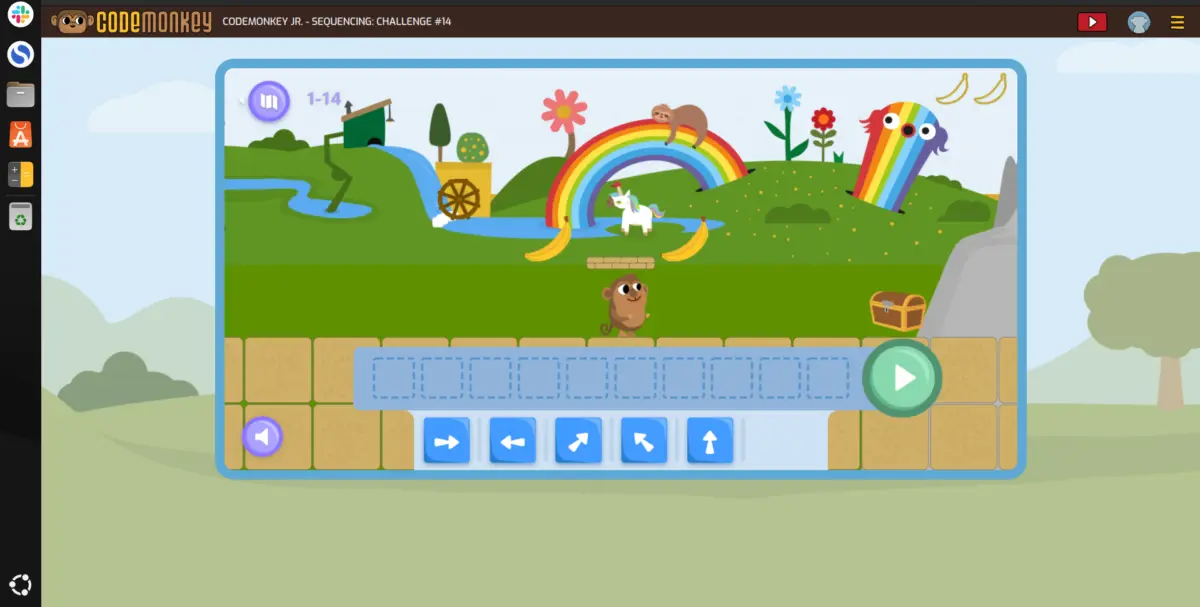
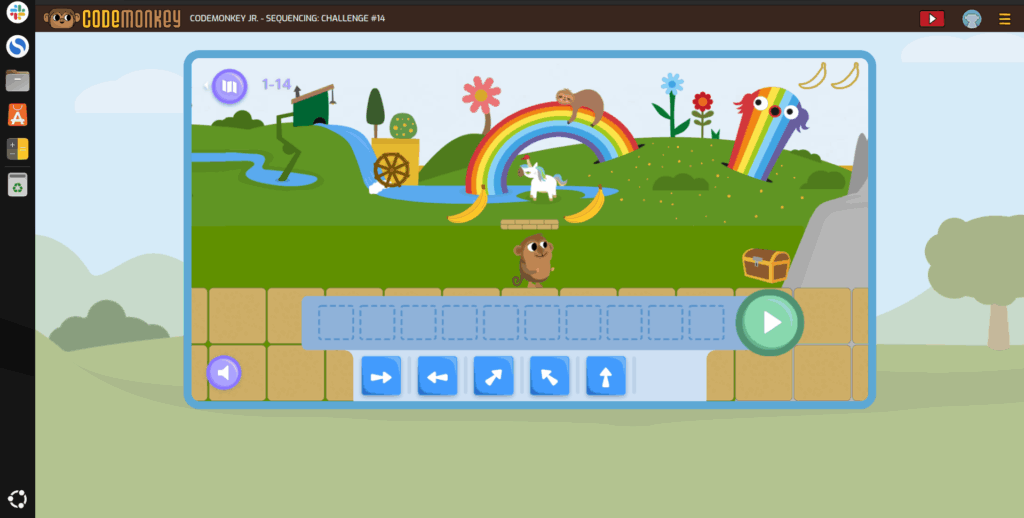
Expansion into Early Childhood (CodeMonkey Jr.): Recognizing that computational thinking begins well before formal schooling, the platform expanded downward to cater to preschoolers and early elementary students. CodeMonkey Jr. introduced simplified mechanics, relying on visual block-based puzzles to establish foundational logic without requiring advanced reading proficiency.
Curriculum Maturation and Advanced Languages: Over successive updates, CodeMonkey broadened its linguistic scope. While starting primarily in CoffeeScript—a streamlined dialect that compiles into JavaScript—the platform integrated dedicated pathways for Python, one of the most widely used and versatile programming languages in professional software engineering today.
Modern Integration and Global Reach: Today, CodeMonkey operates globally, adopted by thousands of schools, districts, and homeschool networks. Its continuous evolution includes the addition of the Game Builder tool, automated progress-tracking analytics, and responsive coding chatbots designed to assist students dynamically when roadblocks arise.
Supporting Context & Core Pedagogical Metrics
CodeMonkey’s widespread adoption is built upon a carefully calibrated pedagogical approach that leverages cognitive science, gamification, and structured curriculum design.
The Gamification of Coding
Traditional education often struggles with student engagement due to high friction thresholds—moments where frustration outweighs curiosity. CodeMonkey mitigates this by turning programming into a series of nearly 400 incremental challenges.
The Reward Loop: Students write precise lines of code to navigate their primate protagonist across a grid. Successful execution yields up to three stars, validating their logic and encouraging optimization.
Deconstructing Complex Problems: The platform trains young minds to practice decomposition—breaking large, seemingly insurmountable problems into smaller, manageable, sequential steps.
Comprehensive Curriculum and Age-Tiered Pathways
The platform’s structure accommodates vastly different developmental stages through dedicated environments:
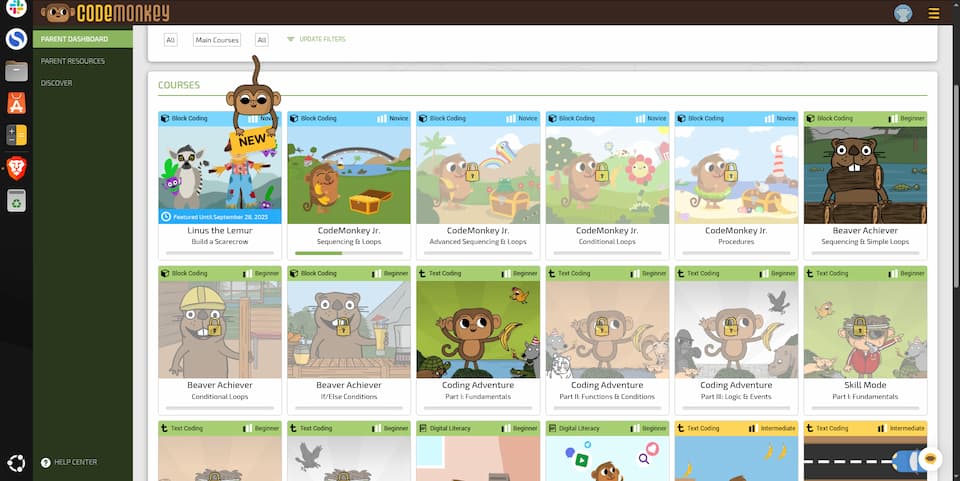
CodeMonkey Jr.: Tailored for preschoolers and early readers, utilizing icon-based, visual blocks to introduce basic commands, sequencing, and spatial logic.
Coding Adventure: The primary engine for elementary and middle school students. Here, learners write actual lines of code, beginning with CoffeeScript and naturally transitioning toward Python and JavaScript.
Game Builder: An advanced sandbox environment where students apply cumulative knowledge to design, code, and share their own playable video games, fostering creative autonomy alongside technical competence.
Core Programming Concepts Mastered
CodeMonkey does not merely teach superficial tricks; it introduces foundational computer science concepts mirrored in professional software development:
Loops: Teaching students efficiency by executing repetitive tasks through automated loops rather than redundant manual entry.
Functions and Function Calls: Introducing modular programming principles, allowing learners to write reusable blocks of code (akin to custom recipes) that can be invoked repeatedly.
Objects and Arrays: Managing complex data structures where containers hold multiple values, variables, or lists of items.
Variables and Boolean Conditions: Equipping students with the logic of decision-making trees (e.g., if-else statements), enabling programs to react dynamically to changing inputs and scores.
Official Statements & Stakeholder Perspectives
The true efficacy of an educational platform is best judged by those who utilize it daily in classrooms and home-learning environments.
Educator and Homeschooling Feedback
Educators frequently praise CodeMonkey for its plug-and-play adaptability. Teachers utilize the platform not only for daily computer science instruction but also as a premier vehicle for national initiatives like the Hour of Code. Because the system features automated grading and instant feedback loops, teachers are freed from the bottleneck of manual code reviews, allowing them to provide targeted, one-on-one interventions to students who require extra assistance.
Parents and homeschooling educators report similar success. One homeschooling parent notes:
"My son has explored coding through books and YouTube tutorials, but CodeMonkey provided a structured foundation that tied everything together. The immediate visual feedback keeps him motivated, and the parent dashboard gives me complete visibility over his mastery of specific concepts without requiring me to be a software engineer myself."
Technical Architecture and Data Privacy
As an online-first platform, CodeMonkey employs essential session-based cookies strictly designed for core functional utility—such as maintaining user login states and tracking progress across challenges. Unlike third-party advertising cookies, these platform-specific tools prioritize user privacy, complying with stringent educational data standards while offering families straightforward opt-out controls via standard browser settings.
Future Outlook: The Next Frontier in Early STEM Literacy
As artificial intelligence, automation, and data analytics continue to reshape the global workforce, early fluency in computer science is transitioning from an elective advantage to an essential life skill. Platforms like CodeMonkey are at the vanguard of this shift, redefining how foundational tech literacy is delivered.
Looking ahead, the platform is positioned to expand its integration of advanced coding paradigms, potentially introducing introductory AI logic, debugging modules, and collaborative multiplayer coding environments. By maintaining a delicate balance between rigorous academic programming languages (Python, JavaScript) and engaging, gamified mechanics, CodeMonkey ensures that children are not merely consumers of digital technology, but confident, creative producers of it.
Whether implemented within sprawling public school districts or guided by parents at home, CodeMonkey proves that learning to code does not have to be an arduous chore. By turning syntax into a playground, it empowers the next generation to approach complex problem-solving with creativity, resilience, and analytical precision.