As the winter season settles in and communities face the predictable disruptions of holiday breaks, shifting daily routines, and extended periods of indoor confinement, educators, parents, and child development specialists are increasingly turning their attention to a critical yet often overlooked skillset: self-regulation. Defined scientifically as the capacity to manage thoughts, emotions, and behaviors, self-regulation acts as the foundational engine enabling children and teenagers to focus on cognitive tasks, navigate complex social landscapes, and process everyday emotional triggers.
While self-regulation is a year-round requirement for healthy youth development, its urgency spikes dramatically during the winter months. The convergence of erratic schedules, sensory deprivation from lack of outdoor play, and holiday-induced stress can overwhelm a child’s neurological system. Behavioral pediatricians and educational psychologists note that behavioral challenges in classrooms and households frequently peak during the weeks directly preceding and following major winter breaks.
To combat this seasonal dysregulation proactively, child development experts advocate for evidence-based, highly engaging interventions. Moving away from punitive models of discipline, modern pedagogical frameworks favor practical emotional regulation exercises that seamlessly blend into daily schedules. This report explores twelve strategic, engaging activities designed to help children and adolescents build robust self-regulation skills this winter, grounding each practice in neurological science and practical execution.
Detailed Chronology: Understanding the Winter Behavioral Curve
To effectively deploy self-regulation strategies, adults must first understand the cyclical nature of childhood behavioral shifts throughout the academic and calendar year. The winter behavioral curve follows a distinct chronological pattern that requires tailored adult interventions at each phase:
Phase 1: The Pre-Break Build-Up (Late November to Mid-December)
As winter approaches, schools introduce holiday pageants, changed schedules, and the ambient excitement of impending festivities. During this window, children’s executive functions are tested by constant environmental changes. Neurologically, the pre-frontal cortex—responsible for impulse control—becomes fatigued. Educators report a noticeable rise in impulsivity, distractibility, and emotional outbursts during this time, making it imperative to introduce calming routines early.
Phase 2: The Break Disruption (Mid-December to Early January)
During the holiday hiatus, the rigid architecture of the school day vanishes. While rest is essential, the abrupt removal of structural anchors can lead to under-stimulation or sensory overload. Children often struggle to transition back to baseline emotional equilibrium without clear guidelines, setting the stage for difficult home environments.
Phase 3: The Post-Break Readjustment (January and February)
Perhaps the most challenging period of the winter cycle is the return to structured learning in the dead of winter. Shortened daylight hours, plummeting temperatures, and a lack of natural sunlight contribute to lethargy, seasonal mood dips, and heightened anxiety. Introducing structured, engaging self-regulation activities during these harsh months is not merely a supplementary classroom exercise; it is an essential public health intervention for youth well-being.
Supporting Context & Metrics: The Science of Self-Regulation
Self-regulation is not an innate trait that children magically master; it is a learned neurological capability that develops gradually over the course of childhood and adolescence. When children experience stress, sensory overload, or routine disruption, their sympathetic nervous system triggers a "fight-or-flight" response, impairing higher-order thinking.
Neurological Underpinnings
Interventions that focus on mindfulness, tactile exploration, and breathwork directly stimulate the parasympathetic nervous system. This biological shift lowers heart rates, reduces cortisol production, and restores blood flow to the pre-frontal cortex. Clinical research consistently demonstrates that children who regularly participate in structured self-regulation exercises exhibit:
Enhanced Academic Focus: Improved sustained attention spans during independent and group work.
Reduced Anxiety Metrics: Measurable decreases in stress-related behavioral incidents in institutional and domestic settings.
Stronger Social Resilience: Greater capacity for empathy, conflict resolution, and positive peer connectivity.
The 12 Engaging Winter Self-Regulation Activities for Kids and Teens
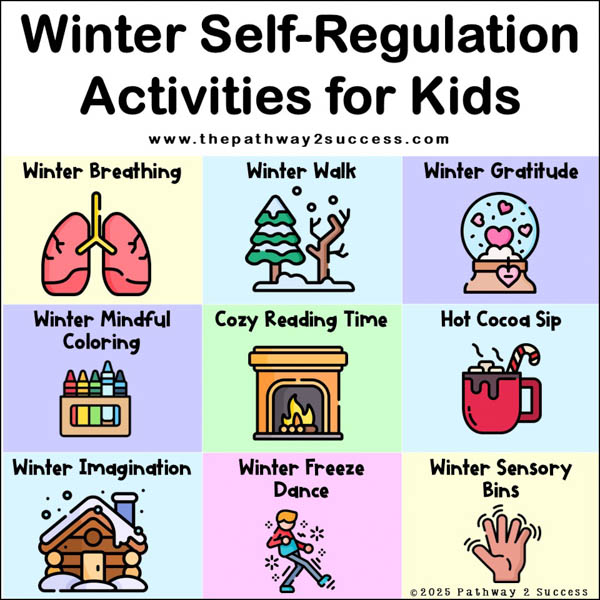
To bridge the gap between abstract psychological concepts and actionable daily routines, experts recommend twelve specialized winter activities. Each strategy incorporates a specific mechanism designed to foster emotional stability.
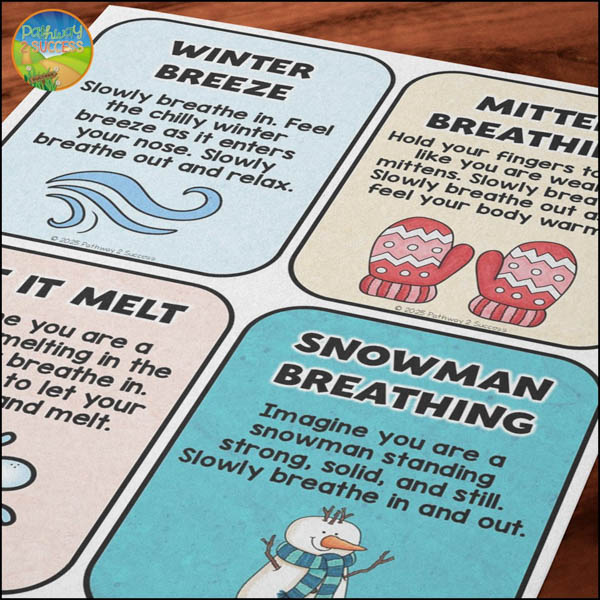
1. Winter Breathing Exercises
The Concept: Mindful breathing acts as an internal pause button. By focusing entirely on deliberate inhales and exhales, children interrupt immediate emotional impulses, allowing their central nervous systems to reset.
Implementation: Introduce winter-themed breathing techniques (such as imagining smelling a warm mug of cocoa or tracing a snowflake pattern while breathing).
Why It Works: It directly activates the vagus nerve and stimulates the parasympathetic nervous system, inducing rapid physiological calm.
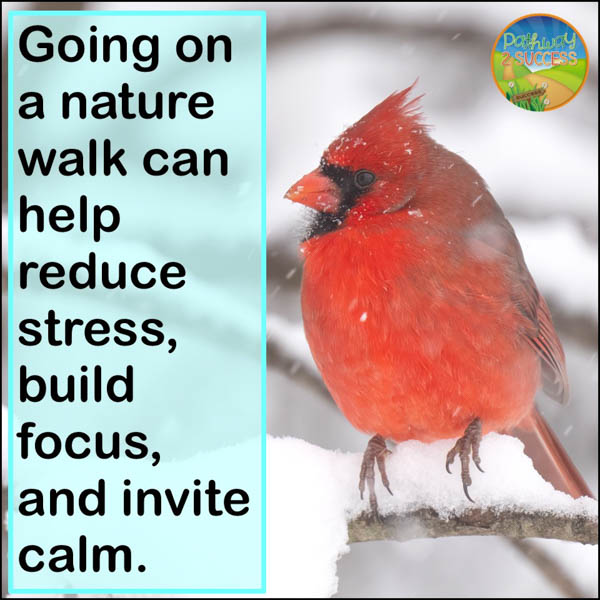
2. Outdoor Nature Walks
The Concept: Mindful exploration of the natural world, engaging all five senses (sight, sound, smell, touch, and taste) despite cold weather.
Implementation: Bundle up and take structured walks where children identify specific environmental markers—such as the texture of frozen bark or the crispness of the winter air—followed by reflection circles.
Why It Works: Nature immersion reduces baseline stress hormones, enhances visual attention, and guarantees essential exposure to natural sunlight, which combats winter lethargy.
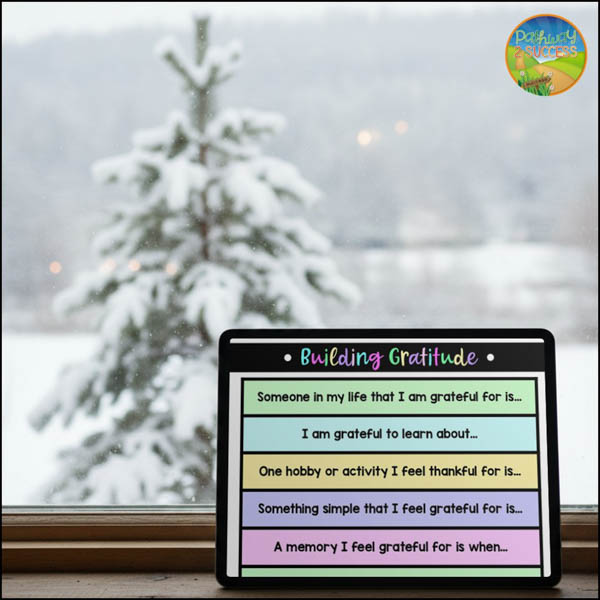
3. Winter Gratitude Reflection
The Concept: Shifting cognitive focus toward appreciation for specific elements of the winter season.
Implementation: Utilize specialized gratitude sentence starters, journaling exercises, or classroom sharing circles focusing on positive winter elements (e.g., warm blankets, family time, sparkling snow).
Why It Works: Practicing gratitude systematically rewires neural pathways to notice positive stimuli, fostering resilience and boosting overall mood.
4. Mindful Winter Coloring
The Concept: Creative visual expression using winter-themed and positive self-talk coloring pages.
Implementation: Distribute coloring sheets featuring uplifting mantras alongside colored pencils, crayons, or gel pens, emphasizing the process of relaxation over artistic perfection.
Why It Works: Coloring serves as an accessible somatic bridge to meditation, making it uniquely effective for children who struggle with absolute physical stillness.
5. Cozy Reading Time
The Concept: Immersive literary engagement designed to foster deep stillness and emotional connection.
Implementation: Create a cozy reading nook complete with soft lighting (or a projected virtual fireplace) for independent reading or guided read-aloud sessions.
Why It Works: Deep reading lowers heart rates, eases muscle tension, and provides a restorative psychological escape from daily stressors.
6. Winter Sensory Bins
The Concept: Tactile exploration using bins filled with winter-themed materials (artificial snow, pinecones, jingle bells, cinnamon sticks).
Implementation: Provide large, contained tactile stations where children can manipulate materials freely, encouraging sensory grounding.
Why It Works: Tactile play anchors children in the physical present, regulating sensory processing systems while encouraging fine motor skill development.
7. The Mindful Hot Cocoa Sip
The Concept: Transforming a comforting winter treat into a deliberate exercise in sensory awareness.
Implementation: Guide students to experience hot cocoa (or any warm beverage) by focusing exclusively on its warmth, aroma, and taste, pausing intentionally between sips.
Why It Works: Warmth relaxes skeletal muscles, while focused sensory engagement anchors runaway thoughts and settles the central nervous system.
8. Winter Scene Visualization
The Concept: Guided mental imagery exercises transporting children to serene, peaceful winter landscapes.
Implementation: Lead children through descriptive prompts asking them to visualize quiet snowy woods, frozen lakes, or cozy cabins, engaging all sensory modalities in their mind’s eye.
Why It Works: Visualization trains the brain to voluntarily induce physiological states of calm, offering a portable coping mechanism for stressful situations.
9. Hands-On Winter Crafts
The Concept: Structured creative projects that require fine motor control, step-by-step sequencing, and frustration tolerance.
Implementation: Engage children in making snowflakes, winter animals, or seasonal decorations with clear steps but open-ended creative freedom.
Why It Works: Crafting channels physical energy into productive focus, teaching emotional endurance when creative elements do not go according to plan.
10. Winter-Themed Instrumental Music
The Concept: Utilizing acoustic or instrumental winter compositions to alter the ambient energy of a space.
Implementation: Play gentle piano or guitar tracks during transitions, independent work periods, or paired with visualization exercises.
Why It Works: Auditory pacing directly influences human brainwave patterns, steering individuals away from high-stress beta waves toward relaxed alpha states.
11. The Winter Freeze Dance
The Concept: Dynamic movement play that builds impulse control through sudden physical stops.
Implementation: Allow children to dance freely to music, commanding them to "freeze" instantly upon hearing specific winter vocabulary words (e.g., "blizzard," "icicle").
Why It Works: Freeze games challenge the motor cortex to rapidly shift between high energy and total stillness, directly strengthening executive inhibition.
12. Emotional Check-In Stations
The Concept: Establishing dedicated physical or digital spaces where children can identify and communicate their current emotional state.
Implementation: Use visual rating scales or mood check-in boards at the start of each day to validate feelings and connect youth with appropriate regulation tools.
Why It Works: Self-awareness is the prerequisite for self-regulation; naming an emotion reduces its neurological intensity.
Official Statements and Expert Perspectives
Child development advocates and mental health professionals emphasize that institutional and parental responses to winter dysregulation must be proactive rather than reactive.
"When we look at the behavioral spikes observed in December and January, our first instinct as adults is often to tighten control and impose stricter punishments," notes Dr. Elena Vance, a prominent educational psychologist specializing in youth self-regulation. "However, neurological science tells us the exact opposite is required. Children do not need more control imposed upon them from the outside; they need structural tools to build internal control. Activities like mindful breathing, sensory engagement, and gratitude exercises provide the exact physiological bridge kids need to survive and thrive through the winter months."
Furthermore, school counselors emphasize that incorporating these strategies into daily routines requires minimal instructional time while yielding exponential returns in classroom climate and emotional safety.
Future Outlook
As educational institutions and parenting paradigms continue to evolve in the post-pandemic landscape, the integration of social-emotional learning (SEL) into everyday life is no longer viewed as optional programming. The challenges posed by winter disruptions—ranging from increased indoor sedentariness to holiday-induced anxiety—demand sophisticated, evidence-based responses.
Looking forward, the successful cultivation of self-regulation in children will rely on a collaborative continuum connecting classrooms, communities, and households. By normalizing practices such as mindful breathing, sensory grounding, and intentional gratitude during the coldest months of the year, adults can transform winter from a season of behavioral volatility into an invaluable opportunity for profound emotional growth and resilience building.